• Following Us

  • Categories

  • Check out the Archives


  • Awards & Nominations

Netflix and Marvel’s Daredevil – Season 1 (Review)

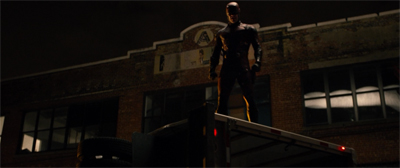
Marvel and Netflix’s Daredevil owes as much to the work of Christopher Nolan as it does to the larger Marvel Cinematic Universe. Taking advantage of the change in platform and format, the thirteen-episode season is a bit rougher and meaner than most of Marvel’s recent output. The show never reaches the excesses of The Punisher or Punisher: War Zone, but the show has a much rougher edge to it than many of its contemporaries. It is very much grounded in an urban noir storytelling style.

With thirteen episodes released to stream simultaneously, Daredevil is a unique venture for a studio that has been experiment in different media and different delivery methods. Daredevil is much more cohesive than either Agents of S.H.I.E.L.D. and Peggy Carter, feeling much more like its own thing. While each of the thirteen episodes is structured as an episode in its own right, the whole season amounts to a single long-form story. Distilled to its essence, Daredevil is the story of the conflict between an emergent vigilante and an ascendant crime lord.
daredevil-daredevil14

The series is not flawless; there are some pacing and structural issues that do haunt the series. However, it is a bold piece of work that stands unique among the prolific output from Marvel Studios. It is hard to imagine that either Avengers: Age of Ultron or Ant-Man will feel anything like this more grounded adventure, giving Daredevil a distinctive texture and demonstrating that Marvel is willing to experiment with the tone and style of some of its product. Given the volume of the studio’s output, this is inherently a good thing.

Daredevil is anchored in a set of terrific central performances and a clear sense of purpose. It might lose focus at points, or stumble into some plotting or pacing issues, but it marks a high point in Marvel’s television output.

daredevil-theonesweleavebehind8

Continue reading

Mark Waid, Chris Samnee, Paolo Rivera et al’s Run on Daredevil (Vol. 3) (Review/Retrospective)

This April, to celebrate the release of The Amazing Spider-Man 2, we are taking a look at some classic and modern comics featuring Spider-Man (and friends). Check back daily for the latest review.

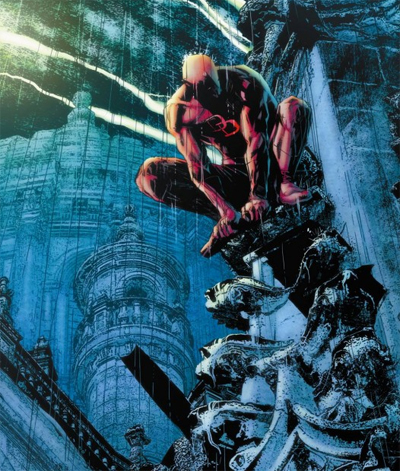
Daredevil had been one of the most consistently reliable books at a major comic book publisher over the last decade or so. Under creative teams from Kevin Smith to David Mack to Brian Michael Bendis to Ed Brubaker, the gritty street level superhero has enduring a whole host of twists and shifts that have made the book a compelling read. Indeed, the only real problem with the run was that Andy Diggle couldn’t quite stick the landing and so we ended up closing out that incredibly run with a bland and generic crossover like Shadowland.

Still, Daredevil remains an exciting book – a comic that affords the writers and artists a bit more freedom than they’d enjoy working on a more high-profile or major character. When Spider-Man’s identity was revealed by J. Michael Straczynski during Civil War, the publisher almost immediately hit a reset button in the form of One More Day to tidy up everything. When Brian Michael Bendis revealed Matthew Murdock’s secret identity to the world, there was no attempt to stuff the genie back in the bottle. That radical shift remained in play for the rest of Ed Brubaker and Andy Diggle’s run, casting a shadow over Mark Waid’s as well.

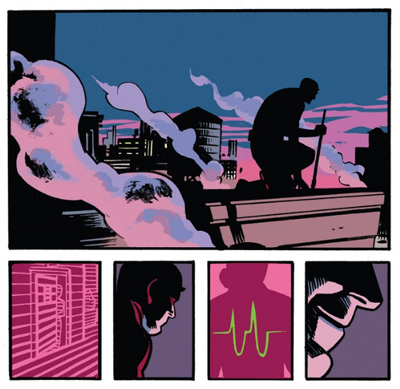
The big smoke...

The big smoke…

However, reading Andy Diggle’s Daredevil, it’s easy to get a sense that the character was suffocating under the influence of Frank Miller. Frank Miller and Klaus Jansen enjoyed a character-defining run in the mid-eighties. For Miller, it paved the way to The Dark Knight Returns, and it really shook the foundations of the superhero genre. Suddenly superheroes weren’t infallible; suddenly fights could get genuinely dirty; suddenly dressing up in a silly costume to fight crime was treated as something that might be deemed a little eccentric.

This had a dramatic impact across the superhero genre. At the same time, however, it really defined the character of Daredevil. In his year years, Daredevil often seemed like a cheap knock-off of Spider-Man; an imitation of a far more popular hero. With the work of Frank Miller, Matthew Murdock become more conflicted and more complex. He became a hero who could make mistakes, a hero who didn’t have the best judgement, a hero who could fail. This pushed the character of Daredevil more towards gritty urban crime and film noir conventions, and further away from superhero conventions.

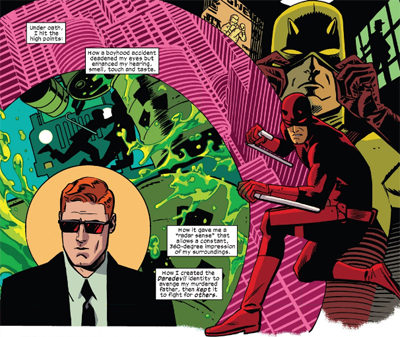
Radar love...

Radar love…

Decades after Born Again, writers are still drawing on that iconic take on Matthew Murdock. The Kingpin is still considered one of the – if not the – greatest foe of the Man Without Fear. Kevin Smith killed off Karen Page, the character who betrayed Matthew Murdock in Born Again. Brian Michael Bendis wrote a story featuring the character who planted the bomb in Born Again, two decades after that story was published. Miller cast a long shadow over the character. One of the (many) problems with Andy Diggle’s Daredevil was the way that it demonstrating that riffing on Frank Miller was getting old.

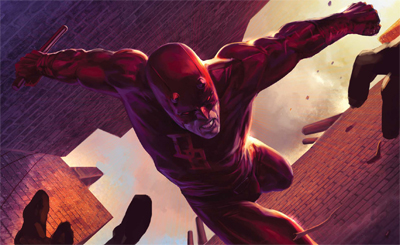
And so, Mark Waid’s run on Daredevil is absolutely fascinating. It’s a clear departure from the grounded urban realism that came to define the character, often feeling like an attempt to reconnect with the character’s Silver Age roots. Brought to life by some of the best artists in the business, the run just pops off the page. At the same time, Waid doesn’t ignore or avoid or overlook what has come before. He just seems to realise that there are other ways of approaching the character.

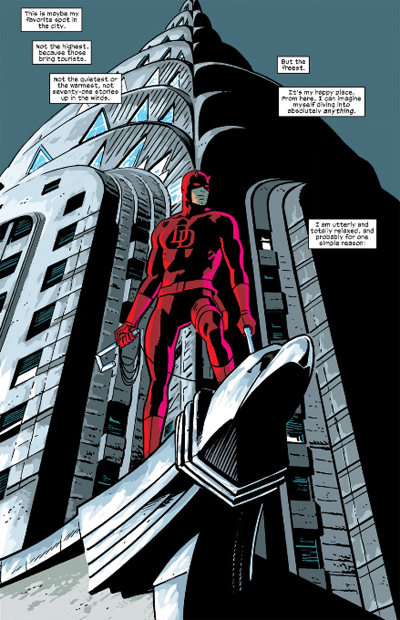
On top of the world...

On top of the world…

Continue reading

Andy Diggle’s Daredevil – Reborn (Review/Retrospective)

This April, to celebrate the release of The Amazing Spider-Man 2, we are taking a look at some classic and modern comics featuring Spider-Man (and friends). Check back daily for the latest review.

Well, by the end of Daredevil: Reborn, it is certainly time for a change.

Radar love...

Radar love…

Continue reading

Andy Diggle’s Run on Daredevil – Shadowland (Review/Retrospective)

This April, to celebrate the release of The Amazing Spider-Man 2, we are taking a look at some classic and modern comics featuring Spider-Man (and friends). Check back daily for the latest review.

Shadowland is a disappointing climax to a wonderful decade of Daredevil. From the moment that Kevin Smith launched the second volume of the character through to the end of Ed Brubaker’s run, the Man Without Fear enjoyed a wonderfully consistent run of stories including runs from some of the best writers and artists working in comics, pushing the character in bold new directions and well outside his comfort zone.

Shadowland has a lot of problems, but the most obvious is that it betrays its central character. Matt Murdock is one of the most fascinating protagonists in comics, a proud (and occasionally arrogant) individual who might have the best of intentions but isn’t always able to make the right choices. Watching Murdock deal with his own mistakes and setbacks was a pretty compelling hook, as the comic pushed its protagonist into increasingly uncomfortable positions.

Unfortunately, the same cannot be said for Shadowland. Despite an interesting premise, it all falls apart when it decides that “a demon did it” is an acceptable explanation for Murdock’s latest errors in judgement.

Devilish delight?

Devilish delight?

Continue reading

Andy Diggle’s Run on Daredevil (Review/Retrospective)

This April, to celebrate the release of The Amazing Spider-Man 2, we are taking a look at some classic and modern comics featuring Spider-Man (and friends). Check back daily for the latest review.

One of the most remarkable things about Daredevil was how consistent the quality of the title had been. Andy Diggle inherited Daredevil at the height of its popularity. Ed Brubaker’s Daredevil was well-loved and enjoyed, climaxing on a celebratory 500th issue. Brubaker had come on after Brian Michael Bendis’ much-lauded run on the title. The two are considered among the best writers to work on the character since Frank Miller redefined the Man Without Fear. Diggle was succeeded by Mark Waid, who has made a reinvigoured and nostalgic Daredevil into one of Marvel’s best-reviewed and best loved books.

These are all great runs. Andy Diggle’s Daredevil run is not well-remembered. Diggle essentially wrote twelve issues of the main title, and almost the same number of crossover tie-ins, miniseries and one-shots. Whereas those other successful runs of Daredevil existed with their own space and freedom, Diggle’s Daredevil was very much event-driven. The big moment in all of Diggle’s Daredevil writing is the street-level crossover event Shadowland. It’s a problematic event, and quite a few of those problems reverberate back into Diggle’s work on the main title.

And yet, despite that, what’s most frustrating about Diggle’s Daredevil run is that it really could (and should) have been so much better.

The Devil you know...

The Devil you know…

Continue reading

Daredevil by Ed Brubaker Omnibus, Vol. II

Still, it must have been nice for you, Murdock.

What?

To win this one. It seems like you really needed it.

– North and Murdock

There goes the whiniest superhero I ever met.

– Mr. Izo

I’ve said it before and I’ll likely say it again: Daredevil has had an amazing ten-year run under the stewardship of Kevin Smith, David Mack, Brian Michael Bendis and Ed Brubaker. It’s just been a really well-put together comic book which really works. one of the finest compliments of the book I’ve read, and one I sadly can’t take credit for, is that Daredevil mostly avoids the deconstruction which has been a fixture of many iconic runs, while also avoiding the pitfalls of nostalgia that typically define the reaction to deconstruction – instead, the book has found a third way: it has found a way to take the conventional tropes of the superhero genre, and use them to offer something relatively new and exciting, exploring the story potential inherent in ideas like a secret identity, or what happens when a vigilante creates a vacuum in crime. Ed Brubaker, who – if you ask me – has offered the most fascinating run on the character and has surpassed his work on Captain America, finishes his run here and closes a chapter in the life of the Marvel Universe’s most tragic superhero.

Stars in your eyes...

Note: This review will contain spoilers for the end of Brubaker’s run, if you aren’t already familiar with it. I’ll flag them beforehand, but consider yourself warned.

Continue reading

Daredevil by Ed Brubaker Omnibus, Vol. I

It’s pretty tough taking over a beloved cult title from a run which certainly measures among its best. Daredevil has long been a testing ground for many an iconic comic book writer, but Brian Michael Bendis left the book seeming to have done the impossible. Depending on who you asked, he had either come extremely close to matching the seminal run by Frank Miller, or had simply left it in the dust behind him. So taking over from Bendis would be no easy task. Thankfully, Ed Brubaker is more than up to the task.

Brubaker dives headfirst into his run...

Continue reading

Daredevil: Yellow (Review)

The rest of the story you know too well. It’s been told a lot of ways, with many other people in my life, but this is the way I choose to remember it when I think of you.

– Matt Murdock

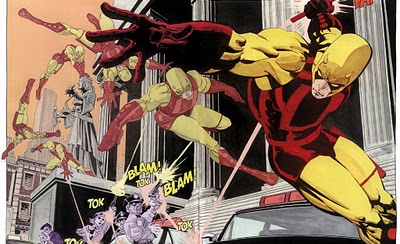
The first part of Tim Sale and Jeph Loeb’s informal ‘colours’ trilogy (Spiderman: Blue and Hulk: Grey being the rest of it), Daredevil: Yellow has a lot going for it beyond the two talents behind a trilogy of iconic Batman stories (Haunted Knight, The Long Halloween, Dark Victory). Cynics would describe it as the last classic that Loeb wrote. The truth is that it offers a wonderful eulogy for the carefree comic book stories of old, simple and ridiculous fare with simple storylines and clear-cut good guys and bad guys. It’s a nostalgia trip – which means it isn’t quite as compelling as the duo’s work on Batman – but it does lend the collection a nice feel to it. If you are in anyway interested in the olden days of comic books without the retro-post-modernism that typically accompanies such fare, this is the story for you.

Daredevil's come on leaps and bounds from his early days...

Continue reading