• Following Us

  • Categories

  • Check out the Archives


  • Awards & Nominations

Doctor Who: Colony in Space (Review)

To celebrate the fiftieth anniversary of the longest-running science-fiction show in the world, I’ll be taking weekly looks at some of my own personal favourite stories and arcs, from the old and new series, with a view to encapsulating the sublime, the clever and the fiendishly odd of the BBC’s Doctor Who.

Colony in Space originally aired in 1971.

Are you some kind of scientist?

I’m every kind of scientist.

– Caldwell and the Doctor

Colony in Space is an interesting story for many reasons. For one thing, it’s the first colour adventure to travel to another world. It was the first time since Jon Pertwee took over the title role that the character had been allowed to leave the surroundings of modern-day Earth. Even if he did land in a quarry. Colony in Space demonstrated the possibilities to tell futuristic and extraterrestrial stories in the new and remodelled version of Doctor Who, and the show began to slowly venture further and further afield over the next few years, with the Doctor finally regaining control of his TARDIS in The Three Doctors a little under two years later.

However, Colony in Space is also interesting because it is a script from Malcolm Hulke, who has really become one of the more Doctor Who script writers more inclined to pepper his scripts with political and moral philosophy. Colony in Space is an interesting exploration of those themes, even if it does run a little bit long in places. (That said, Hulke is one of the better writers of the six-part format in the show’s history.)
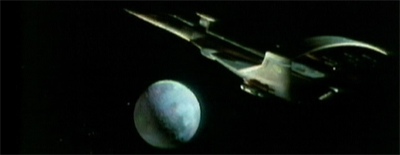
Go on, try to fight the urge to pronounce the episode title like "colony... IN SPACE!"

Go on, try to fight the urge to pronounce the episode title like “colony… IN SPACE!”

Continue reading

Doctor Who: The Claws of Axos (Review)

To celebrate the fiftieth anniversary of the longest-running science-fiction show in the world, I’ll be taking weekly looks at some of my own personal favourite stories and arcs, from the old and new series, with a view to encapsulating the sublime, the clever and the fiendishly odd of the BBC’s Doctor Who.

The Claws of Axos originally aired in 1971.

Are you trying to tell me you can absorb the total output of this complex in a police box?

Yes.

– Hardiman and the Master discover that self-confidence is a genetic Time Lord trait

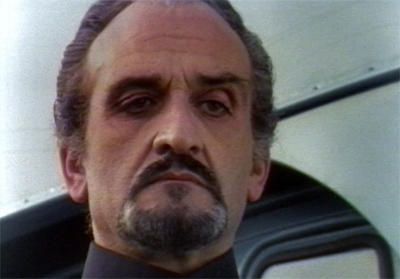
The Claws of Axos tends to come in for a fair bit of criticism for pretty much being the quintessential Earth-based Jon Pertwee story, with very little exceptional to distinguish it from the pack. Personally, I’m actually quite fond of it, perhaps precisely for that reason. I think you’re hard-pressed to find an adventure in the early part of Jon Pertwee’s tenure that so effectively and so efficiently captures the spirit of the show – both good and bad. That kind of makes The Claws of Axos stand out if only because it so perfectly embodies those early Pertwee years.

Eye see you…

Continue reading

Doctor Who: Terror of the Autons (Review)

To celebrate the fiftieth anniversary of the longest-running science-fiction show in the world, I’ll be taking weekly looks at some of my own personal favourite stories and arcs, from the old and new series, with a view to encapsulating the sublime, the clever and the fiendishly odd of the BBC’s Doctor Who.

Terror of the Autons originally aired in 1971.

That jackanapes! All he ever does is cause trouble!

– nice to see the Doctor taking the Master seriously

I think you can make a fairly credible argument that Jon Pertwee’s first season of Doctor Who stands out as one of the best years the show ever produced. Facing the challenge of migrating from black-and-white to colour, and forced to tell stories entirely set on present-day Earth, the writers and producers managed to craft a season of television that I think stands quite well when measured against the very best of vintage BBC science-fiction. Sure, there may have been walking shop-front dummies, lizard people, animal men and haunted space suits, but the stories were surprisingly mature and relatively clever. The writers used the framework of Doctor Who to tell four very good and very philosophical stories exploring both bold science-fiction high-concepts (alternate universes) and also moral quandaries (how humanity relates to the unknown).

Terror of the Autons is the first story in Jon Pertwee’s second season. I’m actually quite fond of it, and it’s packed to the brim with iconic imagery, so it’s very difficult to be too critical of it. After all, any adventure that left so large an impression on the public imagination must have something to recommend it. However, there’s a very clear sense of regression here. It seems, from this first serial of Pertwee’s second year, that the agenda has changed somewhat.

Terror of the Autons is arguably more indicative of Pertwee’s time in the lead role than any of those stories from his first year. It’s exciting, it’s fast-paced, it has a decidedly man-of-mystery feeling to it, but it also feels somewhat light and a little insubstantial. Not that there’s anything wrong with that, but it just feels like a definite regression.

Master of the Whoniverse?

Master of the Whoniverse?

Continue reading

Doctor Who: Scream of the Shalka (Review)

To celebrate the fiftieth anniversary of the longest-running science-fiction show in the world, I’ll be taking weekly looks at some of my own personal favourite stories and arcs, from the old and new series, with a view to encapsulating the sublime, the clever and the fiendishly odd of the BBC’s Doctor Who.

Scream of the Shalka originally streamed in 2003.

Doctor Who survived its cancellation across a variety of media. There were unofficial videos starring Colin Baker and Sylvester McCoy. There were audio plays. There were mountains of books. The BBC even came up with the clever idea of offering on-line content, with a series of illustrated audio plays, including the Seventh Doctor story Death Comes to Time and the Sixth Doctor adventure Real Time, as well as an adaptation of the aborted Douglas Adams serial Shada. Most of these were little more than powerpoints with sound playing over them. However, for the show’s fortieth anniversary, the BBC came up with an altogether more ambitious idea – a brand new fully animated adventure starring a new Doctor and promising a wave of new adventures, striving boldly forward into the new century.

The Doctor is in…

You can hear the serial, free, here.

Continue reading

My 12 for ’12: The Master & The American Century

I’m counting down my top twelve films of the year between now and January, starting at #12 and heading to #1. I expect the list to be a little bit predictable, a little bit surprising, a little bit of everything. All films released in the UK and Ireland in 2012 qualify. Sound off below, and let me know if I’m on the money, or if I’m completely off the radar. And let me know your own picks or recommendations.

This is #6

It’s very weird being a popular culture nerd who lives outside the United States. A significant portion of pop culture is exported directly from the United States. I grew up on Star Trek and Batman, two iconic American franchises. I probably know more about American history – filtered through feature films, television shows and other popular forms of entertainment – than school taught me about the origins of my own nation. Even then, it still feels a little strange to watch American film makers commentating on American situations, and to not only recognise but almost understand how those references work within the American subconscious.

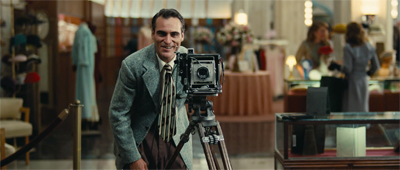
The Master is a fascinating exploration of post war America, the period where America well and truly emerged as the defining global power, where the country embraced economic prosperity and manifest destiny no longer referred to expansion out west, but a bold adventure into a promising future. In an article published shortly before America entered the Second World War, Henry R. Luce argued that the twentieth century was “the American century.” If it seemed that way before the conflict, it was all but certain afterwards. Of course, economic prosperity does not always bring with it a sense of peace and tranquillity, and The Master explores the sense of existential ennui that took root in a way that is, if you’ll pardon the pun, masterful.

themaster2

Continue reading

Non-Review Review: The Master

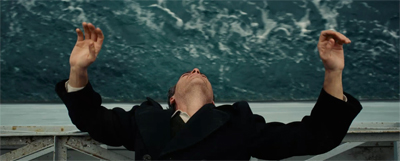
The Master is a boldly ambitious picture, if one that’s occasionally difficult to parse. Is it a character study of the two leads, the broken Freddie and dysfunctional Lancaster Dodd? Is it a commentary on the sudden material success and spiritual emptiness of fifties America, in the wake of the Second World War? Is it a study of the phenomenon and psychology of “cult”, with one particular cult in mind? The Master is all these, and probably a great deal more, and its only real flaw is that it never manages to truly fashion these multiple compelling facets into one fully realised whole. Still, that’s a comparatively minor complaint, when dealing with a movie produced with this level of technical craft.

All at sea…

Continue reading

A Little Gold Man, Far Away: Oscar Season as a Spectator Sport…

In case you hadn’t realised, Oscar season is in full swing. We’ve already had the Toronto International Film Festival. There’s already a front-runner in the form of The Master. The seemingly obligatory voting controversy has already been reported upon. Newspapers and on-line film websites are already launching their coverage of a race that won’t be over for another five months, despite the fact that many would argue the race probably already has a winner. And that discounts those websites already set up specifically for the race, which are (understandably) kicking into overdrive.

And I… find myself having difficulty mustering too much enthusiasm about it.

The show goes on…

Continue reading