• Following Us

  • Categories

  • Check out the Archives


  • Awards & Nominations

Doctor Who: Time-Flight (Review)

To celebrate the fiftieth anniversary of the longest-running science-fiction show in the world, I’ll be taking weekly looks at some of my own personal favourite stories and arcs, from the old and new series, with a view to encapsulating the sublime, the clever and the fiendishly odd of the BBC’s Doctor Who.

Time-Flight originally aired in 1982.

I’ve never heard such an extravagant explanation.

– Hayter’s gonna hate

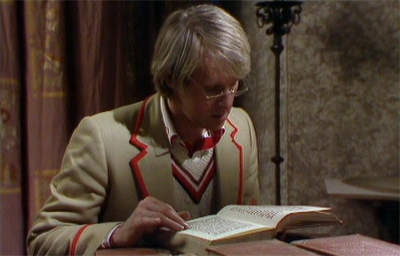
Time-Flight is a much maligned piece of Doctor Who, and hardly the best way to round out a season that has, generally speaking, done a reasonable job introducing a new lead actor following the departure of the most iconic actor ever to play the role. The show’s nineteenth season holds together reasonably well, with Earthshock generally highly regarded and only Time-Flight considered to be a complete failure.

And yet, despite that, I can’t hate Time-Flight. That’s not to suggest that the traditional criticisms of the serial are off-base. They are entirely spot-on. The production is shoddy, the plot is nonsense and the dialogue is terrible. It seems like everybody was trying to push one last story out the door before breaking for holidays, and nobody cared too much about the final product. And yet, despite that, I find myself able to forgive quite a lot of the show’s problems.

Don’t get me wrong. It’s not good Doctor Who. It’s not even passable Doctor Who. However, I’d argue that it is nowhere near the worst that the Davison era would produce.
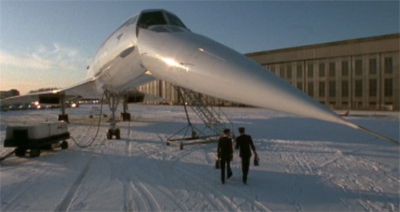
Keeping the nose clean...

Keeping the nose clean…

Continue reading

Doctor Who: Castrovalva (Review)

To celebrate the fiftieth anniversary of the longest-running science-fiction show in the world, I’ll be taking weekly looks at some of my own personal favourite stories and arcs, from the old and new series, with a view to encapsulating the sublime, the clever and the fiendishly odd of the BBC’s Doctor Who.

Castrovalva originally aired in 1982.

Welcome aboard. I’m the Doctor. Or will be if this regeneration works out.

– the Doctor greets Adric

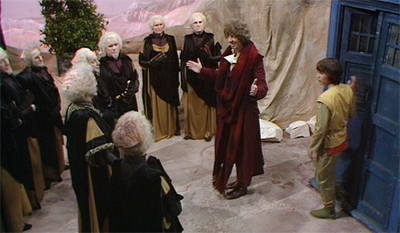
Tom Baker did seven years of Doctor Who. That is impressive. No matter which way you look it, and no matter how cynical you might be, it’s hard to argue that Baker’s departure wasn’t a fundamental and radical change to the series. In fact, his influence is so great that Castrovalva even opens with a rare pre-credits sequence, just to make sure that the viewers know that Baker is gone. (Despite the fact that John Nathan Turner apparently asked that the scene be shot so that the new season could open without having to show Tom Baker.)

Baker was going to be a tough act to follow. In fact, to many people, Tom Baker is still the Doctor. I don’t mean that in a sort of “stubborn fans refusing to acknowledge change” sort of way. I mean that in a “when The Simpsons make a Doctor Who reference they use Tom Baker” sort of way. He cast one hell of a shadow, and it’s hard to truly fathom how daunting it must have been to try and step out from that show.

That Peter Davison manages to do so is nothing short of amazing. Equally impressive is the fact that Castrovalva manages to be its own story. While it suffers – as with so many Bidmead scripts – from the fact that the technical limitations of the show can’t keep pace with his ideas, there’s still a lot to love here. And not just Peter Davison. Though he helps.

“Oh! The brainy specs!”

Continue reading

Doctor Who: Logopolis (Review)

To celebrate the fiftieth anniversary of the longest-running science-fiction show in the world, I’ll be taking weekly looks at some of my own personal favourite stories and arcs, from the old and new series, with a view to encapsulating the sublime, the clever and the fiendishly odd of the BBC’s Doctor Who.

Logopolis originally aired in 1981. It was the second instalment in the “Master” trilogy.

It’s the end… but the moment has been prepared for.

– the Doctor finally figures out what this year has been about

I don’t think the departure of a Doctor has even been a bigger deal than it was with Tom Baker. Sure, Christopher Eccleston’s first season was so fixated on death that his departure seemed preordained, even in the episodes written before his decision to leave. Similarly, Peter Davison’s final year seems designed to demonstrate that the universe is no longer suited to this particular iteration of the Doctor. Maybe David Tennant’s final year is focused on his passing, but the episodes are so spaced out that it makes little difference. However, we’ve just spent an entire year focused on the idea of entropy and decay, the inevitably of change and the notion that death is just a nature part of the cycle of things.

When the Doctor assures his companions that “the moment has been prepared for”, he may as well be looking at the camera, assuring those of us at home that the past year has been spent readying them for the unthinkable: the time when Tom Baker might not be the Doctor.

Final destination?

Final destination?

Continue reading

Doctor Who: The Keeper of Traken (Review)

To celebrate the fiftieth anniversary of the longest-running science-fiction show in the world, I’ll be taking weekly looks at some of my own personal favourite stories and arcs, from the old and new series, with a view to encapsulating the sublime, the clever and the fiendishly odd of the BBC’s Doctor Who.

The Keeper of Traken originally aired in 1981. It was the first instalment in the “Master” trilogy.

He dies, Doctor. The Keeper dies!

– Tremas heralds the end of an era

Of course, the entire season has been less than subtle about the point, but The Keeper of Traken is the point at which Tom Baker’s final season builds to critical mass, and reaches the point of no return. Entropy, decay and death have all been crucial ingredients in the year’s collection of adventures, but The Keeper of Traken is the point at which it seems like our character has set himself on an incontrovertible course, a path from which he cannot diverge. Baker’s approaching departure gives The Keeper of Traken a great deal of weight, and helps balance a story that might otherwise seem excessive or overblown. There’s melodrama here, but it feels strangely appropriate.

Lawrence Miles has argued that Logopolis was the funeral for the Fourth Doctor. If so, The Keeper of Traken is his wake – and it’s fitting that Irish poet and writer Johnny Byrne should provide this strangely lively (if morbid) celebration.

Hell of a wake...

Hell of a wake…

Continue reading

Doctor Who: The Last of the Time Lords (Review)

To celebrate the fiftieth anniversary of the longest-running science-fiction show in the world, I’ll be taking weekly looks at some of my own personal favourite stories and arcs, from the old and new series, with a view to encapsulating the sublime, the clever and the fiendishly odd of the BBC’s Doctor Who.

The Last of the Time Lords originally aired in 2007.

I just need you to listen.

No, it’s my turn. Revenge!

– the Doctor and the Master

I like quite a lot of The Last of the Time Lords. I think, for example, that Russell T. Davies does an exceptional job creating a version of the Master that manages to remain true to the character’s pantomime roots, while also seeming a credible threat and dark mirror to the Doctor. I also think that Martha’s character arc has a fairly logic and fluid conclusion. On the other hand, there’s a great deal about the resolution to The Last of the Time Lords that feels a bit rushed, a bit convenient, a bit tidy.

I’m quite fond of Davies’ writing style, but I’ll concede that he tends to favour theme and character over plot and structure. The Last of the Time Lords does an excellent job illustrating this, providing a bunch of fascinating thematic and character-based moments, but positioning them in a plot that doesn’t really work.

You know, for once I actually feel sorry for the Master...

You know, for once I actually feel sorry for the Master…

Continue reading

Doctor Who: The Deadly Assassin (Review)

To celebrate the fiftieth anniversary of the longest-running science-fiction show in the world, I’ll be taking weekly looks at some of my own personal favourite stories and arcs, from the old and new series, with a view to encapsulating the sublime, the clever and the fiendishly odd of the BBC’s Doctor Who.

The Deadly Assassin originally aired in 1976.

I deny this reality.

– the Doctor

The Deadly Assassin is a rather boldly experimental episode of Doctor Who. It’s the first story told without a companion character, and it also ventures quite forcefully into the realm of surrealism. It offers a rather bold deconstruction of the Time Lords, a rather cynical depiction of the aliens who had seemed all-powerful in stories like The War Games or The Three Doctors. More than that, though, The Deadly Assassin feels – appropriately enough – like a treatise on the inevitable death of Doctor Who.

Located in the middle of the fourteenth of twenty-six seasons, and broadcast thirteen years from both the start and the end of the show’s initial run, The Deadly Assassin seems to be positioned at the very heart of Doctor Who.

A rough outline of what's going on...

A rough outline of what’s going on…

Continue reading

Doctor Who: Frontier in Space (Review)

To celebrate the fiftieth anniversary of the longest-running science-fiction show in the world, I’ll be taking weekly looks at some of my own personal favourite stories and arcs, from the old and new series, with a view to encapsulating the sublime, the clever and the fiendishly odd of the BBC’s Doctor Who.

Frontier in Space originally aired in 1973.

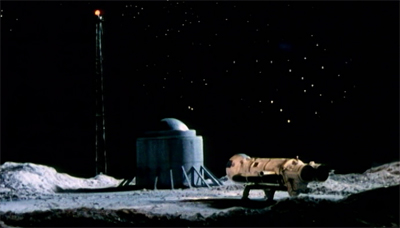
To celebrate the tenth anniversary of the show, the four-part serial The Three Doctors was produced. However, it was also decided that Jon Pertwee’s fourth season in the role should also contain something quite a bit grander than the average Doctor Who serial. Clearly intended to rival the epic (and lost) Daleks’ Master Plan in terms of scale and scope, an epic twelve-part adventure was conceived that would run across two back-to-back serials. It would open with Frontier in Space, before easing gently into Terry Nation’s Planet of the Daleks.

Unfortunately the adventure was never quite able to measure up to the series’ earlier Dalek epic, primarily due to problems with the second serial. Still, though somewhat weakened by the necessity to dovetail into the story directly following, Frontier in Space remains a rather wonderful example of the series on its largest scale, offering epic space opera with large-scale consequences.

Lost in space…

Continue reading

Doctor Who: The Sound of Drums (Review)

To celebrate the fiftieth anniversary of the longest-running science-fiction show in the world, I’ll be taking weekly looks at some of my own personal favourite stories and arcs, from the old and new series, with a view to encapsulating the sublime, the clever and the fiendishly odd of the BBC’s Doctor Who.

The Sound of Drums originally aired in 2007.

Doctor.

Master.

I like it when you use my name.

You chose it. Psychiatrist’s field day.

As you chose yours. The man who makes people better. How sanctimonious is that?

– the Doctor and the Master

The Sound of Drums is really more interesting than it is successful. Building off Utopia as the second part of a three-part finalé, building the longest single story in the revived Doctor Who, The Sound of Drums does an excellent job moving the characters along and getting everything where it needs to be for the requisite cliffhanger. Unfortunately, Davies’ weaknesses when it comes to plotting are at play here. While Utopia took advantage of a leisurely pace and conventional plot in order to do some nice set-up, The Sound of Drums doesn’t have that luxury. Utopia came out of left-field, with the last ten minutes taking the audience by surprise. Now the audience knows the game is afoot, so the rules have changed.

The Sound of Drums kicks off with everything in full swing, and Davies has to ratchet up the tension from there. The result is that Davies does solid character work, but that the plot points and set-ups occasionally feel a bit forced. That’s especially true when it comes to the ideas that will be important to the resolution of The Last of the Time Lords.

The End of the World... oh, wait, we already did that one...

The End of the World… oh, wait, we already did that one…

Continue reading

Doctor Who: Utopia (Review)

To celebrate the fiftieth anniversary of the longest-running science-fiction show in the world, I’ll be taking weekly looks at some of my own personal favourite stories and arcs, from the old and new series, with a view to encapsulating the sublime, the clever and the fiendishly odd of the BBC’s Doctor Who.

Utopia originally aired in 2007.

Ooo, new voice. Hello, hello. Hello. Anyway, why don’t we stop and have a nice little chat while I tell you all my plans and you can work out a way to stop me, I don’t think.

Hold on. I know that voice.

I’m asking you really properly. Just stop. Just think!

Use my name.

Master. I’m sorry.

Tough!

– the Master, Martha and the Doctor welcome a new old face back

It’s very hard to talk about Utopia without seguing into talking about The Sound of Drums or The Last of the Time Lords. Certainly the third season finalé is the most ambitious of Russell T. Davies’ end-of-season adventures. It’s a three-part adventure, the equivalent to one of those classic gigantic six-part serials. If you accept that logic, it breaks down neatly into the old two-parter-and-four-parter format that the writers used to use to prevent an extended story from dragging too much.

Utopia, of course, serves the function of the two-parter in this classic structure – the smaller chunk of the episode with its own plot points and characters and settings, but with very definite connections to the rest of the adventure. However, I’d argue that Utopia is a lot more successful than either of the two episodes following, and a lot of that stems from the fact that it devotes a considerable amount of time to quietly setting up plot points and characters that will pay off down the line.

It’s also a powerful subversion of the fundamental ethos of Doctor Who, which makes it particularly effective as we head into two episodes where the Master hijacks not only the TARDIS but the show itself.

No time like the end of the universe...

No time like the end of the universe…

Continue reading

Doctor Who: The Dæmons (Review)

To celebrate the fiftieth anniversary of the longest-running science-fiction show in the world, I’ll be taking weekly looks at some of my own personal favourite stories and arcs, from the old and new series, with a view to encapsulating the sublime, the clever and the fiendishly odd of the BBC’s Doctor Who.

The Dæmons originally aired in 1971.

I’ve bought you a nice cuppa, Sergeant. I hope you like china.

For goodness sake, Miss Hawthorne.

What’s the matter? Don’t you like tea?

Something’s gone badly wrong. We’ve no idea what’s happening to Miss Grant and the Captain, the Doctor should be back here by now, I can’t get through to the Brigadier and you’re nattering on about tea.

You must learn the art of waiting, Sergeant. The Doctor will come, or else he won’t, and that’s all that can be said. Now, milk or lemon?

– Miss Hawthorne helps Sergent Benton get his priorities straight

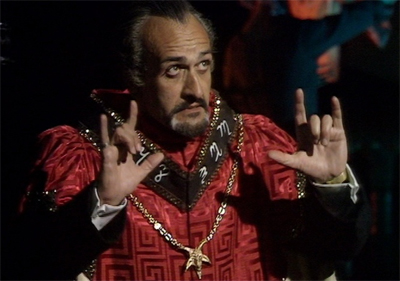
Barry Letts was a very talented man. I feel like I don’t stress that often often. I’ll freely concede that the UNIT era isn’t my favourite part of Doctor Who history, but there are times when you really have to admire the skill and competence of Letts as the show’s producer. In fact, he served as both a director and a writer on the series. He had a very clear vision for the show, and he implemented it remarkably well, to the point where his work on the show still stands out as something quite distinguished from the work of other producers.

The Dæmons is a very clear illustration of just how carefully and how thoughtfully Letts had overhauled the show for the seventies. While it’s not the most Letts-ian episode ever produced (he would produce, write and direct Pertwee’s final episode, Planet of the Spiders), but it is a great illustration of Letts’ approach to the programme and perhaps a testament to his lasting legacy.

Rock on, you crazy Master...

Rock on, you crazy Master…

Continue reading