• Following Us

  • Categories

  • Check out the Archives


  • Awards & Nominations

Night Stalker – Pilot (Review)

This January, to prepare for the release of the new six-part season of The X-Files, we’re wrapping up our coverage of the show, particularly handling the various odds and ends between the show’s last episode and the launch of the revival.

If you want to examine at the impact of The X-Files on mainstream American television, there are worse places to look than Night Stalker.

Sure, the show only ran for six episodes before it was cancelled, but its very existence speaks to the legacy and success of The X-Files. Night Stalker was a revival of a failed seventies cult television show commissioned by Touchstone Television and broadcast on ABC, one of the “big three” American television networks. More to the point, the network had tasked a veteran producer of The X-Files to oversee production of the show. The network scheduled their Night Stalker relaunch on Thursday nights, against the ratings juggernaut of CSI.
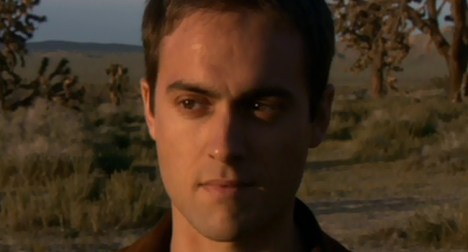
Night Stalking, deserves a quiet night...

Night Stalking, deserves a quiet night…

This was not a scrappy young network taking a creative gambit on an unknown property because they had nothing to lose; this was a substantial investment by a major player in a property that was largely forgotten outside of cult circles and which had failed the last time that it had come to television. It was very much a creative decision based on what had been learned from the success of The X-Files; handled properly, a seemingly marginal and fringe property could grab the national attention. The major networks had been paying attention.

In a way, the success of CSI at the turn of the twenty-first century was proof of this; a forensic thriller populated by idiosyncratic characters with an emphasis on stylised direction. ABC had committed to this idea with Lost, which launched in September 2004. Debuting a year later, Night Stalker found the network doubling down on the premise. Although the twenty-first century televisual landscape owed a debt to The X-Files, Night Stalker would be perhaps the most obvious successor. At least until Fringe came along three years later.
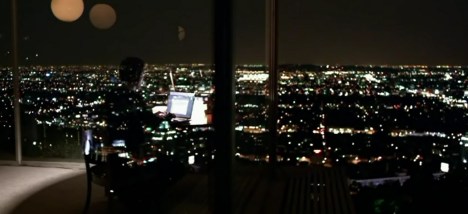
Playing all the angles on the City of Angels...

Playing all the angles on the City of Angels…

Continue reading

The X-Files – The Beginning (Review)

This July, we’re taking a trip back in time to review the sixth season of The X-Files and the third (and final) season of Millennium.

The more things change, the more they stay the same.

The opening shot of The Beginning makes it quite clear that things have changed. The camera opens staring at the sunny cloudless sky of California, doubling for Arizona. It pans down to an open desert. As the production team conceded with Anasazi, the desert was just about the only American environment that Vancouver could not easily mimic – to the point where the team had to paint rocks red in order to convincingly set a scene in New Mexico. California makes for a much more convincing desert.

Bursting on to the scene...

Bursting on to the scene…

The contrast is striking. The sixth season of The X-Files is bright and sunny; it is aware of its new production reality and chooses to embrace them rather than pointlessly resist them. Things had changed, and there was nothing to be gained from pretending otherwise. It is no wonder that the opening sequence of The Beginning features a group of working-stiff conspirators in transit; the perfect opening image for a season still figuring out how Los Angeles works. The Beginning loads all of that into its opening shot, getting it out in the open before it gets down to business.

At the same time, The Beginning is keen to stress that not too much has actually changed. The naming of the fifth season finalé and the sixth season premiere is decidedly symmetrical – The End and The Beginning. In fact, naming the second part of a two-part episode “The Beginning” is a very clear attempt at reassurance. It is a beginning without actually being a beginning; it is a conclusion without actually being a conclusion. The wheel keeps on turning. All that is missing is the ouroboros.

Dude, that's totally not sterile...

Dude, that’s totally not sterile…

The closing shot as much as confirms this, revealing that the bold new alien design revealed in The X-Files: Fight the Future is not so bold and new after all. Instead, the monster obviously inspired by Alien is something of a missing link, a tether connecting the grey aliens seen in episodes like Duane Barry to the black oil introduced in Piper Maru. It is all one big circle in perpetual motion. Everything is connected. Everything fits together. The show might have moved two thousand miles south, but it hasn’t missed a step.

For better or worse, The Beginning is about assuring viewers that – no matter what has changed – everything remains the same. It is up to the viewer to decide whether that is a good or a bad thing.

The truth is in there...

The truth is in there…

Continue reading

The X-Files – Season 5 (Review)

This May and June, we’re taking a trip back in time to review the fifth season of The X-Files and the second season of Millennium.

The fifth season of The X-Files represents the height of the show’s popularity.

Bookended by the production and release of the motion picture, the fifth season also earned the highest overall Neilsen ratings of any of the show’s nine seasons. The X-Files was a cultural force to be reckoned with, and had come a long way from its origins as little-seen cult television show. In the late nineties, it seemed like it wasn’t just aliens conspiring to colonise the planet; Chris Carter and his team were doing a pretty good job of it themselves. The fifth season has all the swagger and confidence of a show enjoying the view as it stands on top of the world.

xfiles-postmodernprometheus33

The fifth season might not be able to match the third season for consistency from episode to episode. The fifth season might also struggle to match the breathless ambition of the fourth season’s best (and wildest) episodes. However, it is a highly enjoyable season of television on its own terms. The season feels a little more relaxed and organised than the fourth season, and more confident in itself than the third. The fifth season even makes better use of its own internal themes and motifs than any of the previous seasons, with most of the staff seemingly on the same page.

Oddly enough, this thematic consistency does not translate into clear or fully-formed arcs. Unlike the second season of Millennium, it seems like the fifth season of The X-Files has no real idea of where it is going or how it wants to get there. This is slight problem when the fifth season needs to build to a feature film that was shot in the gap between the fourth and fifth seasons. The X-Files gets a lot of credit for popularising serialised storytelling on prime-time television, but the fifth season demonstrates just how sloppy the show could sometimes be in that regard.

xfiles-badblood10

Still, this is a minor problem. With only twenty episodes, the fifth season is the shortest season of The X-Files produced at this point in the show’s history. The ninth season would run the same length, but there is an argument to be made that it is technically the shorter season; The Truth was written and broadcast as a single feature-length episode rather than two individual episodes. However, production necessities required a lot of innovation and experimentation in the fifth season, leading to a very playful and very off-format season of television.

While it is probably very difficult to argue that the fifth season of The X-Files was the show’s best run of episodes, it is a highly enjoyable collection of shows that brings together a lot of what was so much fun about The X-Files. The last season to be filmed in Vancouver, and the season that moves us closer to the end of the series than the beginning. Although certain segments of fandom would argue that it is the last truly great season of The X-Files, that feels unduly harsh to both the sixth and eighth seasons. Nevertheless, it is thrilling to watch a show so thoroughly enjoying its moment in the sun.

xfiles-theend32

Continue reading

The X-Files – The End (Review)

This May and June, we’re taking a trip back in time to review the fifth season of The X-Files and the second season of Millennium.

The End is a watershed moment for the show.

There is a reasonable argument to be made that The End accomplishes very little in terms of narrative. It doesn’t really do a great job bridging to The X-Files: Fight the Future. It certainly doesn’t do a great job wrapping up any of the show’s long-running concerns. Indeed, it adds two characters who will go on to become major (if controversial) players in the show’s overarching mythology. Even the big dramatic twist at the end of the episode feels familiar, with The End closing on a more memorable visualisation of the cliffhanger to The Erlenmeyer Flask.

Burn, baby, burn...

Burn, baby, burn…

Nevertheless, The End does feel like an end of sorts. It closes out five seasons of The X-Files. Carter had suggested in interviews that he only wanted to do five seasons of the show before transitioning into feature films, and so The End marks the conclusion of the run that Carter had originally planned for the show. After all, The X-Files had crossed the hundred episode mark earlier in the year. It was ripe for syndication. It was at the stage where Fox and Ten Thirteen did not need to keep the show on the air to keep printing money.

At the same time, The End marks another more definitive sort of end. It would be the last piece of The X-Files to be filmed in Vancouver until The X-Files: I Want to Believe a decade later. Vancouver was a part of the show’s DNA. It had been the show’s production hub since The Pilot. More than two decades later, The X-Files would return to Vancouver for its six-episode wrap-up miniseries. Discussing the revival, Carter argued that Vancouver was “a natural place to make a show like The X-Files.” Certainly, the mood and atmosphere lent itself to the series.

"My video collection!"

“My video collection!”

So The End marks a fond farewell from the production team to a city and region that had served them well.  In that respect, it feels like a more definitive sort of ending. The End opens with a scene that is confident enough to let Canada be Canada. As with the opening scene of Herrenvolk, it is almost comical how hard The End flags its “and starring Canada as Canada” cred, to the point where a mountie rushes to the aid of an assassination victim. The closing scene of The End burns down the show’s most iconic and memorable sets.

While The End is not necessarily a satisfying mythology episode or season finalé in its own right, it does feel like a suitably big moment in the evolution of the show.

Smoking gun...

Smoking gun…

Continue reading

Non-Review Review: Entourage

Entourage is surprisingly inoffensive.

It has been four years since HBO’s showbiz comedy went off the air. In many respects, Entourage feels like a class reunion – even to somebody unfamiliar with the source material. There is a lot of affection here, no real sense of tension or stress. Everybody is perfectly comfortable, and the entire film has the feeling of something that everybody involved has been doing for quite some time. Anything that looks like a rough edge has been smoothed off, so the film glides along without any meaningful obstruction.

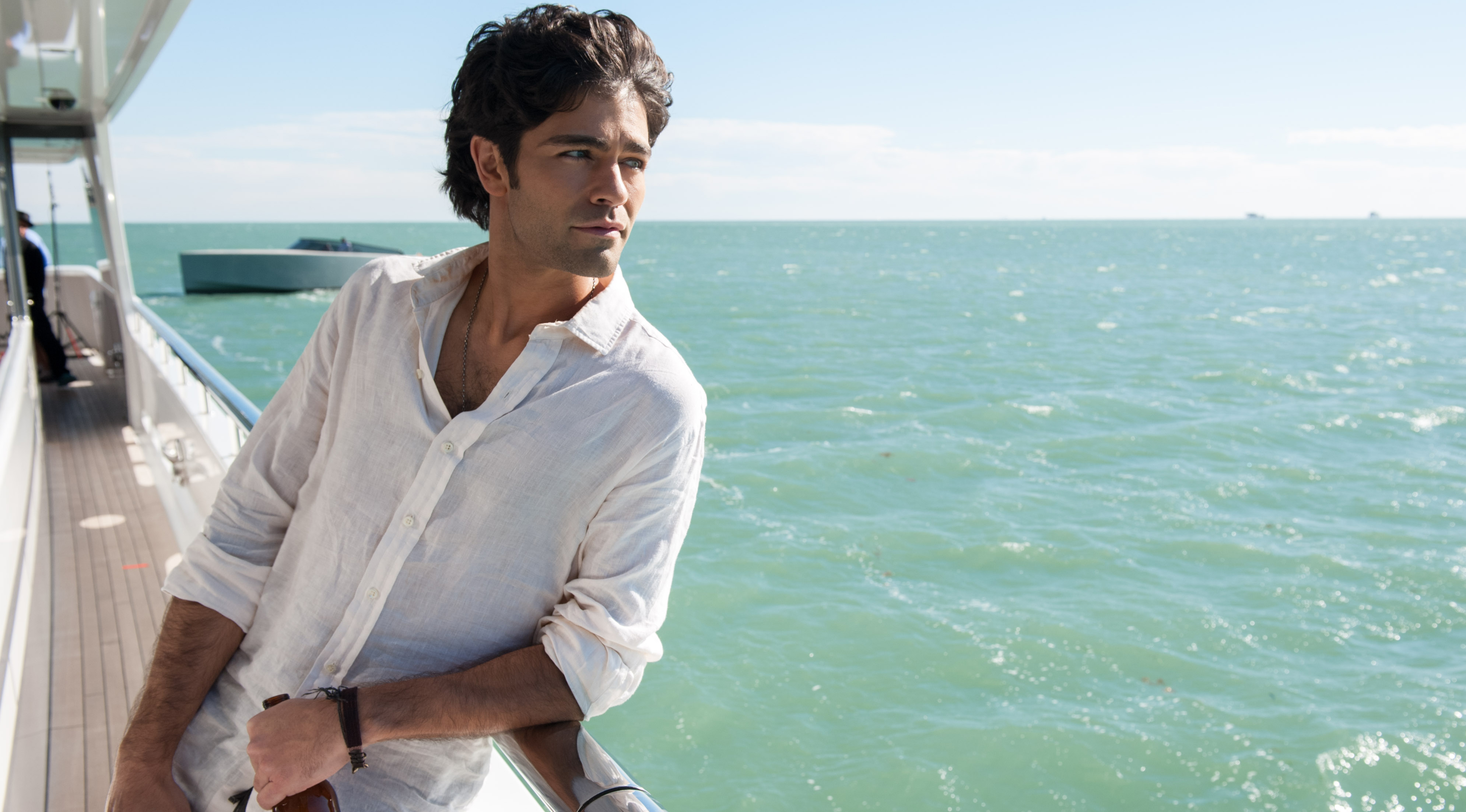
All at sea...

All at sea…

Entourage is not a great film on its own terms. However, it is not trying to be. Instead, it feels like an affectionate slice of nostalgia. It is telling that most of the cameos in the film tend to nod towards older actors and audiences. At one point, Johnny “Drama” Chase reflects that he was cast in the table read of The West Wing and he finds himself competing for roles against David Faustino of Married With Children. Faustino is just one cast member of Married With Children to cameo. Entourage feels familiar and safe, and entirely comfortable with those attributes.

The result is a functional cinematic adaptation for a show that probably did not need one. The stakes in Entourage never feel particularly high, the characters never seem particularly worried. It seems like Entourage was produced in the same way that it was intended to be enjoyed – in a rather relaxed and cordial fashion, without any real verve or energy.

Going for Gold...

Going for Gold…

Continue reading

Millennium – Wide Open (Review)

This February and March, we’re taking a trip back in time to review the fourth season of The X-Files and the first season of Millennium.

The middle stretch of the first season of Millennium is preoccupied with suburban horror.

In The Well-Worn Lock, Wide Open and Weeds, Millennium presents the audience with threats to supposedly “safe” suburban families. In each case, the threat is shown not to come from outside these homes, but is instead nestled snugly inside. In The Well-Worn Lock, Joe Bangs is a respected family patriarch and a monster. In Weeds, Edward Petey is both an active member of his gated community and a predator. Wide Open is perhaps a little more sensationalist, featuring a serial killer who sneaks into houses that are on display, hiding inside until after dark, and then brutally murdering any adults in the home.

Home (in)security...

Home (in)security…

There is an intriguing thematic continuity here between what might loosely be termed “the suburban trilogy.” Indeed, Weeds was shuffled around in the broadcast order so it would not air directly after Wide Open, perhaps because of this similarity. This thematic continuity is quite striking, like the presence of Scully proxies and surrogates in the stretch of the second season of The X-Files running from One Breath to Irresistible or the subtle fixation on “cancer” from the end of the third season into the fourth season of The X-Files.

Like The Well-Worn Lock before it and Weeds after it, Wide Open is not particularly elegant in its meditations about suburbia under siege. The story is a bit clunky, prone to the same trashy exploitative excess that can be found in some of the weaker moments of the first season. Nevertheless, Wide Open largely works – it manages to tap into a fairly universal fear in a decidedly unsettling manner, inviting the audience to wonder whether there may actually be monster lurking in their own closets or under their own beds.

Standing guard against the world...

Standing guard against the world…

Continue reading

Non-Review Review: Inherent Vice

In many ways, Inherent Vice resembles its central character – former-hippie-turned-private-investigator Larry “Doc” Sportello.

Inherent Vice is prone to ramble and meander, stumbling across its central conspiracies as much by fate as by actual investigation. The logic is fuzzy, but the genius is clear. Navigating a complex web of seventies paranoia, it often seems as if Inherent Vice is playing a game of free association between its themes, stumbling upon some higher meta-physical plane where all the evils of the world (or, at least, Los Angeles) are connected by threads almost imperceptible.

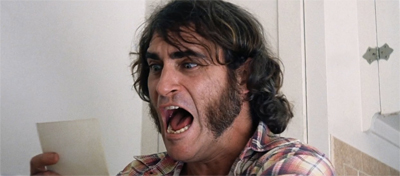
Bad trip...

Bad trip…

Both Inherent Vice and Doc are hooked on their own particular drugs. Over the course of Inherent Vice, Doc makes it quite clear that heroine is just about the only dope he won’t take into his body. Inherent Vice itself is drawn the delightfully trippy far-out prose of Thomas Pynchon, with Paul Thomas Anderson’s script pausing intermittently to dump large quantities of existential musing on to the market. If Pynchon’s prose didn’t flow eloquently from actresses like Katherine Waterston and Jeannie Berlin, the audience might complain.

Running almost two-and-a-half hours, Inherent Vice is more than a little indulgent. Luckily, it is more than a little brilliant as well.

Lawyer up...

Lawyer up…

Continue reading

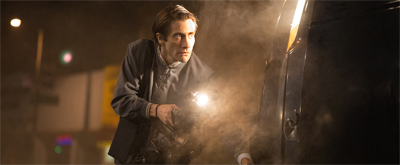
Non-Review Review: Nightcrawler

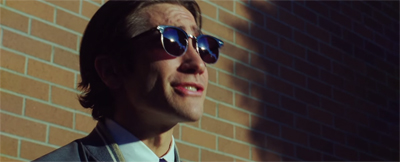
Nightcrawler features a tour de force performance from Jake Gyllenhaal.

Gyllenhaal plays Louie (“call me Lou”) Bloom, a wandering and lost soul who stalks late-night Los Angeles in search of a lucrative pay-day. He is just trying to get his foot on the ladder any way that an entrepreneurial young gentleman can – he’s introduced stealing construction supplies and scrap metal so he can sell them on, seguing effortlessly into a well-rehearsed job pitch applying for an unpaid internship.

nightcrawler

Bloom seems like a man who has watched people from a distance for years, almost through a filter. Gyllenhaal injects a haunting eccentricity into the character, his wide eyes and practised stillness almost edging Bloom into the uncanny valley. Though he seems to always know just what to say, there’s something distinctly inhuman about Lou Bloom. He watches people, but from the outside. He has got a pretty passable impersonation of a human being down, but there’s just something missing.

Nightcrawler is a fascinating, harrow and occasional wry look at desperation and ruthlessness – and the heady cocktail they make when blended together.

nightcrawler1

Continue reading

Star Trek: Deep Space Nine – The Abandoned (Review)

The September and October, we’re taking a look at the jam-packed 1994 to 1995 season of Star Trek, including Star Trek: Deep Space Nine and Star Trek: Voyager. Check back daily for the latest review.

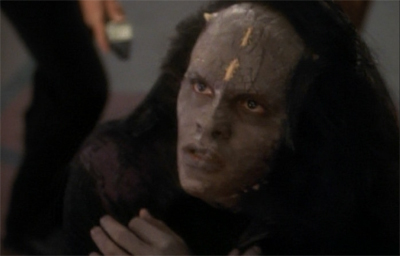
The Abandoned is a problematic episode.

It’s brave and provocative and challenging, but it’s also incredibly grim and cynical. In fact, it is probably the most relentlessly pessimistic episode of Star Trek: Deep Space Nine‘s third season. And, given the episodes surround it, that is quite an accomplishment. Deep Space Nine has subverted classic Star Trek storytelling before. The Maquis was really a watershed moment for the series, suggesting that paradise itself might be unsustainable – attacking Roddenberry’s utopia rather brutally.

However, The Abandoned pushes things even further. There’s a social and racial subtext to this episode that grounds it in the racial politics of Los Angeles in the mid-nineties. The story of a young angry drug-addicted killer can’t help but feel associated with the increased profile of Los Angeles’ gangland in the early-to-mid-nineties. Casting the episode’s young Jem’Hadar soldier using African American actors invites this comparison, something that director Avery Brooks himself has conceded.

The racial politics of The Abandoned are decidedly uncomfortable, but they are clearly meant to be. Still, there’s something rather cynical and pessimistic about the episode’s conclusion that this young boy cannot be saved from a life of brutality and violence.

A Jem?

A Jem?

Continue reading

Jameson Cult Film Club: Die Hard

I had the pleasure of attending Wednesday evening’s Jameson Cult Film Club screening of Die Hard. As we’ve come to expect from the guys, it was a wonderful evening hosted in the Tivoli Theatre, from the black-and-white cop car waiting to greet us outside right down to the cut out copy the Nakatomi lobby sculpture, the team clearly put the usual amount of love and affection into crafting an immersive experience for the audience.

(My personal favourite moment was the decision to announce that the film would be starting shortly by having an Alan-Rickman look-alike and his goons storm the dance floor. It was a lovely touch, particularly given the decision to have the directions shouted by the gun-weilding goons rather than the Rickman impersonator.)

Photos and more after the jump.

Click to enlarge.

Click to enlarge.

Continue reading