• Following Us

  • Categories

  • Check out the Archives


  • Awards & Nominations

Maniac (Review)

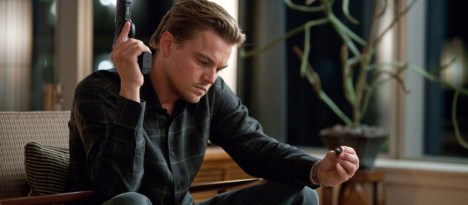
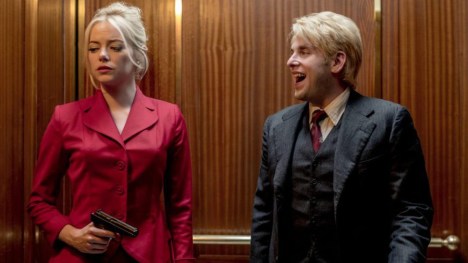
Maniac is Inception meets Cloud Atlas, filtered through a prism of eighties retrofuturism.

That is to say that Maniac will not be for everybody. Indeed, there will be very many people for whom Maniac will simply not work, seeming too weird, too strange and too esoteric. Indeed, it often seems like Maniac is being weird for the sake of being weird, often populating even fairly standard character- or dialogue- driven scenes with small uncanny elements like a foul-mouthed purple robotic koala or a mostly-unseen alien ambassador with a “beautiful blue exoskeleton.” These elements often exist for their own sake. Even when they serve as symbolism, they are often deliberately obtuse.
No Stone unturned.

However, the surreal and contradictory imagery that populates Maniac is a large part of what makes the series so interesting. The bizarre dream-like imagery is very much at the core of Maniac, a bizarre fantasia where everything might possibly be a stand-in for something else or might simply have been plucked half-formed from the imagination with no deeper meaning. Maybe the beautiful alluring alien represents the hawk that a young boy took into his room; maybe the alien represents the predator brother that a young man wants to protect. Maybe sometimes a beautiful blue alien is just a beautiful blue alien.

Maniac is sure to be a polarising experience. Marmite for the television era. Indeed, based on early reviews, it already is. However, it is also a brilliant piece of work; inventive, demented, committed, affecting. This kooky cocktail won’t click with every viewer, but it’ll resonate deeply with those drawn in.
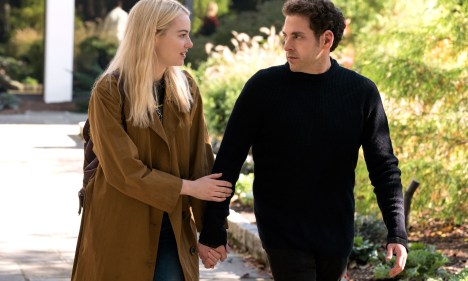
Taking the matter in hand.

Continue reading

Dunkirk and Issue of Genre Legitimacy

The release of Dunkirk has been interesting in many ways.

Most obviously, it seems to confirm Christopher Nolan as a brand name unto himself, managing to open a blockbuster war movie with no stars to speak of to impressive box office results in the middle of July. The film has been widely acclaimed, both by critics and by movie-goers; it scores well on Rotten Tomatoes, Metacritic, IMDb and CinemaScore. There is already talk of a massive Oscar push for the film, with reports of Academy screenings being so packed that additional screenings had to be scheduled.

However, beneath all of this success, there is an interesting narrative forming. There is a recurring suggestion that Dunkirk is not just a great piece of cinema from an incredibly talented director, but that it in some way represents a maturing of Nolan’s talent. Some of the critical narrative of Dunkirk has been framed almost as a cinematic “coming of age” story for Christopher Nolan, as if the veteran forty-six-year-old film maker is finally delivering on potential that has been teased over the past seventeen years.

In a not-untypical comment, David Fear at Rolling Stone reflected, “Everyone knew he had a mastery of the medium. Dunkirk proves he knows how to use it say something.” At The Guardian, Andrew Pulliver suggested that Nolan had finally earned one of the stock comparisons that had been (misguidedly) following him for most of his career, “With Dunkirk, Nolan may at last be able to walk the Kubrick walk.” The implication seems to be that Nolan’s previous nine films were all creative dry runs, cinematic confectionery suggesting (but never delivering on) true artistic talent.

This is, of course, complete nonsense. Nolan arguably established himself as a bona fides film maker with Memento, which was an impressive theatrical debut. Memento was structurally ambitious, thematically rich, and exceptionally clever. Nolan followed that up with Insomnia, a remake of a Scandinavian thriller. He then segued into a big-budget reimagining of the Batman mythos with Batman Begins, The Dark Knight and The Dark Knight Rises, interspacing them with his own projects of interest, The Prestige, Inception and Interstellar.

Whatever an audience member might make of individual films on that resume, and some are undoubtedly better than others, it seems quite clear that Nolan has been doing good work for a long time. Dunkirk is not a break in the pattern. It is in many ways a continuation and extrapolation of his earlier work. It is not so much a quantum leap forward in terms of technique, but simply a nudge in a different direction. So, why is Dunkirk being treated as a vital moment in Nolan’s career? It seems likely because Dunkirk belongs to a much more respectable genre than its Nolan stablemates.

Continue reading

Tryin’ to Throw Your Arms Around the World: Oscars 2011

You know what? I’m not actually that ticked off with the Academy Awards this year. In fact, as I mentioned in discussing the nominees, I was quite happy with the candidates up for the award. Now, nearly a week after the ceremony, I must concede that I’m generally relatively happy with the way that the awards were divided up on the night. CinemaBlend summed up the ceremony as a “group hug” to movies released in a great year for cinema, and I find it hard to object to that succinct summary.

By all accounts, the hosting was a bit of a drag...

Continue reading

How Learnt to Stop Worrying and Love the Oscars…

This is a bit of a belated reaction to the Oscar nominations announced last Tuesday. Going in, I was pretty much agreed with the general consensus – in fact, the only prediction I really bothered to make was that Christopher Nolan would be snubbed in the Best Director categoryagain. A lot of people were surprised that he was omitted, but I really wasn’t – the Academy has made some cosmetic changes, but there’s still that sense of elitism which excludes the director of “common” blockbusters. Anyway, perhaps it’s because I predicted it, but I’m actually fairly okay with the list of nominees this year. When the one snub is the snub you see coming, there’s really not too much to complain about.

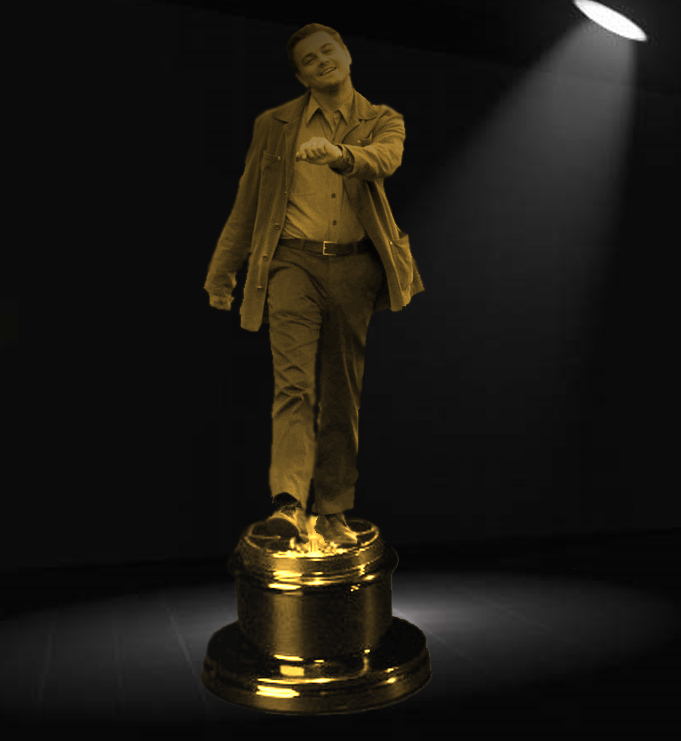
Leo won't be strutting to the Oscars this year...

Continue reading

Are the Oscars Still a Pipe Dream for Christopher Nolan?

As I write this, the clock is counting down. The Oscar race is in full swing. And I look back, and I really haven’t written too much about it. There are two reasons for this. The most obvious is that I haven’t seen too many of the contenders. Of the headliners, I have seen both The King’s Speech and The Social Network. I have yet to see The Black Swan, 127 Hours or True Grit. Of the lower-tier Oscar films, I have really only seen Inception and The Kids Are All Right. It isn’t that I don’t want to see them, it’s just that it has been a busy January and things have gotten in the way. The other reason I haven’t been blogging about it is because – barring what the competition between The King’s Speech and The Social Network says about the Academy – it has been a pretty bland year. There are so many “locks” that the race has become almost boring. In fact, the only real question I’m at all concerned about is whether Christopher Nolan will finally get that Best Director nomination he so sorely deserves.

Could this turn the Oscars upside down?

Continue reading

10 out of 10: The Ten Best Movies of the Year

Contrary to popular opinion, I was actually relatively impressed with 2010 as a year in cinema. It was no 2008, with a consistent string of impressive hits (both big and small). However, it wasn’t as bitterly disappointing as 2009 was, with letdown after letdown. Sure, there weren’t that many hugely successful sequels or reboots, but the vast majority of them weren’t soul-destroying wastes of film. So I’m quite happy. This year I actually had to cut several items from the list to get it down to a perfect ten.

Continue reading

10 for 10: Top Ten Movie Moments of the Year

Tomorrow, I’ll be revealing my top ten movies of the past year. It should be a fairly straightforward list, and – to be honest – there won’t be too many surprises on it. Anyway, I thought I’d put together my list of the top ten “moments” from the past year. As ever, I’m Irish – so I’ve yet to see the major crop of Oscar nominees – but it’s worth keeping in mind that there isn’t really a major overlap between this and the list of the best pictures. Some of the best movies didn’t have iconic moments, while some of the best moments were in otherwise lackluster films. Some good movies had great moments, and some great movies had simply okay moments. So, with the rules out of the way, let’s get this countdown under way!

Continue reading

Too Much of a Good Thing: Why Inception Might Be Best Left as One of a Kind…

Apparently Warner Brothers want a sequel to Inception. That’s a long way from the earlier rumour that Inception was a “gift” to Nolan, almost a sort of bribe in order to keep him on board for Batman 3 (or, as it shall henceforth be known, The Dark Knight Rises), and one that the studio was never really 100% certain about. While I’m delighted the movie turned out to be successful enough to warrant a sequel, I can’t help but hope that it is never produced or released.

This announcement knocked me for a loop...

Continue reading

Why The Social Network isn’t an “Outside” Choice for Best Picture…

I enjoyed The Social Network. Hell, I loved The Social Network. I think it’s easily one of the best films of the year. It has – deservedly in my humble opinion – generated a huge amount of buzz about the Best Picture Oscar. However, the more interesting facets of discussion measure the film against the other favourites, like The King’s Speech or Black Swan. A number of these arguments suggest that The Social Network deserves the Oscar because it is “more socially relevant”, even painting the Oscar voters at a crossroads – forced to choose between a modern film (The Social Network) and a classy but stuffy period piece (The King’s Speech). However, I find this argument rather disingenuous. While the Oscar voters in that situation would undoubtedly be choosing between two solid films, I think it clearly misrepresents the appeal of David Fincher’s deconstruction of the American Dream.

Will Academy voters be getting a friend request?

Continue reading

Anatomy of a Backlash: Intercepting Inception Criticisms…

It’s always interesting to watch the reaction to a highly anticipated blockbuster. Sure, most of the time it hits like a drop in the ocean: there’s a moment of anticipation as it travels through the air and a slight reverberation as it joins the rather sizeable pool of existing movies, quickly forgotten or accepted. However, sometimes – if the movie is big enough – you get a slightly more complex reaction. That second before it hits the water becomes longer, the audience holds its breath even tighter and then, when it hits… there are reactions. The first wave, usually one of acceptance – the geekery, the exotic embrace, the types of reviews that push a Rotten Tomatoes score up to 100% before it even gets a wide release. Then there’s the second wave, as a few high-profile commentators dare to speak out against the film – usually reviewers from prestigious publications, usually as release day dawns. There’s a third movement, perhaps in direct response to the above – the rapid fanboy passion, one determined to lock down any criticism, sometimes aggressive, just sometimes caught up in the moment. And, if the film is really big, there’s a fourth wave, the public backlash against the film itself. It’s interesting to watch a movie cycle through these four basic events, like Inception certainly has of late. There are ripples across the internet, and waves of discussion and engagement, which is always great to see. However, it’s somewhat less exciting to witness how bitter criticisms and arguments can become.

It's all a bit topsy-turvy...

Continue reading