• Following Us

  • Categories

  • Check out the Archives


  • Awards & Nominations

Non-Review Review: The Babadook

Monsters are real.

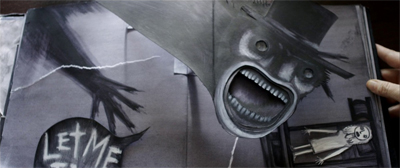
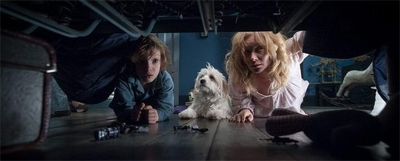
We all have our own monsters that we keep with us over our lives. “You can’t get rid of the Babadook,” a mysterious storybook threatens early in the runtime of The Babadook. Young Samuel tries to warn his mother Amelia about the monster lurking in the dark spaces – under the bed, in the closet, in the corner of his eye. He offers one rather sage bit of advice when it comes to such creatures. “You have to let it in.”

thebabadook1

Writer and director Jennifer Kent has crafted a superlative creature feature with The Babadook, acknowledging the metaphorical nature of monsters. These strange nightmares tend to stand in as expressions of guilt or anxiety. They give expression to thoughts and fear we could never properly articulate. The Babadook teases its audience with questions about the reality of the eponymous creature.

Is the strange “Mr. Babadook” something that truly exists, or is it something Samuel (and maybe Amelia) have created to cope with a horrific trauma?

thebabadook2 Continue reading

Non-Review Review: Friday the 13th, Part II

There is something almost endearing about how direct the Friday the 13th film series is, how comfortable it is in its skin.

There are arguments to be made that the original Halloween and Nightmare on Elm Street are genuine cinematic classics, that are frequently underrated because they were followed by decades of sequels, knock-offs, reboots and remakes. Although they rapidly devolved into franchise zombies, Halloween really jump-started a cinematic genre, and Nightmare on Elm Street was slyly post-modern.

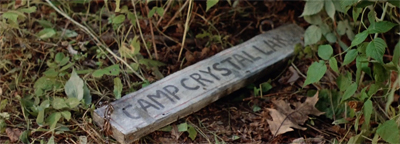
Somebody didn't read the signs...

Somebody didn’t read the signs…

In contrast, the Friday the 13th films have no such pretension. Instead, the Friday the 3th films exist as pure and uncompromising slasher schlock. Hack and slash and slice and dice. The Friday the 13th film series is powered not by central themes or ideas, but by a simply desire to churn out movies in which attractive and generic characters get brutally slaughtered. It is a ruthlessly efficient model; there were eight Friday the 13th films released between 1980 and 1989.

It’s hard not to admire the ingenuity at work here – the Friday the 13th films are relentless, refusing to let little things like logic or resolutions get in the way of the next sequel. Friday the 13th, Part II starts the franchise machine properly rolling, by rather efficiently getting around the fact that the first film’s serial killer had been fairly cleanly dispatched. It’s time to meet Jason Voorhees.

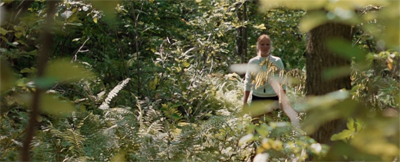
If you go down to the woods today...

If you go down to the woods today…

Continue reading

Doctor Who: Mummy on the Orient Express (Review)

“You know, Doctor, I can’t tell if you’re ingenious or just incredibly arrogant.”

“On a good day, I’m both.”

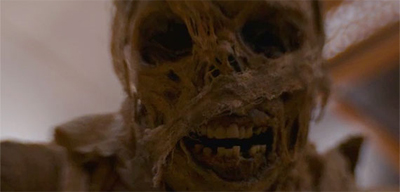
Mummy on the Orient Express is Doctor Who in a blender. It’s classic period piece, genre pastiche and science-fiction spectacle, mixed with a healthy dose of creature feature horror and a solid development of the themes running through the eighth season so far. It’s clever, witty and energetic. The episode is a delight from beginning to end, beating out Robot of Sherwood and Time Heist to claim the title of the year’s best “romp” – as you might expect from a story that is a Hammer Horror murder on the Orient Express in Space.

doctorwho-mummyontheorientexpress8

Continue reading

Jameson Cult Film Club Screening of Friday The 13th Part II in Dublin on October 22/23!

Happy Halloween!

The Jameson Cult Film Club are hosting a screening of Friday the 13th Part II in Dublin over the 22nd and 23rd of October. It’s a great early Halloween treat, with the group turning a Dublin location into a perfect duplicate of the Camp Crystal Lake Training Centre for the screening. And the tickets are free! If you haven’t already signed up, you can apply for free tickets to the event on the Jameson Cult Film Club website. If you’ve been before, you know how much fun it can be. If you haven’t, you’re in a for a treat.

Also worth pausing to note just what a great horror film connoisseur choice Friday the 13th Part II is. The default choice – and one supported by other horror film series like Nightmare on Elm Street or Halloween – would be to pick the first film in the series. However, this is the exception that proves the rule. Sure, you lose out on the Kevin Bacon factor of Friday the 13th Part I, but you get most of the wonderfully iconic aspects of the Friday the 13th film series. A very good choice, by all involved.

The full details are below, after the jump.

Jameson Cult Film Club screening of Friday The 13th Part II

Continue reading

Non-Review Review: Annabelle

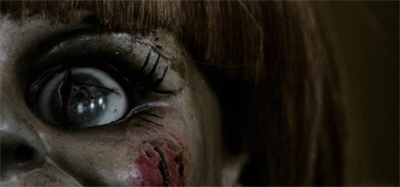
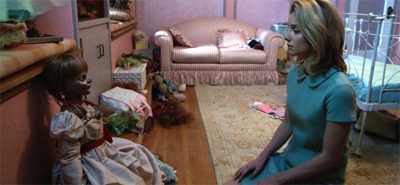
Annabelle certainly looks pretty. Not the doll, of course. The doll looks like the children’s toy version of Jack Nicholson. There is something immediately and effectively intense about the figure at the centre of this horror spin-off, to the point where it’s hard to imagine anybody wanting the toy in their home in the first place. To paraphrase Stephen King’s criticism of Jack Nicholson in The Shining, it is not a question of if this doll will start killing people, but when.

However, the production design on Annabelle is quite striking. It very much a period horror film in the way that The Conjuring was a period horror film. This time, we are visiting the sixties rather than the seventies. There are lots of bright colours and stylish clothes, and the film works hard to capture the mood and aesthetic of the era – or, at the very least, the era as we remember it. Annabelle feels like a horror film effectively riding the waves of sixties nostalgia that has rocked popular culture in recent years.

Well, it'll never be a collector's item now...

Well, it’ll never be a collector’s item now…

Sadly, Annabelle is not pretty enough to distract from its rather fundamental problems. Its script has some good ideas, but no real idea what to do with them. So, instead, it falls back on a kitchen sink approach to modern horror. The script for Annabelle is a collection of sequences and stock elements copied wholesale from recent films like Insideous or Sinister or The Conjuring. While those films did not necessarily have fresh scares, they were blowing the dust off some very classic horror movie tropes.

Here, it feels almost like reheated leftovers.

A doll's house...

A doll’s house…

Continue reading

Non-Review Review: Maps to the Stars

It is a cliché to suggest that Hollywood loves movies about Hollywood.

Sure, quite often these are celebratory meditations on how great Tinseltown is – Argo was the story of how Hollywood saved the lives of Americans caught up in the Iranian Revolution; Hitchcock celebrated the making of Psycho. Sometimes these are more cynical and jaded explorations of how Hollywood works, seeking to expose the community’s seedy underbelly to the world – Robert Altman’s The Player remains the definitive example, but films like What Just Happened probably count as well.

These stock Hollywood-story-about-Hollywood are the weakest aspects of Maps to the Stars. The movie often feels like it’s trying too hard to add a surface gloss of what people expect from a film about Hollywood, on top of a much more interesting and compelling tale of dysfunction and decay. Maps to the Stars is held together by a rake of terrific performances and a wonderfully creepy central metaphor, but it feels let down by the more superficial elements of the script.

We're all in the gutter...

We’re all in the gutter…

Continue reading

The X-Files – Excelsis Dei (Review)

This August (and a little of September), we’re taking a trip back in time to review the second season of The X-Files. In November, we’ll be looking at the third season. And maybe more.

The horror genre is much maligned.

Horror films typically fight harder for recognition than films in many other genres – often finding themselves consigned to the same ghetto as science-fiction or fantasy films. They are less likely to take home major mainstream awards, and it seems like horror films typically have to wait longer for reappraisal. Outside of aficionados, there’s a wariness of the horror genre – a skepticism towards it.

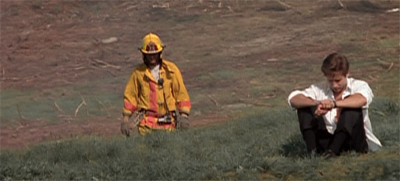
Window of opportunity...

Window of opportunity…

There are a lot of reasons for that. Some of them make sense; some of them don’t. One of the more common assumptions about horror is that the genre is more likely to produce “cheap” or “trashy” entertainment, as opposed to something more profound or insightful. There are, again, lots of reasons for this assumption. Most obviously, there’s the absurd cost-to-profit ratio of cheap terrible horror films that incentivises studios to churn out as many as they can as fast as they can. There’s a reason there’s an absurd number of Saw sequels.

However, that “cheapness” or “trashiness” isn’t just a result of business decisions. There are certain story tropes and narrative techniques that exist within the horror genre that feel like the cheapest sort of thrills. If you want to make an audience uncomfortable, just throw in something one of those trashier elements. As long as the audience squirms in their seats, it doesn’t matter what the implications of your decisions are. After all, your job is to creep them out?

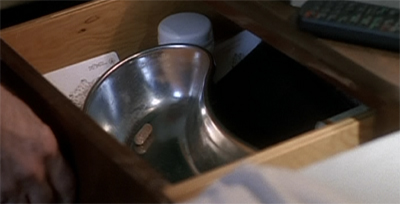
Bitter little pill...

Bitter little pill…

So horror takes all manner of shortcuts, without any real thought as to what those elements actually mean. They are just something that catches the audience off-guard and makes them sit up in their seat. So horror tends to indulge in the worst sorts of racism and sexism as a means of drawing any sort of response from the audience. These tried-and-tested horror staples become effective storytelling shortcuts. The foreign becomes horrific. Conservative sexual morality is enforced with brutality. Rape – literal or metaphorical – is a cheap thrill.

The X-Files struggles with these sorts of issues as it tries to bring horror to television. It occasionally does a very good job. However, there are also times when the series gives into its baser instincts. Excelsis Dei is an absolutely terrible episode, and an example of why the horror genre gets written off by so many people so quickly. It’s a poorly constructed hour of television, one about how old men are perverts, the rape of an under-developed character is a story hook and foreigners are magic.

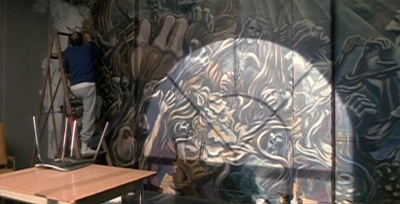
The writing (or fine art) is on the wall...

The writing (or fine art) is on the wall…

Continue reading

The X-Files – 3 (Review)

This August (and a little of September), we’re taking a trip back in time to review the second season of The X-Files. In November, we’ll be looking at the third season. And maybe more.

3 is the first absolute misfire from the second season of The X-Files.

It’s easy enough to account for the problems with 3. The production on the episode was a mess. It was the first episode produced without one of the show’s two lead characters. It existed to plug a hole in the schedule caused by factors outside the control of the production staff. Writers Glen Morgan and James Wong were working on both this and One Breath simultaneously. And it’s also a traditional monster story, which is something that The X-Files had struggled with and would struggle with again.

Vamping it up...

Vamping it up…

To be fair, 3 does what it says on the tin. It is the episode between Ascension and One Breath, a forty-five minute breather that fills a broadcast slot and allows the show to continue on while Gillian Anderson takes maternity leave. The fact that there was only one slot to fill without Anderson is a testament to both the production team’s organisational skill and Anderson’s work ethic. Really, all that 3 needs to do is exist.

Even with that in mind, 3 still feels like a disappointment. Given how Anderson’s pregnancy managed to spur the production team to create a compelling long-form story for the show, culminating in stories like Duane Barry and One Breath, it’s disappointing that her absence doesn’t inspire the same creativity. Seeing The X-Files without Scully should be the opportunity for a fascinating adventure or insightful character study; it could play with audience expectations or the show’s rigid format. Instead, the result is just a mess.

"All by myself..."

“All by myself…”

Continue reading

Batman – The Cult (Review/Retrospective)

23rd July is Batman Day, celebrating the character’s 75th anniversary. To celebrate, this July we’re taking a look at some new and classic Batman (and Batman related) stories. Check back daily for the latest review.

The Dark Knight Returns has a lot to answer for.

Although written “out of continuity” as the last Batman story, critically deconstructing and examining the Caped Crusader, The Dark Knight Returns remains a hugely influential piece of the Batman canon. It’s a story that was hugely influential in comics as a whole, but which understandably had a major influence on Batman. To pick an easy example, both of the recent “guiding” writers on the Batman franchise – Scott Snyder and Grant Morrison – can be seen to react to The Dark Knight Returns a variety of ways.

They are dead to him.

They are dead to him.

In a way, no author was more responsible for porting over concepts from The Dark Knight Returns as effectively as Jim Starlin. Although Starlin is perhaps most associated with Marvel’s cosmic saga, the author did write two massively iconic and distinctive Batman stories. Starlin was the author who wrote A Death in the Family, the story that killed off Jason Todd. He also wrote The Cult, a story about Gotham under siege from an evil religious leader who manages to “break” Batman.

The Cult itself was influential. Aspects of The Cult can be seen in Christopher Nolan’s The Dark Knight Rises, a story about an urban uprising from the sewers and Batman’s attempts to rebuild himself to save Gotham. Unfortunately, as with Starlin’s other iconic Batman story, there’s a sense that The Cult works better in theory than in execution.

A Deacon of light...

A Deacon of light…

Continue reading

Non-Review Review: Deliver Us From Evil

Deliver Us From Evil is a film where ambition seems to outpace ability. A wonderfully surreal blend of cop action movie with exorcism horror, the movie manages to score a few clever juxtapositions – even if it never seems to decide whether it’s gloweringly serious or wryly ironic. While Deliver Us From Evil never finds the right balance of po-faced gravitas and witty self-awareness, it is a surprisingly enjoyable ride.

After all, it is very hard to hate a film where a demonic presence seeks to establish itself upon the world using the music of The Doors as a recurring motif.

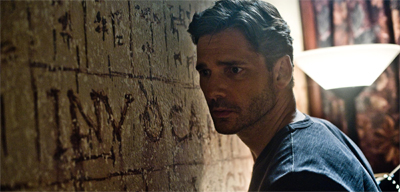
The writing's on the wall...

The writing’s on the wall…

Continue reading