• Following Us

  • Categories

  • Check out the Archives


  • Awards & Nominations

Millennium – The Beginning and the End (Review)

This May and June, we’re taking a trip back in time to review the fifth season of The X-Files and the second season of Millennium.

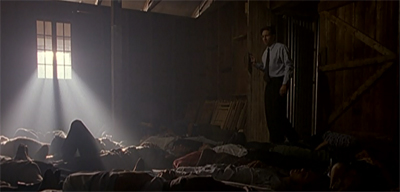
The Beginning and the End manages the impressive and paradoxical feat of both rebooting Millennium and resolving the cliffhanger at the end of Paper Dove. These two contradictory impulses become part of the thematic fabric of The Beginning and the End, an episode fascinated by duality and opposition. Can the polaroid stalker be both a serial killer of the week and the herald of something so much greater? Can Catherine and Frank Black be both united and separated? Can Millennium be the same show it was last year and something completely new?

The Beginning and the End is the start of the show’s polarising and divisive second season. To critics, the second season completely branches off from the first season of the show, replacing a framework that had grown and developed over the course of the year with a bizarre and unwieldy approach that was gonzo and surreal. To fans, the second season was an ambitious and exciting piece of television utterly unlike anything that had been broadcast before or has been broadcast since.

Up in the sky...

Up in the sky…

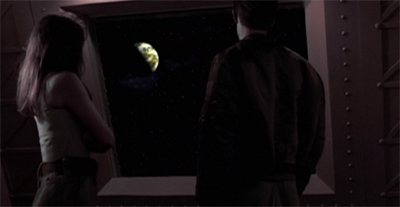
With Chris Carter back focusing on the development of The X-Files and the looming release of The X-Files: Fight the Future, Fox drafted in Glen Morgan and James Wong to steer the second season of Millennium. The duo had helped to define the identity of The X-Files in its first year, and had produced the failed (but ambitious and prescient) series Space: Above and Beyond for the network. After working on the fourth season of The X-Files and the first season of Millennium, Fox allowed the pair to produce their own pilot – The Notorious Seven.

When Fox opted not to take The Notorious Seven to series, they asked Glen Morgan and James Wong to take charge of Millennium in its sophomore season. As The Beginning and the End demonstrates, Morgan and Wong promptly made the show their own.
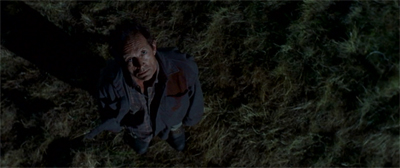
Looking up and wondering...

Looking up and wondering…

Continue reading

The X-Files – Season 4 (Review)

This February and March, we’re taking a trip back in time to review the fourth season of The X-Files and the first season of Millennium.

The fourth season of The X-Files is a work of chaotic genius.

While the third season of The X-Files is one of the most consistently well-made seasons of television ever produced, the fourth season is a lot more uneven. There are a lot of reasons for this. Chris Carter was busy launching Millennium. Fox had decided to press ahead with The X-Files: Fight the Future. Behind the scenes, it was chaotic. Glen Morgan and James Wong hung around for half the season before leaving to work on their own pilot, a planned script from Darin Morgan fell through, Chris Carter’s attention was divided.

xfiles-musingsofacigarettesmokingman17

However, the fourth season represents something of a changing of the guard on the writing staff, a transition between two generations. The fourth season sees the permanent departure of writers Glen Morgan, James Wong and Howard Gordon. These were all writers who worked hard to give The X-Files its unique flavour and identity in the show’s earliest years. The X-Files would not be the same show without the input of those three writers. It is a shame to see them depart, although four years is a long time in the industry.

In contrast, the fourth season also sees younger talent rising up. It sees the first collaboration of Vince Gilligan, John Shiban and Frank Spotnitz. The trio would become one of the most consistent (and productive) writing ensembles on the series. The fourth season also saw the rapid ascent of Vince Gilligan, who had only contributed one script to the third season; Gilligan’s three solo scripts for the third season are iconic and influential in their own right. These are the voices that will steer The X-Files through to the end of its nine-year run.

xfiles-paperhearts22

As such, the fourth season feels transitional. It is a season that lacks the finely-honed efficiency that defined the third season, in favour of a more ambitious and even experimental style. The result is a season that feels wildly creative, a joyous cacophony rather than a harmonious symphony. The fourth season may not always hit the notes, but it is doing something very fresh and exciting. There is an energy and enthusiasm to the season that carries even some of the weaker episodes.

The fourth season is not consistently brilliant, but it is more than occasionally transcendental.

xfiles-max15

Continue reading

The X-Files – Never Again (Review)

This February and March, we’re taking a trip back in time to review the fourth season of The X-Files and the first season of Millennium.

Not everything is about you, Mulder. This is my life.

Yes but it’s m–

– Glen Morgan and James Wong take their bow; David Chase eat your heart out

...

Continue reading

Millennium – 5-2-2-6-6-6 (Review)

This February and March, we’re taking a trip back in time to review the fourth season of The X-Files and the first season of Millennium.

It is interesting to compare and contrast the scripts that Morgan and Wong wrote for the fourth season of The X-Files with the scripts that they wrote for the first season of Millennium. The duo were writing for both shows at the same time – with episodes frequently airing within a week of each other. Morgan tended to focus more on the four X-Files scripts, while Wong worked primarily on the three Millennium episodes. While the seven scripts are all fascinating in their own way, there is a marked difference in how the duo approach the two shows.

Their four episodes of The X-Files are very bold and experimental – they look and feel utterly unlike anything that the show has done; before or after. These four scripts seem to needle at the show, pushing it further. Home seems designed to see how much unpleasantness the writers can get on to Fox prime time in the nineties. The Field Where I Died is a thoughtful and melancholy romance with no companion in the X-Files canon. Musings of a Cigarette-Smoking Man parodies the show’s central conspiracy. Never Again makes the Mulder/Scully dynamic toxic.

Having a blast...

Having a blast…

That makes a great deal of sense. After all, The X-Files was in its fourth season. It was approaching that impressive “one hundredth episode” landmark, the number of episodes necessary before the show would be secure in syndication. (At least in the television landscape of the nineties.) Although less than half-way through its eventual nine-season run, The X-Files was an old dog by this stage of its life cycle. As such, it made a great deal of sense for Morgan and Wong – two writers who had been there at the beginning – to shake things up.

In contrast, the three scripts that Morgan and Wong wrote for the first season of Millennium are a bit more conservative in scope and tone. They are fascinating pieces of television that help to establish the mood of the show, but they are not as experimental of the work that Morgan and Wong were doing on The X-Files. Again, this makes a great deal of sense. Millennium was still a very young show. It was still defining its own identity, figuring out what it wanted and needed to be. Morgan and Wong’s three scripts are essential in that development.

Taking a page from the Group...

Taking a page from the Group…

Continue reading

The X-Files – Musings of a Cigarette-Smoking Man (Review)

This February and March, we’re taking a trip back in time to review the fourth season of The X-Files and the first season of Millennium.

“No great man lives in vain. The history of the world is but the biography of great men.”

– Thomas Carlyle, On Heroes, Hero-Worship, and the Heroic in History

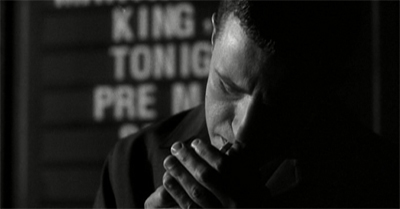
Light 'em up...

Light ’em up…

Continue reading

The X-Files – The Field Where I Died (Review)

This February and March, we’re taking a trip back in time to review the fourth season of The X-Files and the first season of Millennium.

Morgan and Wong’s four scripts for the fourth season of The X-Files are utterly unlike any other stories in the show’s nine-season run. Experimental, bold, confrontational; these four stories stretch and pull at The X-Files, as if eager to see just how far the hit show will bend.

The Field Where I Died is probably the weakest of these four episodes, but it is also the most ambitious. It is a script with big ideas and a willingness to commit to those ideas. There is no modesty here, no hesitation. There is a sense that Morgan and Wong are committing wholeheartedly to their themes and their concepts. The Field Where I Died is an episode that rubs quite a lot of people the wrong way, for a number of different reasons; however, the episode never pulls its punches. It never holds back. It never tries to be anything that it is not.

Far afield...

Far afield…

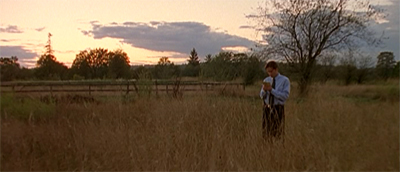
There is a lot to admire here. The Field Where I Died is not an episode with a simply formulaic concept or a conventional structure. It looks and feels completely unlike any other episode of the show. Even when the show touched on similar themes in its final season, the result was radically different. Hellbound is a much more conventional episode than The Field Where I Died. More than Home or Musings of a Cigarette-Smoking Man or Never Again, this is an episode that really seems like an odd fit for The X-Files.

Then again, that may be the beautiful thing about The Field Where I Died, for all its many flaws. It is utterly unlike anything else on television in the nineties. The fact that it can produce an episode of television so unique and incomparable is ultimately what makes The X-Files feel like The X-Files. The fact that The Field Where I Died feels so unconventional and eccentric is precisely what makes it a worthy episode of The X-Files.

Another roaring success for Mulder...

Another roaring success for Mulder…

Continue reading

The X-Files – Home (Review)

This February and March, we’re taking a trip back in time to review the fourth season of The X-Files and the first season of Millennium.

Home is a big one.

It is an episode that is frequently ranked among the best that the show ever produced. It is an episode that many viewers remember quite clearly, even if they only saw it once years earlier. It was the first episode of the show to receive a viewer discretion warning on initial broadcast and was famously never repeated on the Fox Network. “It had one airing and then it was banned,” writer Glen Morgan quipped. “Jim and I don’t get rerun money for that.” It is also one of the rare episodes of The X-Files that is not explicitly paranormal in its subject matter, instead wandering into the macabre and the taboo.

Here there be monsters...

Here there be monsters…

Home also marks the return of writers Glen Morgan and James Wong to the series, following the cancellation of Space: Above and Beyond. With the debut of Millennium looming, the production team on The X-Files was under pressure. Fox had convinced Morgan and Wong to return to Ten Thirteen in return for producing a pilot for The Notorious Seven, one the duo’s long-gestating ideas. Morgan and Wong would produce four episodes of the fourth season of The X-Files and three episodes of the first season of Millennium.

Home is the first of their four scripts for the fourth season of The X-Files, and it sets the mood quite well. Returning from Space: Above and Beyond, the two seemed to be bristling with an electric energy and a palpable frustration. While not all four scripts are unqualified masterpieces, they each serve to push The X-Files further than it has gone before. Perhaps the most surprising thing about Home is that it is the most conventional of these four explosive scripts.

The mother of all problems...

The mother of all problems…

Continue reading

Space: Above and Beyond (Review)

This November (and a little of December), we’re taking a trip back in time to review the third season of The X-Files and the first (and only) season of Space: Above and Beyond.

It is very hard to judge a series based on the first season alone. After all, many long-running series evolve quickly and radically from their debut year. In many cases, the first season is about desperately trying to find a footing as everybody gets used to the realities of producing a television show. Assessing a first season is often an exercising in gauging potential, which makes it a risky proposition when trying to evaluate the first and only season of a cancelled television show.

Space: Above and Beyond contains its fair share of clunkers, as does any first season with twenty-odd episodes. There are episodes that seem at odds with the premise and mood of the show, being written by staff writers before the show went to air or simply trying to do something with which the show isn’t comfortable. There are episodes that have interesting ideas, but don’t place emphasis on the show’s strengths.

spaceaboveandbeyond-pilot32

However, this is all but expected for a first season. A first season is a learning experience for all involved. After all, the first season of The X-Files was packed with episodes like Shadows, Fire, Lazarus, Young at Heart and Born Again. It is very rare for the first season of any show – particularly a genre show – to be the strongest. There are rules to be learned, beats to be established, foundations to be laid. If shows are lucky, that work gets to pay off in later seasons, as everybody gets more comfortable.

Space: Above and Beyond never got that chance, which is a shame. Because there is a phenomenal amount of potential on display here.

spaceaboveandbeyond-thefarthestmanfromhome24

Continue reading

Space: Above and Beyond – … Tell Our Moms We Done Our Best (Review)

This November (and a little of December), we’re taking a trip back in time to review the third season of The X-Files and the first (and only) season of Space: Above and Beyond.

Fox has a very weird (and perhaps even paradoxical) reputation when it comes to cancelling television shows. On the one hand, there is the tendency to run successful shows into the ground, missing the window of opportunity to transition them into big screen franchises. The X-Files and 24 are perhaps the most obvious example of this tendency. Of course, this isn’t unusual in American television. If a show is making money, it makes sense to keep on the air for as long as possible.

On the other hand, the network is notoriously ruthless when it comes to cancelling young shows. Although popularised by the cancellation (and subsequent revival) of shows like Firefly and Family Guy in the early years of the twenty-first century, the network had already demonstrated that it had little time for dead weight in the schedule. In hindsight, it seems like a wonder that The X-Files survived its first season, and was allowed to grow and develop into a massive cultural phenomenon.

We have met the enemy...

We have met the enemy…

Indeed, considering the abbreviated runs of shows like Profit or The Tick or The Ben Stiller Show or Harsh Realm or The Lone Gunmen, Space: Above and Beyond was lucky to get a full twenty-two-episodes-and-a-pilot run on Fox, even if it couldn’t count on the network to air the episodes at a consistent time on a consistent day. Space: Above and Beyond was undoubtedly treated shabbily by the network, but it could have been a lot worse.

That’s not the best eulogy you could write for a television show, but it is worth treasuring what we got.

President of the World...

President of the World…

Continue reading

Space: Above and Beyond – And If They Lay Us Down to Rest… (Review)

This November (and a little of December), we’re taking a trip back in time to review the third season of The X-Files and the first (and only) season of Space: Above and Beyond.

The last stretch of episodes of Space: Above and Beyond are quite mournful and introspective.

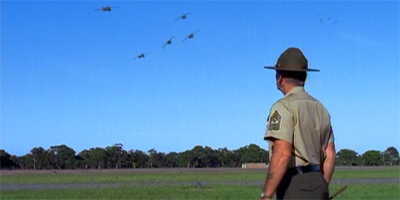
It is very difficult to tell a war story. There are a host of tightropes that any writer has to navigate. After all, it is very easy for a story about the bonds of warfare and humanity in wartime to be interpreted as militaristic or fascistic. At the same time, it is very easy for an anti-war parable to seem critical of the soldiers fighting the war, to dismiss the bravery and courage on display in that most horrific of environments.

Seeing eye-to-eye...

Seeing eye-to-eye…

With its futuristic tech and gigantic guns, as well as its fascination with the military apparatus, it is easy to read Space: Above and Beyond as a pro-military piece. Given how much pride it takes in the way that it presents military life, or how much it wallows in the military setting, a casual viewer might be forgiven for assuming the it glorifies warfare. However, this is the most superficial of readings. It ignores a lot of what the show actually has to say about combat and warfare.

Space: Above and Beyond is by turns cynical and romantic in its portrayal of this futuristic conflict – it clearly respects and appreciates the sacrifices made by those in service of mankind, but is also wary about the motivations of those ordering the sacrifices. It is a very delicate balance to maintain. However, And If They Lay Us Down to Rest… and … Tell Our Moms We Done Our Best seem to lay the cards out on the table, once and for all. This is as anti-war as the show ever gets.

Face of the enemy...

Face of the enemy…

Continue reading