• Following Us

  • Categories

  • Check out the Archives


  • Awards & Nominations

Millennium – A Room With No View (Review)

This May and June, we’re taking a trip back in time to review the fifth season of The X-Files and the second season of Millennium.

“This is how it will all end,” Jose Chung idly speculated half-way through Jose Chung’s “Doomsday Defense.” He advised Frank that the end of the world will not begin “with floods, earthquakes, falling comets or gigantic crabs roaming the earth. No, doomsday will start simply out of indifference.” He may have been correct. It is one thing to kill a person; it is quite another to destroy their spirit, hollowing out the shell before slotting them comfortably back into a functioning society.

A Room With No View plays Chung’s observation and plays it straight. Well, mostly – there is something darkly comical about Landon’s reaction to discovering that he is being abducted into Oregon. Appropriately enough, Lucy Butler’s hideout in Hood County is relatively close to the town of Boring, Oregon. A Room With No View is a bleak and cynical piece of work, an existential apocalyptic horror story perfectly suited to Millennium. It is an episode that would seem strange or unusual in any circumstances, but fits quite comfortably here.
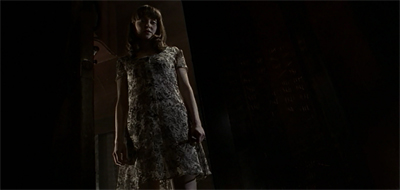
Here's Lucy!

Here’s Lucy!

On paper, A Room With No View could easily seem cynical or exploitative. It is the story about a sadistic kidnapper who abducts teenagers to torture and sexually abuse them in a dungeon. The basic plot elements of A Room With No View come from the pop culture serial killer playbook, to the point where it is not too hard to image the episode as a trashy instalment of CSI or Criminal Minds or – truth be told – the first season of this show. In basic structure, A Room With No View could seem as crude as Wide Open or Weeds or Loin Like a Hunting Flame.

However, it is the execution of A Room With No View that marks as a genuine classic. For all that the episode trades in the stock tropes of serial killer fiction, it is doing something unique and provocative with them. Writer Ken Horton and director Thomas J. Wright construct a potent allegory for abuse and under-achievement, a haunting horror story that is all the more unsettling for its refusal to conform to audience expectations for a story like this.
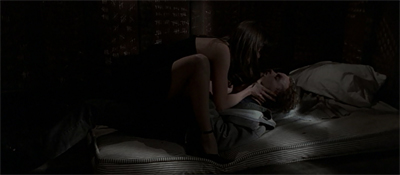
Blue is not always the warmest colour...

Blue is not always the warmest colour…

Continue reading

Millennium – In Arcadio Ego (Review)

This May and June, we’re taking a trip back in time to review the fifth season of The X-Files and the second season of Millennium.

A relatively recent study of teenage pregnancies accounted for forty-five virgin births in the United States, based on data from 1995, 2008 and 2009. Extrapolating from this data, the researchers estimate that almost 1% of births in the United States could be considered virgin births.

Of course, the researchers suggest a notable correlation between these self-described virgin births and other interesting social factors – virgin mothers are statistically quite likely to have low levels of sex education and are quite likely to have taken chastity vows. The myth of a virgin birth is powerful, and it is easy to understand in the context of contemporary attitudes about sex and sexuality that almost one in every hundred pregnant teenagers would rather claim a virgin birth than admit that they had sexual intercourse.

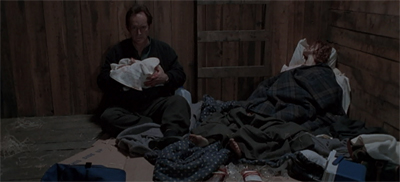
And Frank's left holding the baby...

And Frank’s left holding the baby…

In Arcadia Ego is not a particularly subtle script. Writer Chip Johannessen is quite candid about how he feels about all of this, telling a story about a modern-day immaculate conception featuring two escaped prisoners just looking for a reprieve from all the abuse and violence that they have encountered. In Arcadia Ego is a very socially-conscious piece of work, a rather pointed episode that pokes and prods at some the hypocrisies and inconsistencies in how we talk about sex and women in contemporary society. It is never too hard to tell how Johannessen feels on the matter.

At the same time, In Arcadia Ego is also a thoughtful and moving story about love, hope and faith. After a stretch of episodes that have seen Frank becoming more and more uncertain, In Arcadia Ego casts Frank as a pillar of moral certitude. While it might be a little clumsy in places, In Arcadia Ego is never less than well-intentioned.

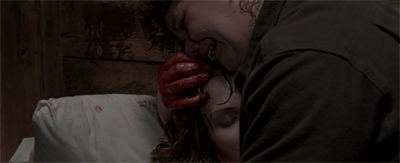
Bloody murder...

Bloody murder…

Continue reading

Millennium – Siren (Review)

This May and June, we’re taking a trip back in time to review the fifth season of The X-Files and the second season of Millennium.

Even when the second season of Millennium doesn’t quite work, it remains a fascinating piece of television.

Siren is the last script written by Glen Morgan and James Wong before they drafted the two-part second season finalé, The Fourth Horseman and The Time is Now. The duo wrote a phenomenal stretch of the second season. They wrote six of the first eight episodes to air; Siren ends another run of four episodes credited to the duo in the middle of the season. Including the two-part finalé, the pair wrote twelve of the season’s twenty-three episodes. That is a phenomenal workload, even discounting the work of producing and re-writing the other eleven teleplays.

Where's your head at?

Where’s your head at?

Given that the duo were writing what amounts to a full-season order for some modern shows, and producing similar volume of episodes, it seems inevitable that one of their episodes would have to slip. Siren is mess. The script feels like it was stitched together from two different story ideas – each of which might have sustained its own intriguing forty-five minute episode. However, cramming both of those ideas into a single script means that neither feels as developed or as explored as it might be.

At the same time, the careful structuring of the season makes it quite what Siren is trying to do. There are a wealth of interesting ideas here that very clearly and very logically serve the larger arc of the second season. However, it often feels like this weight derives not from Siren itself, but from the outline of Siren created when all the other episodes in the season click together.

Hear him out...

Hear him out…

Continue reading

Millennium – The Pest House (Review)

This May and June, we’re taking a trip back in time to review the fifth season of The X-Files and the second season of Millennium.

Millennium is largely a show about the nature of evil.

It feels a little redundant to point that out more than halfway through the second of three seasons, but it is worth repeating. When Chris Carter created Millennium, he designed the show to explore the many faces of evil in a variety of ways. It could be argued that Millennium was largely spawned from episodes of The X-Files like Irresistible or Grotesque, stories fascinated by very human forms of evil that almost become supernatural. Carter and his writers played with that idea over the course of the first season, particularly in episodes like The Pilot and Lamentation.

A pointed commentary?

A pointed commentary?

However, Carter was not the guiding visionary for all of Millennium‘s run. He remained involved in the production of the show, but the day-to-day running of the series was handed over to Glen Morgan and James Wong, who immediately reinvented it from the ground up. One of the more interesting aspects of this transition is watching the differences in how the two creative teams approach various aspects of Millennium. In many ways, The Pest House would be read as an exploration and critique of Carter’s approach towards the concept of evil by Morgan and Wong.

Carter’s work seems to suggest that evil is an external and infectious force – a contagion or pathogen that can be passed from one person (or generation) to another. In contrast, Morgan and Wong seem to argue that evil must be rooted in a person, that it must come from inside rather than outside. The Pest House contrasts these two different visions of evil, finding Morgan and Wong playing with the recurring Ten Thirteen trope of evil as a transferable quantity that can be moved and reallocated. And The Pest House seems horrified by such a concept.

A bloody mess...

A bloody mess…

Continue reading

Millennium – Goodbye Charlie (Review)

This May and June, we’re taking a trip back in time to review the fifth season of The X-Files and the second season of Millennium.

Goodbye Charlie is an interesting oddity at this point in the season. It is the closest thing that the show has done to an old-fashioned “serial killer” story in quite some time, while still remaining quite unique and bizarre. It is a story about a man who may (or may not) be a serial killer, opening with shots of that (possible) killer serenading his victims with a dodgy karaoke version of the already dodgy Seasons in the Sun. It is memorable and striking, a strange hybrid of familiar trappings and completely bonkers absurdity.

There are points where Goodbye Charlie does not work. There are moments when the script seems a little too knowing or a little too heavy-handed. However, there moments are generally fleeting. When Goodbye Charlie falters, it is only a slight misstep; there is never a sense that it might implode in the same way that Sense and Antisense or A Single Blade of Grass threaten to collapse in on themselves. More than that, as with a lot of the bumps in the road during the second season, the show is generally ambitious and energetic enough that it’s hard not to get drawn in despite the flaws.

Sing with me now...

Sing with me now…

There are two elements of Goodbye Charlie that really sell it. The first is Richard Whiteley’s script. It is perhaps a little stilted in places – most notably in the way that it awkwardly plays up the ambiguity around the case by having Frank and Lara repeatedly draw attention to the ambiguity around the case – but it is clever, fast and witty. The episode also benefits from the casting of Tucker Smallwood as Steven Kiley, who turns in one of the best one-shot guest appearances of the season as a character who might be an altruistic helper or a manipulative sociopath.

Goodbye Charlie is perhaps a little too uneven to count among the very best of the season, but it is a fascinating little episode. It is also perhaps an indication of how profoundly the show has changed over this half-season that Goodbye Charlie manages to feel like one of the more conventional episodes of the year.

Nuts to that...

Nuts to that…

Continue reading

Millennium – Midnight of the Century (Review)

This May and June, we’re taking a trip back in time to review the fifth season of The X-Files and the second season of Millennium.

Midnight of the Century is a Millennium Christmas episode, as strange as that might sound.

In hindsight, it really should not seem so strange. After all, The X-Files had just done a big two-part Christmas episode with Christmas Carol and Emily. More than that, executive producers Glen Morgan and James Wong had demonstrated an affinity for holiday-themed episodes. The duo had written the Christmas-themed Beyond the Sea for the first season of The X-Files, and had commissioned The River of Stars while they were running Space: Above and Beyond. They had also written The Curse of Frank Black, a Halloween-themed Millennium episode.

Angels in America...

Angels in America…

Midnight of the Century is the second Millennium script credited to writers Kay Reindl and Erin Maher. The duo had been recruited by Morgan and Wong at the start of the second season, and had already produced A Single Blade of Grass. It was a messy episode, albeit one with flashes of genius. Midnight of the Century gives the two writers a much cleaner brief and a lot more room to work. As with The Curse of Frank Black, there is a wonderfully relaxed pace to Midnight of the Century, a sense it knows both where it’s going and how it wants to get there.

On paper, the idea of “a Millennium Christmas episode” sounds like the bleakest thing ever. However, while there are elements of melancholy involved, it is to the credit of everybody involved that Midnight of the Century feels so damn bittersweet.

A Black (family) Christmas...

A Black (family) Christmas…

Continue reading

Millennium – The Hand of St. Sebastian (Review)

This May and June, we’re taking a trip back in time to review the fifth season of The X-Files and the second season of Millennium.

The Hand of St. Sebastian closes out the first third of the second season of Millennium. It also marks the half-way point in the episodes credited to Morgan and Wong as writers over the course of the season – it is the sixth of a phenomenal twelve scripts credited to the showrunners, even outside their responsibilities as executive producers. In many ways, The Hand of St. Sebastian represents the point at which the stage has been completely set. It establishes the last of the basic ideas that the team will play with across the rest of the season.

The Curse of Frank Black and 19:19 had affirmed that Christian eschatology would be a driving force for the show, as if that had ever been in doubt. After all, the first season’s big two-part epic had been Lamentation and Powers, Principalities, Thrones and Dominions, an epic story about demons and angels. More than that, Morgan and Wong had revised the opening credits sequence of the show so that it ended with the promise that “the time is near”, an obvious textual reference to Revelation.

Circle of trust...

Circle of trust…

The Hand of St. Sebastian confirms what was inferred in Beware of the Dog when Frank pointed out that the ouroboros was “used as a secret symbol on early Christian graves.” Here, the Millennium Group itself is identified as an ancient Christian organisation, one interested in ancient Christian relics for their spiritual and magical uses. There is a decidedly pulpy feel to the second season; one that is particularly evident in The Hand of St. Sebastian, as Frank and Peter go abroad to do a modern day Raiders of the Lost Ark on a nineties television budget. Ambition is not the worst vice.

However, The Hand of St. Sebastian is perhaps most notable for putting the focuse squarely on the character of Peter Watts. Naturally, Frank plays a pretty vital role in The Hand of St. Sebastian, but the episode does a lot to develop Peter as a character. It builds off his powerful speech in The Beginning and the End to portray a man of faith searching for validation and meaning in the world. The second season really capitalised on the presence of Terry O’Quinn, recognising the actor’s immense talent and helping to establish him as a televisual talent to watch.

This is who we were...

This is who we were…

Continue reading

Millennium – The Curse of Frank Black (Review)

This May and June, we’re taking a trip back in time to review the fifth season of The X-Files and the second season of Millennium.

The Curse of Frank Black is a phenomenal piece of television, and an episode that demonstrates the raw potential of the approach that Glen Morgan and James Wong have adopted towards Millennium, making the show feel (simultaneously and paradoxically) more intimate and more epic. It is a show about the end of the world, but where the end of the world can be conveyed through the late night wandering of an old man on Halloween. It is a superb piece of work on just about every level.

The Curse of Frank Black is, in a many ways, the perfect encapsulation of many of the themes and ideas that Morgan and Wong have played with over the years. It is constructed in the style of a classic horror film, but is driven by character. As with Scully in Beyond the Sea, Mulder in One Breath, and McQueen in The Angriest Angel, Frank Black finds himself facing an existential crisis at the darkest moment of his life. What will Frank do when faced with the most horrific of possibilities?

millennium-thecurseoffrankblack22

What does anybody do when they are confronted with the end of their world? Morgan and Wong are fond of putting their characters through the metaphorical crucible, seeing what happens when the foundations are eroded and the support framework is taken away. The Curse of Frank Black suggests that there are only two possible options when the world falls to pieces: either you stand safely on your side of the line and watch it happen, or you pick up a bucket of water and start cleaning up.

It is a simple choice, an elegant metaphor, and it sits at the heart of The Curse of Frank Black.

millennium-thecurseoffrankblack15

Continue reading

Millennium – A Single Blade of Grass (Review)

This May and June, we’re taking a trip back in time to review the fifth season of The X-Files and the second season of Millennium.

A Single Blade of Grass is one of those episodes of television that skirts a line. It is very much a companion to “subculture” episodes of The X-Files, shows that would see our white heroes wading into the world of an ethnic minority – be the Haitian refugees in Fresh Bones, Chinatown in Hell Money, African immigrants in Teliko or Mexican-Americans in El Mundo Gira. In the case of A Single Blade of Grass, Frank Black is wandering into the world of Native Americans in New York.

It goes without saying that these sorts of episodes have to be very careful. Both Millennium and The X-Files are very white television shows – they have exclusively white primary casts, and the vast majority of their supporting cast are also white. (Also, most of the writers’ rooms.) As such, telling a story about a subculture can be very tricky – it is easy to seem shallow or condescending, trite or exploitative. It is worth noting that some of the biggest misfires on The X-Files occurred when the production team got this horribly wrong – Excelsis Dei, Teso Dos Bichos, El Mundo Gira, Badlaa.

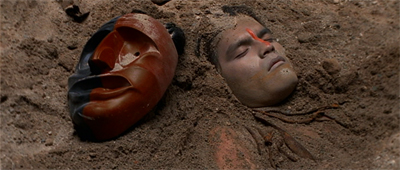
Burial mask...

Burial mask…

It is very easy to get caught up in mysticising and fetishising the Other, which can become quite problematic when “the Other” corresponds to a real-life minority that have – historically speaking – never been treated particularly well by those in authority. As such, A Single Blade of Grass feels like a very risky and very difficult story, particularly for a show that was already struggling in the ratings and trying to gain some traction with audiences. A Single Blade of Grass has the potential to go spectacularly wrong in places, and it is to the credit of all involved that it (mostly) doesn’t.

Then again, this is a large part of the appeal of the second season of Millennium – what makes even the year’s failures seem compelling in their own eccentric way. There is a sense that the second season of Millennium is completely unfazed by the possibility of failure, and so commits completely to what it wants to do. While A Single Blade of Grass might be a little muddled and unfocused in places, it retains a raw energy that makes for compelling viewing.

Let us sit upon the ground and tell sad stories about the death of worlds...

Let us sit upon the ground and tell sad stories about the death of worlds…

Continue reading

Millennium – Monster (Review)

This May and June, we’re taking a trip back in time to review the fifth season of The X-Files and the second season of Millennium.

Monster continues the process of laying the groundwork for the second season of Millennium. Glen Morgan and James Wong had very consciously shaken things up with The Beginning and the End, and the first third of the second season is clearly intended to construct a solid foundation for the rest of the year. Looking at the plot points and character beats from the various episodes, they read almost like a checklist of things to address or introduce before the series can really start moving under its own power again.

Even outside of the dramatic changes wrought by The Beginning and the End, the other episodes in this stretch of the season each have their own purpose. Beware of the Dog introduces us to the Old Man, affectionately riffs on the first season format, and outlines the refactored Millennium Group. In turn, Sense and Antisense riffs on The X-Files and helps to identify areas of overlap with Millennium. A Single Blade of Grass gives Frank back his psychic powers, albeit in a more powerful and abstract form. The Curse of Frank Black is a character-driven vehicle. 19:19 and The Hand of St. Sebastian get well and truly biblical.

Fire and brimstone...

Fire and brimstone…

The most dramatic aspect of Monster is the introduction of the character of Lara Means. Means becomes a pretty vital part of the second season of Millennium, and is introduced in Monster with an eye to her inevitable role in The Time is Now. Means is a vital cog in the workings of the second season, perhaps the most important part of the mythology explicitly created by Morgan and Wong, instead of simply repurposed and reinvented. Means is a fantastic creation, wonderfully brought to life by actor Kristen Cloke and well-realised by Morgan and Wong’s scripting.

However, even outside of the important introduction of Lara Means to Millennium, Monster feels like an episode that exists to set up and outline the larger themes and ideas of the season in a way that foreshadows the larger arc. Like A Single Blade of Grass, it reiterates themes that will become a lot more important as the year goes on. Like Beware of the Dog, it uses the familiar template of a first-season Millennium episode to do this.

I believe in angels...

I believe in angels…

Continue reading