Terence Malick’s Tree of Life stems from the beginning of the universe to “the end of time.”It’s hard to imagine any film with a similar scope, let alone one focused on the troublesome relationship between a nuclear family in the mid-to-late-twentieth century. The easiest way to summarise Malick’s epic yet intimate drama is describe it as a profound meditation on the history of the cosmos, reflected through a child’s coming-of-age tale. Confused? I don’t blame you. I’m slightly confused and I just watched the damn thing.
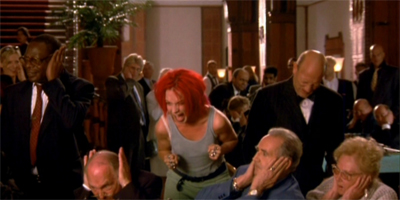
I really do have a great deal of affection for Run Lola Run, as a highly energetic and stylishly executed piece of cinema. It’s hard to think of a movie that can match the sheer intensity of the assault that the opening few moments make upon your senses, as the images flash across the screen, the heavy dance soundtrack kicks to life, and the camera dances and cuts like there’s no tomorrow. It’s a shame that the movie can’t really maintain that wonderful pace for the rest of its runtime, but perhaps it’s too much to ask for an eighty-minute sprint.
Ronan from Swear I’m Not Paul (he’s not) sent on the final instalment in the Relentless Short Films competition, and I’ve enjoyed the other entries so far, so I thought I’d share this last video with you. It’s an interesting look at the world of crowd surfing, and you can see it below.
For more details of the Relentless Short Films competition, click here.
I caught The King of Kong at the weekend and I really enjoyed. It’s a fantastic underdog tale set in a fascinating subculture that really deserves to be seen. However, the movie was beset by claims after the fact that it had been somewhat unfair to Billy Mitchell, the reigning Donkey Kong champion who found himself cast in the role of villain. While fictional movies take liberties with their characters all the time, I can’t help but wonder what sort of standard should apply to documentaries. They obviously require some basis in fact, but to what extent is possible to be entirely fair and objective in bringing any subject to screen?
I think part of the reason that The King of Kong: A Fistful of Quarters works so well is because it takes any number of well-loved and popular story-telling tropes concerning the conflict between a hard-working underdog and an exclusive and elitist authority, and then plays them out against one of the most brilliantly ridiculous backdrops possible. Professor Wallace Sayre, a political scientist at Columbia University once made the observation that “in any dispute the intensity of feeling is inversely proportional to the value of the issues at stake.” So perhaps we shouldn’t be so surprised that a competition over a videogame world record should capture these ridiculous grand themes with such skill, and a wonderful sense of humour.
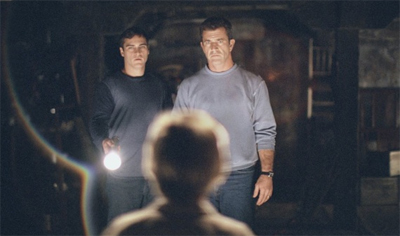
You know what? Even though history and experience has retroactively soured the movie, with M. Night Shyamalan’s career entering freefall and Mel Gibson’s personal problems clouding his career, I kinda like Signs. In fact, I’d go so far as to argue that the movie represents Shymalan’s last good film. That said, it’s a well-constructed and engaging little thriller that is, unfortunately, hugely flawed. Some of these flaws are so fundamental that they’re hard to ignore, but I think that this movie was the last time that Shyamalan demonstrated a real organic talent and skill for film making.
Man, I watched Apocalypse Now Redux last weekend, and my butt is still a little bit numb. Clocking in at well over three hours, I couldn’t help but find my attention wandering, despite the fact that I was deeply interested in the story unfolding in front of me. Terrence Malick’s Tree of Life, which I am very much looking forward to, hasn’t opened over here yet, but there are already rumours circulating at a cut of the movie over six hours long. As much as I want to see the film, and as much of the director’s vision as I might want to take in, I can’t help but feel that 360+ minutes might just be too long for a single sitting.
You could nearly grow a tree during the length of Malick's proposed six-hour cut...
I feel a little bit heartless in confessing this, but Amélie (or Le fabuleux destin d’Amélie Poulain, to use its original title), never really connected with me. Don’t get me wrong, I can appreciate the film’s wonderful visual style, and those amazing opening scenes with a young Amélie growing up the way she did thanks to the strange and particular set of circumstances around her, but I couldn’t maintain that emotional connection through the film. Which is a shame, because the movie is a wonderful technical accomplishment, from its heavily saturated primary colours through to its distinctive score, and the manner at which it plays with the fourth wall.
Hello dear reader. I’m very sorry. It’s going to be a relatively slow week at the blog here, I’m afraid. That blasted real world keeps getting in the way, as it must from time – I’m preoccupied with various boring concerns, and my attention to cinema perhaps isn’t as finely honed as I might have liked. Even over the weekend, although I took the occasion to treat the better half to her first viewing of The Queen (which I suspect I liked far more than she did), I found myself without a clear idea of what I was going to watch. I hadn’t made a note of anything, or decided to revisit a particular classic, or seek out an important film, or even overheard somebody in work talking about a cult or classic film. Indeed, I didn’t have any idea what I was going to watch. So I decided to just turn the television on and see what it was that home entertainment could offer me this time.




















 the m0vie blog