• Following Us

  • Categories

  • Check out the Archives


  • Awards & Nominations

Non-Review Review: Pan

There is something delightfully off-kilter about Pan, to the point that it seems almost surprising that it got made.

After all, Peter Pan doesn’t seem to need an origin story. All the core ingredients are included in the original stories that J.M. Barrie wrote at the start of the twentieth century, allowing generations of other writers to improvise and elaborate around a rather robust blueprint. Steven Spielberg hit on an interesting idea in theory (if not necessarily execution) in Hook, producing a sequel imagining what might happen if the boy who never grew up… actually grew up. However, there does not seem to be an equivalently interesting hook into a prequel story.

Don't be so harsh, Blackbeard...

Don’t be so harsh, Blackbeard…

Indeed, there is very little in Pan that connects it to its source material, beyond a few overlapping names and sly in-jokes. Captain Blackbeard meditates on Neverland as the realm of death, alluding to the historical context of the stories, but the film is absolutely fascinated by the concept of death in Neverland. James Hook might be taunted with a “tick tock” and dangle his hand in crocodile-infested waters, but the film has very little interesting to say about his relationship with Peter Pan beyond falling back on the trope of suggesting that they were once friends.

However, there is something fascinating about the execution of Pan. Even if the script doesn’t hold together, and the film often seems like two-hours of punk pop candy floss, there is an endearingly gonzo quality to the film that makes its complete refusal to work all the more interesting.

Sheets to the wind...

Sheets to the wind…

Continue reading

Non-Review Review: The Walk

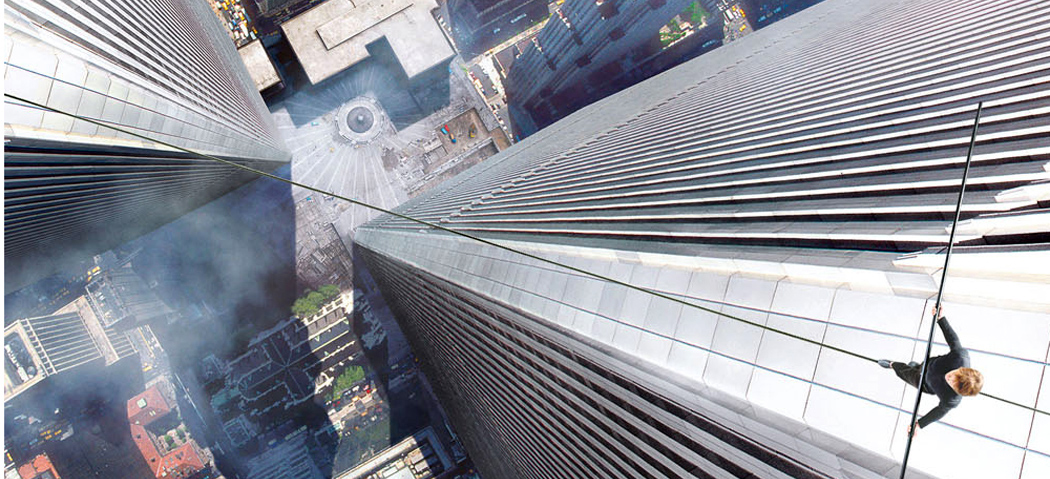
“It is not real,” Philippe Petit reflects quite early in The Walk.

Resting his chin against one of the steel supports running the height of the World Trade Centre, Philippe stares upwards into infinity. Up until that moment, the Twin Towers had existed as a conceptual object for the young French tightrope artist; he had only seen them in photographs and sketches, framed in comparison to the Eiffel Tower to afford them a sense of scale. Appreciating the majesty of the World Trade Centre in the flesh is almost too much to process. Making them more real has somehow made them less real.

Walk on the wild side...

Walk on the wild side…

Philippe could just as easily be talking about the film that surrounds him. Director Robert Zemeckis might be best known for his work on Back to the Future, but a lot of his twenty-first century filmography has been fixated upon the unreal; Zemeckis has become known for his fascination with motion-capture and computer-generated imagery, the illusive pursuit of verisimilitude through the uncanny valley. The special effects used to realise The Walk are superb and top of the line, but there remains a feeling of unreality to the whole film.

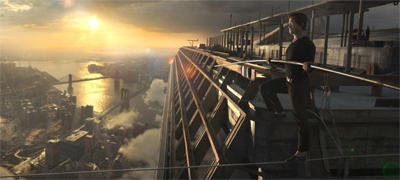
It would be impossible to film The Walk in a real location using real stunts. The Walk is an ode to New York City, but to a version of New York City that no longer exists. Tourists cannot visit it, although perhaps it might be found on a postcard or trapped in a photo. The Walk cleverly and consciously refuses to downplay that feeling of unreality, feeling almost like a nostalgic memory recalled through the fog of time. Philippe Petit’s tightrope walk between the Twin Towers was so effective because it was real; The Walk is so effective precisely because it is unreal.

Stepping out...

Stepping out…

Continue reading

Non-Review Review: The Intern

The Intern is a likeable, competent movie about likeable, competent people doing likeable, competent things.

What is most remarkable about Nancy Meyers’ latest effort is the fact that there is no real tension at play here. Sure, there’s a three-act structure; there are revelations; there are insecurities; there is crying. However, it seems like everybody in the movie wants nothing more than to get along with everybody else in the movie. Sure, there are the obligatory comedy screw-ups and miscommunication, but there’s never a real sense of risk or stakes as the movie wanders politely from one work-related crisis to another.

Nobody gets too bent out of shape...

Nobody gets too bent out of shape…

It is not an approach that makes for particularly compelling or exciting viewing. Indeed, the characters populating The Intern seem terrified about the idea of getting anybody’s blood pressure up; whether that of septuagenarian Ben Whittaker or the prickly mother of executive Jules Ostin. Everybody involved in The Intern, including the characters themselves, are professionals. Sure, mistakes happen and people mess up, but it’s not the end of the world. There is something oddly comforting in that, even if nobody watching The Intern will be on the edge of their seat.

In the end, The Intern is a lot like the eponymous character; it is steady and reliable, amicable and inoffensive. It looks smart and it knows just what to say. Everybody’s just wary about getting that heart beating a little too hard.

"You feel tense..."

“You feel tense…”

Continue reading

Non-Review Review: Hotel Transylvania 2

Hotel Transylvania 2 certainly has some moves.

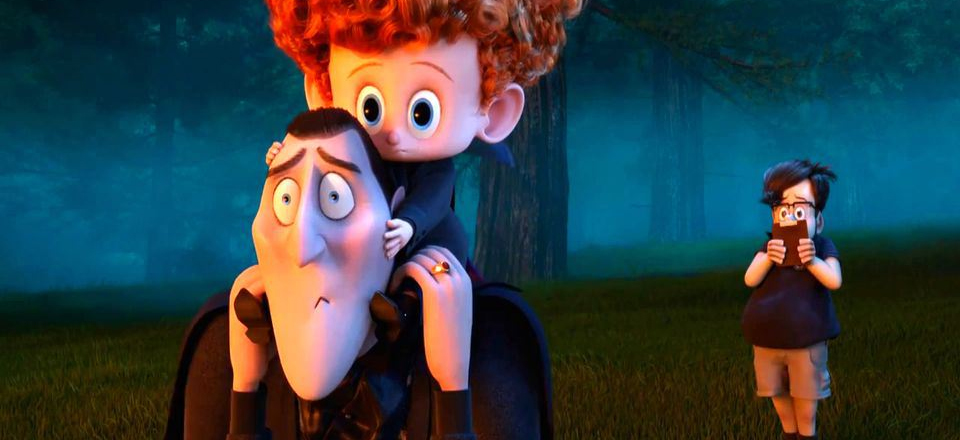
The film might be computer animated, but director Genndy Tartakovsky draws from more a classic style of cartooning. There are several points in Hotel Transylvania 2 where it seems like the film has reverted to a two-dimensional style, with figures standing in silhouette against the background. Even the human characters of Hotel Transylvania 2 take on an elasticity, stretching and distorting in the style of classic Looney Tunes. Hotel Transylvania 2 gets considerable mileage out of this slapstick element.

Drac pack's back...

Drac pack’s back…

It helps that the film is packed with gags. Not all the jokes land as well as they might, with the film leaning a little too heavily on some particularly cheap shots, but there is a sense that Hotel Transylvania 2 is more concerned with getting those jokes into the film than it is with actually constructing a narrative around them. The film packs an impressive quantity of humour into its ninety-minute runtime, with nothing in the film being allowed to overstay its welcome.

That said, the movie hits some speedbumps when it comes to plot and characterisation. Some of these issues are simply structural, with Hotel Transylvania 2 eschewing all but the most basic of set-up and pay-off in favour of energetic cut-away jokes and quick sight gags. Some of the issues are tonal, with the film wrapping up some very uncomfortable plot developments and decisions with a simple “all’s well that ends well” conclusion that ultimately avoids delving too deeply into any of the implications of certain characters’ actions.

Vamping it up...

Vamping it up…

Continue reading

Non-Review Review: Ghosthunters on Icy Trails

Ghosthunters on Icy Trails is derivative as anything.

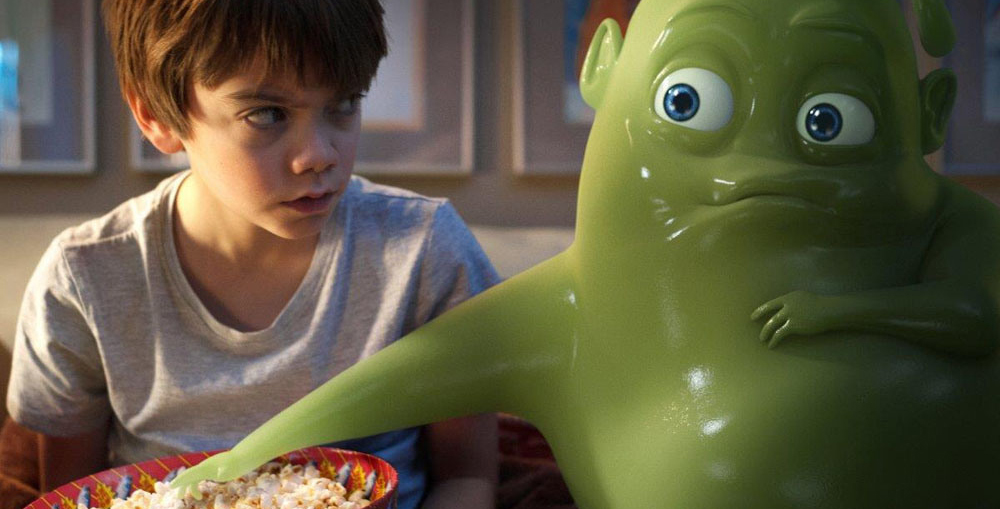
The movie walks a very thin line between knowing self-aware homage and cynical appropriation. The movie’s script draws attention to many of its influences and inspirations, but there is frequently a feeling that many of these ideas and images worked much better the first time around. There some nice gags in there, and two solid central performances from Milo Parker and Anke Engelke, but Ghosthunters on Icy Trails frequently feels like a featherweight imitation of much more entertaining family films.

Pass the popcorn...

Pass the popcorn…

Continue reading

Non-Review Review: The Martian

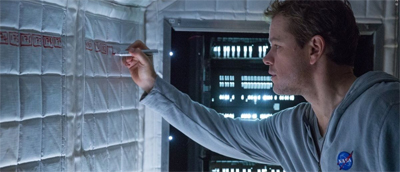
The beauty of The Martian lies in its relative simplicity. Although it runs a solid two-hours-and-twenty-minutes, the film seems a lot faster than many of its contemporaries because it keeps its eyes on a very simply central dynamic. Within the opening five minutes, the movie’s status quo is established with breathless efficiency; astronaut Mark Whatney is left for dead on the surface of Mars, and must struggle to survive as the entire planet figures out how to get him back alive.

The premise is very straightforward, and seldom gets more complicated than that. Mark tries to figure out how to stay alive as the greatest minds back home work on daring plans to establish communication and possible retrieve the lost astronaut. Along the way, both Mark and NASA suffer setbacks and reversals; complications abound and dilemmas present themselves. However, The Martian is always anchored in that very basic struggle against overwhelming odds and an indifferent universe.

Is there life on Mars?

Is there life on Mars?

The Martian is something of a genre cocktail. The movie’s tone and plot is perhaps best evoked by reference to Byron Haskin’s 1964 cult classic “Robinson Crusoe on Mars.” Mark’s plight is not too dissimilar to that of the Robert Lewis Stevenson protagonist, nor to that of Chuck Noland in Cast Away or the anonymous protagonist of All is Lost. However, the movie’s stellar setting serves as a gateway to a broader commentary on human codependency and association. Nobody gets there on their own; nobody gets back alone.

The Martian is a surprisingly heartwarming and life-affirming adventure, anchored in a charming central performance from Matt Damon and a very deep ensemble. Despite the massive sense of scale involved, Ridley Scott’s direction and Drew Goddard’s script work hard to keep it all personal. The Martian is a triumph.

Matt Damon was very excited about the film's release...

Matt Damon was very excited about the film’s release…

Continue reading

Non-Review Review: Life (2015)

The biggest problem with Life is that the film is largely lifeless.

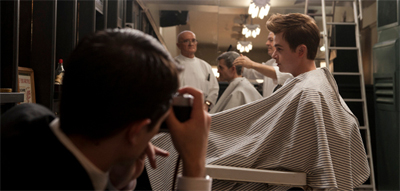
Life is the story of the iconic photographs of James Dean taken by photographer Dennis Stock in the run-up to the release of East of Eden in March 1955. At that point, Dean was a young actor on the cusp of stardom. As the premiere of East of Eden approached, Dean still aspiring towards his definitive role in Rebel Without a Cause. Dennis Stock saw something in the young actor, believing he might capture a moment of cultural change in the brooding young actor.

"The coat, he borrowed from James Dean..."

“The coat, he borrowed from James Dean…”

Even if they didn’t make the cover of Life magazine, Stock’s photographs have come to define Dean in the popular memory. These photographs capture Dean at his most brooding and his most joyous, capturing the extremes of his experience. Snapping Dean walking through the rain in Times Square or reading comics with his brother, Dennis seemed to trap some of the essence of the actor in his work. Life centres on the complicated relationship that exists between the two men, as they attempt to get a read on one another and navigate the taut waters of celebrity.

However, for a film inspired by (and derived from) an instantly recognisable set of photos, there is something just a little bit too staid about Anton Corbijn‘s two-hour long character study. It feels like a loose selection of pop psychology strung around some faithful recreations, missing the vibrancy and the intimacy that made those shots so distinctive.

#HairRaising

#HairRaising

Continue reading

Non-Review Review: Legend

Legend is a nostalgic gangster film.

Sure, it embraces its sixties aesthetic with relish. After all, setting a film in sixties London all but assures impressive production design. Legend looks and sounds quite lavish, evoking not so much the sixties but the cultural memory of the sixties. The film likes its loud blues and rich browns, but it also draws quite skilfully from the sounds of the era. Appropriately enough for a film adopting the title Legend, the film feels like it owes more to some hazy collective recollection than the concrete reality.

"Whoa! Let's READ the review first..."

“Whoa! Let’s READ the review first…”

However, Legend‘s nostalgia runs a great deal deeper than that. After all, writer and director Brian Helgeland has some experience with crime-based period pieces. The trailers to Legend loudly trumpet Helgeland as the writer of L.A. Confidential, and it’s an obvious comparison in terms of visual style. However, the narrative and structure of Legend feel a lot older. At its heart, Legend is an old-fashioned gangster biography, offering a broad and sweeping (and occasionally episodic) historical travelogue through the meteoric rise and catastrophic fall of the Krays.

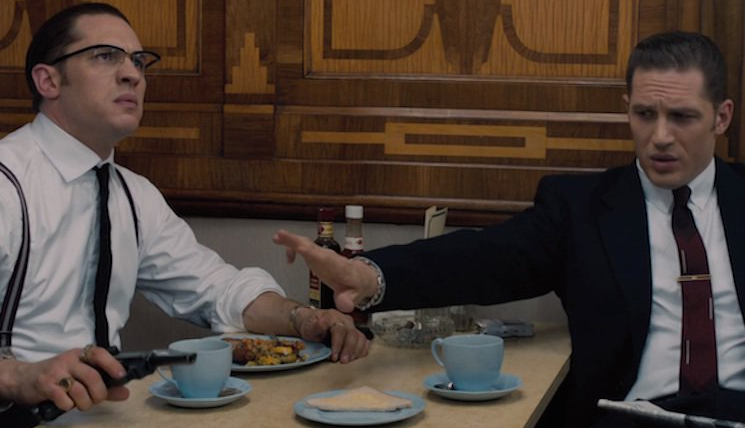
It is an approach that has fallen somewhat out of style in recent years. The technique certainly has its weaknesses, particularly when applied by hands less skilled than those of Martin Scorsese. It is too much to suggest that Legend measures up to Goodfellas or Casino, but Legend makes good use of its format. It starts with enough energy to sustain its two-hour-and-ten minute runtime through the ebbs and flows of a familiar plot structure, allowing Tom Hardy enough room to craft two separate stunning performances.

Twin town...

Twin town…

Continue reading

Non-Review Review: Irrational Man

If Blue Jasmine could be read as an adaptation of A Streetcar Named Desire, Woody Allen continues his journey through classic cinema (and novels and plays) with Irrational Man. The core of Irrational Man is built around the basic premise of Strangers on a Train, exploring the strange intersection of lives around a seemingly motiveless murder plot. Using the plot of Strangers on a Train as a springboard, Allen staged Irrational Man as a character study (very loosely) framed discussion of ethics and moral philosophy.

Set in a small-town New England college campus, Allen strips Patricia Highsmith’s novel down to its core elements. As with a lot of late-stage Woody Allen films, there is not so much a plot as a set of complications. The story is streamlined so as to allow a depth of focus on its central characters; murder is not swapped so much as volunteered, meaning that Irrational Man only has to focus on a single murder and its impact on a single set of characters. In this case, Allen focuses on Professor Abe Lucas and his student Jill Pollard.

Murder on the mind...

Murder on the mind…

Lucas is depressed and withdrawn; he is a philosopher who has lived a long and varied life, but who seems numbed by the experience. Lucas is not necessarily suicidal, but it doesn’t seem like he’d be too upset by the prospect of his own death. As fellow faculty member Rita Richards and bright young student Jill Pollard try to pull the philosopher out of his depression, a conversation overheard in a diner lights a spark. Listening to a stranger detail the injustices inflicted upon her, Lucas decides to set about righting wrongs on her behalf.

Irrational Man builds to a decidedly academic murder plot. It is very much “Woody Allen presents How to Get Away With Murder.”

"Voila Davis always gets higher student approval ratings."

“Voila Davis always gets higher student approval ratings.”

Continue reading

Non-Review Review: We Are Your Friends

Appropriately enough, We Are Your Friends feels like a selection of remixed samples of other movies.

The script for We Are Your Friends dutifully hits all the requisite beats from a coming of age story about a young man trying to find his way in the world; in this case, “the world” refers to “the San Fernando valley”, just over the Hollywood Hills. Appropriately enough, We Are Your Friends positions the valley (“the Valley”) as a sort of purgatory for those who want to get out towards better things; aspiring DJs and actors trapped in dull routine who must learn to stay true to themselves to attain meaningful (and not just material) success.

The beat goes on...

The beat goes on…

It is a very familiar story structure, one that lends itself to the sense of social striving associated with other (more substantial) films about life in Los Angeles. We Are Your Friends doesn’t have a story as much as it has an outline; the requisite steps that young would-be DJ Cole Carter must take on the path to stardom. There is an older mentor with feet of clay, a troubled love interest also looking for meaning in the world; there is the false promise of financial security, a tragic lesson about life lived to access.

However, all of this is drawn so broadly that We Are Your Friends is a tracklist rather than an album. Director Max Joseph brings commendable energy to the film, and Zac Efron is quite affable as a protagonist more cliché than character. Wes Bentley adds just a hint of flavour to an otherwise ambient film. We Are Your Friends is inoffensive, but ultimately more visually interesting than completely satisfying.

Hey, Mister DJ, put a record on...

Hey, Mister DJ, put a record on…

Continue reading