• Following Us

  • Categories

  • Check out the Archives


  • Awards & Nominations

Doctor Who: The Armageddon Factor (Review)

To celebrate the fiftieth anniversary of the longest-running science-fiction show in the world, I’ll be taking weekly looks at some of my own personal favourite stories and arcs, from the old and new series, with a view to encapsulating the sublime, the clever and the fiendishly odd of the BBC’s Doctor Who.

The Armageddon Factor originally aired in 1979. It was the sixth and final part of The Key to Time saga.

The Key to Time was perhaps the first conscious attempt to tell a season-long story in Doctor Who. Sure, we’ve had elements of an arc before. The first season, for example, gave the Doctor himself a character arc where he evolved from cowardly curmudgeon into an unlikely heroic figure. Jon Pertwee’s second season was given the Master as a linking element. Tom Baker’s Doctor embarked in a pretty much unbroken series of adventures from Robot through to Terror of the Zygons, with the ending of one serial seemingly leading directly into the next. None of these were necessarily that ambitious and you could argue they evolved more by chance than by design.

So, The Key to Time represented a bit of a learning curve, an attempt to tie a season’s stories together using an over-arching concept. As I’ve discussed quite a bit in my reviews of the season, the result was a little clunky, with those concepts seemingly clumsily shoe-horned into a separate bunch of adventures. That leaves the finalé, The Armageddon Factor to do the heavy-lifting with regards to The Key to Time saga. Unfortunately, the pay-off feels a bit jumbled, over-wrought, disorganised and non-sensical, as it juggles a wealth of elements that never add up to more than the sum of their parts.

While a great many Doctor Who six-parters suffer from being too long, too padded, too stretched for their story and concepts, The Armageddon Game feels curiously over-stuffed, lacking a tight focus on the interesting elements and too many distractions clogging up the story.
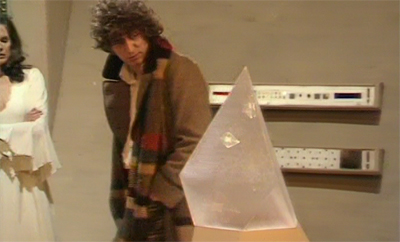
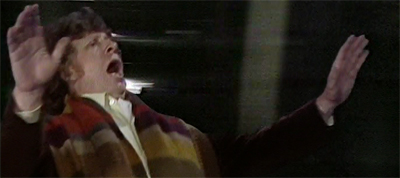
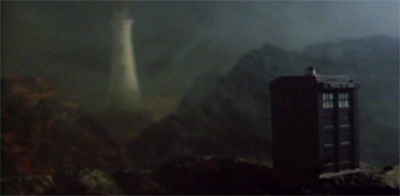
The problems are crystal clear...

The problems are crystal clear…

Continue reading

Doctor Who: The Androids of Tara (Review)

To celebrate the fiftieth anniversary of the longest-running science-fiction show in the world, I’ll be taking weekly looks at some of my own personal favourite stories and arcs, from the old and new series, with a view to encapsulating the sublime, the clever and the fiendishly odd of the BBC’s Doctor Who.

The Androids of Tara originally aired in 1978. It was the fourth part of The Key to Time saga.

Ah! That takes me back… or forward… that’s the trouble with time travel, you can never remember…

– The Doctor

There are some things that I know I should probably feel guilty about – cases where my opinion is so clearly distinct from the general consensus that I feels some sense of obligation to apologise for my radical and far-out ideas. While it falls just short of that mark, I honestly enjoy The Androids of Tara as the best story of The Key to Time. I’ll concede it isn’t as masterfully written as The Ribos Operation, nor as full of wonderfully clever constructs as The Pirate Planet, but The Androids of Tarais a refreshingly small-scale adventure that manages to accommodate the awkward humour that this era of the show is accustomed to, while remaining an excellent adventure in its own right.

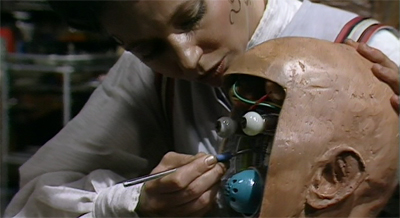
Eyes without a face...

Continue reading

Doctor Who: The Pirate Planet (Review)

To celebrate the fiftieth anniversary of the longest-running science-fiction show in the world, I’ll be taking weekly looks at some of my own personal favourite stories and arcs, from the old and new series, with a view to encapsulating the sublime, the clever and the fiendishly odd of the BBC’s Doctor Who.

The Pirate Planet originally aired in 1978. It was the second part of The Key to Time saga.

Excuse me, are you sure this planet’s meant to be here?

– The Doctor

I have to admit, I admire The Pirate Planet for its lofty aim. Douglas Adams’ script is vast and impressive and epic, incorporating and number of brilliant high concept ideas, traditional science-fiction story-telling devices, and healthy sense of humour into one Doctor Who story. Unfortunately, the production is restricted both by the technical limitations of the time, but also by the sense that there’s simply too much going on over the course of this four-episode adventure. Still, it’s as bold, fun and imaginative as any Doctor Whostory, and showcases the series at its most ambitious. There’s nothing wrong with that.

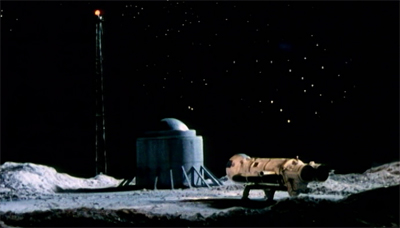
Pulling a fast one...

Continue reading

Doctor Who: Frontier in Space (Review)

To celebrate the fiftieth anniversary of the longest-running science-fiction show in the world, I’ll be taking weekly looks at some of my own personal favourite stories and arcs, from the old and new series, with a view to encapsulating the sublime, the clever and the fiendishly odd of the BBC’s Doctor Who.

Frontier in Space originally aired in 1973.

To celebrate the tenth anniversary of the show, the four-part serial The Three Doctors was produced. However, it was also decided that Jon Pertwee’s fourth season in the role should also contain something quite a bit grander than the average Doctor Who serial. Clearly intended to rival the epic (and lost) Daleks’ Master Plan in terms of scale and scope, an epic twelve-part adventure was conceived that would run across two back-to-back serials. It would open with Frontier in Space, before easing gently into Terry Nation’s Planet of the Daleks.

Unfortunately the adventure was never quite able to measure up to the series’ earlier Dalek epic, primarily due to problems with the second serial. Still, though somewhat weakened by the necessity to dovetail into the story directly following, Frontier in Space remains a rather wonderful example of the series on its largest scale, offering epic space opera with large-scale consequences.

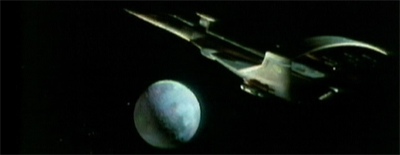
Lost in space…

Continue reading

Doctor Who: The Time Warrior (Review)

To celebrate the fiftieth anniversary of the longest-running science-fiction show in the world, I’ll be taking weekly looks at some of my own personal favourite stories and arcs, from the old and new series, with a view to encapsulating the sublime, the clever and the fiendishly odd of the BBC’s Doctor Who.

The Time Warrior originally aired in 1974.

Look, will you excuse me? I’ve got to go and find a young girl. I’ll see you later, I hope.

Young girl? I should have thought he was a bit old for that sort of thing. Oh well.

– the Doctor and Rubeish discover that Jo’s departure isn’t affecting him too much

The end of an era is fast approaching. Jon Pertwee departed Doctor Who after spending five years in the title role. The end of his fourth year saw the departure of his longest-serving companion, Jo Grant. The start of his final year would see the introduction of Sarah Jane Smith, perhaps the most iconic companion of all time. However, watching the first serial of his last year – The Time Warrior – there is a sense of pending change in the air, a sense that show in the cusp of a very significant shift. The Time Warrior isn’t necessarily explicit about this, but you can almost feel it.

Time is running out...

Time is running out…

Continue reading

Doctor Who: Colony in Space (Review)

To celebrate the fiftieth anniversary of the longest-running science-fiction show in the world, I’ll be taking weekly looks at some of my own personal favourite stories and arcs, from the old and new series, with a view to encapsulating the sublime, the clever and the fiendishly odd of the BBC’s Doctor Who.

Colony in Space originally aired in 1971.

Are you some kind of scientist?

I’m every kind of scientist.

– Caldwell and the Doctor

Colony in Space is an interesting story for many reasons. For one thing, it’s the first colour adventure to travel to another world. It was the first time since Jon Pertwee took over the title role that the character had been allowed to leave the surroundings of modern-day Earth. Even if he did land in a quarry. Colony in Space demonstrated the possibilities to tell futuristic and extraterrestrial stories in the new and remodelled version of Doctor Who, and the show began to slowly venture further and further afield over the next few years, with the Doctor finally regaining control of his TARDIS in The Three Doctors a little under two years later.

However, Colony in Space is also interesting because it is a script from Malcolm Hulke, who has really become one of the more Doctor Who script writers more inclined to pepper his scripts with political and moral philosophy. Colony in Space is an interesting exploration of those themes, even if it does run a little bit long in places. (That said, Hulke is one of the better writers of the six-part format in the show’s history.)

Go on, try to fight the urge to pronounce the episode title like "colony... IN SPACE!"

Go on, try to fight the urge to pronounce the episode title like “colony… IN SPACE!”

Continue reading

Doctor Who: The Claws of Axos (Review)

To celebrate the fiftieth anniversary of the longest-running science-fiction show in the world, I’ll be taking weekly looks at some of my own personal favourite stories and arcs, from the old and new series, with a view to encapsulating the sublime, the clever and the fiendishly odd of the BBC’s Doctor Who.

The Claws of Axos originally aired in 1971.

Are you trying to tell me you can absorb the total output of this complex in a police box?

Yes.

– Hardiman and the Master discover that self-confidence is a genetic Time Lord trait

The Claws of Axos tends to come in for a fair bit of criticism for pretty much being the quintessential Earth-based Jon Pertwee story, with very little exceptional to distinguish it from the pack. Personally, I’m actually quite fond of it, perhaps precisely for that reason. I think you’re hard-pressed to find an adventure in the early part of Jon Pertwee’s tenure that so effectively and so efficiently captures the spirit of the show – both good and bad. That kind of makes The Claws of Axos stand out if only because it so perfectly embodies those early Pertwee years.

Eye see you…

Continue reading

Doctor Who: Attack of the Cybermen (Review)

To celebrate the fiftieth anniversary of the longest-running science-fiction show in the world, I’ll be taking weekly looks at some of my own personal favourite stories and arcs, from the old and new series, with a view to encapsulating the sublime, the clever and the fiendishly odd of the BBC’s Doctor Who.

Attack of the Cybermen originally aired in 1985.

We realise this must be confusing for you.

– Threst tells it how it is

There is a tendency, these days, to be more sympathetic in appraisals of the Colin Baker years. Everybody – including Baker – accepts that his tenure could have gone a lot smoother. Watching Attack of the Cybermen, I can’t help but feel sorry for just about everybody involved. Rewatching Colin Baker’s first season, I can’t help but feel that the problem with this period of the show wasn’t that the production crew were making new mistakes or deviating from good ideas. It seems quite apparent that a lot of the major problems were embedded during Peter Davison’s time in the role.

The problem with Colin Baker’s first year on the show was that the writers and producers allowed those already significant flaws to attain critical mass.

A crushing blow...

A crushing blow…

Continue reading

Non-Review Review: Broken

This film was seen as part of the Jameson Dublin International Film Festival 2013. It was the opening gala.

Broken is that rarest of beasts, a suburban ensemble drama that manages to merge charming humanism with gritty reality. Mark O’Rowe’s adaptation of Daniel Clay’s novel is filled to the brim with humour and joy, but isn’t afraid of the darker shades of emotion. It’s unflinching and occasionally brutal, a candid exploration of the intersecting lives of those inhabiting a small close. However, this honesty lends the film credibility in its lighter moments. The smiles, the giggles and the laughter that come from many off the movie’s more human moments feel earned, and there’s a wonderful sense of balance to Broken, as if to concede that life cannot be composed of entirely happy moments, nor entirely sad. That’s the wonder of it all, and Broken skilfully manages to combine those extremes into a single charming and engaging coming of age drama.

A close call...

A close call…

Continue reading

Doctor Who: Horror of Fang Rock (Review)

To celebrate the fiftieth anniversary of the longest-running science-fiction show in the world, I’ll be taking weekly looks at some of my own personal favourite stories and arcs, from the old and new series, with a view to encapsulating the sublime, the clever and the fiendishly odd of the BBC’s Doctor Who.

Horror of Fang Rock originally aired in 1977.

So you found the trouble then?

Yes, I always find trouble.

– Vince and the Doctor

The show was on something of a hot streak when Horror of Fang Rock aired. While producer Philip Hinchcliffe’s tenure on the show is roundly praised, and is a personal favourite, the standard of the show had been particularly high. The beloved Talons of Weng-Chiang had closed out the previous season, following hot-on-the-heels of the well-regarded Robots of Death – both classic and iconic stories that stand as the very best of Tom Baker’s time in the lead role. Horror of Fang Rockis right on up there, as perhaps one of the best gothic horrors that the series has ever produced.

Something wicked this way comes...

Continue reading