• Following Us

  • Categories

  • Check out the Archives


  • Awards & Nominations

Non-Review Review: Filmworker

This film was seen as part of the Audi Dublin International Film Festival 2018.

What must it be like to surrender a life in service of somebody else pursuing their dreams? It is a challenging and provocative question; very few people are willing to risk everything to chase their own dreams, so what level of devotion must be required to do that in service of somebody else’s aspirations?

This is the central question of Filmworker, the documentary charting the life and times of Leon Vitali, who essentially surrendered his life to director Stanley Kubrick, to help the director fulfill his creative vision and realise his dreams on celluloid. The opening voiceover, lifted from Matthew Modine’s diaries working on Full Metal Jacket, likens Leon Vitali to a moth drawn to Stanley Kubrick’s flame. It’s an apt metaphor, one that plays through Filmworker.
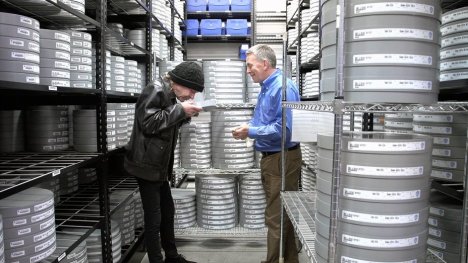
For years, Leon Vitali was Stanley Kubrick’s right-hand man, the film offering varying labels; some call him an “assistant”, others a “factotum”, while Leon’s own official classification of his job for paperwork and applications was “filmworker.” Whatever title might have been applied to Leon, the man did everything did everything. The jack-of-all-trades coached actors, he oversaw casting, he restored negatives, he documented decisions, he engaged with distribution. He was essential to the operating of Kubrick’s creative machine, yet he remains mostly anonymous.

Filmworker engages with this relationship, with the sacrificing of an individual’s autonomy to enable another’s creative vision. The film is refreshing frank in some respects about the demands of such a life, of the temperamental impositions made by such artists of these devotees. The film captures the romance of working with genius, but also the toll that it exacts.

Continue reading

Non-Review Review: Dawson City – Frozen Time

This film was seen as part of the Audi Dublin International Film Festival 2018.

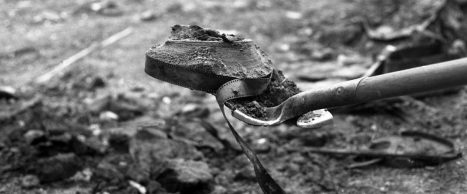
In 1978, the city of Dawson was demolishing an old ice rink to make room for a new recreational centre. During the demolition, the construction crews stumbled on something remarkable. Reels and canisters of films buried in the old swimming book, sealed away and forgotten about. This was a treasure trove for cinema historians, the unearthing of a collection that included films that had been presumed lost to history. It represented a tangible and literal connection to the rich history of cinema and – through that – to the history of American popular culture.

Bill Morrison’s Dawson City: Frozen Time is a documentary looking at this archeological discovery, but it is also so much more. Using footage taken from the recovered films, and from other contemporaneous materials, Morrison takes the audience on a trip through the cultural history of the eponymous settlement, from its origins at the end of the nineteenth century through to the unearthing of these nitrate film reels in the late seventies. The result is a beautiful and compelling exhumation of something much more than those invaluable and long-considered lost silent films.

Morrison weaves a fascinating and compelling narrative that seems to tie all of this together into a convincing and expansive social history. The result is a documentary with startling ambition and scope, in some ways reflecting the approach taken by those earliest of settlers panning for gold in the Yukon territory. Dawson City follows both the social evolution of the settlement and occasionally digresses to follow some of its most important inhabitants. Some of these digressions introduce players who will return to the narrative later in the film, both others suggest a broader social context for the film.

Dawson City is occasionally just a little bit too unfocused for its own good, casting its net just a little bit too wide to bring everything back together for an otherwise satisfying finale. Nevertheless, Dawson City is a powerful ode to a community and to cinematic history, one with big ideas and provocative insights.

Continue reading

Non-Review Review: Hitchcock/Truffaut

This film was seen as part of the Audi Dublin International Film Festival 2016.

Hitchcock/Truffaut is incredibly light and fluffy.

In many respects, Kent Jones’ documentary about the eponymous piece of classic film literature plays like something of a late night infomercial populated with nerdiest film endorsements imaginable. Hitchcock/Truffaut is not so much interested in exploring and expanding its source text, instead settling for celebration. Wes Anderson boasts that his copy of the book is so well-used that it is held together by rubber bands; Kiyoshi Kurosawa explains that the only thing holding him back from blatantly stealing from the book is a promise to himself.

hitchcocktruffaut

There is not anything particularly wrong with this. There is something quite fun in watching film-makers get evangelical about their craft. All of the talking heads offer some insight into their own work when they expand upon what Alfred Hitchcock means to them. Martin Scorsese’s joy as he journeys shot-by-shot into Psycho is infectious, and it is clear that everybody involved with the project holds Hitchcock in the highest possible regard and embraces him as a cornerstone of modern movie-making.

Hitchcock/Truffaut‘s biggest issue is also its strongest virtue; this is a cheerful and superficial acknowledgement of its subject, one that decides particularly in-depth coverage of the auteur is secondary to rendering the material accessible to neophytes.

hitchcocktruffaut5

Continue reading

Non-Review Review: Aonrú

Aonrú offers a fascinating insight into life on Cape Clear Island off the west coast of Cork. The small community had subsisted for years on farming and fishing – as the documentary notes, “the farmers were fishermen and the fishermen were farmers.” Now, due to a number of intersecting and overlapping hurdles – both natural and man-made – the community finds itself struggling to provide a future for itself. The thirty minute documentary examines what it must be like to live on Cape Clear.

Skilfully constructed from a myriad of first-person accounts, archive footage and beautiful images of the region, Aonrú explores the pace of life in one of the most remote parts of the country.

aonru1

Continue reading

Non-Review Review: Shoulder the Lion

This film was seen as part of the Jameson Dublin International Film Festival 2015.

Shoulder the Lion is a visual sumptuous documentary from the creative team of Erinnisse and Patryk Rebisz.

The duo have a long history behind the scenes. Patryk is an accomplished cinematographer and Erinnisse is a veteran editor. However, barring a short film written and produced by Patryk a decade ago, Shoulder the Lion is the first time that the duo have taken complete charge of a film. The result is visually stunning. Shoulder the Lion is a documentary that divides its focus among three subjects – each dealing with a debilitating condition. However, the key is in how Shoulder the Lion attempts to relate to its subjects.

shoulderthelion2

Shoulder the Lion attempts to convey to the audience – visually and aurally – what it must be like to see the world through the perspective of its three subjects. There are any number of striking compositions and sequences in the film, as the Rebiszes invite the audience to experience even some small segment of what day-to-day life must be like for its three central individuals. As Alice Wingwall describes her deteriorating vision, the camera filters out the colours. As Fergal Sharpe describes the agony of tinnitus, a painful electronic buzz builds.

There are structural problems with Shoulder the Lion. Most obviously, the fact that it divides its attention between three subjects while devoting so much energy towards its visuals means that not all of the three central figures emerge fully-formed. Indeed, it could be argued that the film expends more time trying to replicate their disabilities than exploring their experiences beyond that. However, the result is a thought-provoking and well-constructed piece of film. It is a beautiful piece of work, if not quite as deep as it might have been.

shoulderthelion

Continue reading

Non-Review Review: Dennis Rodman’s Big Bang in Pyongyang

This film was seen as part of the Jameson Dublin International Film Festival 2015.

Dennis Rodman’s Big Bang in Pyongyang tells a story that would seem almost too absurd or too far-fetched if it were a scripted drama. The documentary charts the former NBA star as he attempts to organise a friendly basketball game between North Korea and the United States. The idea came from Kim Jong-Un, who had struck up an unlikely friendship with Rodman during an earlier trip to the isolated dictatorship. Over December 2013 and January 2014, Rodman helped to organise the most unlikely basketball friendly in history.

dennisrodmansbigbanginpyongyang2

Continue reading

Non-Review Review: Electric Boogaloo – The Wild, Untold Story of Cannon Films

This film was seen as part of the Jameson Dublin International Film Festival 2015.

There is a lot of affection on display in Electric Boogaloo: The Wild, Untold Story of Cannon Films.

Sure, it’s the kind of affection that comes qualified with awkward laughter and wry self-aware sarcasm, but it seems like a lot of the participants in this documentary exploring the eventful life of the infamous film studio are pleasantly surprised that the ride lasted as long as it did. If there is one big recurring motif throughout the film, it is sheer wonderment at how the studio managed to continue operating – churning out questionable film after questionable film. There are commentators who seem in awe at the factory-like conditions of the studio.

americanninja

To be fair, Electric Boogaloo does afford a platform to those commentators with legitimate grievances against the studio. Writers lament the changes that their scripts went through, actors make observations about questionable choices made by directors, partners observe the difficulty of dealing with material churned out by the studio. More than one commentator offers their own crude impression of Menahem Golan and Yoram Globus. However, most of these observations come from a place of mild bemusement or open awe at what the studio got away with doing.

Writer and director Mark Hartley covers an impressive amount of material in his documentary, even if it suffers a bit from lack of focus. There is an incredible energy and sense of fun about the whole project – acknowledging that Golan and Globus had a tremendous influence on how the movie industry currently works, without romanticising their process. Electric Boogaloo: The Wild, Untold Story of Cannon Films is a fascinating watch for any film fan.

cannonfilms

Continue reading

Space: Above and Beyond – Dear Earth (Review)

This November (and a little of December), we’re taking a trip back in time to review the third season of The X-Files and the first (and only) season of Space: Above and Beyond.

In many respects, Dear Earth serves as a mirror to Toy Soldiers.

Both stories are based around familiar wartime story beats. Both are very sentimental hours of television. Both are firmly anchored in the idea that Space: Above and Beyond is largely about reworking the narratives of the Second World War for a futuristic outer space setting. There is a lot of overlap between Dear Earth and Toy Soldiers, with the episodes feeling like two peas in a pod. They both appeal to the same aspects of Space: Above and Beyond.

You've got mail...

You’ve got mail…

However, Dear Earth works a lot better than Toy Soldiers did. It is dealing with a similar collection of iconic imagery and ideas associated with the Second World War, touching on many of the same themes and ideas; it is just that the execution is considerably stronger. Dear Earth is a show that not only has a lot more charm than Toy Soldiers did, but a lot more humanity. It is an episode that does a lot to remind viewers why they have come to care for the show’s ensemble.

Dear Earth is a very well-made piece of television.

Astro-turf...

Astro-turf…

Continue reading

Non-Review Review: Good Ol’ Freda

This film was seen as part of the Jameson Dublin International Film Festival 2014.

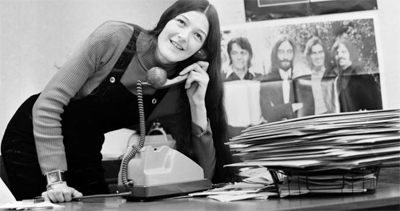
Freda Kelly was secretary to The Beatles, and the head of the official Beatles fan club. She managed letters and schedules and magazines and wages and all these different aspects of the lives of John, Paul, Ringo and George. However, she remains something of a peripheral figure in the grand tapestry of Beatles lore. According to most of the commentators in Good Ol’ Freda, there’s a very simple reason for this.

“My mother never played the fame game,” her daughter notes. Freda never published a tell-all book. She never betrayed confidence. Indeed, one of the stories in Good Ol’ Freda has her firing two assistants for one’s attempt to pass off the hair of a sibling for the hair of a Beatle. Integrity was very much the watchword of Freda Kelly, and it’s something that comes across in the documentary, as Freda rather pointedly refuses to be drawn on more personal or intimate questions.

As a result, there’s very little information here that won’t be familiar to fans of the Fab Four. There are some nice insights and an occasionally endearing anecdote – poor Ringo and his nine fan letters! – but Good Ol’ Freda never really pries too deeply into lives Freda managed for a decade at the peak of their popularity. Instead, Good Ol’ Freda works best as a character study of its subject, a glimpse of a woman who was caught up in a maelstrom and walked out almost completely unaffected.

goodolfreda2

Continue reading

Non-Review Review: Beyond the Edge

This film was seen as part of the Jameson Dublin International Film Festival 2014.

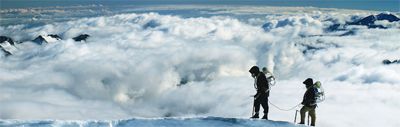
The story of Edmund Hillary is a fascinating one, rendered skilfully in 3D by Leanne Pooley. While Beyond the Edge leans just a little bit too heavy on pop psychology to dig into is subjects, and while the documentary could use a bit more room to breathe, it is a very effective illustration of exactly what the Hunt expedition accomplished in scaling Everest in May 1953.

beyondtheedge3

Continue reading