• Following Us

  • Categories

  • Check out the Archives


  • Awards & Nominations

Doctor Who: Blink (Review)

To celebrate the fiftieth anniversary of the longest-running science-fiction show in the world, I’ll be taking weekly looks at some of my own personal favourite stories and arcs, from the old and new series, with a view to encapsulating the sublime, the clever and the fiendishly odd of the BBC’s Doctor Who.

Blink originally aired in 2007.

But listen, your life could depend on this. Don’t blink. Don’t even blink. Blink and you’re dead.

– the Doctor

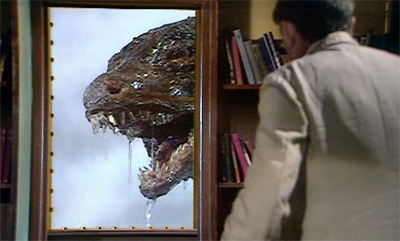
Like Love and Monsters, Blink is a “Doctor-lite” episode, an effective time- and money-saving measure from the show’s production staff, built around filming an episode that requires the minimal involvement from the lead actors. Also like Love and MonstersBlink is an episode of Doctor Who that is about Doctor Who.

Granted, Steven Moffat’s script doesn’t engage with fandom as directly as Russell T. Davies did. Here, the fans trying to find their own meaning in the show are the anonymous net-izens on forums and fan sites, rather than a friendly group of eccentric individuals enriched by contact with one another.

While Love and Monsters is about how Doctor Who fandom tends to serve to unite diverse people beyond an interest in Doctor Who itself, forming bonds that become more significant and important than the interest in the show, Blink is very much a story about trying to make sense of the show itself.

Rocking the boat...

Rocking the boat…

Continue reading

Doctor Who: Carnival of Monsters (Review)

To celebrate the fiftieth anniversary of the longest-running science-fiction show in the world, I’ll be taking weekly looks at some of my own personal favourite stories and arcs, from the old and new series, with a view to encapsulating the sublime, the clever and the fiendishly odd of the BBC’s Doctor Who.

Carnival of Monsters originally aired in 1973.

Roll up and see the monster show! A carnival of monsters, all living in their natural habitat, wild in this little box of mine. A miracle of intragalactic technology! Roll up! Roll up! Roll–

– Vorg welcomes us to the new world

There’s a valid argument to be made that Carnival of Monsters is the heart of the show’s tenth anniversary celebrations. Sure, it lacks the bombast of recruiting William Hartnell and Patrick Troughton to guest star in The Three Doctors, but it’s very much an affectionate love letter to the show and a bold statement of purpose going forward. With the Time Lord’s ending the Doctor’s exile in The Three Doctors, the whole universe is at his doorstep.

Carnival of Monsters, then, is really the point at which a specific era of Doctor Who can be said to begin. While the First and Second Doctors had journeyed to other worlds and times, they had done so in black-and-white. The whole point of exiling the Doctor to Earth way back in Spearhead from Space was so that the shift to colour wouldn’t destroy the suspension of disbelief. The hope was that grounding the series might make it possible to maintain suspension of disbelief in bright colour.

Here there be monsters...

Here there be monsters…

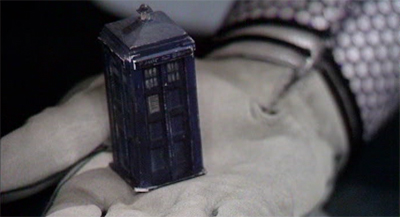
While the Third Doctor has ventured to other worlds before (Colony in Space, Curse of Peladon, The Mutants), this is the point in the show where Doctor Who becomes the full-colour adventures of a man traveling through space and time in a blue box. This is the point at which cardboard sets and dodgy alien design become more than just occasional quirks – they become an expected part of the formula.

In a way, Carnival of Monsters is just as much a bold statement of purpose as Spearhead from Space was.

In the palm of his hands...

In the palm of his hands…

Continue reading

Doctor Who: Love and Monsters (Review)

To celebrate the fiftieth anniversary of the longest-running science-fiction show in the world, I’ll be taking weekly looks at some of my own personal favourite stories and arcs, from the old and new series, with a view to encapsulating the sublime, the clever and the fiendishly odd of the BBC’s Doctor Who.

Love and Monsters originally aired in 2006.

Someone wants a word with you.

You upset my mum.

Great big absorbing creature from outer space, and you’re having a go at me?

No one upsets my mum.

– the Doctor, Rose and Elton get their priorities straight

Love and Monsters remains one of the most divisive stories of the Davies era, if not the revival in general. It’s the show’s first “Doctor-lite” episode, a production featuring as little of the lead actor in possible in order to make the season’s arduous production schedule just a little bit easier. The Christmas Invasion had added another episode to the mix, and so the idea was that Love and Monsters could be shot during the production block of The Impossible Planet and The Satan Pit in order to allow for a standard length season without increasing an already impressive workload for the leads.

As such, it’s easy to imagine that the “Doctor-lite” episodes could be throw-away adventures, episodes chopped together to meet the quota of stories for a given season – churn them out and focus the attention on to the “bigger” and “more important” adventures. Instead, the “Doctor-lite” episodes have proven to be some of the most experimental and creative episodes of the entire Davies era. While critical and fan opinion remains divided on Love and Monsters, the subsequent “Doctor-and-companion-lite” episodes – like Blink, Midnight and Turn Left – are counted among the best of their respective seasons.

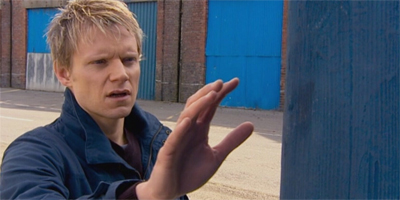
Love and Monsters is a show about Doctor Who. More specifically, it’s about Doctor Who fandom, and a romantic ode to the importance that the show can have in some people’s lives.

Reach out and touch faith...

Reach out and touch faith…

Continue reading

Doctor Who: The Greatest Show in the Galaxy (Review)

To celebrate the fiftieth anniversary of the longest-running science-fiction show in the world, I’ll be taking weekly looks at some of my own personal favourite stories and arcs, from the old and new series, with a view to encapsulating the sublime, the clever and the fiendishly odd of the BBC’s Doctor Who.

The Greatest Show in the Galaxy originally aired in 1988.

Sometimes I think it’s you that’s crazy, not Deadbeat here.

Anybody remotely interesting is mad in some way or another.

– Ace and the Doctor cut to the heart of Doctor Who

It’s very hard to believe that The Greatest Show in the Galaxy aired as the final story of the twenty-fifth season of Doctor Who. Stories like Remembrance of the Daleks and Silver Nemesis were clearly anniversary fodder, celebrating the progress of the show to this point. The Happiness Patrol was a delightfully surreal oddity that has only really been noticed by the general public in recent years, with news breaking in 2010 that Andrew Cartmel had been using Doctor Who to tell politically subversive stories. Which, I suppose, confirms just how few people were watching The Happiness Patrol in 1988.

The Greatest Show in the Galaxy is as concerned with the legacy of Doctor Who as Remembrance of the Daleks or Silver Nemesis, but it lacks the nostalgic shine. Instead, it’s a stunningly bitter piece of television that offers a pretty damning indictment of what Doctor Who had become by the late eighties, a critique of selling out and chasing ratings and living in constant fear that the gods of entertainment – the middle-class families so desperately courted and so carefully catered to – might tune out and consign the show to oblivion.

The Doctor welcomes you to The Greatest Show in the Galaxy...

The Doctor welcomes you to The Greatest Show in the Galaxy…

Continue reading

Watch! Day of the Doctor Trailer!

This being the month of the fiftieth anniversary, we’re going a bit Doctor Who mad here at the m0vie blog. The trailer for the special, The Day of the Doctor, has been released. And you can check it out below. It looks fairly epic. Check back daily over the next few weeks for our latest Doctor Who reviews, both classic and modern.


Doctor Who: Series Four (or Thirty) (Review/Retrospective)

The fourth season of the revived Doctor Who is probably the most consistent of the seasons produced by Russell T. Davies. The first season had a very clear arc running through it, building to a fantastic final run of episodes; the second season had some strong individual elements, but suffered from a lot of behind-the-scenes shuffling; the third season suffered from a shoddy opening stretch, teething difficulties with the show’s first new companion lackluster finalé, despite some great ideas and wonderful experimental plotting.

While the fourth season is far from perfect, it does hang together a lot better than any of the previous three seasons. Watching from Partners in Crime through to Journey’s End, it definitely feels like Russell T. Davies had a stronger sense of where he wanted to go than he had with any of the previous three seasons. It helps that the past three seasons had been spent trying to acclimatise viewers to the workings of Doctor Who. The first season introduced the first Doctor and companion and the Daleks. The second introduced the first new Doctor and the Cybermen. The third introduced the first new companion and the Master.

doctorwho-theunicornandthewasp

So the fourth season is the first time that the show doesn’t really have too much of a mission statement. Unlike the Daleks or the Master or the Cybermen, nobody was really clamouring to see the Sontarans reinvented, let alone to reintroduce Davros. Like a lot of the foruth season, it seems like the show was really enjoying any freedom from a sense of obligation. The public knew what Doctor Who was. The rules and players had been set out, the past had been acknowledged and the show defined.

As such, the fourth season feels a lot more relaxed for everybody involved.

doctorwho-planetoftheood12

Continue reading

Doctor Who: Journey’s End (Review)

To celebrate the fiftieth anniversary of the longest-running science-fiction show in the world, I’ll be taking weekly looks at some of my own personal favourite stories and arcs, from the old and new series, with a view to encapsulating the sublime, the clever and the fiendishly odd of the BBC’s Doctor Who.

Journey’s End originally aired in 2008.

Stand witness, humans. Your strategies have failed, your weapons are useless, and… oh, the end of the universe has come.

– Davros, master of understatement

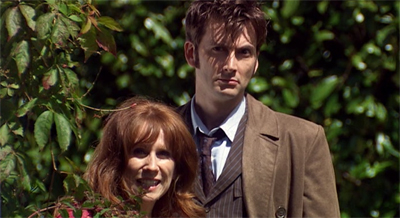
Journey’s End covers a lot of ground incredibly quickly. Even running one-and-a-half times the length of a regular episode, Journey’s End feels like it’s ready to burst at any given moment. Those who don’t like Davies’ finalés will find a lot to complain about here. The stakes are raised so high as to become almost abstract. The plot is written into a corner where it takes nothing short of a convenient deus ex machina to resolve it all. The Tenth Doctor and Rose are as annoying together as they have ever been, despite both being quite awesome apart.

However, if you’re looking at The Stolen Earth and Journey’s End as a story, you’re missing the point. The real news is that this was a crowning accomplishment for the series. Not only did The Stolen Earth and Journey’s End both pull a record high Appreciation Index of 91, Journey’s End edged out East Enders and Coronation Street to become the most-watched show on British television that week. This was the first time that Doctor Who had accomplished this since it came back.

The Daleks' master plan...

The Daleks’ master plan…

The only comparable accomplishment in the history of the show is City of Death scoring the show’s highest ever ratings. And that only happened because an ITV strike made it quite difficult for anybody to watch anything else at the time. So, no matter how you cut it, Journey’s End is a phenomenal piece of event television, one that really solidifies the importance of the resurrected Doctor Who in British popular consciousness.

In a very real way, the title feels somewhat apt. The long journey of Doctor Who from a failed science-fiction show in the wilderness to a crown jewel in British television was finally over.

It's been a hell of a ride...

It’s been a hell of a ride…

Continue reading

Doctor Who: Turn Left (Review)

To celebrate the fiftieth anniversary of the longest-running science-fiction show in the world, I’ll be taking weekly looks at some of my own personal favourite stories and arcs, from the old and new series, with a view to encapsulating the sublime, the clever and the fiendishly odd of the BBC’s Doctor Who.

Turn Left originally aired in 2008.

You said I was going to die, but you mean this whole world is going to blink out of existence. But that’s not dying, because a better world takes its place. The Doctor’s world. And I’m still alive. That’s right, isn’t it? I don’t die. If I change things, I don’t die. That’s that’s right, isn’t it?

– poor Donna… poor, poor Donna

The fourth season is basically one gigantic victory lap for Russell T. Davies’ Doctor Who. Davies has done the hard work of returning the show to television. He’s made the Daleks threatening. He’s rebooted the Cybermen. He’s made the Master sexy again. The fourth season is really just about enjoying the success of the show, and using that success to do crazy things like bringing back the Sontarans or Davros. Because nobody was clamouring for another Sontaran or Davros story.

That sense of celebration is probably most obvious in Turn Left, the penultimate story of the fourth season. It’s basically It’s a Wonderful Life, starring the Tenth Doctor. Or, to be more accurate, It’s a Wonderful Life for the new series of Doctor Who. It’s an excuse to celebrate a raft of continuity from The Runaway Bride through to The Sontaran Stratagem, to bring back Billie Piper and just to celebrate not only the wonder of Doctor Who, but the virtue of Davies’ approach to the series.

Everything goes up in smoke...

Everything goes up in smoke…

Continue reading

Doctor Who: Midnight (Review)

To celebrate the fiftieth anniversary of the longest-running science-fiction show in the world, I’ll be taking weekly looks at some of my own personal favourite stories and arcs, from the old and new series, with a view to encapsulating the sublime, the clever and the fiendishly odd of the BBC’s Doctor Who.

Midnight originally aired in 2008.

And you be careful, all right?

Nah. Taking a big space truck with a bunch of strangers across a diamond planet called Midnight? What could possibly go wrong?

– Donna and the Doctor tempt fate

Midnight was the fiftieth episode of the revived Doctor Who to enter production. It had been intended to air as the fiftieth episode of the new series, but plotting similarities between Forest of the Dead and Turn Left forced Davies to shift the broadcast order of the episodes. As a result, we end up with the longest consecutive streak of Davies-written episodes in the history the show, stretching from Midnight through to The End of Time, Part II. In essence, although it’s not really intended as part of the over all arc, Davies’ swan song begins here.

And it’s the best episode that Davies has ever written. It might be the best episode of the fourth season. It might even compete for the best episode of show produced by Davies.

So it’s pretty great.

The long dark midnight of the soul...

The long dark midnight of the soul…

Continue reading

Doctor Who: Forest of the Dead (Review)

To celebrate the fiftieth anniversary of the longest-running science-fiction show in the world, I’ll be taking weekly looks at some of my own personal favourite stories and arcs, from the old and new series, with a view to encapsulating the sublime, the clever and the fiendishly odd of the BBC’s Doctor Who.

Forest of the Dead originally aired in 2008.

Everybody knows that everybody dies. But not every day. Not today. Some days are special. Some days are so, so blessed. Some days, nobody dies at all. Now and then, every once in a very long while, every day in a million days, when the wind stands fair, and the Doctor comes to call, everybody lives.

– River brings Moffat’s contributions to the Davies era a full circle

There’s actually quite a lot to like about Forest of the Dead. Like Silence in the Library, it doesn’t really push Moffat’s work on Doctor Who that much further. A lot of its big ideas can be found in Moffat’s earlier Doctor Who work. Still, it is quite clever and quite well-written, and a pretty well-constructed episode. This is, after all, the last episode of the Davies era that is not credited to Davies himself. Given it’s written by the showrunner elect, that celebratory feel is justified.

At the same time, however, there are some very uncomfortable gender roles at work in Forest of the Dead for female characters like Donna or River. Moffat would come under a lot of fire during his tenure producing Doctor Who for the way that he wrote female characters, but I’d actually argue that the problems with Forest of the Dead are more in keeping with wider Davies-era trends towards the way that female characters are written.

It just clicked...

It just clicked…

Continue reading