• Following Us

  • Categories

  • Check out the Archives


  • Awards & Nominations

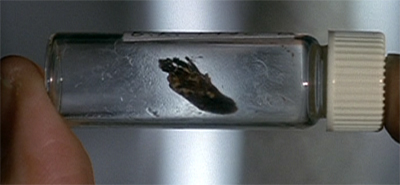
The X-Files – Anasazi (Review)

This August (and a little of September), we’re taking a trip back in time to review the second season of The X-Files. In November, we’ll be looking at the third season. And maybe more.

Burn it.

– C.G.B. Spender, 16 April 1995

On alien soil...

On alien soil…

Continue reading

The X-Files (Topps) #4-6 – Firebird (Review)

This August (and a little of September), we’re taking a trip back in time to review the second season of The X-Files. In November, we’ll be looking at the third season. And maybe more.

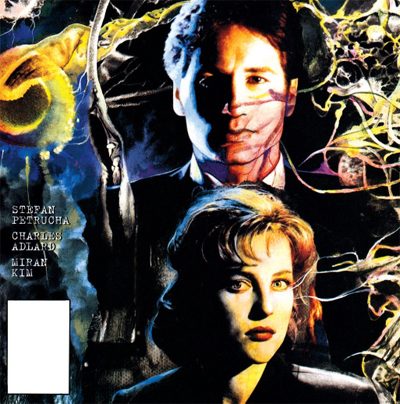
Firebird is the first multi-part story told in the pages of The X-Files. Writer Stefan Petrucha and artist Charles Adlard don’t transition from done-in-one stories to two-part adventures, instead skipping the middle step and producing a three-issue epic. While A Little Dream of Me exposed the limitations facing a creative team working on a tie-in, Firebird demonstrates the strengths of the format. Spanning from Siberia to New Mexico, Firebird has an epic scale that would not be possible on the second season of The X-Files.

(Rather interestingly – and perhaps tellingly – Petrucha takes the comics to places that the show wants to go. The American South-West would be very difficult to replicate in Vancouver, prompting the creative team to make an ambitious effort to bring Mulder and Scully to New Mexico in Anasazi, infamously painting a quarry red to achieve the desired result. The show would wait until the fourth season before it was confident enough to take Mulder to Siberia in Tunguska and Terma.)

Something out of this world?

Something out of this world?

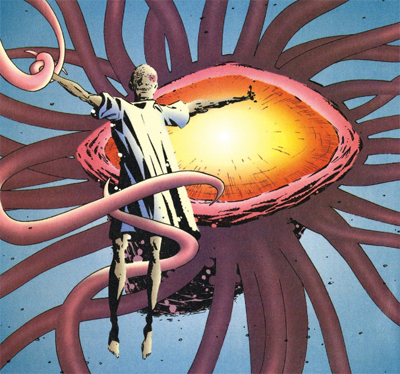
As with Not To Be Opened Until X-Mas, Firebird is very much a comic book story. While the show was reluctant have Mulder and Scully directly encounter aliens, the story features a monster that looks like something from the Lovecraft mythos. While the stakes on the show were generally rather personal to this point, Firebird puts the entire population of New Mexico (if not the world) at stake. While the series took its time revealing its evil conspiracy, Firebird gives us a cabal headed by a monologuing skull-holding would-be supervillain.

Perhaps surprisingly, this works. It’s clear that Petrucha and Adlard are aware that they are working in a different medium with different expectations and conventions. Firebird is very much an X-Files comic book epic, a story that couldn’t be realised on film. And there’s something very endearing about that.

Alien affairs...

Alien affairs…

Continue reading

The X-Files – Soft Light (Review)

This August (and a little of September), we’re taking a trip back in time to review the second season of The X-Files. In November, we’ll be looking at the third season. And maybe more.

Soft Light is a bit of an oddity. It’s primarily notable for being Vince Gilligan’s first credit on The X-Files, coming a few years after the release of Wilder Napalm, a film based on his screenplay.

Gilligan, of course, would go on to become a wildly influential television writer. He would join the staff in the show’s third year and produce some of the series’ most memorable episodes. He would also manage the day-to-day running of The Lone Gunmen spin-off. Although, at the moment, Gilligan is probably best known for creating and producing Breaking Bad, which has already been ranked among the best television series ever produced.

Everything burns...

Everything burns…

It is very tempting to look at a writer’s early work and to try to retroactively over-analyse it – to spot familiar themes and images, as if to incorporate it into a large oeuvre. That becomes a bit more complicated in television, where an early screenplay is quite likely to have been written and re-written several times before it reaches the screen. As a freelance writer submitting a script, Gilligan’s work would have been heavily reworked to make it fit within the context of The X-Files.

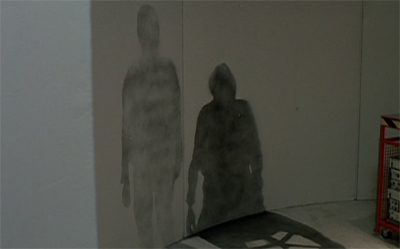
While there are traces of Gilligan’s later work to be found here, Soft Light is a rather awkward late-season episode, one that seems a little out of place.

Shadows on the wall...

Shadows on the wall…

Continue reading

The X-Files – F. Emasculata (Review)

This August (and a little of September), we’re taking a trip back in time to review the second season of The X-Files. In November, we’ll be looking at the third season. And maybe more.

The wonderful thing about the second season of The X-Files is the spirit of experimentation. There’s a sense that the show is consciously pushing itself to try new things, to figure out what works. Watching the second season of the show, you can see the series’ outline beginning to take shape, even if it’s not full developed yet. The third season of The X-Files would seem a lot stronger and more cohesive, but it was building off the lessons learned during the second season.

Sometimes those experiments worked well. For example, the first stretch of the season demonstrated that the show could do an arc spanning multiple episodes. Colony and End Game established the foundations of the larger “colonisation” mythology even beyond “the government knows about aliens and they sometimes abduct people.” Episodes like Die Hand Die Verletzt and Humbug demonstrated that the show could do comedy stories and step outside its comfort zones.

Has everybody caught the Ebola bug?

Has everybody caught the Ebola bug?

Of course, there were a few narrative dead-ends as well, a few experiments that did not work as well as they might. Most notably, the tail end of the season leans rather heavily on science-fiction high-concepts. The elements introduced in Colony and End Game work well enough, but shows like Soft Light and Død Kälm feel almost like episodes of some other science-fiction anthology show. Still, there’s a sense that the show is trying to figure out what exactly it wants to be.

F. Emasculata is a wonderful example of that spirit of experimentation, effectively tapping into nineties health scares within the framework of a conspiracy thriller.

Everything burns...

Everything burns…

Continue reading

The X-Files (Topps) #3 – A Little Dream of Me/The Return (Review)

This August (and a little of September), we’re taking a trip back in time to review the second season of The X-Files. In November, we’ll be looking at the third season. And maybe more.

There are inevitable challenges in working on a licensed property. You are effectively playing with somebody else’s toys. Since these tie-ins cannot drive a narrative currently unfolding in another medium, it’s often a challenge to maintain the illusion of forward momentum while existing at the behest of a story that can change from week-to-week. While The X-Files was a massive coup for Topps comics, and while Stefan Petrucha and Charles Adlard did a wonderful job, the comic had to face these constraints.

A Dismembrance of Things Past had brushed up against those limitations in trying to tell a U.F.O. story without meddling in the television show’s continuity. Petrucha used some fiendishly clever sleight of hand there, suggesting that the story would be about an alien visitation and possible cover-up, only to reveal that the story was actually an intimate meditation on the ideas of truth and memory. It was a rather ingenious bait-and-switch, resulting in a wonderful little story.

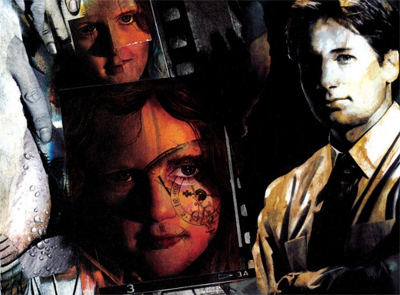
Pictures in his head...

Pictures in his head…

A Little Dream of Me is not quite as efficient in dealing with the external limitations imposed on a tie-in comic book. The unfortunate realities of comic book scheduling meant that A Little Dream of Me had the misfortune to hit the stands very shortly after the broadcast of Colony and End Game. Of course, the script for A Little Dream of Me would have been written long before the episodes aired (about six months), but the scheduling causes the comic to suffer.

After all, Colony and End Game had made it abundantly clear that Samantha Mulder was unlikely to be returning to her family any time soon. And that was in the television show. The third issue of the comic book teasing the return of Samantha Mulder seems like a rather cynical cheat.

The "X" file...

The “X” file…

Continue reading

The X-Files – End Game (Review)

This August (and a little of September), we’re taking a trip back in time to review the second season of The X-Files. In November, we’ll be looking at the third season. And maybe more.

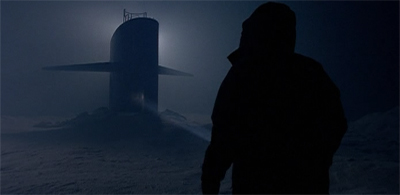
Towards the end of End Game, Mulder stumbles across a nuclear submarine that was attacked in the episode’s teaser. The craft was disabled by a strange craft it picked up in the ocean. Now, following a mysterious alien figure across the world in a quest to find his sister, Mulder approaches the location of the lost American submarine. As he does, he notices the submarine’s coning tower, bursting through the ice.

It’s one of those beautifully iconic television moments. It’s an image that is audacious and stunning and beautiful and breathtaking. It immediately gives End Game (and Colony) a sense of scale. All of a sudden, this isn’t just a bunch of stuff happening under the radar in some small town somewhere. This is the hijacking of a nuclear submarine by a hostile entity. This is Mulder going to the ends of the Earth to get his sister back.

Not so green any longer...

Not so green any longer…

It’s also worth noting that the symbolism is beautiful. Even looking at a picture of Mulder on the ice conjures up all manner of associations. Coupled with the non-linear storytelling employed by Colony and End Game, it calls Frankenstein to mind – Frankenstein serving as a massively influential text on Chris Carter. However, the idea of Mulder finding important existential answers on an Arctic soundstage also evokes Clark Kent’s self-discovery in Richard Donner’s Superman films, playing into the sense that this is an episode framed in cinematic terms.

The rest of the episode could just be dead air, and End Game would still work impressively well. However, End Game remains a fantastic piece of work in its own right, effectively codifying how a two-parter is meant to work.

The truth is out there...

The truth is out there…

Continue reading

The X-Files – Colony (Review)

This August (and a little of September), we’re taking a trip back in time to review the second season of The X-Files. In November, we’ll be looking at the third season. And maybe more.

Colony is another second season game changer. As with other episodes in the second season, there’s a sense that the production team are really getting to grips with what works with the show – laying groundwork and defining a template that they can work with into the show’s third season. While the Duane Barry and Ascension two-parter had been an act of desperation to work around Gillian Anderson’s pregnancy, Colony and End Game is a two-parter that the show embraced entirely of its own volition.

These two two-part episodes really set the template for the show going forward. There’s a sense that Chris Carter and his team were really defining what a season of The X-Files should look like, giving them a blueprint that they might build on in the years ahead. From the second season through to the sixth, the show would stick quite rigidly to the idea of two big two-parters in the middle of the season, quite apart from any multi-part stories bridging the seasons.

Lights in the sky...

Lights in the sky…

These two parters were typically broadcast as part of the “sweeps”, and inevitably focused on the show’s alien conspiracy mythology. Even the more stand-alone two-parters like A Christmas Carol and Emily or Dreamland Part I and Dreamland Part II still build off the series’ central mythology. Given those were the points at which the show got the highest exposure, and the point where the show worked hardest to draw in an audience, it’s no surprise that the mythology arc rose to such prominence.

Duane Barry and Ascension undoubtedly set a precedent, but those episodes were prompted by factors outside the control of the creative team. However, Colony and End Game really solidified that precedent into a guiding principle for the show. This two-parter comes to codify and cement a lot of the things that the show’s mythology comes to take for granted. For better and worse.

Quite pointed...

Quite pointed…

Continue reading

The X-Files (Topps) #2 – A Dismembrance of Things Past (Review)

This August (and a little of September), we’re taking a trip back in time to review the second season of The X-Files. In November, we’ll be looking at the third season. And maybe more.

A Dismembrance of Things Past is an absolute delight, and a nice demonstration of how well writer Stefan Petrucha and Charles Adlard could tell stories set within The X-Files universe.

There are many interesting things about A Dismembrance of Things Past. It’s a fine piece of work, deftly balancing the demands on a new comic book set within the world of The X-Files with an urge to tell a story that fits very clearly and very comfortably within the show’s basic structure. It is easy to imagine A Dismembrance of Things Past receiving a live-action adaptation. Indeed, Petrucha’s script feels like something of a tribute to writer Darin Morgan before Darin Morgan had even written for the show, half-way between Blood and Jose Chung’s “From Outer Space.”

Something to remember them by...

Something to remember them by…

A Dismembrance of Things Past confronts the difficulties of writing a tie-in comic book to The X-Files, while using those constraints to tell an interesting story in its own right. After all, the comic book would have to tell an alien or U.F.O. story eventually. The words “The X-Files” are written on the cover, and that comes with the territory. At the same time, Petrucha and Adlard have to acknowledge the fact that the tie-in comic book cannot advance the on-screen mythology arc. Indeed, it seems unlikely Carter had shared too much of that arc with Petrucha or Adlard.

It takes a lot of skill to balance these competing demands of a tie-in comic book – to remain connected to the source material, but never pulling too far away or ahead, while remaining interesting. A Dismembrance of Things Past manages to satisfy all of its obligations and then some.

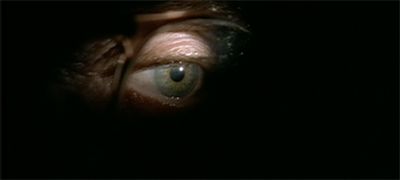
Through alien eyes...

Through alien eyes…

Continue reading

The X-Files – Red Museum (Review)

This August (and a little of September), we’re taking a trip back in time to review the second season of The X-Files. In November, we’ll be looking at the third season. And maybe more.

While Firewalker is a solid episode ill-served by its position in the schedule and its similarity to an early episode of the show, Red Museum is just a mess.

The production issues with Red Museum are infamous. It was intended as the first part of a crossover between The X-Files and Picket Fences, both airing on Friday nights. The idea was that fans could tune into The X-Files on Fox for the first part of the story, and then move over to CBS after the credits rolled to pick up the case on Picket Fences. It was an ambitious effort – too ambitious. Although showrunners Chris Carter and David E. Kelley agreed on the idea, CBS vetoed it. It resulted in two orphaned hours of television, Red Museum and Away in the Manger.

Well, not quite. The result is something of a malformed two-parter composed of two individual malformed episodes.

He likes to watch...

He likes to watch…

Continue reading

X-Over: The X-Files & Steven Moffat’s Doctor Who

It goes without saying that The X-Files was a massively influential television show. As early as its second season, the show had launched all manner of imitations and copycats, both inside and outside the Fox Network. It seems quite likely that Fox invested two-and-a-half million dollars in the failed Doctor Who relaunch of 1996 in the hopes of spinning off another cult/mainstream science-fiction hit like The X-Files. It was launched as a two-hour television movie, failing to earn the rating necessary to spin it off into a weekly series.

However, although the 1996 telemovie provides an obvious point of intersection between The X-Files and Doctor Who, the influence of The X-Files can perhaps be most keenly felt in Steven Moffat’s work on the relaunched television series. Moffat is credited as the producer who helped the show to “break” America during his second year as showrunner, and he did so in a number of ways. Perhaps the most interesting is that he leaned rather heavily on The X-Files as a point of cultural intersection.

Shades of greys...

Continue reading