• Following Us

  • Categories

  • Check out the Archives


  • Awards & Nominations

The X-Files – Tunguska (Review)

This February and March, we’re taking a trip back in time to review the fourth season of The X-Files and the first season of Millennium.

The show’s conspiracy plot line is rapidly approaching critical mass.

It is quite clear at this point that while colonisation might have a schedule, Fox had just thrown Chris Carter’s out the window. The X-Files: Fight the Future looms large on the horizon. Indeed, Tunguska is credited to Chris Carter and Frank Spotnitz, who would end up writing the screenplay for the feature film over the Christmas break. However, while Carter had originally conceived the movie to put a cap on the television series, Fox wanted it to tie more aggressively into the series. It would not be the end of the journey, but a middle chapter.
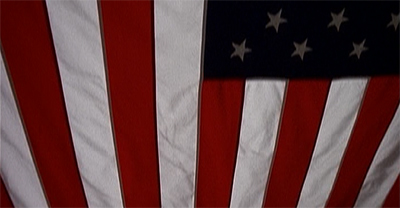
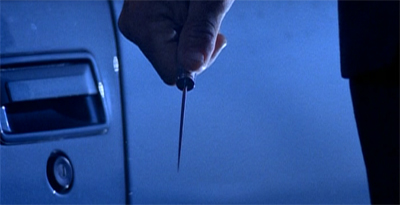
Flagging the danger...

Flagging the danger…

As such, the larger conspiracy plotline that had been gathering momentum since the end of the second season spends two years largely spinning its wheels to keep the feature film relevant. The film was written midway through the fourth season and shot in the gap between the fourth and fifth seasons. So, there is a lot of stalling required. To use the “cancer” metaphor that is cleverly (and almost subconsciously) woven through the fourth season, the central conspiracy plotline seems to go into remission for a while.

This isn’t inherently a bad thing. Indeed, the stalling allows the show to take stock and to devote space in the mythology to more personal stories like Tempus Fugit and Max or Christmas Carol and Emily. However, it also means that episodes like Herrenvolk, Tunguska, Terma and The End felt like attempts to buy time – offering the illusion of dynamism and change while only inching the plot along.
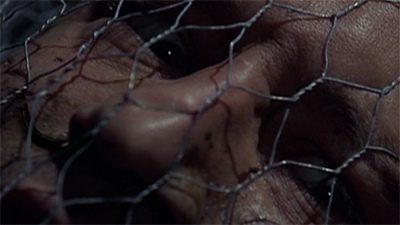
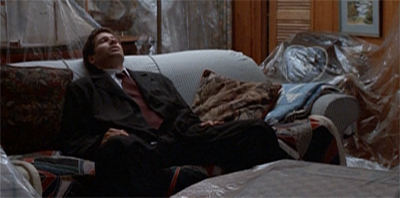
Wired up...

Wired up…

Continue reading

The X-Files (Topps) #17 – Thin Air (Review)

This February and March, we’re taking a trip back in time to review the fourth season of The X-Files and the first season of Millennium.

By all accounts, this was the kind of creative team that Ten Thirteen Productions probably wanted on Topps’ X-Files comic since the start.

Stefan Petrucha and Charles Adlard had done a phenomenal amount of work on The X-Files comic line. They had written sixteen issues of the monthly series, an annual, two digests and a slew of short stories scattered across various forums. However, it was quite clear that their approach to the comic was not quite what Ten Thirteen had hoped for when they licensed the comic to Topps. Petrucha’s scripts were ambitious, bold and playful; they were occasionally downright cheeky. Adlard was a master of mood and expression; he was less suited to likeness.

Here come the men in black...

Here come the men in black…

This had caused no small amount of friction between the production company and the creative team. By all accounts, the working relationship between Petrucha and the production company was quite strained. Eventually they fired him from the comic, making Home of the Brave the last story written by Stefan Petrucha and Charles Adlard on Topps’ The X-Files comics. Given the two had been with the comic from the start, this was quite a radical change.

However, this did allow Topps to put a team more agreeable to Ten Thirteen’s demands on the comic.

"I call it blue steal..."

“I call it blue steal…”

Continue reading

The X-Files – Herrenvolk (Review)

This February and March, we’re taking a trip back in time to review the fourth season of The X-Files and the first season of Millennium.

After Talitha Cumi, Herrenvolk cannot help but seem like a little bit of a disappointment.

Towards the end of the episode, the Alien Bounty Hunter hunts down Jeremiah Smith. Mulder begs for mercy, but the Bounty Hunter will hear nothing of it. “He shows you pieces, but tells you nothing of the whole,” the Bounty Hunter remarks to Mulder. It feels like that sentiment encapsulates Herrenvolk in a nutshell. Mulder goes on the run with Jeremiah Smith and sees a collection of vague but compelling things that may or may not tie into colonisation.

"Now you're thinking, 'I hope that's shepherd's pie in my knickers!'"

“Now you’re thinking, ‘I hope that’s shepherd’s pie in my knickers!'”

Like a lot of the mythology in the fourth and fifth seasons, it feels like a holding pattern. Talitha Cumi was surprisingly candid in its revelations. The aliens were plotting to colonise Earth in collaboration with the human conspirators. The date had been set, the plot was in motion. That was a pretty big bombshell, confirmed in unequivocal terms. It was arguably the clearest and most transparent that the conspiracy arc would ever be. There was a clear goal, a deadline, and a sense of purpose.

Almost immediately, Herrenvolk works to muddy the water. It stalls, it procrastinates, it delays, it evades. It is a plot structured around a collection of ominous conspiracy buzz words (DNA, smallpox, colonies, clones) without a clear purpose or objective.

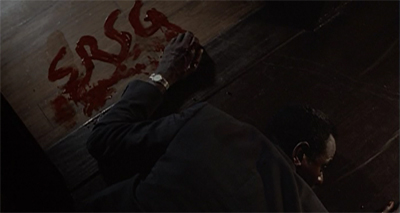
A bloody mess...

A bloody mess…

Continue reading

Star Trek (DC Comics, 1989) #49-50 – The Peacekeepers (Review)

The first Star Trek pilot, The Cage, was produced in 1964. To celebrate its fiftieth anniversary, this December we are reviewing the second season of the original Star Trek show. You can check out our first season reviews here. Check back daily for the latest review.

There is something quite disconcerting about Gary Seven.

Abducted from Earth at a young age by a race of mysterious aliens, Gary Seven was then returned to Earth in order to ensure that human history unfolds as expected. The unstated assumption is that “as expected” is a euphemism for “according to the wishes of his mysterious employers.” Using his advanced technology, Gary Seven manipulates the world around him. His technology allows him to cloud the minds of his enemies, and to materialise wherever he might wish. He tinkers with nuclear weapons, keeping his existence – and his objectives – a secret from the local people.

Everything comes apart...

Everything comes apart…

It is interesting to wonder how Assignment: Earth might have developed had it successfully spun off from Star Trek. After all, a pilot does not exist to completely define a new television show; it exists to set up a framework through which interesting stories might be told. Would a weekly television show built around Gary Seven have explored these big questions? Or would it have been content to exist as an imitation of Mission: Impossible? As with ever road not taken, it is absolutely impossible to be sure where it might lead.

Still, Howard Weinstein’s The Peacekeepers teases out some of these interesting questions and queries. Even if it never really offers any answers, there is a lot to chew over.

A spectre...

A spectre…

Continue reading

The X-Files – Season 3 (Review)

This November (and a little of December), we’re taking a trip back in time to review the third season of The X-Files and the first (and only) season of Space: Above and Beyond.

The second season of The X-Files was quite experimental in nature. Not all of that experimentation was intentional or planned, but the second season worked quite hard to demonstrate what the show could do. Gillian Anderson’s pregnancy forced the show to plot a relatively long-form arc, with Scully getting abducted and the X-files remaining closed for the first six episodes of the season. In essence, Anderson’s absence forced the show to embrace serialisation.

Other second-season experiments seemed more relaxed. The show discovered that big two-part mythology episodes did well during sweeps. Die Hand Die Verletzt and Humbug proved that the series could do comedy. David Nutter, Rob Bowman and Kim Manners became the show’s go-to directors. The show’s alien conspiracy arc became a recurring thread rather than a subset of the monsters of the week. There was a lot learnt during that second season.

xfiles-paperclip26

The third season of The X-Files feels a lot more relaxed, and a lot more comfortable. The third season seems to be largely about reinforcing the lessons learned during the second season. The third season gives more work to writers, directors and actors who made an impression during the second season. It works hard to solidify the concept of The X-Files. It seems like Chris Carter and his collaborators have finally figured out exactly what The X-Files should be, and are delivering it consistently.

The result is one of the most impressive seasons of television produced in the nineties, beginning a hot streak for the show. Chris Carter and Ten Thirteen would manage to produce three consistently fantastic seasons of television between September 1995 and May 1998. The third season of The X-Files really gets that ball rolling in a very profound and meaningful sense.

xfiles-josechungsfromouterspace5 Continue reading

The X-Files – Talitha Cumi (Review)

This November (and a little of December), we’re taking a trip back in time to review the third season of The X-Files and the first (and only) season of Space: Above and Beyond.

Talitha Cumi is a staggeringly confident piece of television, the kind of episode casually produced by a show at (or approaching) the top of its game.

It is interesting just how much this season finalé seems to promise business as usual. It is perhaps the least radical of the show’s season-ending cliffhangers, with the third season closing on an immediate rather than a conceptual threat to our leads and to The X-Files as a show. The Erlenmeyer Flask ended with the death of Deep Throat and the closing of the X-files. Anasazi ended with Mulder being burnt alive in a boxcar filled with alien bodies. Gethsemane ups the ante further.

A stab in the dark...

A stab in the dark…

In contrast, Talitha Cumi ends with the Alien Bounty Hunter walking towards Mulder and Scully in a rather menacing fashion. It is very effective television – and a solidly suspenseful cliffhanger – but it also feels rather low-key when compared to other season-ending episodes. Talitha Cumi feels like a pretty effective hook, rather than a game-changer. There’s an immediacy to the cliffhanger, but nothing that threatens to upend the show as a whole.

Then again, one suspects that is entirely the point. The third season has been largely about consolidation of The X-Files. It makes sense that it wouldn’t throw everything up into the air at the end of the season.

It's been a long year...

It’s been a long year…

Continue reading

The X-Files – Wetwired (Review)

This November (and a little of December), we’re taking a trip back in time to review the third season of The X-Files and the first (and only) season of Space: Above and Beyond.

Wetwired is an oddity.

It is the penultimate episode of the third season, written by special effects supervisor Matt Beck. It is very much a conspiracy episode, albeit one lacking any real sense of forward moment and with only the loosest thematic ties to the rest of the show’s mythology. Unlike – say – Soft Light, this is not simply a “monster of the week” story with elements of the mythology grafted in. The show has largely move past those, which is why Avatar felt so weird.

More like

More like “terror vision”, am I right?

Instead, Wetwired is that strangest of government conspiracy stories. It is an episode dedicated almost exclusively to shady goings-on at the highest levels of government, but with no mention or inference of aliens or other sinister long-term plots. Wetwired stands out as something strange and hard to place; perhaps its closest analogue is The Pine Bluff Variant from towards the end of the fifth season.

The result is an oddity that is a little uneven and disjointed, an episode packed with clever ideas and concepts, but difficulty connecting them to each other.

Scully has had it with Mulder's quips about her driving...

Scully has had it with Mulder’s quips about her driving…

Continue reading

The X-Files – Avatar (Review)

This November (and a little of December), we’re taking a trip back in time to review the third season of The X-Files and the first (and only) season of Space: Above and Beyond.

Avatar is really the first time that The X-Files relies on a member of its supporting cast to carry a story all by themselves.

Later seasons will get a bit more adventurous when it comes to sharing screen time. Musings of a Cigarette-Smoking Man and En Ami both offer viewers a glimpse at the man behind the cigarette. The Lone Gunmen prepare for their own spin-off with The Unusual Suspects and Three of a Kind. Even Skinner gets a couple more character-centric episodes with Zero Sum and S.R. 819. In a way, Hungry is a day-in-the-life episode of a monster of the week.

Pushing Mulder to the background...

Pushing Mulder to the background…

Avatar is an episode that demonstrates that these kinds of stories are possible – that The X-Files can lift the focus off of Mulder and Scully for a week and flesh out those characters who exist at the periphery of the series. Just under two years after he was first introduced, Mitch Pileggi has proven himself invaluable to the series. Asking him to carry an episode like this demonstrates the show’s faith in the character.

Avatar is a bit rough around the edges, struggling to decide whether it is part of the show’s conspiracy mythology or a stand-alone monster tale in a season that has worked hard to delineate the two types of show. Still, it’s an ambitious late-season installment that makes a lasting impression on what The X-Files can be.

Don't look now...

Don’t look now…

Continue reading

The X-Files – Piper Maru (Review)

This November (and a little of December), we’re taking a trip back in time to review the third season of The X-Files and the first (and only) season of Space: Above and Beyond.

Piper Maru and Apocrypha continue a pretty clear thematic throughline for the show’s third season mythology episodes.

As with The Blessing Way/Paper Clip and Nisei/731, Piper Maru and Apocrypha tell a story about how we relate to the past. In particular, in keeping with the rest of the third season mythology, it is a show about the legacy of the Second World War. The X-Files is a show that is sceptical of the decisions made by the American government towards the end of the Second World War, particularly as those decisions shaped and moulded the present. In many ways, The X-Files is a show about history and legacy, trauma and consequence.

A fish out of water...

A fish out of water…

Piper Maru and Apocrypha are less direct about this connection than the earlier mythology episodes. They aren’t about the war criminals given safe habour after the Second World War in return for scientific knowledge or tactical advantages. Instead, Piper Maru and Apocrypha are shows about dredging up the past and confronting the consequences of past actions. These two episodes are not only steeped in American popular history, but also in the show’s internal continuity. The majority of what happens here is driven by events we’ve seen in the show.

At the same time, Piper Maru and Apocrypha represent an attempt to boldly expand and push the mythos forward in the same way that Colony and End Game did at this point in the second season. The result is an intriguing two-parter that feels a little muddled and messy, an example of the show stumbling slightly as it tries to grow outwards. Although the mythology is still working a lot more efficiently than it would in later seasons, there is a sense of clutter beginning to filter in.

The eyes have it...

The eyes have it…

Continue reading

The X-Files – Syzygy (Review)

This November (and a little of December), we’re taking a trip back in time to review the third season of The X-Files and the first (and only) season of Space: Above and Beyond.

On original broadcast, Syzygy and War of the Coprophages were separated by three weeks, airing either end of January.

That probably helps to make Syzygy seem like less of a disappointing retread on initial broadcast, but it doesn’t help on modern binge re-watches. Even allowing for the three weeks between the episodes, Syzygy was always going to suffer in comparison its direct predecessor. If War of the Coprophages was Darin Morgan affectionately mimicking Chris Carter’s style, then Syzygy feels like Carter’s attempt to write a script in a voice quite close to that of Darin Morgan.

The horny beast...

The horny beast…

Structurally, the third season is constructed quite cleverly – and Syzygy is a massive part of that. The third season seems to fold in on itself, which means it makes sense for Syzygy to serve as a fun house mirror War of the Coprophages from a purely structural perspective. The problem is that this decision adds a lot to the third season of the whole while undermining Syzygy itself. It feels like an unsatisfactory decision.

However, even divorced from context, Syzygy is still a mess of an episode. Carter would go on to provide some of the show’s most comedic hours in later seasons, and Syzygy marks a starting point of that trend. It is not an auspicious beginning.

Reading the signs...

Reading the signs…

Continue reading