• Following Us

  • Categories

  • Check out the Archives


  • Awards & Nominations

The X-Files – Revelations (Review)

This November (and a little of December), we’re taking a trip back in time to review the third season of The X-Files and the first (and only) season of Space: Above and Beyond.

Religion, eh?

In the mid-nineties, religion was a very difficult subject to navigate on network television. The so-called “culture wars” were in full swing at the middle of the decade, with religious values serving as a particularly brutal battleground. Religion is a very thorny and contentious subject. As recently as 2012, more than 40% of polled Americans stated they would not vote for an atheist candidate in a presidential election. Pete Stark would admit to being an atheist in 2007, becoming the first self-identified atheist in the United States Congress.
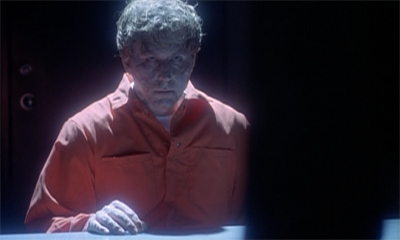
Mulder's got a taste for adventure...

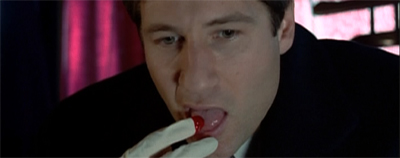
Mulder’s got a taste for adventure…

As a result, it is very difficult to have a meaningful and thoughtful conversation about it. “There’s a man that I work with – a friend – and usually I’m able to discuss these things with him… but not this,” Scully confesses at the end of the episode. While undoubtedly a comment on Mulder’s stubborn refusal to engage with Scully on the topic, it also feels like a commentary on the awkwardness of any public discussion about religious beliefs or values, which was prone to become highly charged and contentious.

The conventional wisdom was that you didn’t talk about religion at the dinner table. It wasn’t much easier on television. This puts Revelations in a very awkward position.
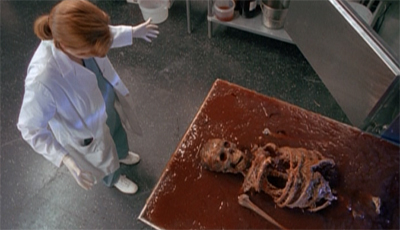
A bloody business...

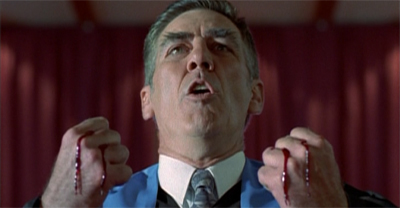
A bloody business…

Continue reading

The X-Files – 2Shy (Review)

This November (and a little of December), we’re taking a trip back in time to review the third season of The X-Files and the first (and only) season of Space: Above and Beyond.

A lot of the success of the third season of The X-Files came for learning what had worked earlier, and trying to hone that.

So, for example, the epic mythology of Colony and End Game enabled episodes like Nisei and 731 along with Piper Maru and Apocrypha. Shows like Die Hand Die Verletzt and Humbug had proven that the show could do comedy, so it wasn’t as big a risk to commit to stories like Clyde Bruckman’s Final Repose or Jose Chung’s “From Outer Space.” Even episodes like Fresh Bones had helped to define what a standard “monster of the week” should look like.

Freak like me...

Freak like me…

This approach to the third season had its drawbacks. It seemed like the first chunk of the first season was stuffed with supernatural revenge stories, to the point where it is surprisingly easy to confuse The List and The Walk on the basis of title and theme alone. However, it was a very effective way of producing television. It is very hard to fault any approach towards television production that could turn “fat-sucking vampire” into a premise that works.

The genealogy of 2Shy is quite easy to trace. It is the obvious synthesis of Tooms and Irresistible, two of the more memorable and effective monster stories of the first two seasons. 2Shy may have some very serious problems, but it does what it says on the tin.

Fresh bones...

Fresh bones…

Continue reading

The X-Files – The List (Review)

This November (and a little of December), we’re taking a trip back in time to review the third season of The X-Files and the first (and only) season of Space: Above and Beyond.

The List taps into a lot of contemporary anxieties.

As with Chris Carter’s last stand-alone script for The X-Files, there is something very timely about The List. The late second season medical conspiracy thriller F. Emasculata had aired at a point where national anxieties about Ebola and other killer diseases were at a high, with the high-profile release of Outbreak and the publication of Crisis in the Hot Zone. One of Carter’s strengths as a producer and a writer was his ability to take the national pulse, and to make The X-Files reflect whatever made nineties America uncomfortable.

A capital idea...

A capital idea…

Continue reading

The X-Files – Paper Clip (Review)

This November (and a little of December), we’re taking a trip back in time to review the third season of The X-Files and the first (and only) season of Space: Above and Beyond.

And now we return to your scheduled viewing.

In many respects, Paper Clip feels like the real third season premiere. It establishes a lot of the recurring themes and ideas for the mythology of the season, from Krycek-on-the-run through to collaboration in the wake of the Second World War. It builds on the successful multi-part formula established by episodes like Ascension or End Game during the show’s second season. It moves things along in a way that The Blessing Way simply refused to. (It even resolves the cliffhanger from the last episode on screen.)

The light at the end of the tunnel...

The light at the end of the tunnel…

Paper Clip demonstrates the strengths of the third season of The X-Files. The third season was the point at which the show really pushed the mythology out, building on earlier implications that there was form to be found in the shadows. The third season also looked to the second season to determine what had worked and what had not worked. Paper Clip is very clearly modelled on the successful aspects of second parts like Ascension or End Game.

It moves. The power of Paper Clip comes from an incredible forward momentum that allows the show to maintain tension and excitement while refusing to allow the audience to catch their breath. Instead of resolving the bigger plot threads from the first episode, questions and hints are thrown out with reckless abandon as the script just drives through set pieces and emotional beats and suspenseful sequences. It is a very meticulously, very cleverly constructed piece of television.

Watching the skies...

Watching the skies…

Continue reading

The X-Files – The Blessing Way (Review)

This November (and a little of December), we’re taking a trip back in time to review the third season of The X-Files and the first (and only) season of Space: Above and Beyond.

The Blessing Way is the first mythology episode of The X-Files that doesn’t really work.

And it doesn’t really work for a lot of the same reasons that some of the later mythology episodes don’t really work. Its pacing is terrible. It wallows in new age mysticism, allocating characters thoughtful monologues that awkwardly state themes and render subtext as supratext. It plays into the deification of Mulder, trying to bend Mulder’s story to fit into an archetypal “chosen one” narrative. More than that, it is very clearly a holding pattern, an effort to eat up time without moving forward.

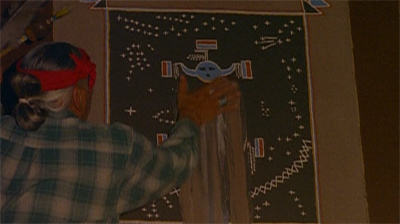
Wiping it all out...

Wiping it all out…

However, despite the fact that The Blessing Way really doesn’t work, it is still a fascinating episode. It’s a wonderful demonstration of how The X-Files has developed a fleshed-out world inhabited by compelling characters. The best moments in The Blessing Way are character-focused, with Skinner caught between his duty to the government and his loyalty to his agents, the Cigarette-Smoking Man revealed to be middle-management at best, and the implication that even vast sinister government conspiracies are hostage to chaos.

The Blessing Way is an oddity, a rather strange piece of television that is almost endearing in its stubborn refusal to deliver what the audience wants and expects. That doesn’t make it good, but it does make it interesting.

The truth is up there...

The truth is up there…

Continue reading

The X-Files – Season 2 (Review)

This August (and a little of September), we’re taking a trip back in time to review the second season of The X-Files. In November, we’ll be looking at the third season. And maybe more.

The first few seasons of a television show are very much about defining the show – figuring out what works and what doesn’t, and what form the show will take. After all, a lot of discussion and planning takes place during development, but all of that is on paper. It’s only once you’ve worked with the cast and had a chance to gauge audience response that it is possible to truly understand a television show.

The first two seasons of The X-Files seem like an attempt to map out the show, to mark the boundaries and do some fine calibration. The show had been a sleeper hit in its first season, popular enough to secure a second season on Fox. However, the second season had seen the series become a breakout hit. It climbed rather dramatically in the ratings, and the show would continue that ascent through to the fifth season in the lead-in to the feature film. However, the second season still feels like it’s a learning curve.

xfiles-onebreath6

There are exceptional episodes in the second season. The season provides a wealth of classic stories. Fresh Bones and Our Town stand out as two of the best monster-of-the-week stories that the show had done by this point in its life-cycle. Even outside of that, there are classics like One Breath or Humbug or The Host or F. Emasculata. However, there are also quite a few misfires like Fearful Symmetry or Excelsis Dei or 3.

There are a lot of points in the second season where it feels like The X-Files is experimenting, trying new things that would ultimately become part of the show’s unique identity. Not all of these elements worked, but that is the luxury of a second season. It allows the production team to do that sort of experimentation so they might find their groove.

xfiles-duanebarry16 Continue reading

The X-Files – The Calusari (Review)

This August (and a little of September), we’re taking a trip back in time to review the second season of The X-Files. In November, we’ll be looking at the third season. And maybe more.

The Calusari is very heavily and very clearly influenced by classic horror cinema. With its demon child and dramatic ritual sequences, the episode seems constructed as a gigantic homage to The Omen and The Exorcist, two of most iconic horror films of the seventies. On paper, this isn’t a bad idea. The show hasn’t done a straight-up quasi-exploitation horror episode since Fresh Bones, and “scary kids” worked well enough for the show in Eve.

On the other hand, the show has historically had trouble doing straight-up classic horror stories – Shadows was a misfire of a ghost story, while Shapes was a questionable werewolf tale and 3 was a disaster of a vampire show. More than that, The Calusari pushes the show into fairly uncomfortable territory, dealing as it does with the religious beliefs of immigrant communities. The Calusari is not as bad as it could be, but it’s also not particularly good, either.

A haunting tale?

A haunting tale?

Continue reading

The X-Files – Colony (Review)

This August (and a little of September), we’re taking a trip back in time to review the second season of The X-Files. In November, we’ll be looking at the third season. And maybe more.

Colony is another second season game changer. As with other episodes in the second season, there’s a sense that the production team are really getting to grips with what works with the show – laying groundwork and defining a template that they can work with into the show’s third season. While the Duane Barry and Ascension two-parter had been an act of desperation to work around Gillian Anderson’s pregnancy, Colony and End Game is a two-parter that the show embraced entirely of its own volition.

These two two-part episodes really set the template for the show going forward. There’s a sense that Chris Carter and his team were really defining what a season of The X-Files should look like, giving them a blueprint that they might build on in the years ahead. From the second season through to the sixth, the show would stick quite rigidly to the idea of two big two-parters in the middle of the season, quite apart from any multi-part stories bridging the seasons.

Lights in the sky...

Lights in the sky…

These two parters were typically broadcast as part of the “sweeps”, and inevitably focused on the show’s alien conspiracy mythology. Even the more stand-alone two-parters like A Christmas Carol and Emily or Dreamland Part I and Dreamland Part II still build off the series’ central mythology. Given those were the points at which the show got the highest exposure, and the point where the show worked hardest to draw in an audience, it’s no surprise that the mythology arc rose to such prominence.

Duane Barry and Ascension undoubtedly set a precedent, but those episodes were prompted by factors outside the control of the creative team. However, Colony and End Game really solidified that precedent into a guiding principle for the show. This two-parter comes to codify and cement a lot of the things that the show’s mythology comes to take for granted. For better and worse.

Quite pointed...

Quite pointed…

Continue reading

The X-Files – Irresistible (Review)

This August (and a little of September), we’re taking a trip back in time to review the second season of The X-Files. In November, we’ll be looking at the third season. And maybe more.

Irresistible is a fascinating piece of television and arguably one of the most iconic and important episodes of The X-Files ever broadcast.

It’s also very, very good.

Here's Donnie...

Here’s Donnie…

Continue reading

The X-Files – Excelsis Dei (Review)

This August (and a little of September), we’re taking a trip back in time to review the second season of The X-Files. In November, we’ll be looking at the third season. And maybe more.

The horror genre is much maligned.

Horror films typically fight harder for recognition than films in many other genres – often finding themselves consigned to the same ghetto as science-fiction or fantasy films. They are less likely to take home major mainstream awards, and it seems like horror films typically have to wait longer for reappraisal. Outside of aficionados, there’s a wariness of the horror genre – a skepticism towards it.

Window of opportunity...

Window of opportunity…

There are a lot of reasons for that. Some of them make sense; some of them don’t. One of the more common assumptions about horror is that the genre is more likely to produce “cheap” or “trashy” entertainment, as opposed to something more profound or insightful. There are, again, lots of reasons for this assumption. Most obviously, there’s the absurd cost-to-profit ratio of cheap terrible horror films that incentivises studios to churn out as many as they can as fast as they can. There’s a reason there’s an absurd number of Saw sequels.

However, that “cheapness” or “trashiness” isn’t just a result of business decisions. There are certain story tropes and narrative techniques that exist within the horror genre that feel like the cheapest sort of thrills. If you want to make an audience uncomfortable, just throw in something one of those trashier elements. As long as the audience squirms in their seats, it doesn’t matter what the implications of your decisions are. After all, your job is to creep them out?

Bitter little pill...

Bitter little pill…

So horror takes all manner of shortcuts, without any real thought as to what those elements actually mean. They are just something that catches the audience off-guard and makes them sit up in their seat. So horror tends to indulge in the worst sorts of racism and sexism as a means of drawing any sort of response from the audience. These tried-and-tested horror staples become effective storytelling shortcuts. The foreign becomes horrific. Conservative sexual morality is enforced with brutality. Rape – literal or metaphorical – is a cheap thrill.

The X-Files struggles with these sorts of issues as it tries to bring horror to television. It occasionally does a very good job. However, there are also times when the series gives into its baser instincts. Excelsis Dei is an absolutely terrible episode, and an example of why the horror genre gets written off by so many people so quickly. It’s a poorly constructed hour of television, one about how old men are perverts, the rape of an under-developed character is a story hook and foreigners are magic.

The writing (or fine art) is on the wall...

The writing (or fine art) is on the wall…

Continue reading