• Following Us

  • Categories

  • Check out the Archives


  • Awards & Nominations

Non-Review Review: Barbaric Genius

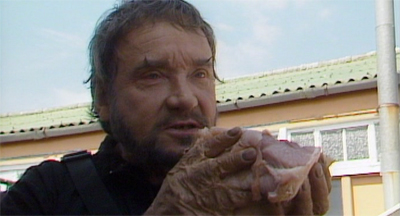
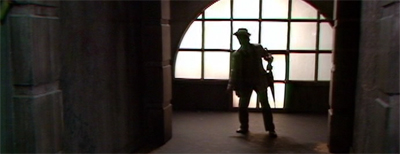
Barbaric Genius has a fascinating subject. Writer John Healy was responsible for The Grass Arena, generally regarded as one of the most searingly and brutally honest depictions of life on the streets published during the eighties. However, despite the fact that The Grass Arena became a touchstone for an entire generation and that it was so successful that it was developed into a film, Healy faded rather quickly from view. Despite writing consistently over the years that followed, none of Healy’s work was published for more than two decades following the 1988 release of The Grass Arena.

It’s an intriguing mystery, and Barbaric Genius does a thorough job exploring it, but the documentary suffers a bit as it tries to bring its subject into focus, often feeling like director/producer/narrator Paul Duane is having difficulty getting the necessary distance between himself and the film.

barbaricgenius

Continue reading

Jason Aaron’s Run on Wolverine & The X-Men – #1-8, 17 (Review/Retrospective)

To celebrate the release of The Wolverine later in the month, we’re taking a look at some classic X-Men and Wolverine comics every Monday, Wednesday and Friday here. I’m also writing a series of reviews of the classic X-Men television show at comicbuzz every weekday, so feel free to check those out.

Superhero comic books have had a somewhat rocky relationship with the concept of “growing up” since the mid-eighties. Books like The Dark Knight Returns and Watchmen proved that it was possible to craft mature tales with incredible depth using these icons. However, it seemed like the industry learnt all the wrong lessons from the success of Frank Miller and Alan Moore. For the past couple of decades, it seems like the ideal for superhero comics is grim and nihilistic nonsense, that “maturity” is measured in blood and bodycount.

There was a sense that the comic book industry was afraid of being seen as childish or unsophisticated, which created an ironic situation where the industry’s immaturity was on show in its fixation with adult material. “When I was ten,” C.S. Lewis once mused, “I read fairy tales in secret and would have been ashamed if I had been found doing so. Now that I am fifty I read them openly. When I became a man I put away childish things, including the fear of childishness and the desire to be very grown up.”

Jason Aaron’s Wolverine and the X-Men feels like it subscribes to this philosophy. It’s an incredibly silly and  goofy piece of work, revelling in the clichés of the superhero genre, but it’s also a surprisingly sincere and intelligent one.

It's a bit of a gamble...

It’s a bit of a gamble…

Continue reading

Doctor Who: The Green Death (Review)

To celebrate the fiftieth anniversary of the longest-running science-fiction show in the world, I’ll be taking weekly looks at some of my own personal favourite stories and arcs, from the old and new series, with a view to encapsulating the sublime, the clever and the fiendishly odd of the BBC’s Doctor Who.

The Green Death originally aired in 1973.

Where are you off to?

To pack a suitcase.

Oh, good. Give me a couple of minutes and we’ll be off.

Off? Off where?

Well, Metebelis III, of course.

I’m not going to Metebelis III.

Why? Where are you thinking of going to?

Well, South Wales, of course. Llanfairfach.

– the Doctor and Jo discuss travel plans… why would you want to go to Metebels III when you can visit South Wales?

The Green Death is a great example of the Jon Pertwee era. It offers a pretty solid showcase of the best of the era, along with the glaring structural and thematic weaknesses that the show never really tackled head-on. It’s a great yarn, an affectionate run-around. There is a reason, after all, that the overgrown maggots have managed to wedge themselves in British popular consciousness. There’s a conscious sense that The Green Death is a season finalé, in the biggest and boldest terms possible.

In an era where television wasn’t really structured in that way, you can trace a pretty clear line between The Green Death and the big epic series finalés of the Russell T. Davies era of Doctor Who.

And the Beatz go on...

And the Beatz go on…

Continue reading

Doctor Who: The Hand of Fear (Review)

To celebrate the fiftieth anniversary of the longest-running science-fiction show in the world, I’ll be taking weekly looks at some of my own personal favourite stories and arcs, from the old and new series, with a view to encapsulating the sublime, the clever and the fiendishly odd of the BBC’s Doctor Who.

The Hand of Fear originally aired in 1976.

Come on, where are we?

We’re in a quarry.

Yes, I know we’re in a quarry, but where?

Well, how do I know? I don’t know all the quarries that–

– the Doctor and Sarah Jane get a bit meta

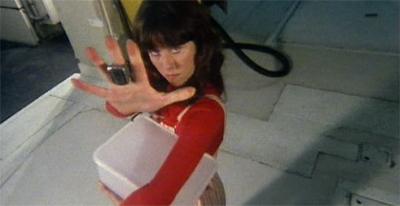
The Hand of Fear is odd, because it’s the end of an era – but it’s not the end of the era for the rather obvious reason that it bids farewell to one of the franchise’s best-loved companion character. The Hand of Fear is best known as the final story to feature Sarah Jane Smith. Indeed, the DVD comes with a helpful sticker informing any potential purchasers of the story’s significance.

However, watching The Hand of Fear with the benefit of hindsight, it isn’t Sarah Jane’s departure that is the most striking part of the show.

Keep it handy...

Keep it handy…

Continue reading

Civil War: X-Men (Review)

To celebrate the release of The Wolverine later in the month, we’re taking a look at some classic X-Men and Wolverine comics every Monday, Wednesday and Friday here. I’m also writing a series of reviews of the classic X-Men television show at comicbuzz every weekday, so feel free to check those out.

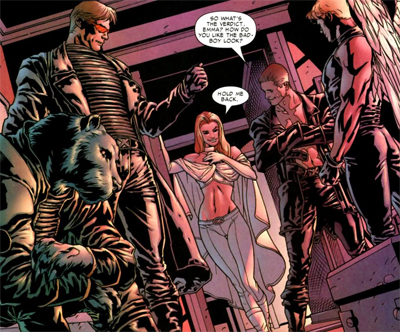
Ugh. There’s nothing like Civil War: X-Men to remind you just how unkind the middle part of the last decade was to Marvel’s merry mutants. It’s a soulless cash-in the worst sense of the word, a four-issue miniseries branded with the title of the gigantic universe-spanning crossover that was going on at the moment. One would imagine that the whole Civil War crossover would provide a multitude of compelling storytelling opportunities for the X-Men as a franchise.

After all, these are superheroes whose entire schtick is based around being hated and feared by the world they try to protect. You’d imagine that they’d have a few choice words for all the superheroes finding themselves suddenly confronted by the idea that the public isn’t too keen on people with superpowers just wandering around. Instead, we get a messy jumble of a plot that doesn’t make sense on its own terms, let alone as an attempt to contextualise the involvement of the X-Men in Marvel’s Civil War crossover.

Back in black...

Back in black…

Continue reading

Doctor Who: Dragonfire (Review)

To celebrate the fiftieth anniversary of the longest-running science-fiction show in the world, I’ll be taking weekly looks at some of my own personal favourite stories and arcs, from the old and new series, with a view to encapsulating the sublime, the clever and the fiendishly odd of the BBC’s Doctor Who.

Dragonfire originally aired in 1987.

You’re going to go looking for the dragon?

Absolutely.

Oh, cool. Can I come too?

– Ace introduces herself to the Doctor smoothly

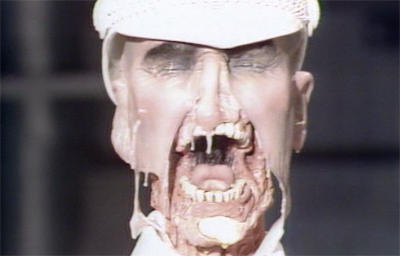
Dragonfire is better than Delta and the Bannermen, which is certainly damning with faint praise. Like the rest of Sylvester McCoy’s first season, Dragonfire suffers because of a gap between concept and execution. There is a wealth of good ideas here, but Dragonfire can’t seem to develop any of them to the point where they stand out. Of this troubled first season, it’s perhaps the serial where the conflict between the show’s old-fashioned production and more modern writing are thrown into sharpest contrast. Dragonfire looks like it wants to be a classic Doctor Who episode, even though it’s written like anything but.

"I'm melting!"

“I’m melting!”

Continue reading

Doctor Who: Delta and the Bannermen (Review)

To celebrate the fiftieth anniversary of the longest-running science-fiction show in the world, I’ll be taking weekly looks at some of my own personal favourite stories and arcs, from the old and new series, with a view to encapsulating the sublime, the clever and the fiendishly odd of the BBC’s Doctor Who.

Delta and the Bannermen originally aired in 1987.

Hey, this doesn’t look like Disneyland.

No, well, according to my reckoning, it seems to be somewhere in, er, Wales.

– Murray and the Doctor get in touch with the “real fifties”

Delta and the Bannermen is quite terrible. That said, it’s not terrible in the same way that, say, Timelash or Attack of the Cybermen or The Twin Dilemma is terrible. It doesn’t offer a demonstration of everything intrinsically wrong with this era of the show, and the frustration isn’t compounded by the sense that nobody producing the show seems interested in watching it and maybe learning from their mistakes.

While that is certainly a promising thing from the perspective of the show, it doesn’t really do the viewer that much good when they are watching it.

Large ham, incoming!

Large ham, incoming!

Continue reading

Doctor Who: Paradise Towers (Review)

To celebrate the fiftieth anniversary of the longest-running science-fiction show in the world, I’ll be taking weekly looks at some of my own personal favourite stories and arcs, from the old and new series, with a view to encapsulating the sublime, the clever and the fiendishly odd of the BBC’s Doctor Who.

Paradise Towers originally aired in 1987.

Oh, I see. It’s some sort of robotic cleaner with automotive bicurval scraping blades. Impressive workmanship.

You don’t understand.

No, I don’t, but I intend to.

– the Doctor and the Deputy Chief Caretaker

Paradise Towers is brilliant. It’s crazy, it’s overstated, it’s an hour too long and it suffers from the fact that nobody really knows what they’re doing, but there’s a sense of genius at work here. Script editor Andrew Cartmel took over at the start of the season, with no scripts. Time and the Rani came from John Nathan Turner’s reliable Pip and Jane Baker, so Paradise Towers is the first script where Cartmel has been allowed to make his mark.

And it’s precisely what the show needed. The execution is significantly flawed, the pacing is all wrong and there’s a sense that not everybody between the script and the camera realised what was going on, but it has a distinct energy to it. Time and the Rani was essentially Doctor Who struggling to keep its head above water. Paradise Towers sees the show diving right into the eighties.

"... where the grass is green and the girls are pretty..."

“… where the grass is green and the girls are pretty…”

Continue reading

Doctor Who: Vincent and the Doctor (Review)

To celebrate the fiftieth anniversary of the longest-running science-fiction show in the world, I’ll be taking weekly looks at some of my own personal favourite stories and arcs, from the old and new series, with a view to encapsulating the sublime, the clever and the fiendishly odd of the BBC’s Doctor Who.

Vincent and the Doctor originally aired in 2010.

But you’re not armed.

I am.

What with?

Overconfidence, this, and a small screwdriver. I’m absolutely sorted.

– Vincent and the Doctor

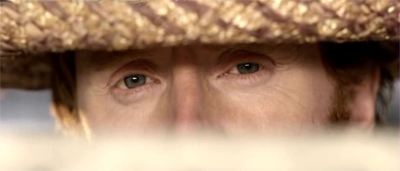
One of the strengths of the revived series has been a willingness to engage with a variety of writers. While Andrew Cartmel may have tried in vain to convince Alan Moore to write for the final years of the classic show, Russell T. Davies and Steven Moffat have managed to draw a wealth of diverse talent to write for the revived series. Sometimes this didn’t always work out (Life on Mars creator Matthew Graham wrote Fear Her), but it did mean that the series could boasts scripts from figures as diverse as Neil Gaiman and Richard Curtis.

There’s something to be said for the diversity the format of the show allows. Vincent and the Doctor is really unlike any other story the show has ever tried to tell, but it still manages to feel like Doctor Who. Which is something pretty spectacular, and worth celebrating. Doctor Who works best as a vehicle for any and all kinds of stories, where the audience isn’t always exactly sure what it is going to get.

An artist's eyes...

An artist’s eyes…

Continue reading

Non-Review Review: Superman vs. The Elite

To celebrate the release of Man of Steel this month, we’re going Superman mad. Check back daily for Superman-related reviews.

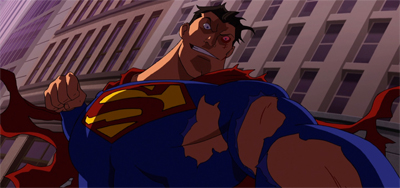
Superman has struggled with his pop culture credibility for quite some time now. The character is seen as too old-fashioned or outdated to really resonate in the modern world, standing for an overly simplistic and unquestioning moral philosophy which doesn’t take into account the nuances of current realities. Superman vs. The Elite, adapted from Joe Kelly’s What’s so Funny About Truth, Justice & the American Way?, represents an attempt to counter this opinion of Superman as a character. Unfortunately, it never really does so be convincing us that the character is still relevant. Instead, it creates a bunch of convenient straw men to oppose our hero, and never allows him to win on his own terms.

Beware the Superman...

Beware the Superman…

Continue reading