• Following Us

  • Categories

  • Check out the Archives


  • Awards & Nominations

The X-Files – Theef (Review)

This November, we’re taking a trip back in time to review the seventh season of The X-Files and the first (and only) season of Harsh Realm.

Theef is an underrated seventh season episode, one often forgotten and overlooked as season seven moves firmly into its second half.

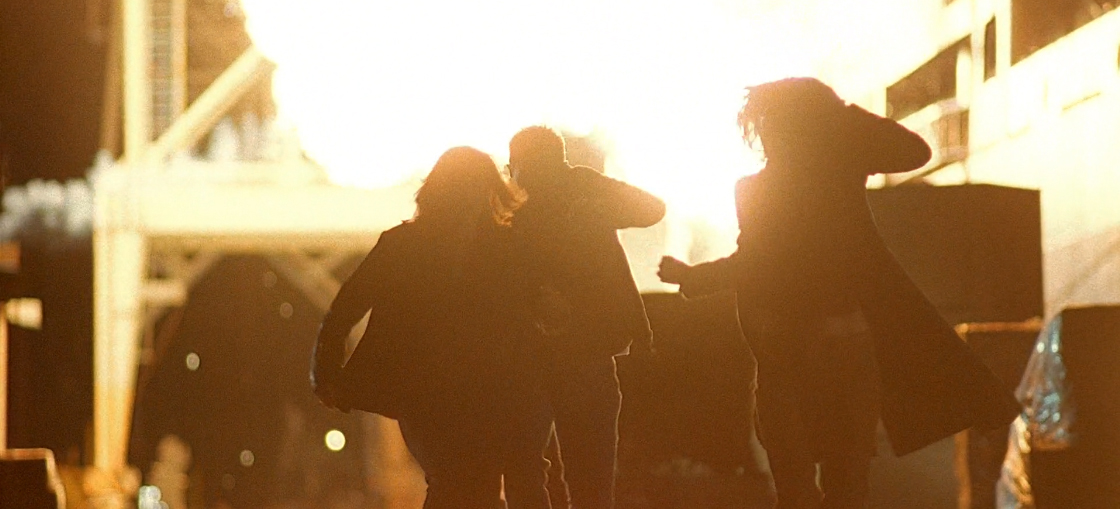
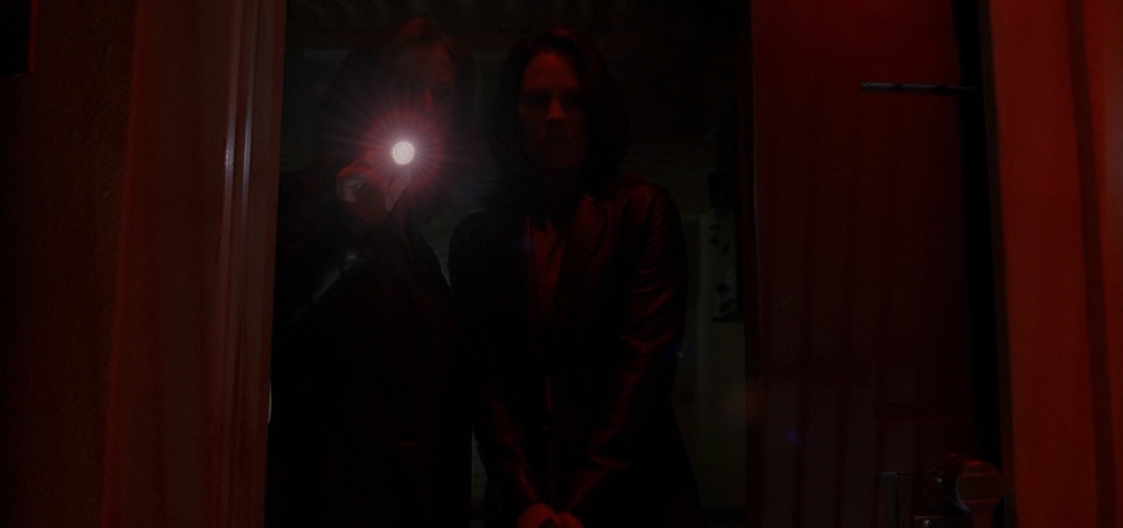
The episode represents another conscious attempt to get “back to basics.” Continuing the vein of Hungry or Millennium or Orison or Signs and Wonders, the script for Theef hopes to prove that the show can still produce a genuinely scary hour of television in its seventh season. It certainly succeeds; Theef is a delightfully unsettling story, one that borders on the downright nasty. From the closing shot of the teaser – a body suspended from a chandelier with the word “Theef” scrawled on a wall in his own blood – Theef goes for the jugular.

"I think he's trying to tell you something."

“I think he’s trying to tell you something.”

Continue reading

The X-Files (Topps) #25-26 – Be Prepared (Review)

This February and March, we’re taking a trip back in time to review the fourth season of The X-Files and the first season of Millennium.

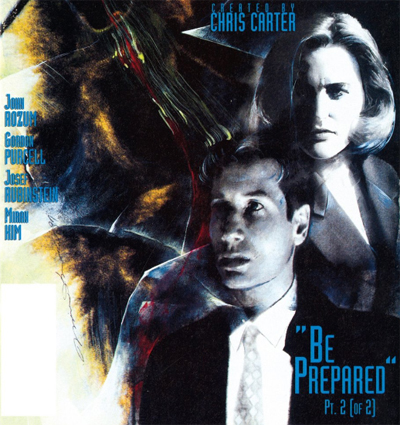
What’s interesting about Be Prepared is how much it feels like an episode of The X-Files.

A lot Rozum’s earlier scripts felt like Mulder and Scully had wandered into old E.C. horror stories, cautionary supernatural tales about vengeful ghosts and poetic justice. In contrast, Be Prepared feels very much in tune with the aesthetic of the show itself. Mulder and Scully investigate a uniquely American piece of folklore, finding themselves in an isolated location dealing with human monstrosity at least as much as any paranormal element.

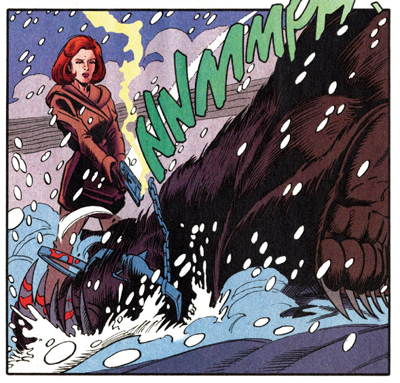
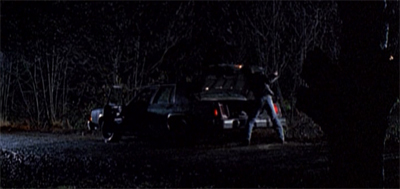
If you go down to the woods today...

If you go down to the woods today…

Indeed, Be Prepared feels very much like an episode from the first two seasons of the show, evoking stories like Ice or Darkness Falls or Firewalker. Indeed, Be Prepared arguably sits comfortably alongside Topps’ range of Season One comics – feeling like a lost episode from the show’s early years. Be Prepared feels like the first time that Rozum is constructing a story specifically from tropes associated with The X-Files, rather than from horror tropes in general.

The result is a fun little adventure that feels more like The X-Files than the comic has in quite a while.

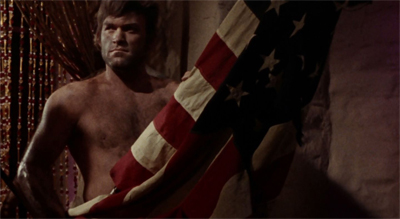
The right to bear arms...

The right to bear arms…

Continue reading

Millennium – The Wild and the Innocent (Review)

This February and March, we’re taking a trip back in time to review the fourth season of The X-Files and the first season of Millennium.

The Wild and the Innocent is an ambitious piece of television.

It is not a piece of television that works as well as it might, the execution of the central ideas leaving a little to be desired, but it is an episode that commits whole heartedly to something unique. In I Want to Believe, Robert Shearman refers to The Wild and the Innocent as “a plot more suited to Cormac McCarthy than Chris Carter.” He’s not wrong. The Wild and the Innocent is a story about cycles of violence and abuse in the American south, a grim road movie with some very harsh conclusions about the way that the world works.

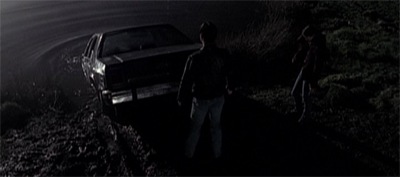
That sinking feeling...

That sinking feeling…

It still fits within the milieu of Millennium. After all the classic “serial killer road movie” is still a serial killer story, and Millennium has already carved out that niche for itself. However, the image of Frank Black and Peter Watts following a trail of bodies from Missouri down through Arkansas suggests a different show than the one that has been airing since The Pilot. In many respects – with its heavy philosophical voice-over, its country-tinged soundtrack, its fixation on the outlaw couple – The Wild and the Innocent feels almost like some old American folk tale.

There’s something decidedly old-fashioned here, with the episode playing more like a western than a police procedural. In the documentary Order in Chaos, Carter described Frank Black as character from a story “like Shane, like any cowboy, any good movie, Western movie.” As such, he fits in quite comfortably with this new type of story.

Road warrior...

Road warrior…

Continue reading

Millennium – Kingdom Come (Review)

This February and March, we’re taking a trip back in time to review the fourth season of The X-Files and the first season of Millennium.

Kingdom Come is a horrible misjudged episode of Millennium, and the show’s first truly spectacular misfire.

Kingdom Come was notably the first episode to air out of production order. It had been produced as the fourth episode following The Pilot, between Dead Letters and The Judge. However, the episode was broadcast as the sixth episode of the television season, after 5-2-2-6-6-6 and before Blood Relatives. The official reason given for this delay was the death of Cardinal Joseph Bernardin in mid-November 1996, following a long and public battle with cancer. It was suggested that an episode about a serial killer targeting religious figures would have been in poor taste at the time.

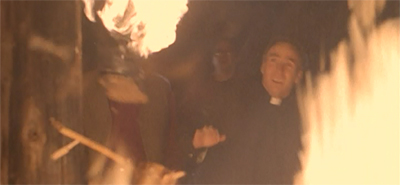
A light in the darkness...

A light in the darkness…

Still, whatever the official reason given, it cannot help but feel like the production staff were hoping to bury a stinker a little deeper into the season. Kingdom Come is an episode that does not work on any number of levels, offering a rather patronising and condescending view of religious faith as explained through stilted exposition and trite cliché. The show’s observations about faith and hope feel more like sentiments from Hallmark greeting cards than observations on the human condition.

The result is an episode that embodies the worst traits of Millennium, feeling just as crass and sensationalist as it does hollow and superficial.

The episode really bombed...

The episode really bombed…

Continue reading

The X-Files – Musings of a Cigarette-Smoking Man (Review)

This February and March, we’re taking a trip back in time to review the fourth season of The X-Files and the first season of Millennium.

“No great man lives in vain. The history of the world is but the biography of great men.”

– Thomas Carlyle, On Heroes, Hero-Worship, and the Heroic in History

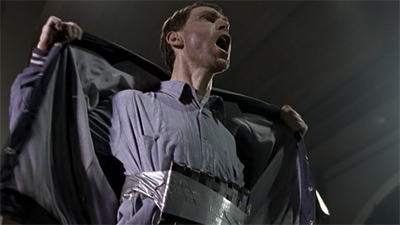
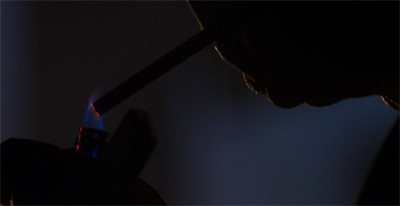
Light 'em up...

Light ’em up…

Continue reading

Star Trek – The Omega Glory (Review)

The first Star Trek pilot, The Cage, was produced in 1964. To celebrate its fiftieth anniversary, this December we are reviewing the second season of the original Star Trek show. You can check out our first season reviews here. Check back daily for the latest review.

Gene Roddenberry is a controversial figure who casts a fairly large shadow. It is very hard to talk about Star Trek – particularly the classic Star Trek – without talking about Roddenberry’s influence and vision. Roddenberry was fond of myth-making when he was alive, of playing up his own contributions to Star Trek while marginalising or dismissing the other people who shaped or defined the franchise.

Roddenberry is a polarising figure among fans and critics, insiders and outsiders. To some, Roddenberry was the man who created Star Trek. While this doesn’t immunise him against criticism, it does provide a sense of context – whatever sins he may have committed and whatever faults he may have had must be offset against that. To others, Roddenberry was prone to exaggerate his accomplishments at the expense of people like David Gerrold or Gene L. Coon who shaped the franchise just as much as (if not more than) he did.

Flagging trouble ahead...

Flagging trouble ahead…

While those are two extremes, they are not the only possible views of Roddenberry. There are a broad range of opinions that might be offered, and not all of them are mutually exclusive. Ask a dozen people who know their Star Trek about Roddenberry, and are likely to come up with a dozen nuanced and defensible positions on the man and his legacy. Nobody seems entirely what to make of Roddenberry and his creative contributions to the franchise.

The Omega Glory is an interesting episode, one that invites as much debate as any of Roddenberry’s contributions to the franchise.

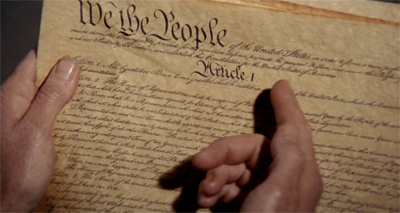
A strong constitution to make it through this one...

A strong constitution to make it through this one…

Continue reading

Star Trek – Catspaw (Review)

The first Star Trek pilot, The Cage, was produced in 1964. To celebrate its fiftieth anniversary, this December we are reviewing the second season of the original Star Trek show. You can check out our first season reviews here. Check back daily for the latest review.

Catspaw was the first episode to enter production for that second season of Star Trek. However, it was not the first to air. Amok Time served as the season opener. Instead, Catspaw was produced as something of a rarity – a Star Trek holiday special. Produced in May, it was eventually broadcast during the last week of October. Given the subject matter and trappings of the episode, that seems highly appropriate.

We are, after all, looking at what amounts to a Star Trek Halloween Special.

Bones joins the cast...

Bones joins the cast…

Continue reading

Space: Above and Beyond – Eyes (Review)

This November (and a little of December), we’re taking a trip back in time to review the third season of The X-Files and the first (and only) season of Space: Above and Beyond.

Eyes is perhaps the most ambitious that Space: Above and Beyond has been to this point in the season.

Eyes develops scraps hinted at in The Pilot and The Farthest Man From Home into a complex web of intrigue, with an assassination plot playing out against all sorts of institutionalised prejudice and suggesting sinister conspiracies at work behind the horrific war that drives the show. The last episode of Space: Above and Beyond credited to Glen Morgan and James Wong in 1996, the episode feels like it is solidifying the series. Six episodes in, enough foundations have been laid that development can begin.

An unstoppable killing machine.

An unstoppable killing machine.

Eyes is rather epic in scale, and massive in scope. It is a story about politics and scheming, unfolding quite far away from the front lines. In episodes like The Pilot, The Farthest Man From Home and even Ray Butts, it often felt like our lead characters were quite divorced from the big decisions. It seemed like the show was very much preoccupied with a day in the life of a space marine, rather with the larger forces at play seen only in glimpses and shadows.

Eyes is a show that does a lot to build the world of Space: Above and Beyond, doing a much better job than The Dark Side of the Sun or Mutiny at giving a sense of this dark future. While the script is perhaps a little too cluttered for its own good, it is a very well-constructed paranoid conspiracy thriller.

That's not at all fascist.

That’s not at all fascist.

Continue reading

Space: Above & Beyond – Pilot (Review)

This November (and a little of December), we’re taking a trip back in time to review the third season of The X-Files and the first (and only) season of Space: Above and Beyond.

Space: Above and Beyond made a great deal of sense in the context of the mid-nineties. Fox had begun its life as a scrappy little network that had trouble producing seven nights of broadcasting, but had rapidly solidified itself into a credible alternative to the big three networks. There were lots of reasons for this. The X-Files was one reason, but the network had also solidified itself with a slate of popular young dramas like Beverly Hills 90210, Melrose Place and Party of Five. Securing the NFL rights in 1993 didn’t hurt.

By late 1995, Fox was largely past the growing pains stage of its evolution. The network had been announced in late 1985, and first hit the airwaves in late 1986. It was approach the end of its first decade by the time Space: Above and Beyond was broadcast. Fox was no longer a small network fighting for scraps, but a viable challenger to the so-called “big three.” This change in outlook would lead to great success in the twenty-first century, but would also lead to change in how Fox did business.

Everything burns...

Everything burns…

The X-Files had been the right show at the right time in a number of ways. It landed at the perfect point to speak to a generation that grew up in the shadow of Watergate, but also to tap into millennial anxieties and insecurities. From a commercial perspective, The X-Files launched towards the end of the period where Fox could take chances on young shows struggling to find an audience. The first season of The X-Files was a cult hit, but not a breakout success story. The network had faith in the show, and that faith paid off.

It is interesting to wonder whether The X-Files would have received a second season if it débuted even two years later. After all, Fox would develop a reputation as a network with a ruthless tendency towards cancellation and plug-pulling. If The X-Files had first appeared in September 1995, would it have enjoyed the same fate as Space: Above and Beyond?

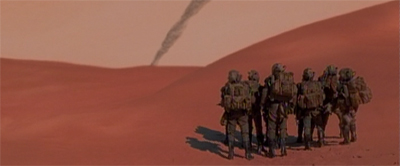
Distant sands...

Distant sands…

Continue reading

Non-Review Review: The Drop

It is suggested that hell is other people. Perhaps not so much. Perhaps hell is the absence of other people. Towards the end of The Drop, a character ruminates on the idea of eternal damnation – suggesting that hell is nothing but eternal emptiness, a cosmic echo chamber where the damned are left with nothing but their own sense of isolation. Maybe that is what damnation is, nothing but an individual’s own loathing and self-doubt reflected back them, amplified through the darkness.

The Drop is a tense and claustrophobic thriller. The bulk of the action unfolds around the small world as Bob knows it. Bob is a simple man. He works at a small dive, “Cousin Marv’s Place.” When asked tough questions, he simply answers, “I just tend bar.” As Bob explains, the dive bar occasionally serves as a “drop” for all the money laundered through local crime. Bob doesn’t know where it comes from or where it goes. He is only aware of it when it comes into his care and when it leaves.

It's a dog's life...

It’s a dog’s life…

The Drop is a story about isolation and loneliness. Characters reflect on their place in the world, trying to make sense of what unfolds around them. Most are unknowable to each other, mysteries and enigmas. Asked a personal question, Bob replies, “That’s my business.” When his friend Nadia asks why Bob never inquired about her own very obvious scars, Bob simply answers, “I figure that’s your business.” The world as Bob knows it is a small place. Maybe it’s constantly getting smaller.

Adapted by Dennis Lehane from his own short story Animal Rescue, The Drop wallows in its own sense of lost direction and impending doom. Michaël R. Roskam’s direction never rushes the story or the actors, allowing the film time to take in the emptiness and hollowness in this small world that briefly intersects with something much bigger and more unpleasant. Perhaps a little too stately and relaxed in places, The Drop is nevertheless an atmospheric delight.

Just Cous...

Just Cous…

Continue reading