• Following Us

  • Categories

  • Check out the Archives


  • Awards & Nominations

Star Trek: Enterprise – Judgment (Review)

Next year, Star Trek is fifty years old. We have some special stuff planned for that, but – in the meantime – we’re reviewing all of Star Trek: Enterprise this year as something of a prequel to that anniversary. This April, we’re doing the second season. Check back daily for the latest review.

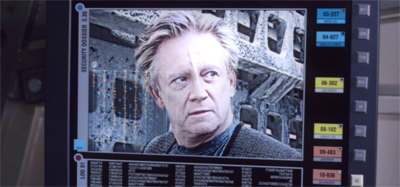
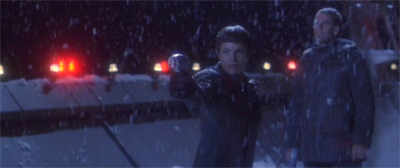
Judgment is the first episode of Star Trek to do something interesting with the Klingons since Tacking Into the Wind, almost four years earlier.

After all, it never seemed like Star Trek: Enterprise had any real idea what to do with the Klingons. The show had made use of Klingons in Broken Bow, Unexpected, Sleeping Dogs and Marauders – but none of these episodes seemed particularly interested in telling a story about Klingons. Enterprise seemed primarily interested in the Klingons as a connection to the franchise’s long and distinguished history. After all, Klingons are almost as iconic a part of Star Trek as Spock; working a few bumpy-headed warriors into your script was a nice way of acknowledging the Star Trek legacy.
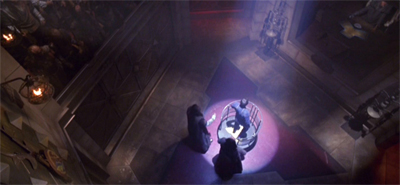
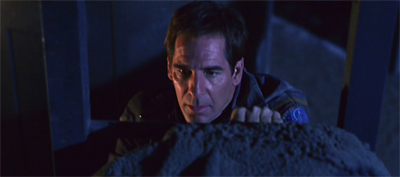
Trial of the twenty-second century...

Trial of the twenty-second century…

Certainly, Enterprise was not interested in committing to the same Klingon world-building in which Star Trek: The Next Generation and Star Trek: Deep Space Nine had revelled. There are a lot of reasons for this. Over ten seasons, writer Ronald D. Moore had probably said just about everything that needed to be said about the Klingons; trying to say something new or interesting without his input was certainly daunting. More than that, Enterprise had committed itself quite firmly to episodic storytelling in its first two years; even the Andorians and Vulcans were still barely developed.

So David A. Goodman’s script for Judgment is ambitious, particularly in light of the spectacular failure of his (heavily re-written) work on Precious Cargo. Constructing an episode that might easily be misread as a rehash of Star Trek VI: The Undiscovered Country was a pretty bold choice, particularly given the problems that the show had endured while trying to construct an homage to Elaan of Troyius and The Perfect Mate. On paper, Judgment is an assignment that could easily explode spectacularly. It might not be as crazy a gambit as A Night in Sickbay, but it is a story with lofty objectives.
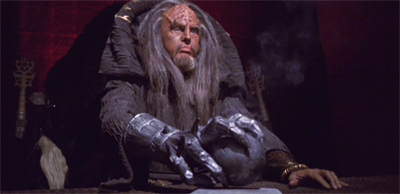
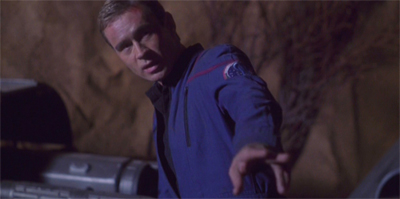
The court has spoken.

The court has spoken.

With so much of the second season feeling like it is running on auto-pilot, the energy and enthusiasm of Judgment is infectious. Singularity, Vanishing Point, Canamar and The Crossing felt like they were constructed using blueprints of what a Star Trek episode should look like. It is refreshing to watch an episode of Enterprise that seems genuinely excited to playing with these particular toys. In that sense, Judgment sets the mood for the final stretch of the season – despite duds like Horizon and Bounty, the final run of episodes feels like a band playing an encore for a show on the cusp of monumental change.

Although not facing the same threat of cancellation that loomed at the end of the third and fourth seasons, the second season of Enterprise feels like the last gasp of a particular model of Star Trek production, one no longer as viable as it once had been. Starting with Judgment, the show seems to acknowledge that things are going to have to change dramatically and soon; however, there is a clear attempt to bid this particular iteration of Star Trek a fond farewell. As such, any and all references to The Undiscovered Country feel entirely appropriate.
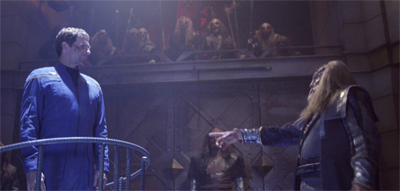
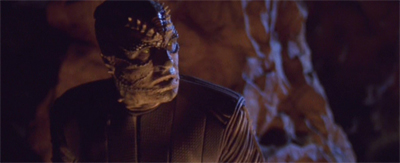
“Don’t wait for the translation! Answer me now!”

Continue reading

Star Trek: Enterprise – The Crossing (Review)

Next year, Star Trek is fifty years old. We have some special stuff planned for that, but – in the meantime – we’re reviewing all of Star Trek: Enterprise this year as something of a prequel to that anniversary. This April, we’re doing the second season. Check back daily for the latest review.

The Crossing represents a troubling return to form for the second season of Star Trek: Enterprise in a number of ways.

In terms of basic storytelling, the show is back at the point where it is simply throwing Star Trek plots into a blender and serving up a rather unappetising smoothy. The Crossing is packed with familiar Star Trek tropes – it is Return to Tomorrow by the way of Power Play through Cathexis. The idea of non-corporeal entities hijacking living bodies is not particularly novel, and The Crossing really has nothing new to offer in terms of that sort of story. There is no element of The Crossing as fun as Leonard Nimoy’s performance in Return to Tomorrow or the hostage crisis stakes of Power Play.

Here's Trip!

Here’s Trip!

However, even without the feeling of reheated leftovers, The Crossing is a very ugly little story. It reflects the reactionary post-9/11 politics of the show, the sense of isolationism and xenophobia that have become part of the fabric of Enterprise. The Crossing is essentially a fifties horror film repurposed as a post-9/11 cautionary tale about the dangers of trusting people who are not like you. It feels like a pretty solid indication of just how thoroughly Star Trek has lost its way. The decision to just externalise these anxieties in The Expanse is long overdue.

The fact that The Crossing is credited to the two showrunners driving Enterprise is quite worrying, particularly given that it serves to express an uncomfortable subtext running through the season.

Having a gas time...

Having a gas time…

Continue reading

Star Trek: Enterprise – Cease Fire (Review)

Next year, Star Trek is fifty years old. We have some special stuff planned for that, but – in the meantime – we’re reviewing all of Star Trek: Enterprise this year as something of a prequel to that anniversary. This April, we’re doing the second season. Check back daily for the latest review.

It is weird to think that Star Trek was dying in early years of the twenty-first century.

After all, the original series had greatly increased its cultural cachet at the height of the Cold War. The adventures of James Tiberius Kirk offered an optimistic alternative to total nuclear annihilation and a doomsday clock that was rapidly approaching midnight. Logic would suggest that utopian fantasy was all the more essential when contrasted against harsh reality. In fact, it seemed like cynicism and pessimism thrived in the (relatively) peaceful and prosperous decade following the collapse of the Cold War. The X-Files and Star Trek: Deep Space Nine were inescapably products of the nineties.

I'm blue dabba dee dabba dii...

I’m blue dabba dee dabba dii…

So one imagines that the dread and fear that took root in the wake of 9/11 might somehow make the optimism and hope of Star Trek all the more essential. After all, pundits and commentators wasted no time in suggesting that irony and cynicism were passé. Stephen Thompson, editor of The Onion, suggested that the age of irony had ended only a week after the attacks.  Graydon Carter, editor of Variety, observed, “I think it’s the end of the age of irony. Things that were considered fringe and frivolous are going to disappear.” In a highly publicised Time article, Roger Rosenblatt rejoiced.

Of course, irony was far from dead, as films like Team America: World Police demonstrated. The Colbert Report became a cultural phenomenon. The Onion is still in business. However, the speed with which these commentators latched on to the idea of the death of irony suggested that the mood had changed perceptibly. Maybe not definitively, maybe not completely, but there was a change in the air. If ever there was a time for the optimism and the utopianism of Star Trek, it would be this particular moment.

"This is the point where everything changed..."

“This is the point where everything changed…”

However, it seemed like 9/11 eroded the franchise’s faith in utopia. Understandably – and perhaps inevitably – Star Trek: Enterprise found itself warped by images and iconography associated with the attacks. The tradition idyllic alien worlds associated with the franchise – visible in early episodes like Strange New World and Civilisation were quickly replaced by landscapes evoking the popular mood – apocalyptic cityscapes of Shadows of P’Jem and Shockwave, Part II, the deserts of Desert Crossing, the militaristic settings of Detained and The Communicator, or even the darkness of Rogue Planet.

It was as if 9/11 had warped the psychological landscape of the Star Trek universe, throwing everything into doubt. Far from responding to that real-world tragedy with optimism and hope, it seemed that Enterprise only lost certainty in itself. Cease Fire is an episode that feels plagued by self-doubt and insecurity, even as it tries to find its way back to the franchise’s trademark idealism. It may not quite find its way back to the path, but it makes a reasonable effort.

It's all in ruins...

It’s all in ruins…

Continue reading

Star Trek: Enterprise – Dawn (Review)

Next year, Star Trek is fifty years old. We have some special stuff planned for that, but – in the meantime – we’re reviewing all of Star Trek: Enterprise this year as something of a prequel to that anniversary. This April, we’re doing the second season. Check back daily for the latest review.

Dawn arrives at a very delicate moment in Star Trek history.

Star Trek: Nemesis had hit cinemas the weekend before The Catwalk aired. It had been an immediate and humiliating disaster for Paramount. It arrived in a stuffed Christmas season, amid a relentless onslaught of big budget blockbuster fare – competing for space against Harry Potter and the Chamber of Secrets, Die Another Day and Lord of the Rings: The Two Towers. It was the first Star Trek film not to open at the top of the United States box office, landing second to Maid in Manhattan.

Engineering a solution...

Engineering a solution…

The prognosis for Star Trek as a franchise had not been particularly optimistic for quite some time. The ratings had been in decline since Star Trek: The Next Generation went off the air. Star Trek: Enterprise was airing on a dying network. Changing management at UPN was less friendly to the franchise than it had been. However, the spectacular failure of Star Trek: Nemesis was perhaps the most public blow the franchise had taken. The critics now had ammunition; the vultures were circling; the franchise was on the ropes for the world to see.

The Catwalk had aired a few days after Nemesis crash-landed, when the franchise was still reeling. The first episode of Star Trek to air in 2003, Dawn was broadcast after the franchise and the public had time to properly process the disaster. It goes without saying that there was a lot of pressure on the episode.

Alien nation...

Alien nation…

Continue reading

Star Trek: Enterprise – The Catwalk (Review)

Next year, Star Trek is fifty years old. We have some special stuff planned for that, but – in the meantime – we’re reviewing all of Star Trek: Enterprise this year as something of a prequel to that anniversary. This April, we’re doing the second season. Check back daily for the latest review.

The Catwalk is a solid, if unexceptional, piece of Star Trek.

Given the problems that the second season of Star Trek: Enterprise has been having to date, it feels like a breath of fresh air. As with a lot of the episodes around it, The Catwalk feels a little familiar. There are refugees with a secret; an alien take-over of the ship; a clever bluff to reclaim the ship from a position of weakness. If we are looking at The Catwalk in the “… by way of …” formula that seems to apply to most of this stretch of the second season, The Catwalk is “Starship Mine by way of Basics.”

"Right, right! Goddammit, Trip, now we'll never get the high score!"

“Right, right! Goddammit, Trip, now we’ll never get the high score!”

However, The Catwalk feels a lot more functional than many of the earlier episodes in the season. A large part of that is down to the way that writers Mike Sussman and Phylis Strong play to their strengths. The inevitable alien hijacking and threat is relegated to the background; The Catwalk is almost half over by the time that anything actually happens. While the episode’s pacing is a little uneven, it does allow Sussman and Strong a bit of room to explore the characters, building up the sense that the crew is something of a family unit.

While The Catwalk isn’t innovative or particularly adventurous, it works quite well. The idea of pushing the whole crew into a confined space and having them weather the storm together feels like it captures a lot of the pioneering sense of adventure that the show has allowed to fade over the second season.

Don't forget to turn out the light...

Don’t forget to turn out the light…

Continue reading

Star Trek: Enterprise – The Seventh (Review)

Next year, Star Trek is fifty years old. We have some special stuff planned for that, but – in the meantime – we’re reviewing all of Star Trek: Enterprise this year as something of a prequel to that anniversary. This April, we’re doing the second season. Check back daily for the latest review.

The Seventh broadcast in early November 2002.

However, production had wrapped on the episode on the 11th of September, the anniversary of the 9/11 attacks. After the crew finished working on the shoot, they paused to observe a moment of silence in honour of all the lives lost in that attack. That same evening, President George W. Bush would speak about those tragic events in the shadow of the Statue of Liberty. It was a very tense and very delicate political and social climate. There was no distance from the atrocity yet.

Public enemy number one...

Public enemy number one…

In January 2002, the United States public still supported intervention in Afghanistan by an overwhelming majority. In October 2002, a survey by the Pew Research Centre would reveal that most Americans supported the idea of war with Iraq, a war that would launch in March 2003. Patriotism surged. In October 2001, the Patriot Act was enacted. In February 2002, the International Olympic Committee asked the Salt Lake Organising Committee to tone down the patriotism at the opening of the winter games.

This was the climate in which The Seventh was produced, an episode about a rogue Vulcan operative who must be tracked down and apprehended for the greater good.

Snow down!

Snow down!

Continue reading

Star Trek: Enterprise – Season 1 (Review)

Next year, Star Trek is fifty years old. We have some special stuff planned for that, but – in the meantime – we’re reviewing all of Star Trek: Enterprise this year as something of a prequel to that anniversary. This January, we’re doing the first season. Check back daily for the latest review.

The first season of Star Trek: Enterprise is caught at a crossroads.

On the hand, it needs to be something new and exciting. The first Star Trek show of the new millennium, Enterprise has to find a way of updating the franchise and pushing forward. It has to find a way to challenge audience expectations and demonstrate that – after fourteen consecutive years and twenty-one overlapping seasons – Star Trek still has something fresh and exciting to offer fans. After all, the television landscape had changed significantly since the late eighties. It was time for Star Trek to change with it.

ent-brokenbow3

On the other hand, there’s a clear desire to seek familiar comforts. Star Trek has been on the air consistently for over a decade now. That wouldn’t be the case if the franchise didn’t have its own merits. There’s a sense that the first season of Enterprise is drawn to the idea that it can keep doing what worked before, offering generic Star Trek stories with a new cast and a new theme tune. This is still Star Trek, after all. There’s nothing gained by changing it to the point where it is unrecognisable.

Throughout the first season, these two impulses seem to be at odds with one another, leading to a surreal sense of whiplash. Episodes that feel as unique as Breaking the Ice, Dear Doctor or Shuttlepod One sit alongside generic shows like Civilisation, Sleeping Dogs or Rogue Planet. The show frequently pushes itself in interesting directions, only to pull relent as it approaches the point of committal. The result is a first season that is uneven, but intriguing, one that has great potential – if not necessarily the will to fulfill it.

ent-shockwavepart1m Continue reading

Star Trek: Enterprise – Shockwave, Part I (Review)

Next year, Star Trek is fifty years old. We have some special stuff planned for that, but – in the meantime – we’re reviewing all of Star Trek: Enterprise this year as something of a prequel to that anniversary. This January, we’re doing the first season. Check back daily for the latest review.

Re-watching a television show with the benefit hindsight is a particularly intriguing experience. Knowing that certain plot lines or character threads will or won’t pay off can be a liberating experience. While a disappointing ending to a particular story can undermine a lot of what came before, foreknowledge of the inevitable anticlimax allows the viewer to manage their expectations and temper their enthusiasm. It stops the viewer from getting too involved with threads that lead to dead ends, and heightens appreciations for those that pay dividends.

The Temporal Cold War plot on Star Trek: Enterprise never went anywhere. This is rather obvious in hindsight, given that it has been a decade since the end of the show. However, it’s worth acknowledging that many viewers correctly predicted as much on the initial airing of Broken Bow in late 2001. None of the questions raised will be answered, none of the plot threads will be resolved. It will just sit there, nestled snugly in the heart of this Star Trek spin-off, possibly embodying the show’s unfulfilled potential.

Enterprise isn't quite going to make it to seventh (season) heaven...

Enterprise isn’t quite going to make it to seventh (season) heaven…

While the Temporal Cold War lacks a clear resolution, it does provide the impetus for some pretty good storytelling on its own terms. In many respects, the plot works best when it exists as a driving force in the background of an episode – rather than being pushed to the fore. This is probably why Cold Front and Shockwave, Part I work much better than episodes like Shockwave, Part II – episodes that use the Temporal Cold War as a jumping off point to character work and development, rather than an end of itself.

Shockwave, Part I is notable for ending the first season of Enterprise on a cliffhanger. This was the first time that the opening season of a Star Trek had show had closed on a cliffhanger. The other shows closed out their freshman season with open-ended stand-alone stories, with the last episodes in the first seasons of Star Trek: Deep Space Nine and Star Trek: Voyager emphasising how far their cast had come. In contrast, Shockwave, Part I closes the first year of Enterprise on an honest to goodness “to be continued.” And a good one at that.

Seeking a friend at the end of the world...

Seeking a friend at the end of the world…

Continue reading

Star Trek: Enterprise – Desert Crossing (Review)

Next year, Star Trek is fifty years old. We have some special stuff planned for that, but – in the meantime – we’re reviewing all of Star Trek: Enterprise this year as something of a prequel to that anniversary. This January, we’re doing the first season. Check back daily for the latest review.

Desert Crossing is an intriguing episode.

It’s a very thoughtful and insightful teleplay from André Bormanis, brought to life by director David Straiton. This is Straiton’s first credit on Star Trek: Enterprise, and he does a good job bringing the script to screen. Although the second half of the episode struggles to engage with any of the intriguing issues broached in the first half, and while nobody seems able to keep the scenery out of guest star Clancy Brown’s mouth, Desert Crossing is a very ambitious late-season episode.

Oh, Archer. What have you Dune now?

Oh, Archer. What have you Dune now?

Continue reading

Star Trek: Enterprise – Detained (Review)

Next year, Star Trek is fifty years old. We have some special stuff planned for that, but – in the meantime – we’re reviewing all of Star Trek: Enterprise this year as something of a prequel to that anniversary. This January, we’re doing the first season. Check back daily for the latest review.

Detained is well-meaning, if a little clumsy and awkward.

It is a rather conscious effort to do a “message show” in the grand tradition of the Star Trek franchise, using the show’s science-fiction premise to offer a commentary on current events. Detained is very clearly structured as a response to the 9/11 attacks, even if Archer only explicitly references the internment of Japanese Americans at Manzanar. Detained is full of interesting ideas, and its heart is in the right place, but the execution feels decidedly rushed and haphazard. Detained works much better as a two-line moral than it does as a forty-five minute episode of television.

You can't call him Al...

You can’t call him Al…

Continue reading