• Following Us

  • Categories

  • Check out the Archives


  • Awards & Nominations

Star Trek: Deep Space Nine – A Stitch in Time by Andrew J. Robinson (Review)

Star Trek: Deep Space Nine is twenty years old this year. To celebrate, I’m taking a look at the first and second seasons. Check back daily for the latest review or retrospective.

We’ll be supplementing our coverage of the episodes with some additional materials – mainly novels and comics and films. This is one such entry.

A Stitch in Time remains a fascinating read. Sure, Star Trek actors had written novels before. William Shatner had turned his Captain Kirk novels into something of a cottage industry, even turning in a Starfleet Academy novel to cash-in in the success of JJ Abrams’ 2009 Star Trek reboot. However, Andrew J. Robinson’s A Stitch in Time is the first tie-in novel written by a cast member without a ghost writer or a collaborator. A Stitch in Time is entirely about Robinson’s relationship with Garak, the character he played for seven years on Star Trek: Deep Space Nine.

It’s a very thoughtful, eloquent and beautiful piece of work – providing the reader a great deal of insight into how Robinson sees Garak as a character, stripping away a lot of the mystery and intrigue that surrounded the character during his appearances. It feels like an attempt by Robinson to offer Garak some measure of closure, to put the character to rest.

ds9-astitchintime

Continue reading

The X-Files – Space (Review)

And so we go from what is possibly the strongest episode of the first season to what is definitely the worst. Space is a colossal failure of an episode, with even writer and creator Chris Carter conceding that it was “one of our most unloved episodes.” However, none of these spectacular failures occur for any particularly interesting reason. It’s the wrong idea with the wrong script with the wrong director, and a result that can’t even claim to be “so bad it’s good” like so many of the series’ other lesser hours.

At best, it’s a cautionary tale, a firm establishment of what The X-Files isn’t. Like The Jersey Devil, it’s an indicator that maybe Chris Carter should have been focused more on show-running than writing. Even factoring in the quite decent pilot, Carter is hardly batting a thousand here. However, it also offers some small measure of proof that – despite show’s fixation on extraterrestrials and UFOs – The X-Files is not really a show about space.

... and the stars look very different, today...

… and the stars look very different, today…

Continue reading

Star Trek: Deep Space Nine – The Maquis, Part II (Review)

Star Trek: Deep Space Nine is twenty years old this year. To celebrate, I’m taking a look at the first and second seasons. Check back daily for the latest review or retrospective.

Oddly enough, for an episode designed to serve as a launching pad for Star Trek: Voyager, The Maquis, Part II really feels like the point where Star Trek: Deep Space Nine becomes Ira Steven Behr’s show. Deep Space Nine had been created by Michael Piller and Rick Berman. While Berman oversaw the franchise as a whole, Piller had been a guiding influence during the first two seasons of Deep Space Nine. However, his attention would wander to both Voyager and the pending films based on the Star Trek: The Next Generation film franchise.

As a result, producer Ira Steven Behr would be left in the driving seat of Deep Space Nine. Behr had some experience with the franchise. he was part of the wonderful writers’ room responsible for the massive upswing in the quality of The Next Generation, but left after a year on that show – describing it as “the Connecticut of Star Trek.” Years later, he was aggressively pursued by Piller to work on Deep Space Nine, where Piller felt his philosophy might be more at home.

The Maquis, Part II is far from Behr’s first writing credit on the show, and it’s certainly not the first time his influence has been felt. It is, however, the point at which it feels like Behr’s creative vision is firmly cemented the show’s outlook. Piller would move further away over the course of the next year, and Behr’s influence would grow even stronger, but this is the point where Behr’s vision of Deep Space Nine really takes hold.

Burning bridges...

Burning bridges…

Continue reading

Star Trek: Deep Space Nine – The Maquis: Soldier of Peace (Review)

Star Trek: Deep Space Nine is twenty years old this year. To celebrate, I’m taking a look at the first and second seasons. Check back daily for the latest review or retrospective.

We’ll be supplementing our coverage of the episodes with some additional materials – mainly novels and comics and films. This is one such entry.

The Maquis: Soldier of Peace is a rather interesting little miniseries, produced while Malibu comics held the rights to Star Trek: Deep Space Nine spin-off comics in the early nineties. Malibu owned the rights to the earliest comics, publishing just over thirty issues of the main Deep Space Nine title between August 1993 and December 1995. Due to Paramount’s desire to exploit the license as much as possible, Malibu only had access to the Deep Space Nine rights, and not to Star Trek: The Next Generation or the original Star Trek.

Malibu would eventually be bought by Marvel, allowing the company to briefly publish Star Trek comics related to all on-going series. However, the company managed to generate an impressive amount of content in the time that it held the rights. Cynics would suggest that company was trying to cash in on the comics boom of the nineties, trying all manner of gimmicks, including one-shots and even a “celebrity” prestige series featuring stories written by Mark Lenard or Aron Eisenberg.

As such, these comics offer an interesting snapshot of where Deep Space Nine was at this point in its history.

The three amigos...

The three amigos…

Continue reading

The X-Files – Ice (Review)

Now we’re talking. It’s been a tough couple of episodes, but The X-Files bounces back with a strong contender for the best episode of the first season. Like the last collaboration between Morgan and Wong, Ice is one gigantic homage to a classic horror film. (Well, two classic horror films.) Shadows took its cues from The Entity, while Ice draws heavily from both John Carpenter’s The Thing and Howard Hawk’s The Thing From Another World, both based on the  John W. Campbell Jr. novella Who Goes There?

However, Ice works a lot better than Shadows. Part of that is down to the fact that Morgan and Wong seem genuinely enthused and engaged with their premise, rather than simply painting by numbers. Part of this is also down to the fact that this sort of horror and paranoia is more firmly in the show’s wheelhouse than the generic “protective avenging ghost” narrative from Shadows.

Ear, ear!

Ear, ear!

Continue reading

Non-Review Review: Captain Phillips

Captain Phillips is the tensest thriller of the year, no small accomplishment when you consider that director Paul Greengrass and writer Billy Ray are working from a high-profile true story that unfolded across media less than a decade ago. “This story is getting a play here,” a naval negotiator is advised a little over half-way into the film, and it’s hard to imagine that anybody going to see the film isn’t loosely familiar with the events (and outcome) of this Somali pirate attack.

Despite this, Greengrass manages to ratchet up the tension on Captain Phillips, turning it into a high-stakes thriller. Even knowing the inevitable outcome, Greengrass pushes the audience to the edge of their seats, refusing to allow the movie to throttle down from the moment that two unidentified blips appear on the trawler’s sonar screen.

Movie piracy really is bad...

Movie piracy really is bad…

Continue reading

Star Trek: Deep Space Nine – The Maquis, Part I (Review)

Star Trek: Deep Space Nine is twenty years old this year. To celebrate, I’m taking a look at the first season. Check back daily for the latest review or retrospective.

The Maquis is an interesting episode, because it really illustrates the weird place that Star Trek: Deep Space Nine holds in the pantheon. It’s the middle act of an arc designed to play out across the final season of Star Trek: The Next Generation, the second season of Deep Space Nine and into the first year of Star Trek: Voyager. This was all part of gigantic lead-up to Voyager, a way for the producers to generate friction between the regular cast of the show.

However, with The Next Generation ending and Voyager being set on the other side of the galaxy, Deep Space Nine wound up stuck with this plot thread. As Michael Piller concedes in The Deep Space Log Book: A Second Season Companion, “DS9 is the true inheritor of the Maquis since there is no long term benefit to Voyager.” And so – despite the fact the Maquis were never intended for the show – they wind up become a perfect vehicle to explore the show’s world view.

Picard's not the only one who can get a good face palm going on...

Picard’s not the only one who can get a good face palm going on…

Continue reading

The X-Files – Ghost in the Machine (Review)

I like Ghost in the Machine more than I really should. I mean, I know it’s a mess. The plotting is uninspired. The characters are thin. There’s a last minute link to the show’s overall conspiracy arc thrown in to compensate for the fact that plugging a device into a USB socket is hardly the most thrilling of climaxes. And yet, despite that, I think there’s an endearing weirdness to Ghost in the Machine that appeals to me.

It’s an AI story that has clearly written by a team who (by their own admission) know nothing about computers, and so there’s an almost ethereal quality to the whole thing – Mark Snow’s looping electronic score, the sparse theatrical set design of the COS mainframe, and director Jerrold Freedman’s obvious affection for Dutch angles all contribute to the sense that something rather strange is happening at the very edge of the frame.

Watch out...

Watch out…

Continue reading

Non-Review Review: Barbaric Genius

Barbaric Genius has a fascinating subject. Writer John Healy was responsible for The Grass Arena, generally regarded as one of the most searingly and brutally honest depictions of life on the streets published during the eighties. However, despite the fact that The Grass Arena became a touchstone for an entire generation and that it was so successful that it was developed into a film, Healy faded rather quickly from view. Despite writing consistently over the years that followed, none of Healy’s work was published for more than two decades following the 1988 release of The Grass Arena.

It’s an intriguing mystery, and Barbaric Genius does a thorough job exploring it, but the documentary suffers a bit as it tries to bring its subject into focus, often feeling like director/producer/narrator Paul Duane is having difficulty getting the necessary distance between himself and the film.

barbaricgenius

Continue reading

Star Trek: Deep Space Nine – Blood Oath (Review)

Star Trek: Deep Space Nine is twenty years old this year. To celebrate, I’m taking a look at the first season. Check back daily for the latest review or retrospective.

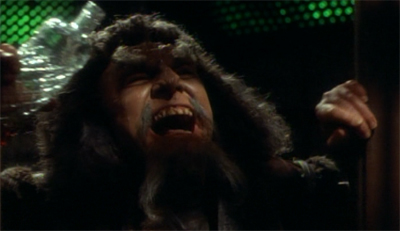
Blood Oath is a pretty fantastic piece of Star Trek: Deep Space Nine, and kicks the second season back into gear after a few mediocre (although not embarrassing) episodes. While it’s hardly the best episode of the year, and comes with its share of problems and baggage, it’s a tight and well-constructed piece of space opera. It’s a pulpy Klingon adventure, with the show’s best exploration to date of the existential problems of being Dax and a relatively simple (but potent) moral dilemma. It’s also just great fun.

Here's Kor!

Here’s Kor!

Continue reading