• Following Us

  • Categories

  • Check out the Archives


  • Awards & Nominations

Star Trek: The Next Generation – Shades of Grey (Review)

This January and February, we’ll be finishing up our look at the second season of Star Trek: The Next Generation and moving on to the third year of the show, both recently and lovingly remastered for high definition. Check back daily for the latest review.

Well. That’s over now. Star Trek: The Next Generation limps across the finish line of its second season with a compilation clip show designed to save money and keep the season’s episode count up. Shades of Grey is frequently cited as the worst episode not just of the second season of The Next Generation, but of the show as a whole. While it’s hard to entirely agree with this assessment – Shades of Grey is cynical and lazy, but it’s neither as sexist as Angel One or The Child nor as racist as Code of Honour or Up the Long Ladder – it is possible to see where that argument comes from.

Like the first season before it, there’s a sense that the second season of The Next Generation might have been better had it ended an episode earlier. Indeed, the second season could have ended with Q Who? and the only episode anybody would really miss would be The Emissary. Unfortunately, one imagines the syndication agreements and network policy made this impossible. While one suspects many of those involved would be happy if Shades of Grey simply faded from existence, it remains part of the show’s syndication package.
This is a little like what this episode feels like...

This is a little like what this episode feels like…

Continue reading

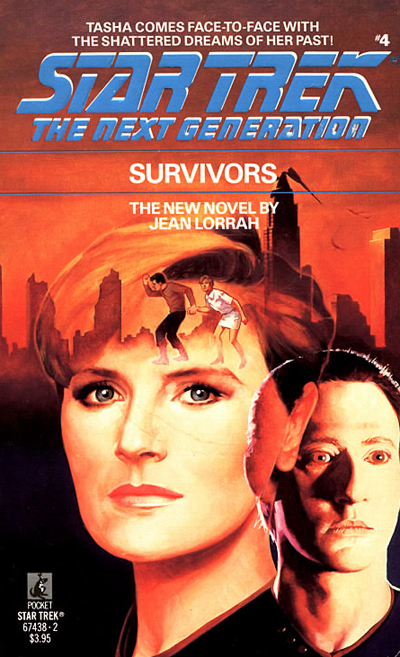
Star Trek: The Next Generation – Survivors by Jean Lorrah (Review)

This January and February, we’ll be finishing up our look at the second season of Star Trek: The Next Generation and moving on to the third year of the show, both recently and lovingly remastered for high definition. Check back daily for the latest review.

We’ll be supplementing our coverage of the episodes with some additional materials – mainly novels and comics and films. This is one such entry. This is actually supplementary to the first season of the Next Generation, specifically the episode Skin of Evil.

Writing tie-in fiction is tougher than a lot of people seem to think it is. There’s a notion that you’re playing in somebody else’s sandbox, and that you’re confined and restricted by what has and what has not appeared on screen, knowing that your work will always be secondary. As such, I can’t imagine how tough it must have been for Jean Lorrah to write Survivors. Only the fourth tie-in novel for Star Trek: The Next Generation, it was released in January 1989, around a quarter of the way through the show’s second season. Given the time it would take to edit and publish a paperback, it seems that Lorrah likely had to have the novel ready quite early in the life of The Next Generation.

It’s one thing to try to accurately capture the voice of well-defined characters on a long-running show, but it must be infinitely more difficult when writing based off sketchy early episodes that aren’t always consistent in their own characterisation.

tng-survivors

Continue reading

Star Trek: The Next Generation – Peak Performance (Review)

This January and February, we’ll be finishing up our look at the second season of Star Trek: The Next Generation and moving on to the third year of the show, both recently and lovingly remastered for high definition. Check back daily for the latest review.

Peak Performance is a functional episode of Star Trek: The Next Generation. It doesn’t really stand out all that much, and it feels quite a bit average. Still, that’s not to dismiss Peak Performance. After all, this past season has seen The Next Generation advance considerably. During the first season, an episode like Home Soil or The Big Goodbye was a welcome relief. At this stage in the show, episodes like Peak Performance and Contagion are the average.

Of course, the third season would see the show’s quality improve even more dramatically, but we’re still just a little bit away from that. So we’re left with Peak Performance, a fairly standard piece of Star Trek that feels just a little bit too formulaic and a little bit too cliché. While it’s not among the strongest of the season, there are definitely worse sins.

Game on...

Game on…

Continue reading

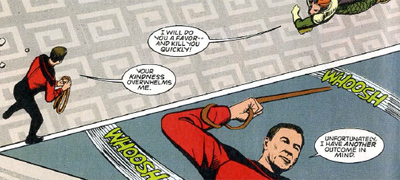
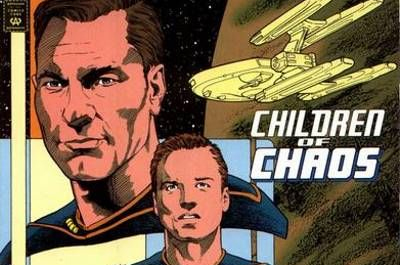
Star Trek: The Next Generation (DC Comics, 1989) #59-61 – Children of Chaos/Mother of Madness/Brothers in Darkness (Review)

This January and February, we’ll be finishing up our look at the second season of Star Trek: The Next Generation and moving on to the third year of the show, both recently and lovingly remastered for high definition. Check back daily for the latest review.

We’ll be supplementing our coverage of the episodes with some additional materials – mainly novels and comics and films. This is one such entry. This is actually supplementary to the first season of the Next Generation, specifically the episode The Battle.

Continuity is a funny thing. Star Trek: The Next Generation would develop its own internal continuity as it went along. The  episodes featuring the Klingons and the Romulans (and the Borg) all fit together in a somewhat logical and progressive pattern, even if the show lacked the clear story arc structure of Star Trek: Deep Space Nine. While the show did offer background information on the members of the Enterprise crew, it never felt particularly beholden to them.

Picard’s time commanding the Stargazer was one of the earliest parts of his history to be established, in the first season episode The Battle. Picard’s tenure on the ship is alluded to several times over the course of the series, and there’s a sense that it was a formative experience for the commander. While it’s never stated outright, it’s suggested that the death of Jack Crusher and the loss of the Stargazer may have turned him into the somewhat aloof and distant superior we met in Encounter at Farpoint.

The slingshot manoeuvre...

The slingshot manoeuvre…

And yet, despite that, The Next Generation never delves too deeply into Picard’s past. There’s the occasional reference to his time serving on the Stargazer, or a reminder of his complicated relationship with Wesley and Beverly Crusher, but The Next Generation is a television show that seems to move forwards. Even the events that happen to Picard in the context of the show – his abduction by the Borg in The Best of Both Worlds or his alternate life in The Inner Light – don’t seem to have affected Picard too much.

So it seems appropriate that this bit of future history should become fodder for the comic books and tie-in materials, delving mroe deeply into the history of The Next Generation than was possible (or even desired) on screen.

Stargazing...

Stargazing…

Continue reading

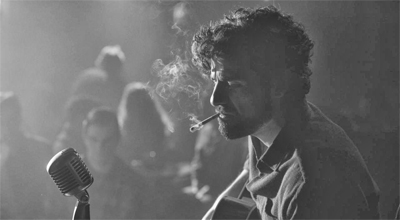
Non-Review Review: Inside Llewyn Davis

Inside Llewyn Davis is great examination of a singer drifting through American music scene in the sixties, starting in Greenwich before embarking on a cross-country tour and then ending up right back where he started.

One of the nicer cinematic tricks employed by the Coen Brothers is a delightful sense of deja vu at the end of the movie. There’s a step backwards in time towards the start of the film, but also a sense that it’s so subtle you might be forgiven for missing it. After all, it doesn’t matter too much. The eponymous Llewyn Davis is an artist caught in a particular groove, stuck on repeat; despite his protestations to the contrary, he is a performing monkey who ultimately only knows one or two numbers that seem to resonate with the audience.

Inside Llewyn Davis is a melancholy examination of personal and professional failure, delivered in the Coens’ trademark tragicomic style. There’s a sense that the world itself has a cruel sense of humour, structuring a joke at the expense of Llewyn. The film doesn’t rank among the Coen Brothers’ best work, and it’s certainly not an instant classic, feeling too disconnected and occasionally too cynical to rank with with the best of their output. At the same time, a middle-tier Coen Brothers’ film is still well worth a look.

Sing when you're winning... ... or when you're not...

Sing when you’re winning…
… or when you’re not…

Continue reading

Star Trek: The Next Generation – The Emissary (Review)

This January and February, we’ll be finishing up our look at the second season of Star Trek: The Next Generation and moving on to the third year of the show, both recently and lovingly remastered for high definition. Check back daily for the latest review.

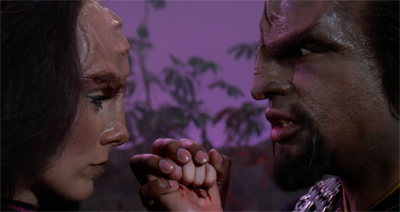
The Emissary is one of the stronger episodes from the tail end of Star Trek: The Next Generation‘s second season. An interesting meditation on heritage and race, as well as an insightful character piece for Worf, The Emissary is an interesting exploration of Worf’s relationship to his culture – and how his experience is far from universal. It’s the sort of story that The Next Generation should have been producing on a more consistent basis, but it’s better late than never.

Bonded by blood...

Bonded by blood…

Continue reading

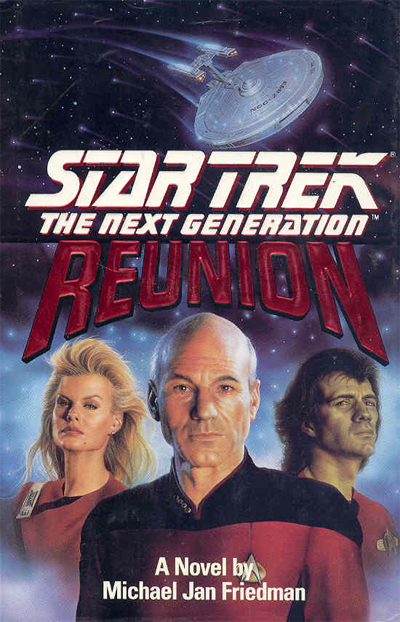
Star Trek: The Next Generation – Reunion by Michael Jan Friedman (Review)

This January and February, we’ll be finishing up our look at the second season of Star Trek: The Next Generation and moving on to the third year of the show, both recently and lovingly remastered for high definition. Check back daily for the latest review.

We’ll be supplementing our coverage of the episodes with some additional materials – mainly novels and comics and films. This is one such entry. This is actually supplementary to the first season of the Next Generation, specifically the episode The Battle.

The Star Trek expanded universe is so large and so expansive that it has its own particular phases of history, its own important and divisive figures, its own grand context for things. With the announcement of Star Trek: The Next Generation in the late eighties, the focus of expanded universe shifted a bit. Ever since the original Star Trek had gone off the air, novelists like John Ford, Vonda McIntyre, Diane Carey and Diane Duane had been free to carve out their own little corners of the shared universe.

There was a sense that the novels existed to expand the Star Trek universe outwards, with certain authors even developing their own recurring casts and delving into the history and culture of various fictional races in a way that simply wasn’t possible as part of a television episode or feature film. In the late eighties, this changed rather dramatically, with Richard Arnold becoming something of a “gate-keeper” of the expanded universe.

Although Diane Carey would write the first Next Generation tie-in novel, Ghost Ship, this represented something of a changing of the guard. The focus of the novels became a bit different, and the authors driving the line began to change. Michael Jan Friedman’s first published Star Trek novel was Double, Double in April 1989. Since than, he has written more than thirty different Star Trek tie-in novels, a few short stories and ninety-one issues (including annuals and specials) of the nineties Next Generation tie-in comic.

In terms of influence in the Star Trek expanded universe of the nineties, Michael Jan Friedman is a defining figure.

tng-reunion

Continue reading

Top Picks from the Jameson Dublin International Film Festival, 2014

All right, it’s that time of the year again, when your humble host looks at the tea leaves and points to some of the highlights of the Jameson Dublin International Film Festival, when the movies take over Dublin city for ten days between the 13th and 23rd of February. The schedule was unveiled today, and although I’ve yet to actually see any of these, I have picked out some of the more interesting and intriguing selections for the festival.

Tickets go on sale at 10am tomorrow morning, so consider this an attempt to point those Irish cinephiles in the right direction.

Calvary

calvary

Continue reading

Star Trek: The Next Generation – Manhunt (Review)

This January and February, we’ll be finishing up our look at the second season of Star Trek: The Next Generation and moving on to the third year of the show, both recently and lovingly remastered for high definition. Check back daily for the latest review.

There’s a strange sense of fatigue as we come towards the end of the second season of Star Trek: The Next Generation, as if the effort of producing Q Who? has really just drained the show of any ambition or drive. To be fair, there are probably more banal motivations at play. The 1988 Writers’ Strike had taken the entire industry by surprise and has been credited with dropping television ratings by ten percent. It damaged the tail end of the first season, causing an improvised conclusion to We’ll Always Have Paris and is probably responsible for the mess that was The Neutral Zone.

The damage also bled into the second season. Even closing with a clip show, Shades of Grey, the second season wasn’t able to meet the average quota of twenty-six episodes per season. The season premiere, The Child, had to be hastily repurposed from an aborted script for Star Trek: Phase II. Even with the shortened orders, the second season of The Next Generation frequently saw episodes coming in behind schedule and above budget. This is one of the reasons that Rob Bowman, despite being responsible for two of the season’s strongest episodes (Elementary, Dear Data and Q Who?), did not become a regular director.

"It's a good time for nap time..."

“It’s a good time for nap time…”

Behind the scenes, the show seemed to be threatening to pull itself apart. Tracy Tormé and Maurice Hurley were frequently at loggerheads with one another over all manner of issues. Tormé was only allowed to register two pseudonyms with the Writers’ Guild of America, he used both on the second season of The Next Generation, protesting over modifications made to his script. It’s no wonder that the writers’ room pretty much exploded at the end of the season, with both Tormé and Hurley departing. When Michael Piller was put in charge on the third season, he had to pretty much start from scratch.

All of which explains why the tail end of the second season seems so lifeless and limp. The Emissary is really the only second season script with any life in it once the show gets past Q Who? Most of the rest of the season seems to trying to limp across the finish line. Still, even with all of that in mind, Manhunt feels a little mean-spirited. It’s an episode designed to mock at Lwaxana Troi, to reduce a middle-aged woman going through a process explicitly compared to menopause to the butt of some particularly harsh joke. It’s hard to find that all that amusing.

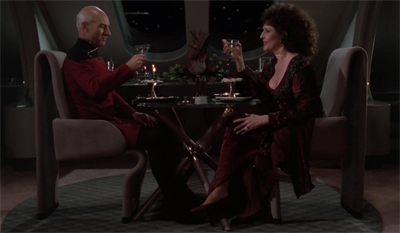
Starlit dinner...

Starlit dinner…

Continue reading

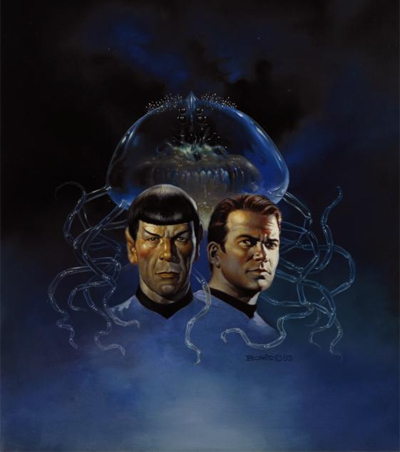
Star Trek – The Wounded Sky by Diane Duane (Review)

This January and February, we’ll be finishing up our look at the second season of Star Trek: The Next Generation and moving on to the third year of the show, both recently and lovingly remastered for high definition. Check back daily for the latest review.

We’ll be supplementing our coverage of the episodes with some additional materials – mainly novels and comics and films. This is one such entry. This is actually supplementary to the first season of the Next Generation, specifically the episode Where No One Has Gone Before.

Diane Duane remains one of the most influential Star Trek tie-in writers ever to work on the franchise. She has been involved in publishing tie-in books pretty consistently since the early days of the publishing line. The Wounded Sky, her first tie-in novel, was lucky number thirteen in the “Pocket TOS” range, published in 1983. Her most recent tie-in novel, The Empty Chair, was published in 2006. As well as a distinguished career outside of Star Trek, she has written novels and comics for the franchise. She even has a television credit, for her work on the teleplay for Where No One Has Gone Before.

There’s a reason that Duane’s contributions to Star Trek fiction are held in such a high regard, and those reasons are quite clear on reading The Wounded Sky. It’s a beautiful and thoughtful piece of prose set within the Star Trek universe, one more concerned with continuing and advancing the spirit of exploration established in the television show than meddling in continuity minutiae or offering generic adventures starring James Tiberius Kirk.

It’s a whole-hearted recommendation for any fan of the original series.

tos-thewoundedsky

Continue reading