• Following Us

  • Categories

  • Check out the Archives


  • Awards & Nominations

Jason Aaron’s Wolverine – Wolverine, Vol. 4 (Review/Retrospective)

This May, to celebrate the release of X-Men: Days of Future Past, we’re taking a look at some classic and modern X-Men (and X-Men-related) comics. Check back daily for the latest review.

Jason Aaron’s work on the character of Wolverine is absolutely fascinating. The writer was written for Logan across a number of different books and in a number of different contexts. Indeed, his first professional comic book credit was on an eight-page story featuring the character. Since the publication of that first story, Aaron has enjoyed a long and productive relationship with Marvel’s most iconic mutant.

He has written Get Mystique for the third volume of Wolverine. He has written a number of miniseries featuring the character – including the tie-in Manifest Destiny miniseries and a six-part Astonishing Spider-Man and Wolverine miniseries. Along the way, he has provided a number of back-ups and short stories featuring the character. He also secured two different spin-offs for Wolverine –  the sixteen-issue Weapon X title and Wolverine and the X-Men.
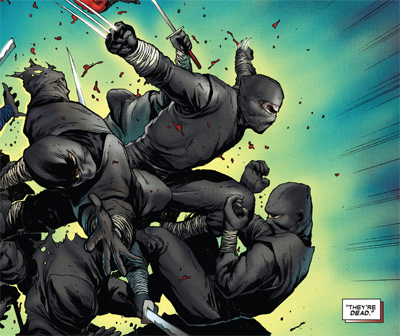
Slice o' life...

Slice o’ life…

So Aaron and Wolverine work quite well together. It’s no surprise that Aaron was chosen as the writer to launch the fourth volume of Wolverine, shepherding the book to its three-hundredth issue. While his work on Wolverine might not be quite as brilliantly eccentric as Astonishing Spider-Man and Wolverine or as insanely fun as Wolverine and the X-Men, it does represent a rather thoughtful and insightful reflection on the popular comic book character.

After all, one of the recurring themes of Aaron’s work with Wolverine is the idea that a character who has lived to long – and one who has been published so frequently – must have seen and done almost everything by this point. The trick is to try and find something new and exciting for the character after all these years. In many respects, that is what is most interesting about Jason Aaron’s run on Wolverine: how much of the run exists to push the character into position for the next leg of his arc.
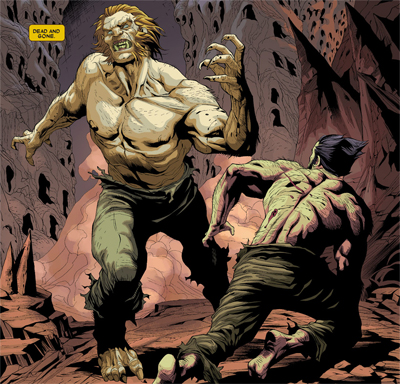
Villains of all Creeds down here...

Villains of all Creeds down here…

Continue reading

Non-Review Review: X-Men – Days of Future Past

X-Men: Days of Future Past works best as a paean for sixties optimism. A little bloated and messy, with not enough room for all its characters or side plots, X-Men: Days of Future Past could do with a trim or three. At the same time, it’s a very thoughtful and reflective blockbuster, pondering questions about innocence and idealism. There’s a sense that X-Men: Days of Future Past works better as a sequel to X-Men: First Class than it does an epilogue and critique of X-Men III.

Blue skies are gonna clear up...

Blue skies are gonna clear up…

Continue reading

An Interview with Chris Claremont, Part II (of V)

All this week, to celebrate the release of X-Men: Days of Future Past, we’re publishing a serialised interview that we conducted with the wonderful Chris Claremont back in February for publication in a British comic book magazine. Many thanks to Mr. Claremont for taking the time to talk to us, and also to Adam Walsh for allowing us to publish this.

It’s hard to talk about Chris Claremont’s X-Men run without discussing his collaboration with fellow comic book superstar John Byrne. When Uncanny X-Men shifted from a bi-monthly schedule to a monthly schedule, John Byrne took over from Dave Cockrum as artist on the title.

Claremont and Byrne are responsible for one of the most celebrated creative runs in mainstream comics. In hindsight, the two seemed well suited. Both were born in the same year, and Byrne had also been born in England. Byrne’s family migrated to Canada when he was only eight years old.

“The point is that John and I had the advantage of originating out of the same cultural stew pot,” Claremont explains. “When I would throw in conceptual reference to something I’d seen in Eagle…”

xmen-claremont5

Continue reading

Ed Brubaker’s Run on Uncanny X-Men – Divided We Stand (Review/Retrospective)

This May, to celebrate the release of X-Men: Days of Future Past, we’re taking a look at some classic and modern X-Men (and X-Men-related) comics. Check back daily for the latest review.

Divided We Stand actually feels like the start of something interesting for Ed Brubaker’s run on Uncanny X-Men. It’s a story arc that heralds a bold new direction for Marvel’s merry mutants in the wake of Messiah Complex, taking the team out of their comfort zone and suggesting that Uncanny X-Men will be moving a little outside its comfort zone and trying something different. It’s a story arc that sees the team reflecting on the past and considering the future.

So, naturally, it is Ed Brubaker’s last solo arc on Uncanny X-Men.

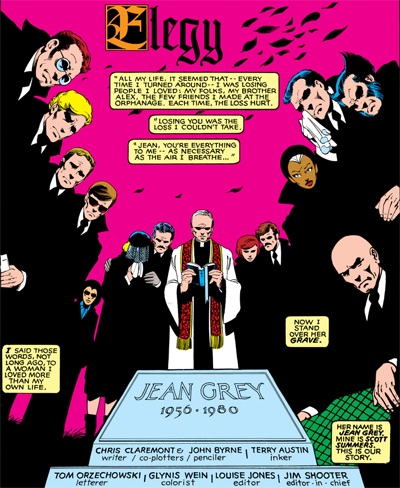
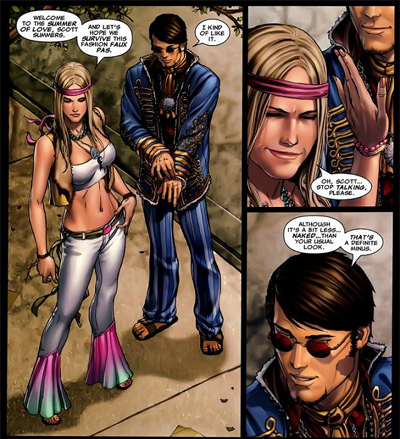
A bad trip?

A bad trip?

Continue reading

An Interview with Chris Claremont, Part I (of V)

All this week, to celebrate the release of X-Men: Days of Future Past, we’re publishing a serialised interview that we conducted with the wonderful Chris Claremont back in February for publication in a British comic book magazine. Many thanks to Mr. Claremont for taking the time to talk to us, and also to Adam Walsh for allowing us to publish this.

Chris Claremont’s studio looks a lot like you might expect.

Joining me online for a conversation about his work, the webcam allows me a glimpse of Claremont’s working area. As befits the man who wrote Uncanny X-Men (along with quite a few spin-offs and tie-ins) for seventeen years, the place is overflowing – with what look like notes and sketches, stories and ideas.

Some of these many papers are filed away neatly into boxes, some are sorted into giant stacks, some threaten to break free and consume their creator whole. Much like Claremont’s imagination and energy, these pieces of paper seem infinite – far too much to be contained in the space afforded.

It isn’t only Claremont’s study that evokes his creative process. He talks in a style familiar to anybody who has ever read any of his work. Answering the onslaught of questions, Claremont remains articulate and clever – often answering with wry wit and a knowing smile.

Subjects mentioned in passing become vitally important later on. Stories go in directions you don’t expect. What starts as a joke ends with an honest insight; what begins as profound statement ends with a clever punchline.

uncannyxmen-daysoffuturepast15

Continue reading

Nick Spencer’s Run on Ultimate Comics: X-Men (Review/Retrospective)

This May, to celebrate the release of X-Men: Days of Future Past, we’re taking a look at some classic and modern X-Men (and X-Men-related) comics. Check back daily for the latest review.

Strangely enough, it’s the second relaunch of the Ultimate comic book line that feels like it is finally dealing with Ultimatum. Jeph Loeb’s “kill ’em all and let editorial sort ’em out” event had served as the catalyst of a relaunch for the entire line, ending long-running books like Ultimate Spider-Man, Ultimate Fantastic Four and Ultimate X-Men. The line was re-tooled and re-focused and relaunched following that event.

However, that relaunch quickly fizzled out. Mark Millar’s run on Ultimate Comics: Avengers could not quite measure up to the dizzying heights of his original run on The Ultimates. Jeph Loeb’s Ultimate Comics: X shipped sporadically at best and his run on Ultimate Comics: New Ultimates was something of a mess. Meanwhile, Brian Michael Bendis continued his run on Ultimate Comics: Spider-Man as if nothing much had changed.

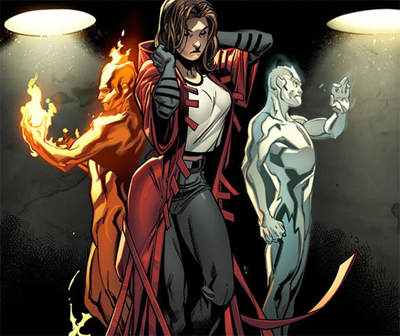
A song of ice and fire...

A song of ice and fire…

Oddly enough, it was the second relaunch that seemed to click. Coming out of The Death of Spider-Man, the slate was cleaned and the various books all got new beginnings. Jonathan Hickman took over Ultimate Comics: The Ultimates, Nick Spencer helmed Ultimate Comics: X-Men, while Brian Michael Bendis launched Miles Morales in a new volume of Ultimate Comics: Spider-Man. This was a very real shift in the status quo, and one that marked a clear departure from what came before, with bold new vision.

One of the more interesting attributes of the latest relaunch of the Ultimate line was the sense of heightened continuity between the various books. In particular, Jonathan Hickman’s run on The Ultimates overlapped quite heavily with Nick Spencer’s work on X-Men. As a result, the first year of each of the three titles seemed to be building towards Divided We Stand, a massive crossover between the various titles.

Sentinels-of-not-quite Liberty...

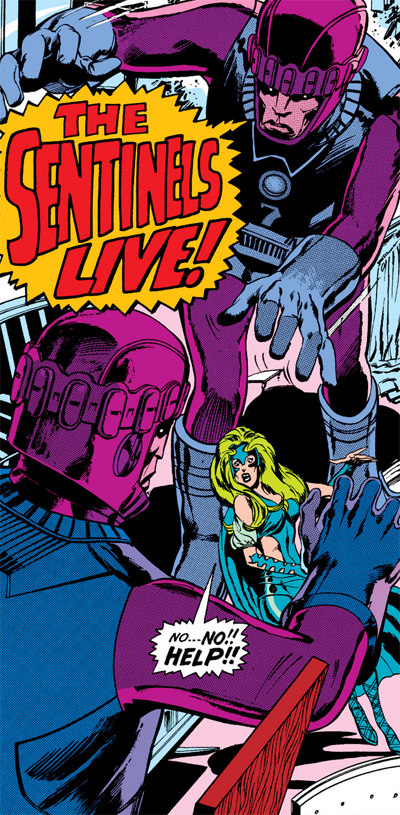
Sentinels-of-not-quite Liberty…

Spencer’s X-Men doesn’t work quite as well as Hickman’s Ultimates, suffering from the fact that nothing seems to get resolved. Dealing with a massive cast and an epic scope, Spencer’s Ultimate Comics: X-Men spends its first year establishing where all of its characters are and how their situations reflect on the larger story that is in motion. It’s an ambitious storytelling model, as Spencer crafts one big story from the ground (or the sewers) to the heights of the Oval Office, but it means that everything is barely set up before it is time to knock it down again.

Spencer’s Ultimate Comics: X-Men is a run with no shortage of great ideas and impressive scale, but one that suffers from the fact that the writer never gets to follow through on the world that he has built.

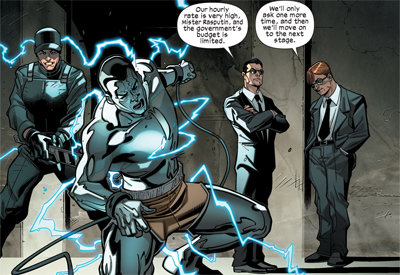
Shocking treatment...

Shocking treatment…

Continue reading

Watch! Interstellar Trailer!

The trailer for Christopher Nolan’s Interstellar is here, and it looks typically bold and ambitious. As a sci-fi fan (and no small admirer of Nolan’s work) I am really looking forward to this one. Check out the trailer below:

Roy Thomas & Neal Adams’ X-Men – X-Men Omnibus, Vol. 2 (Review/Retrospective)

This May, to celebrate the release of X-Men: Days of Future Past, we’re taking a look at some classic and modern X-Men (and X-Men-related) comics. Check back daily for the latest review.

Roy Thomas and Neal Adams (with the odd fill-in here and there) brought the first era of the X-Men to a close. At the end of their run, editor Martin Goodman would cancel the title due to low sales, only to bring it back as a reprint magazine a few months later. The title would continue as a reprint magazine until the publisher decided to resurrect it with Len Wein and Dave Cockrum’s Giant-Sized X-Men and Chris Claremont and Dave Cockrum’s subsequent revival of the original magazine.

The last stretch of issues on this initial run is fascinating. While it lacks the raw energy and sense of direction of Claremont’s early work on the title, it’s easy to argue that Thomas and Adams helped to pave the way for their successors. Thomas and Adams’ X-Men lacks focus and vision, but it does have its own quirky style. The duo would introduce and tease all sorts of ideas that would remain with the X-Men after the cancellation and into the revival.

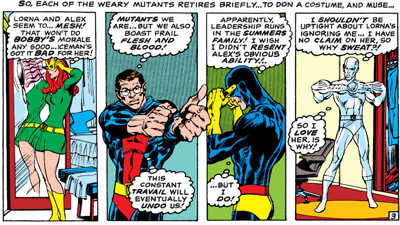
Suit up...

Suit up…

It may be too much to credit Thomas and Adams with saving or redeeming the franchise – although, apparently sales were increasing during their run- but their influence on the creators that followed is obvious. There are a number of clever ideas and premises that were effectively introduced by the duo, which would become almost expected from an X-Men comic book. Even if it seemed like Thomas and Adams were really just making it up on the fly, their work fits quite comfortably with what would follow.

It may not have been enough to save the mutants at that moment in time, but one could argue that it did provide Claremont with a solid base to build from.

They certainly do...

They certainly do…

Continue reading

X-Men: The End – Book One: Dreamers & Demons (Review/Retrospective)

This May, to celebrate the release of X-Men: Days of Future Past, we’re taking a look at some classic and modern X-Men (and X-Men-related) comics. Check back daily for the latest review.

Marvel went through a phase of publishing books based around “The End” of various iconic properties. These comics allowed creators to imagine telling the last possible story for a given character or corner of the Marvel universe. Creators like Garth Ennis or Peter David got to write stand-alone one-shot stories for The Punisher and The Incredible Hulk, respectively. Paul Jenkins wrote a six-issue miniseries Wolverine: The End, while Jim Starlin closed off the entire Marvel Universe with Marvel Universe: The End.

However, given the sprawling and expansive continuity of the X-Men franchise, it stands to reason that any attempt to tell the final X-Men story would have to be a rather epic tale. Writer Chris Claremont wrote Uncanny X-Men for well over a decade, so even asking him to close off his own threads and plot points would take up considerable space. However, X-Men: The End is an absolutely sprawling comic book saga that is spread across three miniseries and eighteen issues.

Blackbird down...

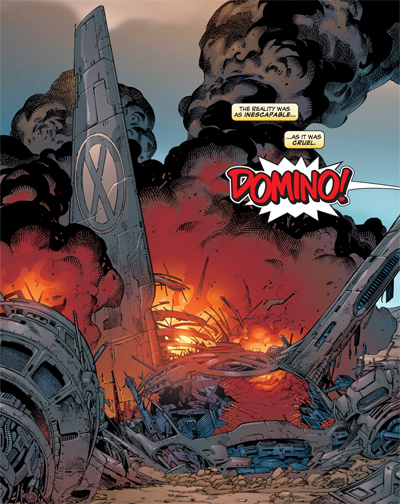
Blackbird down…

In a way, it feels like a touching coda for Claremont’s version of The X-Men. The writer defined the X-Men franchise, introducing many of the plot and character elements that readers would come to take for granted when reading an X-Men story. The End isn’t Claremont’s last X-Men story by any stretch – the writer still works on the franchise quite frequently in a variety of different roles, enjoying short runs and long runs.

However, The End does seem to serve as an epic farewell tour of the world that Claremont helped to build and define. As such, it’s fitting that the miniseries is somewhat clunky and awkward and epic and sprawling and melodramatic and overblown and absurd and unexpected. It is a capstone to Claremont’s gigantic X-Men epic, a closing statement and thoughtful summation to decades of work.

"X" marks the spot...

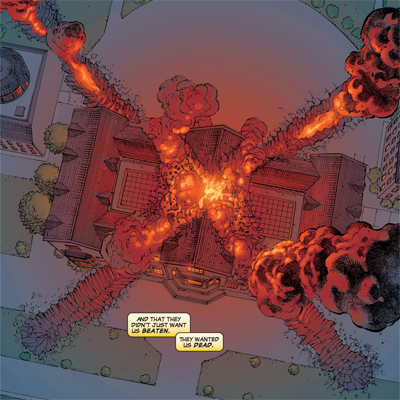
“X” marks the spot…

Continue reading

Hill Street at Irish Cinemas on 23rd May!

The Irish skateboarding documentary Hill Street is opening next week in Irish cinemas. The documentary has had a long road to distribution, premiering at the Jameson Dublin International Film Festival in 2012 to great word of mouth. Looking at the history skating scene, focusing on the eponymous street, it promises a fascinating glimpse at a piece of Irish pop culture that is often overlooked or forgotten.

Check some footage from the documentary below, and catch it in cinemas from next week.