• Following Us

  • Categories

  • Check out the Archives


  • Awards & Nominations

Millennium – Season 2 (Review)

This May and June, we’re taking a trip back in time to review the fifth season of The X-Files and the second season of Millennium.

The second season of Millennium is understandably polarising.

It is returned from its summer hiatus as what was, on the surface, a radically different television show. The Millennium Group was no longer simply a forensic consultancy firm, but had transformed into a secret society dating back millennia; it had become, as Frank would concede in The Fourth Horseman, “a cult.” More than that, the show had changed around the Millennium Group. Serial killers had been the show’s bread and butter in its first season, prompting some critics to describe it as a “serial killer of the week” procedural; now they were a rare occurrence.
millennium-thebeginningandtheend2

More than that, Frank Black had also changed. In interviews around the first season, Lance Henriksen had been very proud to play a hero who solved problems with his mind rather than with a gun. In contrast, the second season opened with Frank Black brutally murdering the man who kidnapped his wife. The yellow house had been a symbol of everything pure and good in the world of Frank Black, of the family he worked hard to protect. The second season had exiled Frank Black from this family and had him move deeper and deeper into the Millennium Group itself.

However, there were other changes that were less profound, but just as striking. Frank Black was suddenly a fan of the music of Bobby Darin. He suddenly had a sense of humour that led him to crack more than two jokes in a season. at the same time, he was also more short-tempered and grouchy. The first season had presented Frank Black as a rock in the middle of otherwise chaotic seas; in the second season, it was clear that Frank himself was feeling the strain and the stress. In short, Frank Black felt a lot more human.
millennium-aroomwithnoview9

The entire mood of the show changed around Frank. Millennium was suddenly a lot weirder. Though the first season had largely moved away from the classic “Frank hunts a serial killer” formula by the end of the year, the second season abandoned any sense of formula altogether. Watching the second season of Millennium on a week-to-week basis, it was almost impossible to predict what the next show would be like. Although there was a very strong thematic continuity between episodes, there was less of a rigid structure to their construction.

The second season of Millennium was a radical departure from what had come before. It was also the best season of television ever produced by Ten Thirteen.
millennium-luminary28

Continue reading →

The X-Files – The X-Files Game (Review)

This May and June, we’re taking a trip back in time to review the fifth season of The X-Files and the second season of Millennium.

At the end of its fifth season, with the release of The X-Files: Fight the Future looming large, it was the perfect time to cash in the popularity of The X-Files. The show had already branded comic books and music albums, so an honest-to-goodness video game was the next logical step. The X-Files Game was released at the end of May 1998, right between the broadcast of The End and the theatrical release of Fight the Future. Fans who could not wait three weeks to see the big budget feature film would have the game to keep them occupied.

To be fair, The X-Files Game was not the first digital project to cash in on the success of The X-Files. Unrestricted Access had been released over a year earlier – a database of information relating to the show that could be read in Internet Explorer 4. Spanning seven discs, The X-Files Game was a much more ambitious project, a series of live-action sequences stitched together to form an interactive video game narrative. However, the game suffers from a somewhat repetitive design and the fact that, while it tries to emulate the look and feel of the show, it simply can’t.

xfiles-game4

Continue reading →

The X-Files – The End (Review)

This May and June, we’re taking a trip back in time to review the fifth season of The X-Files and the second season of Millennium.

The End is a watershed moment for the show.

There is a reasonable argument to be made that The End accomplishes very little in terms of narrative. It doesn’t really do a great job bridging to The X-Files: Fight the Future. It certainly doesn’t do a great job wrapping up any of the show’s long-running concerns. Indeed, it adds two characters who will go on to become major (if controversial) players in the show’s overarching mythology. Even the big dramatic twist at the end of the episode feels familiar, with The End closing on a more memorable visualisation of the cliffhanger to The Erlenmeyer Flask.

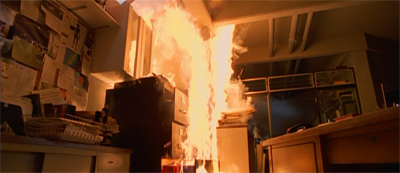
Burn, baby, burn...

Burn, baby, burn…

Nevertheless, The End does feel like an end of sorts. It closes out five seasons of The X-Files. Carter had suggested in interviews that he only wanted to do five seasons of the show before transitioning into feature films, and so The End marks the conclusion of the run that Carter had originally planned for the show. After all, The X-Files had crossed the hundred episode mark earlier in the year. It was ripe for syndication. It was at the stage where Fox and Ten Thirteen did not need to keep the show on the air to keep printing money.

At the same time, The End marks another more definitive sort of end. It would be the last piece of The X-Files to be filmed in Vancouver until The X-Files: I Want to Believe a decade later. Vancouver was a part of the show’s DNA. It had been the show’s production hub since The Pilot. More than two decades later, The X-Files would return to Vancouver for its six-episode wrap-up miniseries. Discussing the revival, Carter argued that Vancouver was “a natural place to make a show like The X-Files.” Certainly, the mood and atmosphere lent itself to the series.

"My video collection!"

“My video collection!”

So The End marks a fond farewell from the production team to a city and region that had served them well.  In that respect, it feels like a more definitive sort of ending. The End opens with a scene that is confident enough to let Canada be Canada. As with the opening scene of Herrenvolk, it is almost comical how hard The End flags its “and starring Canada as Canada” cred, to the point where a mountie rushes to the aid of an assassination victim. The closing scene of The End burns down the show’s most iconic and memorable sets.

While The End is not necessarily a satisfying mythology episode or season finalé in its own right, it does feel like a suitably big moment in the evolution of the show.

Smoking gun...

Smoking gun…

Continue reading →

Non-Review Review: Terminator Genisys

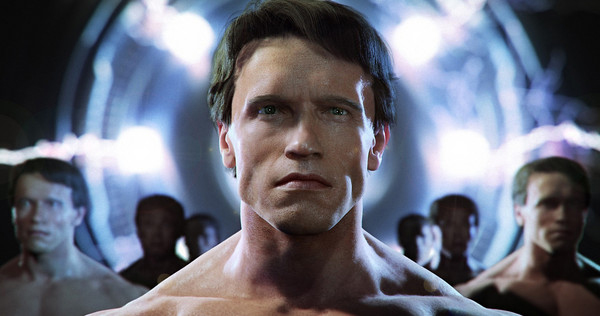
“I am inevitable,” the villain boasts towards the climax of Terminator Genisys, just as things look their darkest for our heroes. He is a fully 3D digital image sourced from wall-mounted projectors, reflecting the way that the film itself has been marketed.

He might as well be talking on behalf of the film itself. The Terminator franchise has evolved into an unlikely juggernaut, spanning over three decades and evolving from a low-budget science-fiction film into a blockbuster series. Critical (and popular) reception to Terminator III: Rise of the Machines and Terminator: Salvation has been somewhat muted, but the film franchise just keeps coming. In a way, it feels like Skynet making itself manifest. Or, more appropriately, the eponymous robot killing machine.

Fresh off the factory line...

Fresh off the factory line…

There are points where Terminator Genisys seems incredibly self-aware, posing the sort of existential and philosophical questions that are confronting the audience. In The Terminator and Terminator II: Judgement Day, James Cameron positioned time travel as a metaphor for the strings of fate and destiny that seemed to bind free will. In Terminator Genisys, time travel becomes a powerful metaphor for the process of film- (or franchise-) making itself.

Both a sequel and a prequel, a reboot and a remake, the time travel plot element of Terminator Genisys turns the franchise into a gigantic mix tape. Screenwriters Laeta Kalogridis and Patrick Lussier collaborate to turn Terminator Genisys into a live-action version of a Jive Bunny and the Mix Masters track, a sample filled with familiar beats played at the wrong tempo. There are moments when the wrongness seems the point, when Terminator Genisys wanders into the uncanny valley. There are points where it almost achieves consciousness.

Prick me, do I not leak?

Prick me, do I not leak?

Continue reading →

Millennium – The Time is Now (Review)

This May and June, we’re taking a trip back in time to review the fifth season of The X-Files and the second season of Millennium.

The second season of Millennium holds together very well as a season of television.

It is arguably more cohesive in terms of plotting and theme than any individual season of The X-Files, with the possible exception of the eighth season. Ideas, characters and themes are all set up early in the season so that they might pay-off at the climax. Watching The Fourth Horseman and The Time is Now, it is very hard to believe that the season could have ended any other way. That is a tremendous accomplishment on the part of Glen Morgan and James Wong, who steered the second season as Chris Carter brought his focus back to The X-Files.

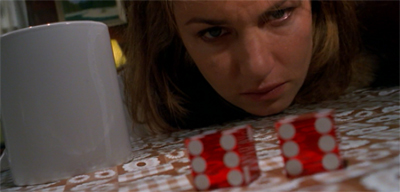
Dicey proposition...

Dicey proposition…

The attention to detail is staggering. There are lots of little touches, from the way that the use of chickens in The Fourth Horseman calls back to the story that bookends Monster to the reference to the fate of Brian Roedecker to the quick shot of Frank placing the statue of the angel on his father’s grave. Glen Morgan has repeatedly stated that the character of Lara Means was introduced in Monster knowing her fate in The Time is Now, and that seems to be true of most of the character and plot arcs over the stretch of the second season.

However, what is truly touching about the second season of Millennium is the way that the show manages to remain deeply personal and emotional, despite the scale of what is unfolding.

Shattered mirror...

Shattered mirror…

Continue reading →

Non-Review Review: Aonrú

Aonrú offers a fascinating insight into life on Cape Clear Island off the west coast of Cork. The small community had subsisted for years on farming and fishing – as the documentary notes, “the farmers were fishermen and the fishermen were farmers.” Now, due to a number of intersecting and overlapping hurdles – both natural and man-made – the community finds itself struggling to provide a future for itself. The thirty minute documentary examines what it must be like to live on Cape Clear.

Skilfully constructed from a myriad of first-person accounts, archive footage and beautiful images of the region, Aonrú explores the pace of life in one of the most remote parts of the country.

aonru1

Continue reading →

The X-Files – Folie à Deux (Review)

This May and June, we’re taking a trip back in time to review the fifth season of The X-Files and the second season of Millennium.

Folie à Deux is the last stand-alone episode of the fifth season, and the last stand-alone episode to be produced in Vancouver. It is also a pretty essential episode before The X-Files: Fight the Future, reinforcing just how essential Mulder and Scully are to one another shortly before the movie threatens to break them up for good.

Folie à Deux is also one of Vince Gilligan’s most underrated scripts from the show’s entire run, a thoughtful examination of the relationship between Mulder and Scully that provides a clever counterpoint to his script of Bad Blood. If Bad Blood was essentially a story about how Mulder and Scully see the universe differently, then Folie à Deux represents an attempt to heal that rift, perhaps suggesting that Mulder and Scully have come to share their own unique form of madness.

Bugging Skinner...

Bugging Skinner…

Continue reading →

Millennium – The Fourth Horseman (Review)

This May and June, we’re taking a trip back in time to review the fifth season of The X-Files and the second season of Millennium.

The second season of Millennium has been consciously building towards an apocalypse.

Actually, that is not entirely true. The second season of Millennium has been building to an almost infinite number of apocalypses. The collapse of Michael Beebe’s home in Beware of the Dog, the destruction of an entire community in Monster, the dissolution of the tribe in A Single Blade of Grass, the potential loss of a child in 19:19, an author’s acceptance of his fading skills and relevance in Jose Chung’s “Doomsday Defense”, the stealing of a soul in The Pest House, the breaking of a spirit in A Room With No View. The second season is populated with apocalypses.

Everything dies...

Everything dies…

Ever since The Beginning and the End opened with Frank Black staring into space as he contemplated cosmic forces of entropy and decay, it has been clear that the second season of Millennium is about more than just the end of the world. It is about the end of worlds. Over the course of The Fourth Horseman and The Time is Now, Peter Watts loses his faith (and maybe his life) as Lara Means loses her sanity. Frank Black loses his father and his friends – and, ultimately, his wife. The Marburg Virus is just a blip on the radar compared to all of this.

The Fourth Horseman and The Time is Now combine to form one of the most interesting and compelling finalés ever produced. The two-parter is the perfect conclusion to the second season of Millennium. Indeed, it would be the perfect conclusion to the entire series. Perhaps the biggest problem with The Fourth Horseman and The Time is Now is the fact that The Innocents is lurking only a few months away.

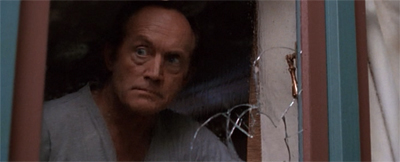
Cracking up...

Cracking up…

Continue reading →

Non-Review Review: Slow West

There is a reason that the western has fallen from popularity after its cinematic heyday.

For decades, it seemed like Hollywood punctuated its release of western films with sampling for other genre, returning time and again to the story of the men who shaped America from the ground up. Over the years, the familiar tropes have been deconstructed and reconstructed and deconstructed again. They have been mashed up and knocked down and spun around. They have been torn apart and thrown back together with reckless abandon. With all of that going on, it often seems like anything that the genre has to say has been said and repeated time and again.

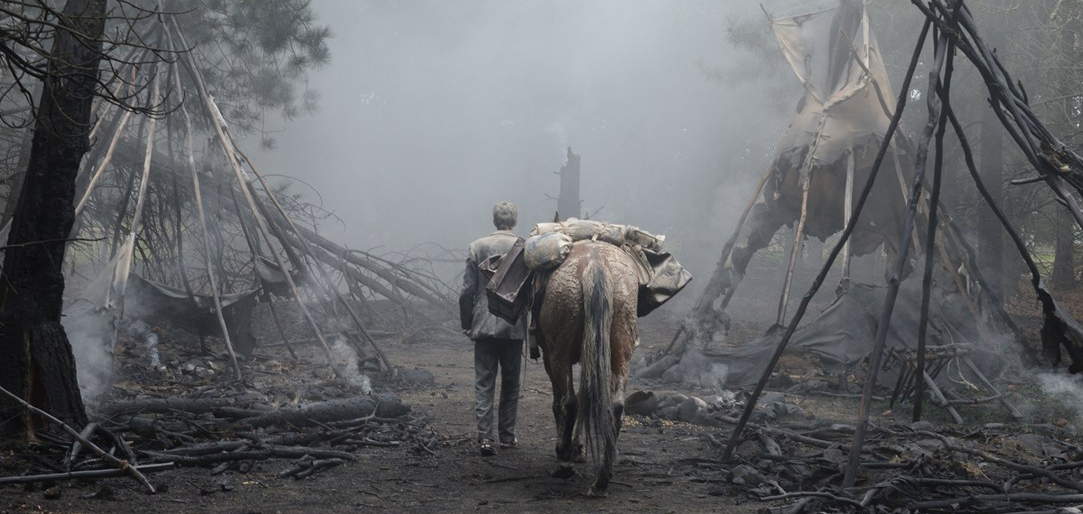
Life is peaceful there...

Life is peaceful there…

There are probably still things to be said about the myth of the Old West, even if the genre seems as explored and catalogued as the American continent itself. There are little hidden pockets and eccentric spaces that might hold a surprise or several. Slow West doesn’t necessarily have anything new or revelatory to say about the western. It seems unlikely to shatter any illusions or break any preconceptions. A lot of the ground covered by Jay Cavendish and Silas Selleck on their trek westward will be familiar to anybody with a passing knowledge of the genre.

At the same time, there is a lyrical beauty to Slow West. The film is a haunting and evocative trip through a landscape that most viewers know better than their own locality. Slow West might not say anything particularly earth-shattering, but it does articulate itself clearly and elegantly. It is a meticulously crafted film, finely constructed and sumptuously filmed. It might be a tourist trip over well-travelled group, but it takes the most scenic route imaginable.

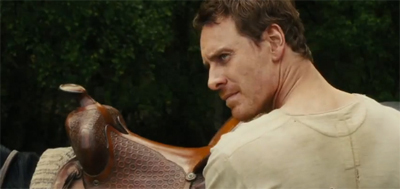
Saddle up!

Saddle up!

Continue reading →

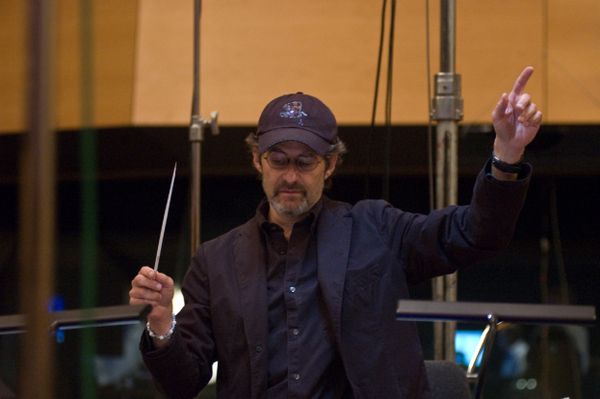
James Horner

It is no exaggeration to say that James Horner was one of the greatest film composers of all time.

Such measures are seldom objective, but Horner was the rare composer who could match critical and commercial success across a wide range of genre and material. Understandably, coverage around his death has focused on the biggest hits in his extensive filmography. He won two Oscars out of ten nominations. He occupied two of the five nomination slots in 1996 for his soundtracks to Apollo 13 and Braveheart. It is quite something to compete against yourself for an Oscar.

6a00d8341c630a53ef012875f27459970c-600wi

Titanic tends to headline such discussions of Horner’s work, as one might expect given that it was “the biggest selling primarily orchestral film score in history.” More than that, Horner wrote The Heart Will Go On, the love theme that sold more than 15 million copies to become one of the biggest selling singles of all time and the biggest selling single of 1998. The Heart Will Go On is credited with revitalising the “spin-off hit” in the late nineties, prompting lots of movie-launched love ballads like Don’t Wanna Miss a Thing or There You’ll Be.

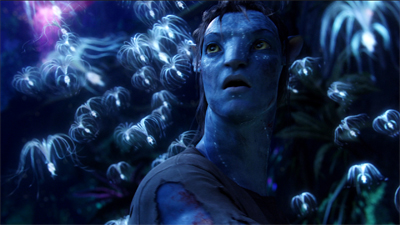
Horner enjoyed no shortage of commercial success. He provided the soundtracks to two movies that could claim to be the biggest movies of all time upon their release. Titanic was the first such example, becoming the most successful movie of all time upon its release in 1998. Horner also provided the soundtrack to Avatar, the movie that would claim the title in 2009. However, the most impressive aspect of Horner’s extensive filmography is the sheer scope of his work.

avatar1

Continue reading →