I am in the middle of a run of appearances on The Time is Now at the moment, and taking the time out to discuss the rare second season episode of Millennium that I don’t consider to be a highlight. I’m discussing The Pest House with the wonderful Kurt North and the fantastic Adam Chamberlain.
The Pest House is an interesting episode. It’s written by the second season showrunners Glen Morgan and James Wong, and plays into some of their interests in the horror genre. It’s very much a celebration of slasher movie clichés, which would be reflected in their projects after finishing up on Millennium – from Morgan’s Black Christmas to Wong’s American Horror Story to their joint Final Destination. However, the episode often feels like a mess of tropes and ideas, at least two different episodes stitched inelegantly together.
As ever, you can listen directly to the episode here, subscribe to the podcast here, or click the link below.
I had the pleasure of joining the great and generous Carl Sweeney on his excellent classic Hollywood podcast The Movie Palace.
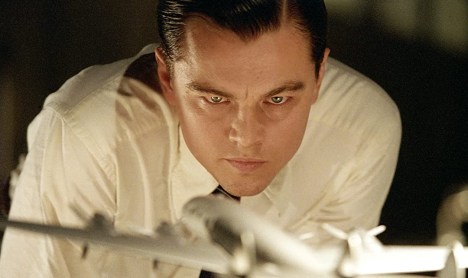
Carl had put the podcast on a bit of a hiatus earlier in the year, but these are strange times. So to kick off a new season, he invited me on to talk about The Aviator, one of Martin Scorsese’s odes to classic Hollywood. I was delighted to accept the invitation, as I’m always happy to revisit a Scorsese film. The Aviator has aged in interesting ways, providing an encapsulation of some of Scorsese’s core themes and ideas, but also blending modern filmmaking with a classic aesthetic. It’s a fascinating window into what makes Scorsese such a unique filmmaker.
I was thrilled to get back invited on The Movie Palace with Carl Sweeney to talk about Martin Scorsese’s The Aviator. It’s a film that I hadn’t watched in quite a while, and which had a much stronger impact on me than I expected. You should listen to the whole podcast conversation, but I had some thoughts I wanted to more properly articulate.
Q-U-A-R-A-N-T-I-N-E…
The Aviator is about many things.
Most obviously, it is about famous Hollywood director and aviation pioneer Howard Hughes. Hollywood had been trying for decades to bring Hughes’ life to screen. Directors like Christopher Nolan and Warren Beatty had failed to get their Hughes-related projects off the ground. Indeed, The Aviator almost feels like a work-for-hire project from Scorsese, who replaced Michael Mann as the director of this project at the behest of lead actor Leonardo DiCaprio. Having previously collaborated on Gangs of New York, The Aviator cemented Scorsese and DiCaprio’s partnership.
However, despite his late arrival on the project, The Aviator feels very much like a Martin Scorsese film. After all, the second half of the film is given over to an impassioned creator dragged out into the limelight and forced to justify a spectacular and costly failure while arguing for his exacting creative vision. This aspect of the film would undoubtedly have resonated with Scorsese, who had just come on to the project fresh from the debacle of Gangs of New York, which involving fighting with Harvey Weinstein over the cut of a movie“whose box office returns weren’t overwhelming.”
Still, there’s one aspect of The Aviator that feels much more pointed and resonant in the current context of global lockdowns and self-isolation. In a very fundamental way, The Aviator is a story about the paradox of touch. It is a story of a man who longs for human connection, but whose neuroses make that sort of connection impossible. The Aviator tells the tale of a man who locks himself away from the world, but must eventually find the strength to put himself back in it.
I published a new piece at Escapist Magazine this evening. With “Alien Day” arriving tomorrow, I thought this was as good a time as any to celebrate the most under-appreciated film in the series.
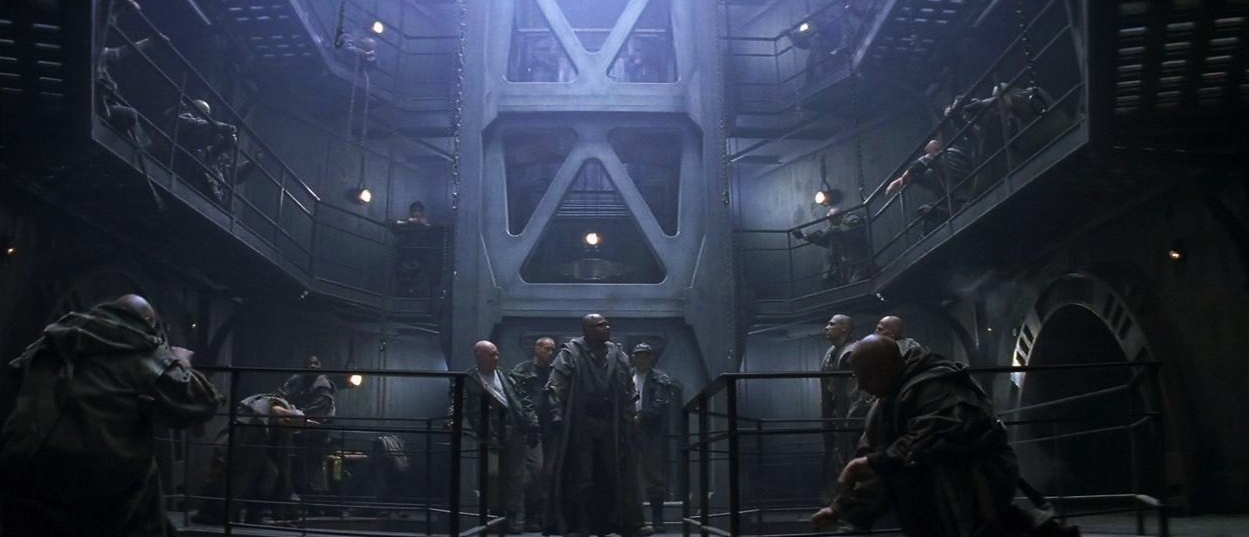
Alien³ has a somewhat tarnished legacy. It was subject to a lot of criticism when it came out, some of which was justified and some was not. While director David Fincher’s original vision is lost to history, there have been welcome efforts to reclaim the film. The Assembly Cut is well worth any film fan’s time, and deserves consideration as a worthy entry within the larger franchise. Even allowing for this minor rehabilitation, the film is still undervalued.
Alien³ will never be as good or as iconic as Alien or Aliens. However, it is a worthy successor. The film’s unrelenting commitment to – and loud endorsement of – nihilism is very much in keeping with the spirit of the franchise. Alien³ is a massive and expensive studio blockbuster that argues for the horror of existence and the cruelty of a vicious universe. It is a $50m argument for self-negation in the face of such cosmic terror. These ideas simmered through Alien, but Alien³ allows them to come to a boil. It’s breathtaking.
You can read the piece here, or click the picture below.
Hosted by Andrew Quinn and Darren Mooney, and this week with special guest Tony Black, The 250 is a (mostly) weekly trip through some of the best (and worst) movies ever made, as voted for by Internet Movie Database Users.
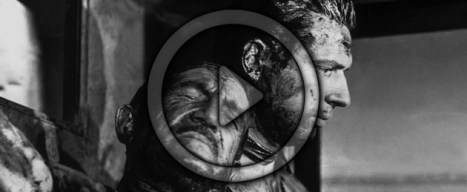
This time, Henri-Georges Clouzot’s Le salaire de la peur.
Four men drift idly around a deadend town in the heart of South America, when an unlikely opportunity strikes. A freak accident has caused a fire at an American oil well, and the company is offering a lavish payday to anybody who can help. The only catch is that to earn that money, these four men will have to drive extremely volatile nitroglycerine across some of the most treacherous terrain imaginable. Those who survive will have enough to escape the purgatory in which they’ve found themselves, and those who don’t won’t care.
At time of recording, it was ranked 202nd on the list of the best movies of all time on the Internet Movie Database.
I published a new In the Frame piece at Escapist Magazine this evening. Better Call Saul wrapped up its fifth season this week, and so it was worth taking a look at the Breaking Bad prequel.
To a certain extent, Better Call Saul seems like a show out of step with the times. It is set in the early days of the twenty-first century. It has never become the ratings or awards juggernaut that Breaking Bad became. It has a strong critical following, but never truly broke out into the wider culture in the way that Breaking Bad did. None of this is a judgment on the show itself. After all, Better Call Saul premiered at a time that television was already pushing away from those antihero dramas.
However, that status as show that exists at the tail end of a broader cultural trend allows Better Call Saul a greater degree of creative freedom. It offers a reflective meditation on the kind of antiheroes that populated so much of the so-called “Golden Age of Television.” These masculine archetypes are easy to galmourise, even when shows are unambiguous about their flaws. The beauty of Better Call Saul lies in creating an antihero who is harder to fetishise. Saul is not Walter White or Tony Soprano or Al Swearengen. He is a lot more tragic, a lot more pathetic.
This is the beauty of Better Call Saul, the angle that allows the show to feel like a true coda to the kind of stories that dominated prestige television for well over a decade. You can read the piece here, or click the picture below.
I was delighted to get invited back on The Time is Now to discuss The Mikado with the inimitable Tony Black.
The Mikado is an interesting episode of the second season of Millennium. In some ways, it represents a conscious throwback to the “serial killer of the week” format that defined so much of the first season. In some ways, it’s the ultimate example of the “serial killer of the week” format, pitting Frank Black against a stand-in for the Zodiac. However, in other ways it feels very much in step with the second season as a whole. It’s a story about information and rebirth, two core themes of the season as a whole. Either way, it’s a highlight in a season full of highlights.
As ever, you can listen directly to the episode here, subscribe to the podcast here, or click the link below.
I published a new In the Frame piece at Escapist Magazine this evening. With the news that Sam Raimi is going to be directing Doctor Strange and the Multiverse of Madness, I thought it was worth taking a look back at his Spider-Man movies.
Sam Raimi’s Spider-Man movies helped to pave the way for the modern superhero blockbuster, arriving at a pivotal moment for mainstream blockbuster cinema. Along with Blade and X-Men, Spider-Man demonstrated that it was possible to accurately translate these heroes to screen. In the years since, the superhero genre has become the dominant form of contemporary blockbuster cinema. However, rewatching Raimi’s Spider-Man movies, it is immediately clear that the genre hasn’t always developed in the healthiest or most satisfactory directions.
What could the MCU learn from Sam Raimi’s Spider-Man movies? You can read the piece here, or click the picture below.
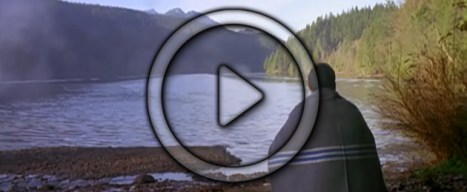
The Time is Now is officially back from its Christmas hiatus, and I was thrilled to join writer Joe Maddrey for a discussion of a highlight from the second season of Millennium, Luminary.
Of course, Luminary was loosely inspired by the real-life story of Christopher McCandless. The teenager famously journeyed into the Alaskan frontier in the hopes of finding a spiritual truth, only to die alone in the remains of an old bus. McCandless was something of a folk icon of the late nineties, most notably inspiring projects like Into the Wild. On the surface, this might appear like a strange fit for Millennium, but that story resonates with the themes of millennial malaise that run through the series. The result is one of the best episodes within a phenomenal season of television.
As ever, you can listen directly to the episode here, subscribe to the podcast here, or click the link below.
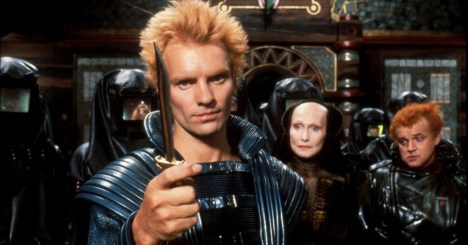
I published a new piece at Escapist Magazine this evening. This week saw the release of the first production photos from Denis Villeneuve, so it felt like the perfect opportunity to take a look back at the last attempted adaptation of Frank Herbert’s iconic science-fiction classic.
David Lynch’s Dune is not necessarily a coherent film. It’s not a good film by any traditional metric of quality. However, it is a unique film. There has, quite simply, never been another blockbuster like it. It’s a film at war with itself, caught between extremes. The producers clearly want the film to look like a Star Wars rip-off, while Lynch is pulling from his own esoteric influences. The results are dazzling and chaotic. It’s hard to believe that a film like this could ever exist.
You can read the piece here, or click the picture below.



















 the m0vie blog