• Following Us

  • Categories

  • Check out the Archives


  • Awards & Nominations

The X-Files – Nothing Important Happened Today I (Review)

This December, we’re taking a trip back in time to review the ninth season of The X-Files.

After all the promise and potential of the eighth season, the ninth season brings everything crashing down.

“Fight the future” is not just the subtitle to the franchise’s first film, nor words hastily scrawled on a CD-ROM or the walls of a prison cell. “Fight the Future” is a motto to live by, a statement of purpose. Just when it looked like Essence and Existence were about to let Mulder and Scully retire gracefully, Nothing Important Happened Today I and Nothing Important Happened Today II have a last-minute change of heart and clutch desperately at Mulder and Scully, as if hoping the duo will never leave.

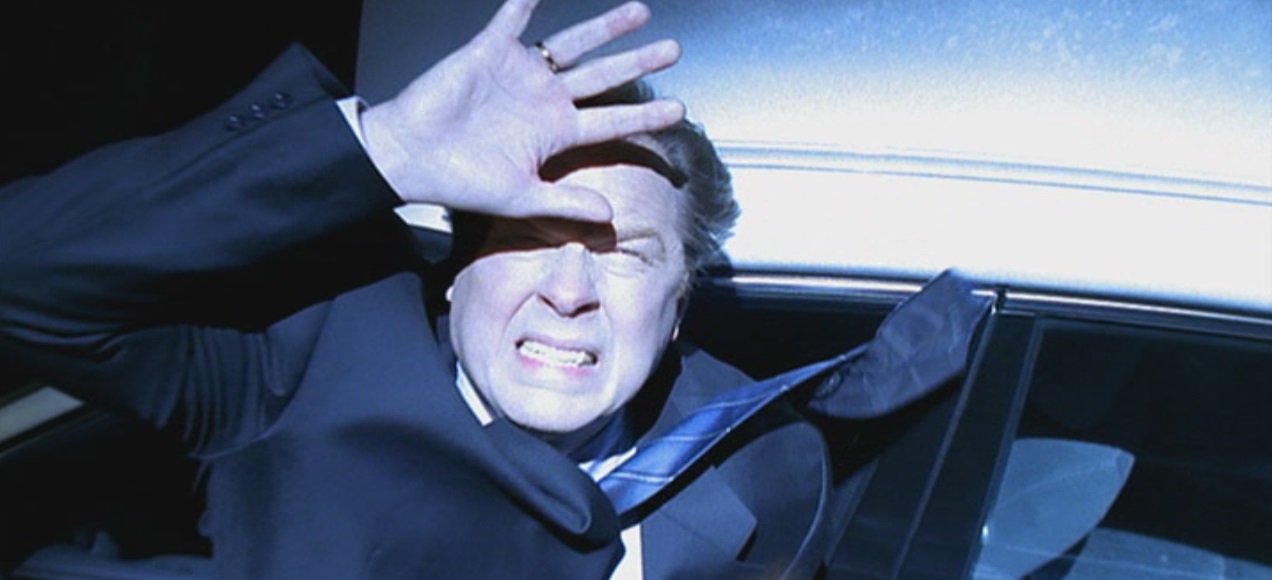
That sinking feeling...

That sinking feeling…

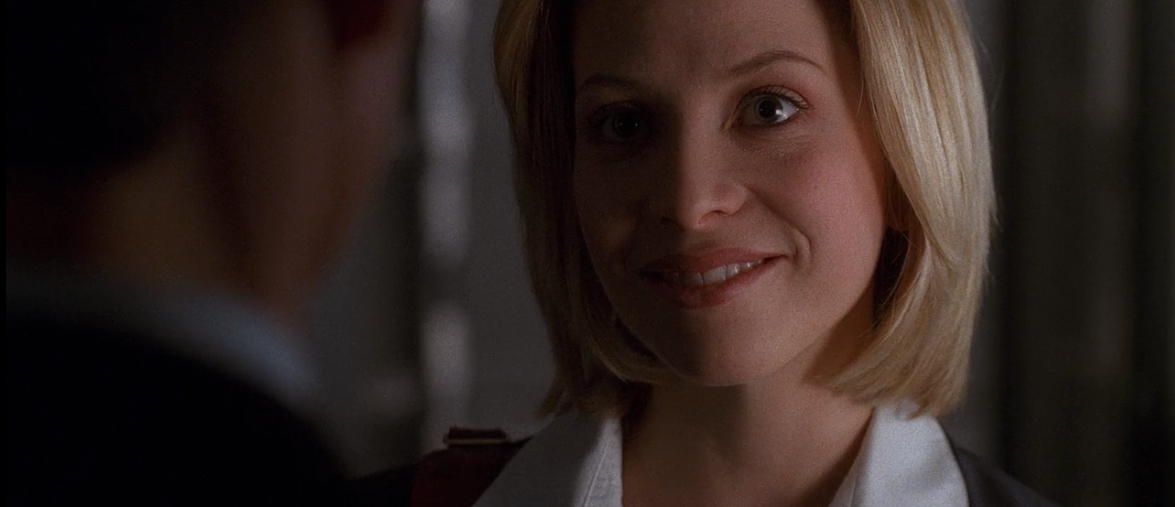
The desperation is palpable. David Duchovny’s butt double appears before any of the episode’s credited regulars, with the episode offering a glimpse of Mulder in the shower as if to promise viewers that David Duchovny’s departure doesn’t mean Mulder is no longer the show’s central character. When Doggett finds Mulder missing, having evidently stopped by his apartment on the way home, he confronts Scully, panicked, “I got panicked that you’re not going to be here, that you left too.”

The eighth season had closed on a confident note, leaving Mulder and Scully at a point where they could live happily ever after, entrusting Doggett and Reyes with the office. The ninth season opens in a state of panic, terrified at the idea that Mulder and Scully might actually be gone. There is something unpleasant about that neediness, that undisguised anxiety. The end of the eighth season promised something new and different. The start of the ninth promises more of the same.

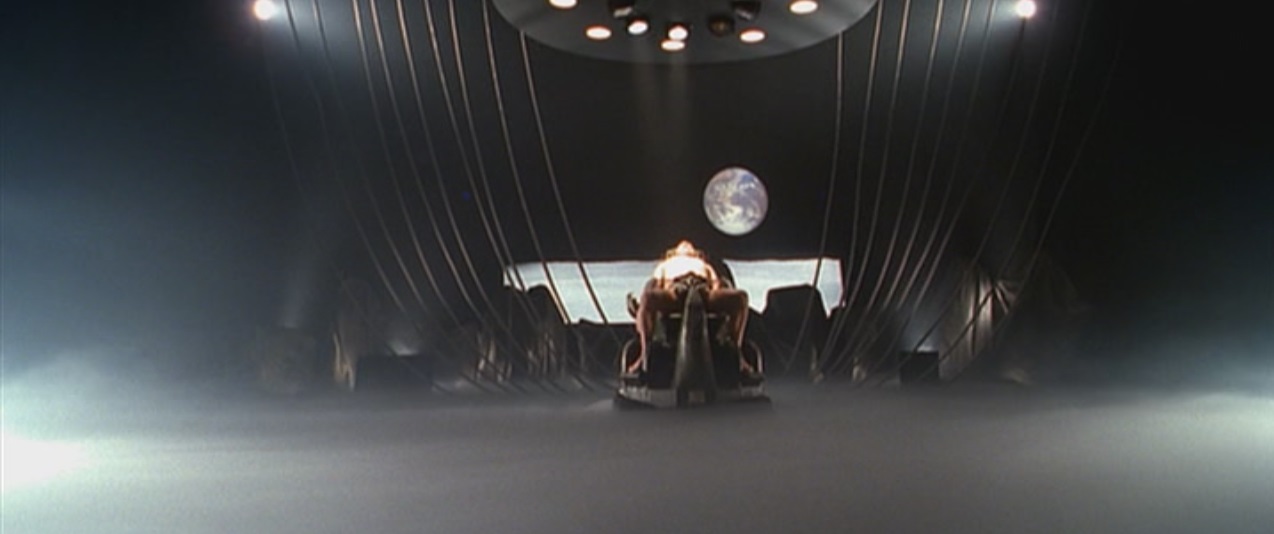
Apocalypse how?

Apocalypse how?

Continue reading

The X-Files – Season 8 (Review)

This October/November, we’re taking a trip back in time to review the eighth season of The X-Files and the first (and only) season of The Lone Gunmen.

The eighth season of The X-Files would be the perfect last season of the show, and a pretty solid first season of a new show born from the ashes.

In many ways, television is a conservative medium – more in an artistic sense than a political one. Network television is largely built around churn, a conveyor belt model that is designed to generate product according to tight schedules and oppressive deadlines. Routine and familiarity make the production schedule easier to manage, particularly for shows with large season orders. More than that, if a show has figured out an approach that has worked, it makes no sense to deviate from that pattern.
xfiles-deadalive33a

Why risk changing something that has been proven to work and to which the audience has responded? For all the (deserved) praise The X-Files gets for popularising (or repopularising) serialised storytelling in prime-time television, it was just as conservative as any other show. The production team were working under incredible pressure, so it makes sense they would not want to change a formula that made sense. As such, the really big changes to the show were largely driven by external factors.

The mythology largely developed from Scully’s abduction in Duane Barry and Ascension, an attempt by the writers to work around Scully’s abduction. The decision to film The X-Files: Fight the Future between the fourth and fifth seasons was at the behest of Fox rather than the production team. David Duchovny forces the move to Los Angeles in the sixth season. The eighth season represents the most seismic shift in the creative life of The X-Files, and – as with those other big decisions – it was largely driven by choices outside the production team.

xfiles-thisisnothappening13a

In hindsight, it seems obvious that the show could not continue forever. Duchovny and Anderson were headlining a show that filmed twenty-odd episodes a season. The show had begun diffusing its focus in the fourth and fifth seasons by focusing on members of the supporting cast, but it was still effectively a two-lead show. That is a tremendous strain. Something had to give. It turned out that something was Duchovny. At the end of the seventh season, with everything coming down to the wire, Duchovny made it clear he would not appear in a full eighth season.

This forced the show to change, but in a way that afforded some measure of stability. The idea of doing The X-Files without either Mulder or Scully was horrifying to the production team and horrifying to certain sections of fandom, but Duchovny’s willingness to stick around for half of the eighth season afforded some measure of compromise. The change did not need to be jarring. Easing David Duchovny out of the show would allow for a smoother transition. It would allow the show to say a proper (and extended) farewell to Mulder.

xfiles-empedocles23a

This is perhaps the strongest aspect of the eighth season, the sense that it has a certainty and finality that the seventh season lacked. Even during the post-production of Requiem, the production team had no idea whether the seventh season would be the final season of the show. As a result, the seventh season is decidedly non-committal on the issue of closure. The eighth season is a lot more enthusiastic about the prospect of wrapping things up, once and for all. There is a sense that this is the final season of a version of the show, at the very least.

The eighth season finds itself in the impossible position of having to imagine The X-Files without Mulder. The only real issue is that it succeeds all too well. The biggest problem with the eighth season is that it is followed by a ninth season.

xfiles-without2a Continue reading

The Lone Gunmen (Review)

This October/November, we’re taking a trip back in time to review the eighth season of The X-Files and the first (and only) season of The Lone Gunmen.

The Lone Gunmen seemed destined to be an oddity.

When it arrived in March 2001, it must have felt like a throwback. The production team had consciously modelled the series on the classic episodic spy and adventure shows of the sixties, seventies and eighties. Mission: Impossible and The A-Team served as cultural touchstones, with both The Pilot and Eine Kleine Frohike making visual references to Brian dePalma’s cinematic adaptation of Mission: Impossible while Maximum Byers featured an extended discussion of the pros and cons of Pros and Cons, an early first season episode of The A-Team.

lonegunmen-pilot14a

In terms of structure and tone, The Lone Gunmen seemed to hark back to the golden age of two-knuckled action adventure television shows like The Man From U.N.C.L.E. or MacGyver. Threads rarely carried over from episode to episode. Only one actor who didn’t appear in the opening credits would appear in more than a single episode of the show. There was no hint of a “mythology” and no clear structure from week-to-week beyond “the Lone Gunmen get into wacky adventures and hijinks ensue.”

In many ways, The Lone Gunmen was the kind of show that had quietly shuffled off the air in the early nineties. It felt like it belonged to a generation of television predating The X-Files rather than succeeding it. Even the opening credits to the show were much less abstract and much more traditional than those of The X-Files, playing as something of a highlight reel of the early first season. There is something very aggressively old-school about the aesthetic of The Lone Gunmen.

lonegunmen-likewaterforoctane2

The Lone Gunmen would have seemed somewhat outdated had it aired before Homicide: Life on the Streets during the late nineties; it was doubly out of place in the emerging era of reality television. However, there are elements of The Lone Gunmen that feel like they might have played better had the show arrived a few years later. Byers, Langly and Frohike were too eccentric to anchor an hour-long show on a major network, as Fox had already become. They might have fared better on another network after the cable television explosion.

It is easy enough to imagine The Lone Gunmen as an oddity airing on a smaller cable network like HBO or Showtime or AMC. Indeed, the perfect pitch for The Lone Gunmen would seem to land somewhere between Bored to Death and The X-Files. The audience for The Lone Gunmen might have been small in terms of major television networks, but it was devoted. Smaller providers – even on-line providers like Amazon or Netflix – would love to court that sort of fanbase. Had The Lone Gunmen arrived a few years later, it may have had a chance.

lonegunmen-planetofthefrohikes13

As such, The Lone Gunmen feels like a television show out of time. It is a series that landed at the wrong moment on the wrong channel, and which likely never had a chance. The animators on King of the Hill were incorporating jokes about the inevitable cancellation of The Lone Gunmen before the episode even aired. The viewing figures were far from spectacular, but they were better than the shows that had aired in the same slot in the season prior and the season following. March 2001 was just not the right moment for The Lone Gunmen.

Then again, it feels appropriate that The Lone Gunmen should so perfectly mirror its central character. Heroic, endearing, charming, but also undeniably odd.

lonegunmen-diagnosisjimmy19

Continue reading

The Lone Gunmen – The “Cap’n Toby” Show (Review)

This October/November, we’re taking a trip back in time to review the eighth season of The X-Files and the first (and only) season of The Lone Gunmen.

In its own way, The “Cap’n Toby” Show feels like an appropriate farewell to The Lone Gunmen.

The “Cap’n Toby” Show was not the last episode of The Lone Gunmen to be produced, but it was the last episode to air. It was broadcast three weeks after All About Yves closed out the first season of the show and more than a fortnight after news of the cancellation first broke. It aired with very little fan fare, avoiding even the modicum of publicity that FX earned as it burnt off the last six episodes of Harsh Realm only a year earlier. Just in case there had been any doubt, or any hope held out, The Lone Gunmen was definitely dead.

No need to get crabby...

No need to get crabby…

There is a melancholy to The “Cap’n Toby” Show that fits quite comfortably with The Lone Gunmen. The episode had clearly been held back in the hops of airing it during a hypothetical second season. Ideally, it would have given the production team a little lee-way at the start of the next season, perhaps even allowing the three title characters to pop over to The X-Files. The ninth season of The X-Files would be launching without Mulder, so some friendly faces would not be amiss. Airing The “Cap’n Toby” Show in mid-June puts paid to that optimism.

However, even allowing for all these issues, there is an endearing pluckiness and romance to The “Cap’n Toby” Show that feels at once entirely in keeping with the show and the characters. What better way to make a cancellation than with a forty-five minute ode to the nostalgic joys of television?

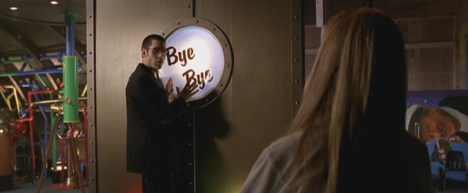
"Bye bye."

“Bye bye.”

Continue reading

The X-Files – Existence (Review)

This October/November, we’re taking a trip back in time to review the eighth season of The X-Files and the first (and only) season of The Lone Gunmen.

This is not the end.

But it really should be. At least for Mulder and Scully.

There was no season nine. What are you talking about?

There was no season nine.
What are you talking about?

Continue reading

The X-Files – Essence (Review)

This October/November, we’re taking a trip back in time to review the eighth season of The X-Files and the first (and only) season of The Lone Gunmen.

The mythology of The X-Files is a strange beast.

In the show’s declining years, it frequently became a stick with which the show might be beaten by critics and fans who had grown exhausted of ambiguity and labyrinthine plotting. Steven King lamented the fact that the show “blundered off into a swamp of black oil, and in that swamp it died.” In assessing the impact of the series, Joyce Millman described the mythology as a “sadistically convoluted plot line.” Juliette Harrisson complained that the entire mythology ended up “so twisted and incomprehensible by the end.”

Oh, baby.

Oh, baby.

In hindsight, it seems like history has not been kind to the mythology. In the years since the show went off the air, it seems that fans have come to value the episodic “monster of the week” stories ahead of the central story arc about aliens plotting to colonise the planet. This is ironic, given the attention devoted to the mythology while the show was on the air. The mythology dominated season premieres and finalés, taking the limelight during Sweeps and commanding impressive production values.

This assessment of the mythology is at once fair and unfair. Examined from far enough away, the mythology was linear and logical: alien colonists were coming back to reclaim the planet and enslave (or exterminate) mankind. Everything else was just window-dressing, with the mythology exploring the compromise and collaboration that facilitated this plan. The mythology was, at its best, an exploration of human weakness and the corruption of authority; a timeless (and almost Shakespearean) tragedy. From a sufficient distance, it was not hard to follow.

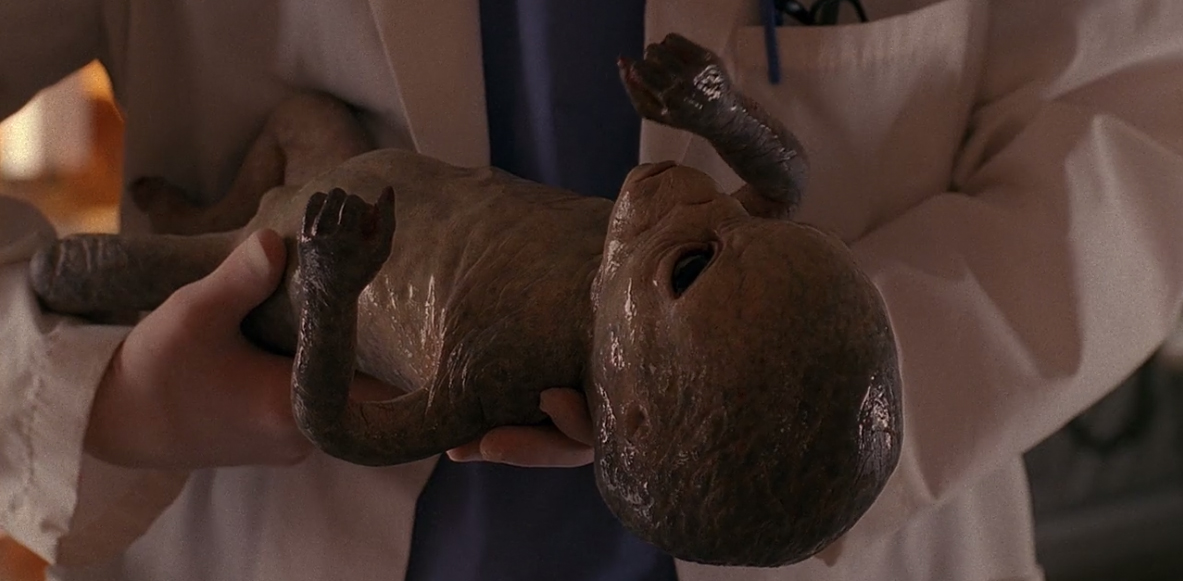
Oh, alien baby.

Oh, alien baby.

However, the details tend to create confusion, with everything getting a little muddled as The X-Files piles compelling and memorable visuals on top of one another. Are the bees intended to spread smallpox to thin the population as Zero Sum suggests, or to spread the black oil to aid in repopulation as The X-Files: Fight the Future implies? Is the black oil a sinister body-hopping parasite as suggested in Piper Maru and Vienen, or is it an organism that turns the body into a host for a gestating alien organism like in Fight the Future or The Beginning?

The eighth season does a lot to simplify the mythology by stripping out the conspirators and the vaccine and the rebels and the hybrids, replacing them with a more blunt central narrative about “alien replicants” mounting a stealth invasion. That said, things begin to get a bit cluttered and crowded as the season reaches its conclusion. Essence and Existence have a very clear structure and clear objectives, but there is a sense that that the narrative could still be streamlined a bit.

Oh, blood-splattered alien babies...

Oh, blood-splattered alien babies…

Continue reading

The Lone Gunmen – All About Yves (Review)

This October/November, we’re taking a trip back in time to review the eighth season of The X-Files and the first (and only) season of The Lone Gunmen.

The broad consensus would seem to suggest that All About Yves is the best episode of The Lone Gunmen.

While this is perhaps unfair to Madam, I’m Adam and Tango de los Pistoleros, it is certainly a defensible position. All About Yves is one of the tightest shows of the season, and marks the first time since The Pilot that a plot has managed to actually build momentum and tension across its run-time. As effective as the climaxes of Madam, I’m Adam and Tango de los Pistoleros might have been, the first season of The Lone Gunmen doesn’t really offer much in the way of dramatic stakes.

"This looks familiar..."

“This looks familiar…”

In a way, that is to be expected. The Lone Gunmen is, first and foremost, a comedy. There are points in the first season where it feels like The Lone Gunmen exists primarily as a silo to store all the displaced comedy that the production team stripped out of the sombre eighth season of The X-Files. (Cynics might suggest that there wasn’t quite thirteen episodes’ worth of comedy to be re-homed.) It is hard to feel too stressed when Langly is threatened in Bond, Jimmy Bond or when a poacher points a gun at Byers in Diagnosis: Jimmy.

That is the beauty of All About Yves, managing to create a growing sense of tension and unease without sacrificing any of the show’s humour. Indeed, with the addition of guest star Michael McKean to the cast, All About Yves winds up funnier than about half of the preceding season.

The truth is out there...

The truth is out there…

Continue reading

The X-Files – Alone (Review)

This October/November, we’re taking a trip back in time to review the eighth season of The X-Files and the first (and only) season of The Lone Gunmen.

In a way, the entire final third of the eighth season is an extended finalé for The X-Files – or, at the very least, an extended finalé for a version of The X-Files starring Mulder and Scully.

This seems quite ironic, considering the confusion that existed towards the end of the seventh season, when it seemed like the production team were unsure whether they could (or should) commit to the idea of The X-Files coming to an end. The seventh season was never entirely sure what (if anything) was going to come next, and so it did not have the opportunity to gracefully set up all of its plot points. As a result, the eighth season had to retroactively incorporate elements like Mulder’s brain illness or Scully’s fertility treatment.

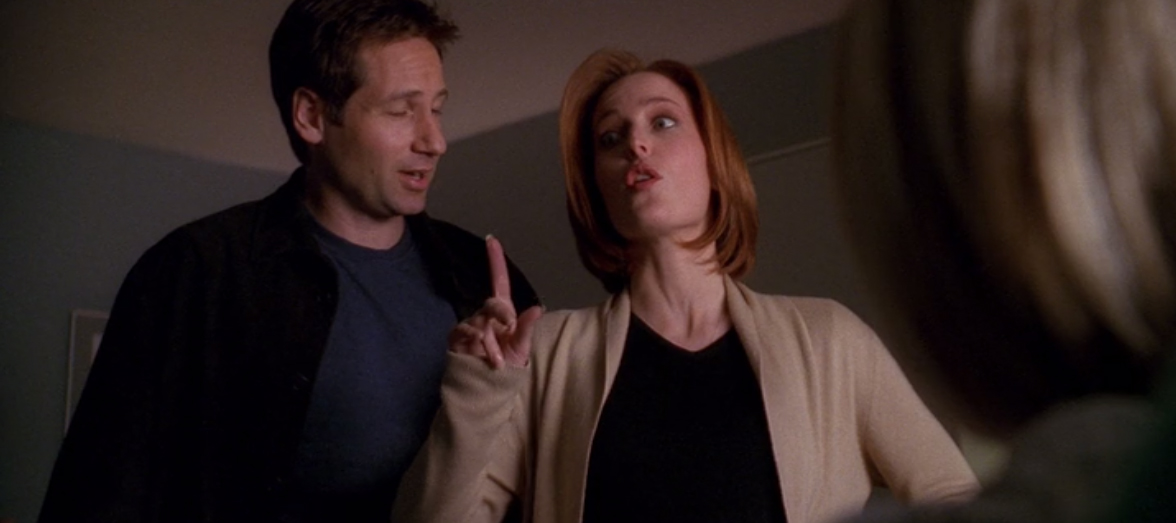
Cue cliché marriage jokes.

Cue cliché marriage jokes.

In contrast, the eighth season seemed quite conscious of the end. The entire eighth season is structured as a strange hybrid; it feels like it could serve as both the final season of the show as it aired for seven years, while also serving as a launching pad to something new and exciting. The final eight episodes of the eighth season are largely about tidying away the character arcs and dangling plot thread associated with Mulder and Scully so that their journey might finally end. If the ratings are strong enough, then Doggett might get to launch his own show.

As such, Alone is positioned very much like Je Souhaite had been and like Sunshine Days would be. It is potentially the “one last monster of the week” story marking the end of an era. While Je Souhaite had marked the end of the Mulder and Scully era of the show, Alone seems to mark the end of the transitional period between Mulder and Scully and whatever is supposed to come next. It is a very light episode, no less effective for that. As with a lot of the late eighth season, its biggest problem is the way that the nineth season creative decisions retroactively undercut it.

Leyla... L-E-Y-L-A... Leyla.

Leyla… L-E-Y-L-A… Leyla.

Continue reading

The Lone Gunmen – The Lying Game (Review)

This October/November, we’re taking a trip back in time to review the eighth season of The X-Files and the first (and only) season of The Lone Gunmen.

The Lying Game is perhaps most well known for its central guest star.

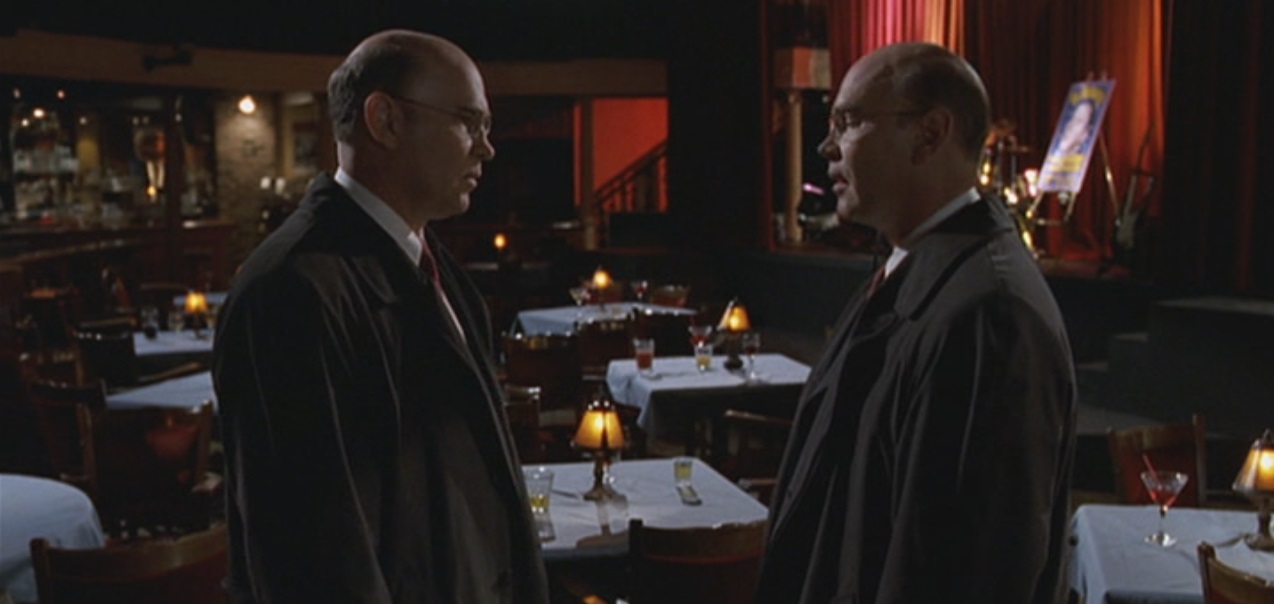
The Lying Game is the episode in which the Lone Gunmen find themselves crossing paths with Assistant Director Walter Skinner. It was a pretty big deal, to the point that Skinner’s appearance towards the end of the season was being hyped in the media immediately following the broadcast of The Pilot, almost two months before the episode actually aired. It wasn’t the first crossover between two Ten Thirteen shows, but it was still a pretty big deal. It makes sense that discussion of The Lying Game would focus on its visiting supporting player.

Some hot Skinner-on-Skinner action...

Some hot Skinner-on-Skinner action…

However, The Lying Game is also notable for featuring a significant transgender guest character. Carol Strode is most significant transgender character to appear in a Ten Thirteen production. As one might expect given the production company’s awkward history with the portrayal of homosexual characters, the results are mixed. There is no question that the episode is well-intentioned, but it is also clumsy and occasionally ill-judged. Even the title would suggest as much, albeit more through absent-minded insensitivity than outright malice.

The Lying Game has its heart in the right place, but doesn’t necessarily have its head in gear.

Surviving by the Skin of his teeth...

Surviving by the Skin of his teeth…

Continue reading

The X-Files – Vienen (Review)

This October/November, we’re taking a trip back in time to review the eighth season of The X-Files and the first (and only) season of The Lone Gunmen.

It feels strange to see the black oil after such a long time.

Technically, the last time that the black oil was brought up was in Two Fathers and One Son, where it was retroactively confirmed to be the “Purity” alluded to in The Erlenmeyer Flask. However, the last time it was an active plot element was really The X-Files: Fight the Future. After that, it lost amid plot developments involving gestating aliens and faceless rebels. So, in a way, putting the black oil at the centre of Vienen feels just a little surreal against the backdrop of “super soldiers” and other more immediate concerns.

Explosive action!

Explosive action!

Vienen feels very old-fashioned. Even the structure of the episode harks back to the first season mythology episodes, when the show was allowed to use aliens and conspiracies without the burden of tying them to a larger narrative. It features the black oil, but Vienen feels closer to Fallen Angel or E.B.E. than Tunguska or Terma. Trying to tie it into the larger plot of the mythology is an exercise in futility, but that is not the point here. Vienen is no more or less a mythology episode than Empedocles, despite its inclusion in the “mythology” DVD collections.

It is an excuse to bring back an iconic baddie for one last run-around with Mulder, continuing the orderly transition of power from the what the show was to what it might be in the future.

You should really use a dipstick for that...

You should really use a dipstick for that…

Continue reading