












“Don’t worry. I have a plan.”
“Really?”
“Well, I will have by the time I reach the top.”
– the more things change
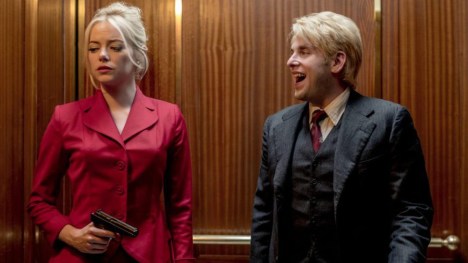
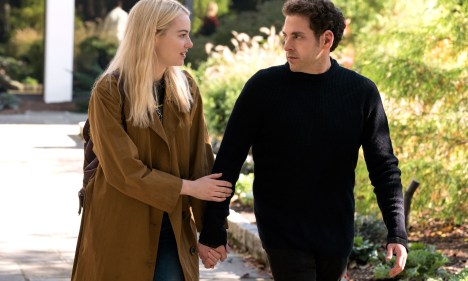
The Woman Who Fell to Earth has a lot of pressure working upon it as Doctor Who season premieres go.
This is the first time that the Doctor has changed gender during regeneration, and is the first time that the title role will be played by a female actor. This is only the second time that the series has changed showrunner and rebuilt itself from the ground up since it returned more than a decade ago. There is a lot riding on The Woman Who Fell to Earth, and a lot of expectations that need to be satisfied.
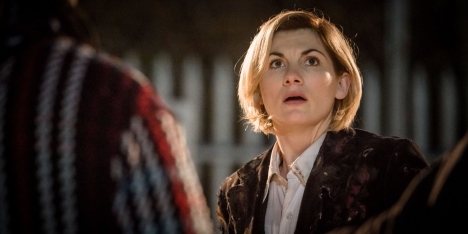
Doctor who?
The Woman Who Fell to Earth is efficient, if not excellent. As a showrunner and scriptwriter, Chris Chibnall immediately and effectively establishes himself as a safe pair of hands. On some level, this is disappointing. After all, both Russell T. Davies and Steven Moffat were showrunners who immediately and aggressively asserted bold visions of what Doctor Who could be, announcing their arrival on the series with a confident statement of purpose that left the series scrambling to keep up. Instead, The Woman Who Fell to Earth seems to promise business as usual.
This isn’t inherently a bad thing, to be fair. There is some argument that Doctor Who might even need a safe and reliable pair of hands at this point. Chibnall is a writer who is much less adventurous than Davies or Moffat, but The Woman Who Fell to Earth is infused with a back-to-basics meat-and-potatoes approach. A lot of the episode is spent trying to avoid potential pitfalls that would emphasise Chibnall’s relative weaknesses, and instead play to a very broad “big tent” ideal of what Doctor Who can be.

Breaking out.
Indeed, The Woman Who Fell to Earth works best in its relatively straightforward nuts-and-bolts elements, when judged on the individual elements of the episode rather than how they all fit together. Jodie Whittaker throws herself into the lead role and understands that she’s effectively propelling the narrative forward. The new regular ensemble has a breezy and easy chemistry that feels suitably distinct from more recent inhabitants of the TARDIS. The actual plotting of the episode is fairly boilerplate Doctor Who, almost as if the series is showing that it can still do that.
That said, there’s a worrying lack of ambition evident in The Woman Who Fell to Earth and its business-as-usual approach to Doctor Who. This is a season premiere that feels more of a piece with episodes like Smith and Jones, Partners in Crime or Deep Breath, episodes that are less concerned with bold questions of vision than they are with the mechanics of simply introducing a new lead. It’s disappointing, because the stock comparison for The Woman Who Fell to Earth should be something as wonderful as Rose or The Eleventh Hour.
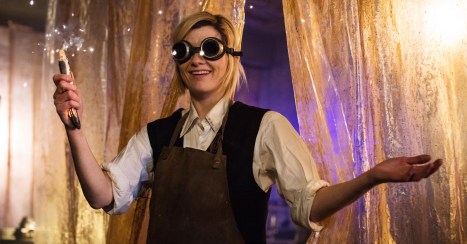
Jodie’s Wits-About-Her.
Filed under: Television | Tagged: Chris Chibnall, doctor who, jodie whittaker, sheffield, the woman who fell to earth | 11 Comments »




 the m0vie blog
Star Trek: Voyager – Critical Care (Review)
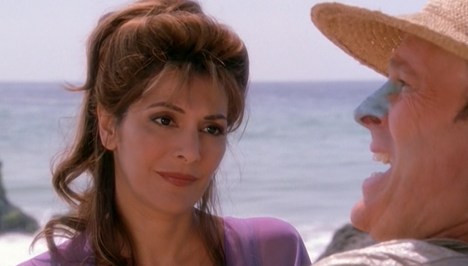
Critical Care is the seventh season of Star Trek: Voyager attempting to be archetypal Star Trek.
To be fair, Voyager had done this before. When Jeri Taylor took over the show during its third season, she steered it away from the disaster of the Kazon arc and towards a more conventional style of Star Trek storytelling. Many of the episodes of the later seasons could easily have been repurposed for Star Trek: The Next Generation or Star Trek: Deep Space Nine or Star Trek: Enterprise without changing much beyond the characters’ names; think of Warlord, Scientific Method, Random Thoughts, Waking Moments.
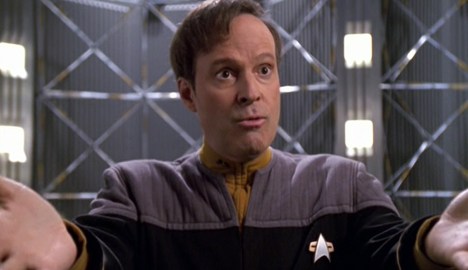
What’s up, Doc?
This isn’t inherently a bad thing. Indeed, many of the best episodes of Voyager had this broad and generic quality to them, offering something resembling an archetypal distillation of Star Trek for audiences. Remember and Memorial were both stunning explorations of cultural memory and Holocaust denial that could arguably have worked with any Star Trek cast. Blink of an Eye was a beautiful science-fiction parable that was more about Star Trek itself than Voyager. Even Nemesis could have easily worked with Riker or O’Brien or Tucker as easily as it did with Chakotay.
However, there are also points when these attempts to create “archetypal Star Trek” feels cynical and exploitative, the writing staff very cynically offering audiences something that is designed to meet as many of the vaguely defined aesthetic qualities of Star Trek, but without any substance underneath it. This happens repeatedly during the seventh season of Voyager, when it seems like the production team understand what Star Trek looks and feels like enough to offer a passable approximation, but don’t understand the underlying mechanics enough to replicate that ineffable feeling.
“Don’t worry, we’re almost home.”
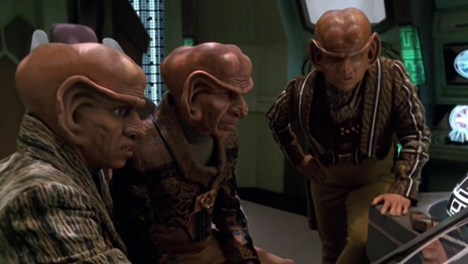
Like a lot of seventh season episodes, Critical Care is couched in the trappings of Star Trek but without any substance to group it. On the surface, Critical Care is classic “social commentary” storytelling, the type of allegorical narrative exemplified by stories like Let That Be Your Last Battlefield or The High Ground. It is an episode about the horrors of contemporary healthcare, transposed to a distant alien world where Voyager can draw some very broad parallels for the audience watching at home. This is, on a very superficial level, what Star Trek is to a large number of fans.
Unfortunately, these touches do not add up to anything particularly insightful or compelling, Critical Care providing observations on contemporary American healthcare that amount to “this is pretty bad, isn’t it?” without anything resembling actual engagement. The result is a shell of an episode, a missed opportunity, and a pale imitation of the franchise’s best social commentary.
“What is up, Doc?”
Continue reading →
Filed under: Voyager | Tagged: capitalism, critical care, death panels, emh, healthcare, hmos, nostalgia, obama care, social commentary, socialism, star trek, star trek: voyager, Television, topical | 9 Comments »