• Following Us

  • Categories

  • Check out the Archives


  • Awards & Nominations

New Podcast! The Time is Now – Season 2, Episode 14 (“The Pest House”)

I am in the middle of a run of appearances on The Time is Now at the moment, and taking the time out to discuss the rare second season episode of Millennium that I don’t consider to be a highlight. I’m discussing The Pest House with the wonderful Kurt North and the fantastic Adam Chamberlain.

The Pest House is an interesting episode. It’s written by the second season showrunners Glen Morgan and James Wong, and plays into some of their interests in the horror genre. It’s very much a celebration of slasher movie clichés, which would be reflected in their projects after finishing up on Millennium – from Morgan’s Black Christmas to Wong’s American Horror Story to their joint Final Destination. However, the episode often feels like a mess of tropes and ideas, at least two different episodes stitched inelegantly together.

As ever, you can listen directly to the episode here, subscribe to the podcast here, or click the link below.
Continue reading

New Escapist Column! On “Better Call Saul” as Fitting Eulogy to the Television Antihero…

I published a new In the Frame piece at Escapist Magazine this evening. Better Call Saul wrapped up its fifth season this week, and so it was worth taking a look at the Breaking Bad prequel.

To a certain extent, Better Call Saul seems like a show out of step with the times. It is set in the early days of the twenty-first century. It has never become the ratings or awards juggernaut that Breaking Bad became. It has a strong critical following, but never truly broke out into the wider culture in the way that Breaking Bad did. None of this is a judgment on the show itself. After all, Better Call Saul premiered at a time that television was already pushing away from those antihero dramas.

However, that status as show that exists at the tail end of a broader cultural trend allows Better Call Saul a greater degree of creative freedom. It offers a reflective meditation on the kind of antiheroes that populated so much of the so-called “Golden Age of Television.” These masculine archetypes are easy to galmourise, even when shows are unambiguous about their flaws. The beauty of Better Call Saul lies in creating an antihero who is harder to fetishise. Saul is not Walter White or Tony Soprano or Al Swearengen. He is a lot more tragic, a lot more pathetic.

This is the beauty of Better Call Saul, the angle that allows the show to feel like a true coda to the kind of stories that dominated prestige television for well over a decade. You can read the piece here, or click the picture below.


New Podcast! The Time is Now – Season 2, Episode 13 (“The Mikado”)

I was delighted to get invited back on The Time is Now to discuss The Mikado with the inimitable Tony Black.

The Mikado is an interesting episode of the second season of Millennium. In some ways, it represents a conscious throwback to the “serial killer of the week” format that defined so much of the first season. In some ways, it’s the ultimate example of the “serial killer of the week” format, pitting Frank Black against a stand-in for the Zodiac. However, in other ways it feels very much in step with the second season as a whole. It’s a story about information and rebirth, two core themes of the season as a whole. Either way, it’s a highlight in a season full of highlights.

As ever, you can listen directly to the episode here, subscribe to the podcast here, or click the link below.

Continue reading

New Podcast! The Time is Now – Season 2, Episode 12 (“Luminary”)

The Time is Now is officially back from its Christmas hiatus, and I was thrilled to join writer Joe Maddrey for a discussion of a highlight from the second season of Millennium, Luminary.

Of course, Luminary was loosely inspired by the real-life story of Christopher McCandless. The teenager famously journeyed into the Alaskan frontier in the hopes of finding a spiritual truth, only to die alone in the remains of an old bus. McCandless was something of a folk icon of the late nineties, most notably inspiring projects like Into the Wild. On the surface, this might appear like a strange fit for Millennium, but that story resonates with the themes of millennial malaise that run through the series. The result is one of the best episodes within a phenomenal season of television.

As ever, you can listen directly to the episode here, subscribe to the podcast here, or click the link below.

Continue reading

New Podcast! Make It So – Re:Discovery, Season 1, Episodes 1 & 2 (“The Vulcan Hello” & “Battle at the Binary Stars”)

The first season of Star Trek: Picard has wrapped, and so Make It So: A Star Trek Universe Podcast has turned its gaze backwards, looking at the start of the Kurtzman and Goldman era of Star Trek. I was flattered to be invited to join the wonderful Kurt North to discuss The Vulcan Hello and Battle at the Binary Stars, the two-part premiere of Star Trek: Discovery.

I’m generally quite fond of the first season of Discovery, although I think it comes a little off the rails towards the end of the season. However, I unequivocally think that The Vulcan Hello and Battle at the Binary Stars comprise the best first episode of any Star Trek series. They are a bold statement of purpose, largely serving as a eulogy for the Berman era of the franchise, typified by Star Trek: The Next Generation, Star Trek: Voyager and Star Trek: Enterprise. Instead, these two episodes offer an immediate and distinct vision of what modern Star Trek might look like. There’s an incredible and infectious confidence at play, including a conscious effort to update the trappings and sensibilities of the franchise for a new era of television.

Anyway, it was a huge honour to be invited on, and I hope you enjoy. You can listen to the episode here, or click the link below.

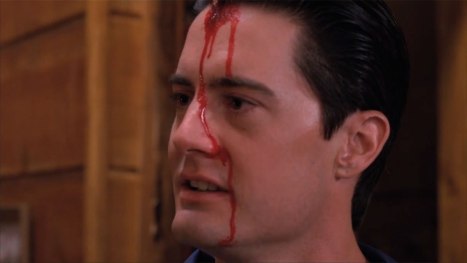
New Escapist Column! On Understanding “Twin Peaks” Emotionally, Rather than Intellectually…

I published a new In the Frame piece at Escapist Magazine yesterday. With the thirtieth anniversary of Twin Peaks, I got to talk a little bit about the show and David Lynch.

Lynch has a reputation as a “difficult” artist for audiences, a filmmaker whose art is challenging and provocative. It’s easy to see why. On a simple mechanical level, it can be very difficult to explain what happens during a David Lynch film or television show. More to the point, two different audience members might provide two very different descriptions. However, that’s always been what I admired about Lynch. As a critic, he forces me to engage emotionally with his work because an intellectual understanding is never enough. I feel Lynch’s work, even if I don’t comprehend it.

You can read the piece here, or click the picture below.

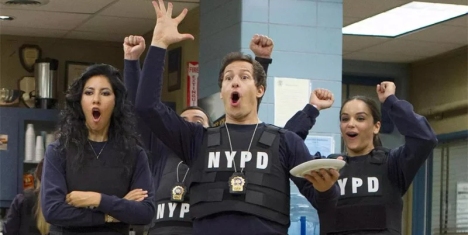
New Escapist Column! On “The Good Place”, “Brooklyn 99” and “Parks and Rec” as the True Successors to “Star Trek: The Next Generation”…

I published a new In the Frame piece at Escapist Magazine this evening. With self-isolation, I’ve been taking the opportunity to binge some light, feel-good television including Parks and Rec and Brooklyn 99, and I’ve come to the shocking realisation that these network sitcoms are probably the closest thing in the modern television landscape to Star Trek: The Next Generation.

Of course, there are a variety of reasons for this. Most obviously, it seems like the only viable space for that sort of utopian humanism in the modern world is within the narrative trappings of the familiar sitcom, a space where audiences are inherently more accepting of a fundamentally functional world. More than that, there’s a sense in which The Next Generation is perhaps closer to an idealised workplace show than its science-fiction trappings would attest; at its core, The Next Generation is about a band of hopeful and hyper-competent people working together for the common good. That’s admittedly a much harder sell these days than it was a quarter of a century ago, but shows like Parks and Rec and Brooklyn 99 offer a very similar vibe.

You can read the piece here, or click the picture below.


New Podcast! The X-Cast – Season 5, Episode 20 (“The End”)

It’s season finale time on The X-Cast, so it was a privilege to be invited back on to talk about the fifth season finale The End. And it was a delight to join Tony Black for that discussion.

The end of the fifth season was the end of an era for The X-Files. The series would light up the multiplex over the summer with The X-Files: Fight the Future, and would return to the airwaves later that year as a changed show, with the production team having moved from Vancouver to Los Angeles. It was a transition that fundamentally altered the core dynamics of the show, and remains highly contested to this day. The End would be the last episode of The X-Files to be produced in Vancouver until My Struggle I, and a large part of the episode is about bidding a fond farewell to the show’s extended family in that area.

Appropriately enough, it seems like this episode marks a similar turning point for The X-Cast. I was caught completely off-guard by it, so I’ll let you listen and year for yourself. You can listen to the episode here, or click the link below.

Continue reading

New Escapist Column! On “Star Trek: Picard” and Parental Failure…

I published a new piece at Escapist Magazine yesterday evening. Given that Star Trek: Picard just wrapped up its first season, I had some thoughts expanding on my discussion of Et in Arcadia Ego, Part II on Make It So.

The first season of Picard is undeniably messy and awkward. The pacing is a little off in places, and it pulls several of its most powerful punches. However, at the heart of the series is a story that simmers through a lot of contemporary pop culture, from Star Wars: Episode IX – The Rise of Skywalker to Bad Boys for Life, the idea of a failed parent trying to redeem themselves through their child. It’s a fascinating inversion of the Campbellian archetype embodied by Star Wars, the quintessential story about a son come to terms with his relationship to his father. Stories like Picard invert that dynamic, and look at the responsibilities that parents owe to their children to provide them with a better world.

You can read the piece here, or click the picture below.

New Podcast! Make It So – Season 1, Episode 10 (“Et in Arcadia Ego, Part II”)

I binged Star Trek: Picard over the course of the previous week, and so was thrilled to join the wonderful Kurt North on Make It So: A Star Trek Universe Podcast to discuss the first season finale, Et in Arcadia Ego, Part II.

I have somewhat complicated feelings about Picard. There are parts of it that I love, and parts of it that I am a bit more skeptical about. One of the joys of coming into the podcast to discuss the season finale was getting the chance to talk about the season as a whole, given how its various arcs were set up and how they paid off. It’s a nice, broad and comprehensive discussion of a sprawling, ambitious and complicated conclusion to the larger season. I feel really bad that I talked as long as I did on the episode, but there was a lot to dissect and discuss. For all the criticisms of Picard as shallow or superficial, there’s clearly a lot of meat on the bones.

Anyway, it was a huge honour to be invited on, and I hope you enjoy. You can listen to the episode here, or click the link below.