• Following Us

  • Categories

  • Check out the Archives


  • Awards & Nominations

New Escapist Column! On How “Star Trek: Picard” Tries to Go Back to the Future…

I published a new piece at The Escapist this evening. We’re doing a series of recaps and reviews of Star Trek: Picard, which is streaming weekly on Paramount+. The second season premiere released this week, and it seemed like a good opportunity to take a look at the series.

The second season premiere of Picard is a much more openly nostalgic affair than the previous season had been. While the previous season often found itself caught between the past and the future, the second season seems to turn its gaze more earnestly backwards. It’s a complicated and somewhat flawed show, often retreating from the more interesting implications of its big ideas, but Picard is at least interested in grappling with the legacy of Star Trek: The Next Generation, and exploring why the utopian future it promised audiences seemed to slip from grasp.

You can read the piece here, or click the picture below.

New Podcast! Primitive Culture #114 – Star Trek and Vietnam

A little while ago, I had the pleasure of sitting down with the wonderful Tony Black to talk about Star Trek and Vietnam.

The general reading of classic Star Trek tends to play up the show’s liberal credentials, to read Star Trek as a utopian and pacifist series that was very much on the right side of history. This antiwar reading is supported by episodes like Errand of Mercy, The Trouble with Tribbles and Day of the Dove, among others. However, the show’s politics are decidedly more complicated. Like America itself, Star Trek was divided over the Vietnam War, as reflected in episodes like Friday’s Child or The Omega Glory, and most especially in A Private Little War.

The result was a fun (and involved) discussion, and you can listen to it below or directly via Primitive Culture‘s homepage on trek.fm.

Continue reading

New Escapist Column! In Defense of Apple TV+…

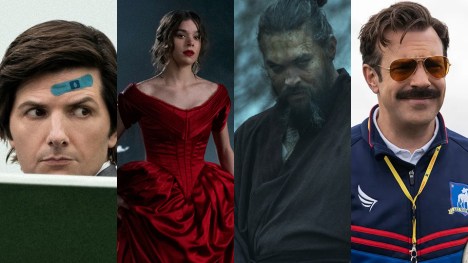
I published a new In the Frame piece at The Escapist earlier this week. With the upcoming release of Severance on Apple TV+, it seemed like a good excuse to take a look at one of the most interesting players in the streaming wars.

Apple TV+ lacks many of the advantages shared by its competitors. It doesn’t have a deep library of back content and intellectual property like Disney+, HBO Max and Paramount+. It also lacks the reach of Netflix or Amazon Prime. However, slowly and surely, without the comfort of existing brands and established intellectual property, Apple TV+ has managed to carve out a unique and distinctive identity in the stremaing wars. Not everything on the service works, but there’s generally a sense that anything that made it to screen is there because somebody fought for it.

You can read the piece here, or click the picture below.

New Escapist Column! On How “Peacemaker” As a Story of Redemption Through Art…

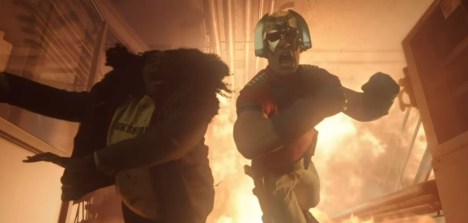
I published a new piece at The Escapist this evening. We’re doing a series of recaps and reviews of James Gunn’s Peacemaker, which is streaming weekly on HBO Max. The seventh and penultimate episode of the show released this week, and it seemed like a good opportunity to take a look at the series.

Much of the discussion around the show has focused on the soundtrack, with James Gunn drawing heavily from hair metal bands. This gives the soundtrack a unique texture in the modern superhero genre, but it also plays into the larger themes of the show itself. The choice of hair metal says a lot about the character of Christopher Smith, particular compared to everything else that the show has told the audience about the protagonist. Indeed, hair metal suggests something close to a path to redemption for a character who struggled to find other means of escape and exposure.

You can read the piece here, or click the picture below.

New Escapist Review! “The Book of Boba Fett – In the Name of Honour”

I published a new review at The Escapist today. I’m reviewing new episodes of The Book of Boba Fett weekly, so this week I’m covering the season finale, In the Name of Honour.

In the Name of Honour is big. In the Name of Honour is bombastic. In the Name of Honour looks like people spent a lot of money on it. Unfortunately, In the Name of Honour is curiously hollow. It’s a season finale that bungles most of the season’s strongest thematic and character arcs, often descending into a chaotic mess of “stuff happening.” It’s a finale that has nothing of substance to say about its characters, the larger show or even the world that it depicts. It is spectacle, though.

You can read the piece here, or click the picture below.


New Escapist Column! On How “Peacemaker” Turns Its Weaknesses Into Strengths…

I published a new piece at The Escapist last week. We’re doing a series of recaps and reviews of James Gunn’s Peacemaker, which is streaming weekly on HBO Max. The fifth episode of the show released last week, and it seemed like a good opportunity to take a look at the series.

Understandably, given that the show is built around a piece of established intellectual property and superheroes, much of the discussion around Peacemaker had focused on creator James Gunn’s earlier work on films like Guardians of the Galaxy, Guardians of the Galaxy, Vol. 2 and The Suicide Squad. However, with its (relatively) lower budget and scrappier aesthetic, Peacemaker arguably hews closers to Gunn’s earliest films as director, movies like Slither and Super. Enjoying incredible creative freedom and lack of ocersight, Gunn is reconnecting with the aesthetic of his earliest work.

You can read the piece here, or click the picture below.

New Escapist Review! “The Book of Boba Fett – From the Desert Comes a Stranger”…

I published a new review at The Escapist today. I’m reviewing new episodes of The Book of Boba Fett weekly, so this week I’m covering From the Desert Comes a Stranger.

Following on from Return of the Mandalorian, From the Desert Comes a Stranger is another episode of The Book of Boba Fett that is surprisingly uninterested in Boba Fett himself. It’s an hour of television that splits its time across two significant plot threads, and the differences between the two are instructive. One of those threads is at least basically functional, if largely unremarkable. The other thread exerts a much stronger gravity, and perhaps demonstrates the worst tendencies of modern Star Wars.

You can read the piece here, or click the picture below.

New Podcast! Your Feature Presentation – “Peacemaker is Wonderfully Weird and Fun”

The Escapist have launched a new pop culture podcast, and I was thrilled to join Jack Packard for the fourth episode. Jack and I get to talk about Peacemaker, which I am really enjoying.

New Escapist Review! “The Book of Boba Fett – Return of the Mandalorian”…

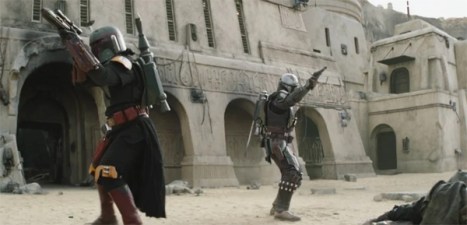
I published a new review at The Escapist today. I’m reviewing new episodes of The Book of Boba Fett weekly, so this week I’m covering Return of the Mandalorian.

Return of the Mandalorian is an odd episode, in large part because it feels like an episode of a different show. Not in an abstract or metaphorical way, but in a very direct and literal way. Return of the Mandalorian feels like a lost episode of The Mandalorian, following that show’s title character in the gap between the second and third seasons. The episode isn’t bad. In fact, it’s arguably the strongest episode of The Book of Boba Fett to date. However, when the strongest episode of a first season feels like an episode of another show, that perhaps suggests more fundamental underlying problems.

You can read the piece here, or click the picture below.

New Escapist Column! On “Peacemaker” and “MacGruber” as Reckonings with Reagan Era Action Heroes…

I published a new In the Frame piece at The Escapist this evening. With the recent release of MacGruber and Peacemaker, it seemed like an interesting opportunity to reflect on two comedy streaming shows that are very firmly anchored in a very particular nostalgia for a certain kind of eighties Reagan era action hero.

MacGruber and Peacemaker are essentially extended riffs on a very archetypal form of American heroism, a very militaristic and jingoistic expression of heroism. While both shows are reasonably affectionate and surprisingly sympathetic to its subjects, they are also quite aggressive in their desconstruction of this archetype. Both MacGruber and Peacemaker are shows about characters who are deeply unpleasant and incredibly juvenile, in what feels like an interesting interrogation of the action heroes of the era. It’s an interesting angle on this nostalgia, feeling at times like a tempered reflection.

You can read the piece here, or click the picture below.