I published a new In the Frame piece at The Escapist this evening. With the season finale of Severance last week, it seemed like an opportunity to take a look at one of the most interesting new shows on television.
Severance is a science-fiction show build around the fictional concept of “severance”, a medical procedure that allows a person to completely separate their professional and personal selves. However, beneath this high concept, Severance plays as a metaphor for a lot of the current anxieties about the work/life balance, and the intrusion of private enterprise into personal lifestyles.
You can read the piece here, or click the picture below.
I published a new piece at The Escapist this evening. We’re doing a series of recaps and reviews of Star Trek: Picard, which is streaming weekly on Paramount+. The seventh episode of the second season released this week, and it seemed like a good opportunity to take a look at the series.
One of the big problems with modern Star Trek has been the extent to which the franchise finds itself caught between the past and the future, between a nostalgic impluse that pulls it back to the plotting that defined the franchise’s long history and something more ambitious that pushes it towards prestige television. The recent shows have never quite managed to square that particular circle, and this problem comes to the fore as Picard tries to delve inside the head of its protagonist.
You can read the piece here, or click the picture below.
I published a new piece at The Escapist this evening. We’re doing a series of recaps and reviews of Moon Knight, which is streaming weekly on Disney+. The third episode of the show released this week, and it seemed like a good opportunity to take a look at the series.
Moon Knight very obviously wants to evoke a particular sort of old-fashioned romantic globe-trotting adventure, like Raiders of the Lost Ark, Romancing the Stone or even The Mummy. It is arguably part of a recent attempted revival of the subgenre, including Jungle Cruise and Lost City of D. However, the show’s attempts to tap into this sort of classic odd couple romance demonstrates the limits of the weird insistent sexlessness that define so many modern blockbuster stories. Moon Knight manages the seemingly impossible, in that it makes Oscar Isaac seem sexless.
You can read the piece here, or click the picture below.
We’re thrilled to be launching a fortnightly companion piece to In the Frame at The Escapist. The video will typically launch every second Monday, and be released on the magazine’s YouTube channel. This is kinda cool, because we’re helping relaunch the magazine’s film content – so if you can throw a subscription our way, it would mean a lot.
With the release Moon Knight, it seemed like a good opportunity to talk about the show. In particular, how Moon Knight offers an interesting approach to the long-standing “villain problem” facing Marvel Studios.
I published a new piece at The Escapist this evening. We’re doing a series of recaps and reviews of Star Trek: Picard, which is streaming weekly on Paramount+. The sixth episode of the second season released this week, and it seemed like a good opportunity to take a look at the series.
One of the interesting aspects of the second season of Star Trek: Picard has been the way in which it has been drawing more overtly from classic Star Trek tropes, with the season taking a number of cues from Star Trek: First Contact. However, the season has drawn most overtly from Star Trek IV: The Voyage Home. What is interesting about this is that the show understands that The Voyage Home isn’t just about time travelers from an imaginary future, but about fugitives from television.
You can read the piece here, or click the picture below.
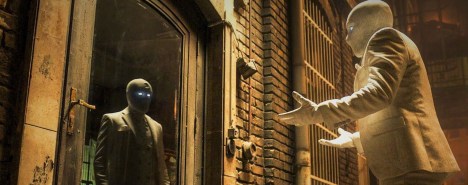
I published a new piece at The Escapist this evening. We’re doing a series of recaps and reviews of Moon Knight, which is streaming weekly on Disney+. The second episode of the show released this week, and it seemed like a good opportunity to take a look at the series.
One of the more consistent criticisms of the Marvel Cinematic Universe is the idea that it suffers from a “villain problem.” While this is perhaps an over-simplification of the situation, there is some truth to the suggestion. Part of what makes Moon Knight so interesting is that the streaming series posits an interesting solution to this long-standing issue. It offers a superhero who can legitimately serve as his own worst enemy.
You can read the piece here, or click the picture below.
I published a new In the Frame piece at The Escapist this evening. With the arrival of the Netflix Marvel streaming shows on Disney+ last week, it seemed like a good opportunity to take stock of where the service’s brand was at.
Disney has established a reputation as a family-friendly company, often outsourcing its more adult-oriented fare to distinct subsidiaries with their own identities. This is arguably less sustainable in the streaming age, as companies are consolidating and the key to a streaming service’s viability might lie in the variety of its content. So Disney+ finds itself at a crossroads, forced to chose between its long-term appeal to a diverse array of audiences and its parent company’s history of wholesome family entertainment. The arrival of the Netflix Marvel shows provide a challenge and an opportunity.
You can read the piece here, or click the picture below.
I was thrilled to be invited to join the great Ben and Baz Greenland for an episode of their new podcast, The TARDIS Crew.
The guys invited me on to talk about a number of subjects, but we eventually settled on a discussion of the Sylvester McCoy and Andrew Cartmel era of Doctor Who. In particular, the way in which Cartmel and his creative team capitalised on the creative strengths of the production at a point where the show was very much on its last legs. Understanding the limitations of the family science-fiction show, and the question of how it could or couldn’t compete in an increasingly special-effects-given genre, Cartmel landed on a radical approach to Doctor Who: a deconstruction and subversion of children’s television.
You can listen directly to the episode below or by clicking here.
I published a new In the Frame piece at The Escapist this evening. With the first trailer and initial press for Obi-Wan Kenobi, it seemed like a good opportunity to take a look at the troubled production.
In January 2020, it was announced that filming on Obi-Wan Kenobi had been delayed at the last minute, with the season’s scripts thrown out and a new showrunner brought in. In an interview with Entertainment Weekly, Kathleen Kennedy confirmed that this was the case, that the initial scripts had been junked because they contrasted with the hopeful and uplifting tone that Disney wanted for the show. However, it’s interesting to wonder whether a show like Obi-Wan Kenobi really must be optimistic and uplifting, or whether it is sometimes okay for populist entertainment to strike a tone that suits its story.
You can read the piece here, or click the picture below.
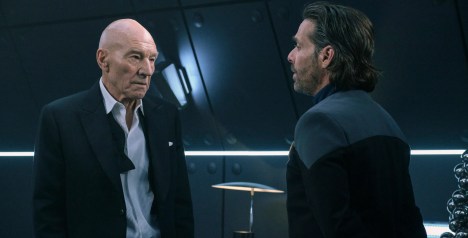
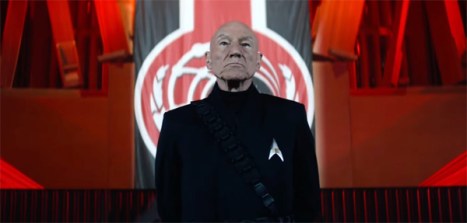
I published a new piece at The Escapist this evening. We’re doing a series of recaps and reviews of Star Trek: Picard, which is streaming weekly on Paramount+. The second episode of the second season released this week, and it seemed like a good opportunity to take a look at the series.
The second episode of the season is an interesting twist on a classic Star Trek trope. Star Trek: The Next Generation never really did a dark alternate universe story, comparable to something like Mirror, Mirror, Crossover, Living Witness or Twilight. It often seemed like The Next Generation was incapable of imagining the world any other way than the way that it was. As such, Penance offers something new for Jean-Luc Picard. Reflecting the gulf that exists in the more-than-a-quarter century between The Next Generation and Picard, the episode offers Picard a chance to look at a darker alternative future.
You can read the piece here, or click the picture below.






















 the m0vie blog