• Following Us

  • Categories

  • Check out the Archives


  • Awards & Nominations

Non-Review Review: The Meg

The Meg is proof that bigger is not always better.

There are moments when The Meg works beautifully, the film embracing its ridiculous concept by going all-in on a couple of absurdly heightened images. There are a number of shots in The Meg, particularly towards the climax, that are gleefully and unapologetically “too much.” It would undercut these moments to discuss them in any great detail in a review of the film, particularly since they are the moments when everything in the film seems to click into place. In these beats, there is a reckless abandon, as if the film understands the appeal of “Jason Statham in Jurassic Shark.”

Lifeboats find a way.

Unfortunately, these moments serve to highlight what is missing from so much of the rest of the film. The Meg is a movie committed to the idea of “more”, but is more invested in promise than in delivery. Everything in The Meg happens at breakneck pace, to the point where the first act of the film might make a compelling blockbuster on its own terms, given room to breath. However, like the sea-faring predator that inspired it, The Meg is eager to get to the next thing and the next thing after that. The result is a movie that feels rushed, but never urgent.

The Meg is so busy trying to heighten its stakes and its scale that it never quite manages to establish them.

Don’t bait him!

Continue reading

“Christopher Nolan: A Critical Study of the Films” Available for Pre-Order

I am thrilled to announce my new book, Christopher Nolan: A Critical Study of the Films. I announced it at the end of The 250 episode covering Christopher Nolan’s The Prestige.

I’ve been working on this for more than a year at this point, and am very excited to be able to share. The idea is to present a broad and accessible examination of the iconic director’s first ten films, looking at his work, his craft and his recurring thematic occupations. The goal is to illuminate one of the defining directors of the twenty-first century, a film-maker who has shaped the medium as we understand it today by combining deeply personal narratives with old-fashioned crowd-pleasing storytelling.

The book is currently scheduled for release late in the year, but you can pre-order it now from various online retailers. It’s a book that I’ve worked very hard on, and one that I am very proud of. If you can support it, whether by pre-ordering it or asking your local library to stock it or even just by sharing word about it online, it would mean a great deal to me.

It’s the second book that I’ve written with McFarland Press, who also published my last book Opening the X-Files, which took a look at the work of Chris Carter and Ten Thirteen on the era-defining series The X-Files and other related projects. They’ve been incredibly supportive of my work, and were a wonderful collaborator once again. Anyway, thanks again for your time, and I’ll hopefully have some more Nolan-related content on here leading up to the release.

If you want to support the book by pre-ordering it, here are the links to the places where you can purchase it at present:

Non-Review Review: American Animals

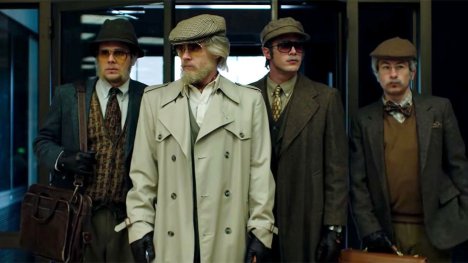
“To do this thing would take extraordinary effort,” observers Warren Lipka of his fiendish heist scheme in American Animals. “Not ordinary effort.”

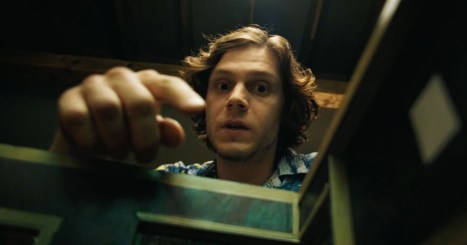
Written and directed by Bart Layton, American Animals is a blend of documentary and dramatisation. It explores the true story of the effort by four young men to steal a collection of precious books from the Library of Transylvania, a scheme that went disastrously and spectacularly wrong. Adopting a style that recalls Bernie or a slightly more grounded I, Tonya, Layton slices interviews with the real-life criminals into a narrative reconstruction of the attempted crime. The results are intriguing, occasionally veering into an exploration of the malleability of memory and the limits of personal perspective.

Up to their old tricks.

At the same time, American Animals is very much engaged with a masculine middle-class malaise. A recurring motif of the film has various figures from around the four criminals pause to reflect upon the character of these young men. “They were good kids,” various talking heads assert over the course of the documentary, talking fondly about their childhoods and their schoolwork and their aspirations. The four young men at the heart of American Animals did not plan (and botch) a heist because they were bad kids or because they needed the money. They did not act out of desperation or anger.

Instead, American Animals suggests that the characters enacted this ambitious and absurd scheme out of a sense of boredom, out of a desire to escape the mundanity of their everyday lives, to do something “extraordinary” to transcend their so-called “ordinary” lives.

Model citizens.

Continue reading

Non-Review Review: Teen Titans Go! to the Movies

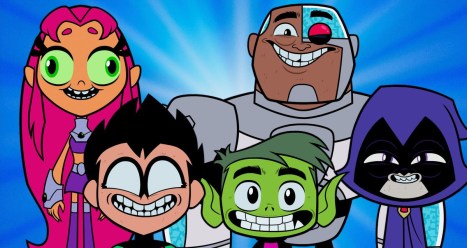
Teen Titans Go! to the Movies is a delight from beginning to end.

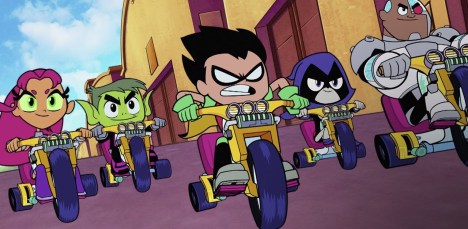
The go-to description of Teen Titans Go! to the Movies is “a G-rated Deadpool”, which is both accurate in general and interesting in specifics. Although the two Deadpool films have become cultural shorthand for “self-aware superhero parodies”, that is not what they really are; at their best, they are affectionate eighties action movie homages with a superhero veneer and a sheen of ironic self-awareness. Ironically, Teen Titans Go! to the Movies is a much better example of an affectionate and a committed parody of superhero cinema.

Cycles of violence.

Teen Titans Go! to the Movies is nonsense, but it is gleeful and self-aware nonsense, dedicated to both celebrating and gently mocking both the conventions and the specifics of superhero blockbuster filmmaking. It is too much to describe Teen Titans Go! to the Movies as a deconstruction of either superheroics or the modern cinema based around these characters, but the film cleverly plays on the tropes, conventions and history of these characters to do something that is highly amusing and occasionally gut-busting.

Teen Titans Go! to the Movies is cheeky fun, and it would be hard for anybody with any affection for either animation or superheroes to watch it without a grin on their face.

Teen work, people.

Continue reading

Non-Review Review: Ant Man and the Wasp

Marvel doesn’t get quite enough credit for its skill at scheduling.

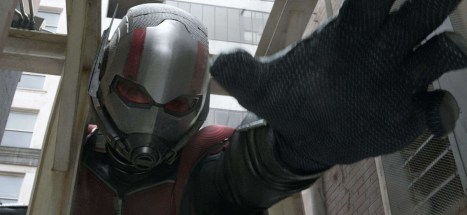
Ant Man and the Wasp is an incredibly light film. Befitting its size-changing central characters, it might even be described as a very small film. In some ways, a distractingly small film. It doesn’t really have a central story so much as a collection of events and complications that occur as a variety of characters attempt to accomplish a number of varying small-scale objectives. It doesn’t really have a central villain so much as a collection of forces working in opposition to one another, locked in a handful of small-scale skirmishes over a variety of macguffins.

Ant Man’s reach exceeds his grasp…

None of this is a problem. Indeed, the relatively intimate stakes of Ant Man and the Wasp feel very welcome in this era of apocalyptic scale and epic urban devastation. At no point in Ant Man and the Wasp does a villain threaten an entire city, let alone the country or the planet or reality itself. That said, the disjointed and low-key nature of the film could easily be a problem under other circumstances; the central conflicts in Ant Man and the Wasp are never defined in any real detail, its characters never really grow, its outcome is never in any real doubt.

However, much like the original Ant Man worked very well as a contrasting counterpoint to the bombastic and bloated Avengers: Age of Ultron, Ant Man and the Wasp benefits as a refreshing change of pace from Avengers: Infinity War. The film seems almost tailor-made to serve as light relief following the epic stakes and universal devastation of the summer’s other Marvel Studios release. It’s debatable whether this serves to make Ant Man and the Wasp a better film on its own terms, but it does make it seem much stronger in contrast.

“We need some theme music!”
“Nah, just a nice sting.”

Continue reading

Non-Review Review: The Equaliser 2

At one point in The Equaliser 2, Robert McCall is listening to a radio forecast of a storm front sweeping through the north east of the United States.

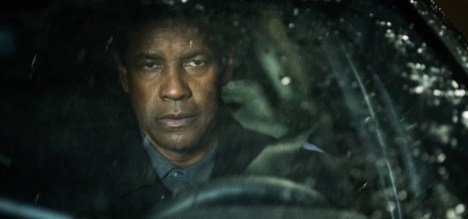
“It’s coming in slow,” the meteorologist explains. “It’s taking it’s time.” In theory, so is The Equaliser 2. The storm is itself a metaphor for both the film and its protagonist, a force of nature descending upon the characters with a slow and steady certainty. The Equaliser 2 is a film that is very consciously taking its time, the script structured in such a way as to prioritise mood and ambiance over plot and pacing. The Equaliser 2 is meant to seem a stately and poetic meditation on violence and the men who commit it. At least in theory.

Yeah, we don’t know why it isn’t called The Sequeliser either.

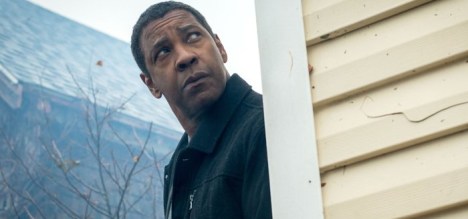
It is clear what writer Richard Wenk and director Antoine Fuqua are trying to do over the course of the film’s two-hour-and-nine-minute runtime, building a mounting sense of dread towards a cathartic release. However, there is something deadly unsatisfying in this. The Equaliser 2 is not nearly clever enough nor intricate enough to sustain that more relaxed pace. What should be profound is instead belaboured, what should be considered is instead clumsy. Plot threads are broached and disappear. The one that reach their conclusion arrive long after the audience.

The Equaliser 2 forsakes the grotty do-it-yourself brutality of its predecessor, aspiring towards something moving and insightful. Unfortunately, all of that gets lost in a haze. The storm passes overhead, and it seems unlikely that anybody would even notice.

A storm is coming.

Continue reading

Non-Review Review: 2 Fast 2 Furious

I’m rewatching The Fast and the Furious for a separate project, as solidarity with fellow film critic Jay Coyle for his “Cinema of Experience” project to look at the changing face of cinema in the twenty-first century. He’ll be writing up his account of how the experience of watching movies has changed in the past twenty-or-so years, but I found my rewatch of The Fast and the Furious interesting enough to write a longer-form review of it.

The Fast and Furious franchise exists somewhere in the space between The Fast and the Furious and 2 Fast 2 Furious, but is never quite caught on camera.

The Fast and the Furious is a late nineties undercover urban western about lawlessness in turn-of-the-millennium Los Angeles, of the dead end of the American Dream where young men (and occasional women) drive fast cars in circles to nowhere in particular, living their lives “one quarter mile at a time” without any purpose or any escape. It is a moral quagmire, a tribal wasteland in which law and order mean nothing. The film centres on a police officer sent to infiltrate this world of fast cars, who ultimately cannot bring his target to justice – because there is no justice in this empty and nihilistic world.

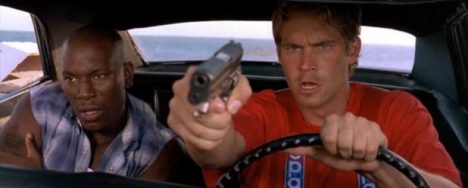
2 Fast 2 Furious is effectively a soft Miami Vice reboot. It is a bright and colourful thriller which follows former undercover police officer Brian O’Conner and his old friend Ramone Pierce as they are tasked to infiltrate a drug kingpin’s organisation in Miami. It is a much more conventional and delineated film, and also a much less existential. There are clearly defined good guys and bad guys, and O’Conner has absolutely no ethical objection to bringing in this particular criminal. The film is also appreciably brighter, both be virtue of its heavily saturated surroundings and by an increased emphasis on neon.

Watching 2 Fast 2 Furious, there’s a real sense that the production team had no idea what a hypothetical sequel to The Fast and the Furious would look like, only that it should exist… and maybe it should have some cars in it. Indeed, 2 Fast 2 Furious is pointedly at its most ridiculous when the script is forced to shoe-horn the “obligatory racing bits” into a conventional “undercover Miami drug bust movie.” There’s a weird disconnect between the two films, that goes beyond the absence of Vin Diesel.
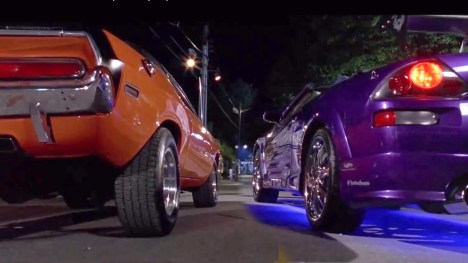
Even with Paul Walker present and few small continuity references, there’s little to tether 2 Fast 2 Furious to The Fast and the Furious. It recalls the sort of old-fashioned Hollywood cynicism that produced sequels like Die Hard with a Vengeance, when familiar characters would be clumsily bolted on to a completely unrelated script to create a new franchise installment. Of course, with Dom Toretto in the wind, 2 Fast 2 Furious doesn’t even really have that many familiar characters to anchor it. Brian O’Conner was never going to be the franchise’s breakout character, after all. 2 Fast 2 Furious only has the name.

In some ways, the spark that would drive the Fast and Furious franchise is found in neither The Fast and the Furious nor 2 Fast 2 Furious. After all, the later blockbuster installments of the franchise feel like a completely different breed than either film; espionage-style superhero films involving the fate of the world. That spark is found in the gap between The Fast and the Furious nor 2 Fast 2 Furious, in the cynical idea that just about any kind of movie can be a Fast and Furious movie if you stick enough cars in it.
Continue reading

Non-Review Review: Mission – Impossible: Fallout

Mission: Impossible – Fallout has the best third act of any blockbuster in years.

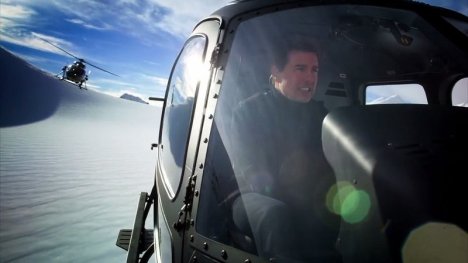
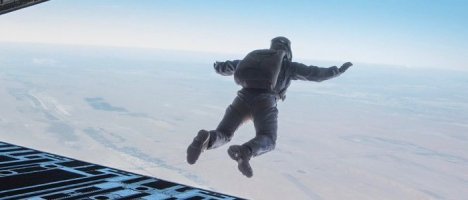
To be fair, the first two acts are highly enjoyable on their own terms, with writer and director Christopher McQuarrie building and maintaining momentum across the film’s near-two-and-a-half hour runtime. As expected of the franchise, Fallout is peppered with memorable set pieces that push the plot along with an endearing commitment to in-camera action set-ups, impressive stunt choreography and ambitious imagination; skydiving through a thunderstorm, a brutal bathroom brawl, a daring mid-movie motorcade abduction, a three-dimensional topographical pursuit.

Snow escape.

While all of these elements work well, with the bathroom brawl in particular serving as a worth addition to the franchise’s set piece canon, the final act of Fallout is a masterclass in blockbuster film-making. It is a genuinely dizzying piece of spectacle, a soaring accomplishment that manages to ratchet up the suspense for the better part of forty minutes, making excellent use of an ensemble in close geographic proximity but in very different situations. McQuarrie skilfully understands the rhythm and the tempo of the scene, crosscutting beautifully between the various strands to sustain the tension.

Fallout is not the best film in the Mission: Impossible franchise; it isn’t quite the all-rounder that Mission: Impossible III was, and it lacks the gleefully demented sustained adrenaline rush of Mission: Impossible – Ghost Protocol. However, it is a testament to the remarkable and sustained quality of the franchise, and the best movie of the summer to this point.

Just dive right in…

Continue reading

Non-Review Review: The Fast and the Furious

I’m rewatching The Fast and the Furious for a separate project, as solidarity with fellow film critic Jay Coyle for his “Cinema of Experience” project to look at the changing face of cinema in the twenty-first century. He’ll be writing up his account of how the experience of watching movies has changed in the past twenty-or-so years, but I found my rewatch of The Fast and the Furious interesting enough to write a longer-form review of it.

The Fast and the Furious is a curious piece of work, especially in the light of everything that followed.

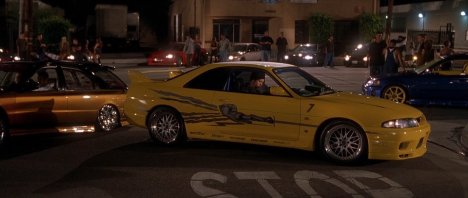
From the opening scene through to the climactic setpiece, The Fast and the Furious is very much framed as an urban western, a tale of conflicted masculinity within an urban wasteland that might as well be lawless. Street racers serve as traffic cops at one point, blocking civilian cars from the predetermined race track without any interference from actual law enforcement. Towards the end, Dom Torreto seeks to evade the law by outrunning a train to a train crossing, one of the classic high-stakes western set pieces.

More than that, the introduction of Dom Torreto in The Fast and the Furious is very much meant to evoke the introduction of a western protagonist. He is first seen from obscured angles, glimpsed from behind and through a wire mesh. His presence is felt at a distance, an island of calm in a chaotic world. Torreto is introduced as an outlaw who seeks peace in a world that is constantly at war. This is perhaps a canny approach from a scripting and directorial perspective, acknowledging Vin Deisel’s strengths as a screen presence. Torreto’s first act is to break up a street fight outside the little restaurant stall operated by his sister.

Released in June 2001, The Fast and the Furious is one of the last action films of the nineties. It is a snapshot of a nation still paranoid about street gangs and boy racers, of urban decay and social collapse, of the apocalyptic notion that Los Angeles is the final frontier of the nation’s westward expansion. Explored in hindsight, these were perhaps more innocent times.

Continue reading

Non-Review Review: Searching…

Searching… is an interesting fusion. It blends the innovative narrative style of Unfriended with the more convention cinematic language of thrillers like Kiss the Girls.

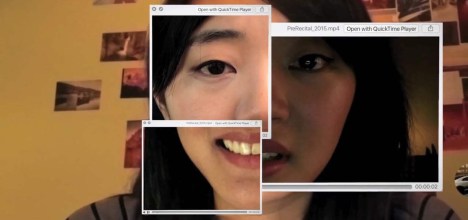
This cocktail is at once welcome and overdue. Unfriended was one of those rare genuinely innovative pieces of mainstream cinema; in form, if not necessarily in function. Unfriended built from a premise that was both incredibly simple and also formally daring, telling a fairly standard supernatural teenage revenge story entirely through a computer desktop. As with Searching…, all of Unfriended unfolded within a computer screen.

Windows ’95 into the soul…

In hindsight, it is surprising that it has taken other genres so long to embrace that formal experiment. Cinema has a long history of eagerly coopting the language and experiments of horror for more prestigious and high-brow fare. Consider, for example, how quickly other genres coopted the “found footage” revolution of the early twenty-first century for action movies, thrillers, comedies, and even monster movies and superhero films. (Then again, that embrace of the “found footage” aesthetic may have caught on for reasons beyond the success of The Blair Witch Project.)

Searching… takes the basic formal conceit of Unfriended and applies it to a more conventional genre film. The result is an abduction thriller told exclusively through screens, through video streams, search histories, web cameras and screenshots. It’s a provocative premise, effectively turning the bigger screen into a smaller one and changing the rules of how the audience processes the imagery in front of them. However, Searching… clearly aspires to bridge the gap between screens big and small.

She needs to screen her fans better.

Continue reading