• Following Us

  • Categories

  • Check out the Archives


  • Awards & Nominations

New Podcast! Scannain Podcast (2018) #41!

It’s time for the latest Scannain podcast!

This week, I join Jay Coyle and Ronan Doyle to discuss the week in film. As usual, we talk about the top ten and the new releases, as well as what we’ve watched this week. In this episode, Jay finally has his say on Mandy and ruminates upon disaster films old and new, while Ronan raves about Dogman and The Unbreakable Kimmy Schmidt.

The week in film news covers a bumper year for Irish nominees at the British Independent Film Awards, gives a quick shout to the Dublin Feminist Film Festival and discusses the shuttering of Filmstruck and the future of film archiving.

The top ten:

  1. La Fanciulla Del West – Met Opera 2018 (Opera)
  2. The Hate You Give
  3. Venom
  4. First Man
  5. Johnny English Strikes Again
  6. Goosebumps II: Haunted Halloween
  7. Smallfoot
  8. Halloween
  9. A Star is Born
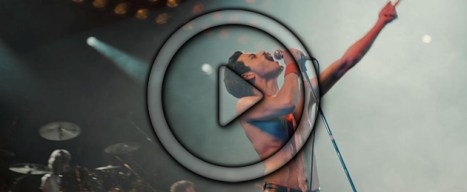
  10. Bohemian Rhapsody

New releases:

You can download the episode here, or listen to it below.

All’s Welles That Ends Welles: “The Other Side of the Wind” and a Sense of Seventies Timelessness…

There is a tendency to think of the current moment as the most important moment; call it “modernity bias.”

There is a certain egocentricism inherent in this premise, in the idea that this moment when we exist will always be the most important moment. On a purely philosophical level, there may some truth in the idea. After all, this is the one moment when we actually get to make a decision and exercise agency, this is the one moment where a course of action can be changed. Of course, people have made decisions in the past and can plan for the future, but this is the moment that exists right now. It’s understandable to think of the current moment in such terms.
Sometimes this can make it hard to engage with popular culture outside of those terms. Of course, a lot of popular culture is defined by the moment in which it was released. It would be hard to separate All the President’s Men (or even conspiracy thrillers like The Conversation or The Parallax View) from the cultural paranoia of the seventies, just as it would be hard to divorce films like Fight Club (or The Matrix) from the pre-millennial anxieties that informed them. This is not to suggest that these movies lack relevance outside their moments, but instead to acknowledge they are rooted in their times.

In most cases, works are released relatively close to the time at which they were produced, meaning that audiences and critics respond to these films in the context in which they were made. Audiences reacting to films like All The President’s Men or Fight Club were very much in step with the culture that informed it, and so there was a strong communion between what the film was saying and what the audience was hearing. Indeed, any critical reevaluation of these works exists in conversation with the original evaluation, and so the cultural conversation about these works of art tends to move forward from a fixed point.
However, this creates a challenge in assessing works that exist outside of that template. “Lost” works that have been recovered. “Incomplete” works that have been finished. Even older works that have been revisited. It is, for example very hard to separate Doug Liman’s reworked 2018 director’s cut of his 2010 film Fair Game from the context of its later release, specifically President Donald Trump’s pardoning of a key official involved in the events depicted in the film. It becomes an even bigger challenge when dealing with a work that is seeing the light of day for the first time years removed from its original context.

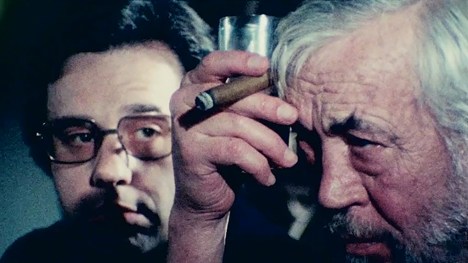
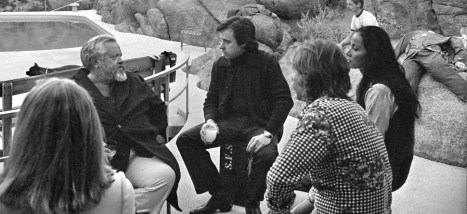
Is The Other Side of the Wind a lost seventies film, or is it a film for the closing of the second decade of the twenty-first century? Is it both? Is it neither? Is it something else entirely?

Continue reading

Non-Review Review: They’ll Love Me When I’m Dead

They’ll Love Me When I’m Dead serves as a convincing argument that The Other Side of the Wind works better as a story than as an actual object that exists.

They’ll Love Me When I’m Dead is a feature-length documentary that is only a few minutes shorter than its subject, providing an exploration of The Other Side of the Wind, from its conception through it development and into its long and storied afterlife. It is a very exciting and engaging tale, one that sweeps across Hollywood history, delving into a variety of nooks and crannies. It is a story that is intertwined with dissolving marriages and international politics, of bad luck and tremendous arrogance. All of this existing in the shadow of Orson Welles.

They’ll Love Me When I’m Dead offers an account of the production of Orson Welles’ ill-fated experimental piece of metafiction. It is perhaps a testament to The Other Side of the Wind that it occasionally feels like They’ll Love Me When I’m Dead can perhaps be folded into the wild ambitions of an ageing filmmaker working on a project that would not materialise during his life-time. Towards the end of They’ll Love Me When I’m Dead, archive footage of Orson Welles finds the auteur musing on his next project.

“Maybe it isn’t even the picture,” he confesses to the press. “Maybe it’s just talking about the picture.” Maybe The Other Side of the Wind is not the real headline. Maybe They’ll Love Me When I’m Dead is the real headline.

Continue reading

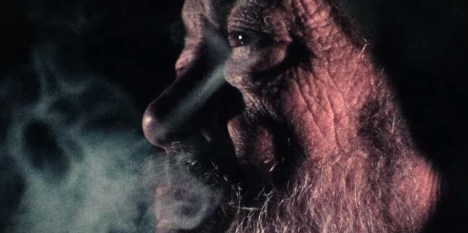
Non-Review Review: The Other Side of the Wind

It is still strange to think of The Other Side of the Wind as an object that actually exists.

The film has haunted film films for decades, the prospect and potential of one last Orson Welles film that remains to be found long after the iconic director’s passing. The footage had all been shot. The material was gathered. All that had to be done was to journey through those hours and hours of material, in search of something resembling a feature film. It evokes that famous story about how Michelangelo approached sculpting, except that instead of a lump of marble, this work of art is to be subtracted from mountains of film.

Of course, there is a valid debate to be had about whether the version of The Other Side of the Wind that has been screened can claim to be the real or actual version. After all, the film arguably only ever existed inside the head of Orson Welles. After his passing, the only thing that could be released was an approximation of his vision, an impression of his filmmaking. This is particularly true given the extent to which Welles relied on editing in his filmmaking. Welles famously boasted to Cahiers du Cinema that editing was more important than mise en scene.

However, watching The Other Side of the Wind, there is a strong sense that Welles himself would approve this ambiguity, that he would actively encourage it. The Other Side of the Wind is a knowingly twisty and slippery piece of work, a wry and iconic piece of film that somehow still seems avante garde more than four decades after it was originally shot. There is a sense in which The Other Side of the Wind feels like sly and biting joke, one told by a comedian with pitch-perfect timing. Only one question remains. Who is the butt of this joke?

Continue reading

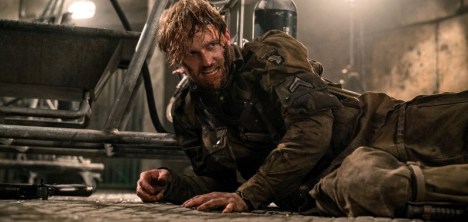
Non-Review Review: Overlord

Overlord is a film that works a lot better in concept than in does in execution.

The idea of constructing a pulpy monster narrative around Nazi atrocities during the Second World War has a certain appeal to it. Not only does it evoke the sort of trashy fiction that that often existed at the margins of popular culture, but it also suggests the speculative lenses through which audiences process trauma, the way in which mass media filters horrors almost beyond human comprehension into something tangible and visceral, creating an uncanny and uncomfortable prism through which anxieties over these horrors might be channeled.

Russelling up some fun.

The horrors inflicted by the Nazis are almost impossible to fully comprehend; the systemic brutality inflicted upon those marginalised groups under their authority, the destruction that they wrought across Europe. These traumas linger in the popular memory. While the reality of those atrocities must never be forgotten or downplayed, there is something very powerful in the idea of translating that to the screen through the cinematic language of horror. Like Wolfenstein, Overlord seems to suggest an impressionistic portrait of the horrors of the period.

This approach is intriguing, and there are moments when Overlord works very well, when the film is creepy and unsettling in all the ways that it should be creepy and unsettling. However, the film suffers greatly when the script tries to impose a familiar framework on these horrors, when it runs through the checklist of storybeats expected for a major modern cinematic release. Put simply, Overlord works best when it aspires to be Captain America: The First Avenger, but as a horror film” and it works worst when it just tries to be Captain America: The First Avenger.

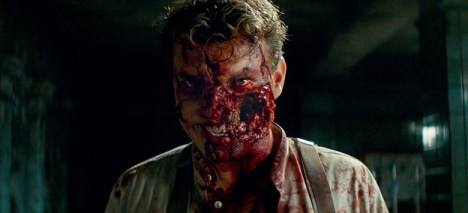
I want to take his face… off.

Continue reading

Non-Review Review: Widows (2018)

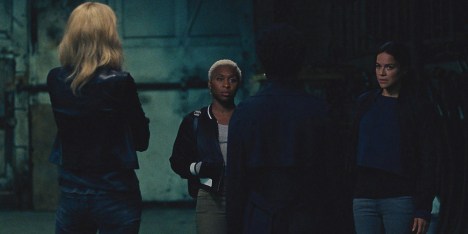
At its most basic, Widows is a testament to applying the skill and craft of two filmmakers working at the very top of their game to a sturdy and reliable genre framework.

The basic plot of Widows is relatively straightforward, adapted from Lynda LaPlante’s book by way of a very successful British television miniseries. A group of women find themselves drawn into an unlikely life of crime when their husbands are killed during a botched robbery. Caught between corrupt politicians and scheming gangsters, the women are thrown out of their comfort zone as their leader commits to completing a heist that was carefully and meticulously planned by her late husband. It’s pulpy, it’s trashy, it’s fun.

Widows of opportunity.

However, the beauty of Widows lies in applying the skill of Gillian Flynn and Steve McQueen to this set-up. Flynn is one of the biggest writers working today, known for both her novels and for her work on screenplays. Gone Girl was enough of a cultural force to turn its title into a verb, and embodied a certain kind of sleek self-aware trashy storytelling style. McQueen is a great writer in his own right, but already one of the most esteemed and respected directors working in contemporary cinema; known for his work on Shame or Twelve Years a Slave.

Widows is a movie that is completely unashamed of the trappings of its story, a familiar story about unlikely criminals who find themselves forced into “one last job”, with the biggest irony being that it is somebody else’s last job. Widows never looks down upon the heightened aspects of its narrative, nor does it feel a need to elevate or legitimise them. Instead, Widows allows its intelligence and insight to fold into the contours of this slick stylish crime thriller. The result is simply dazzling.

Stealy resolve.

Continue reading

New Podcast! Scannain Podcast (2018) #40!

It’s time for the latest Scannain podcast! A somewhat bumper edition this time.

This week, I join Grace Duffy, Luke Dunne from Film in Dublin and Phil Bagnall to discuss the week in film. As usual, we talk about the top ten and the new releases, as well as what we’ve watched this week. In this episode, we all debate Mandy, Grace discusses her rewatch of Arrival, Luke contemplates Bad Times at the El Royale and Phil ruminates upon Wonder Woman.

The bulk of this week’s news coverage is given over to Phil’s trip to the London Film Festival, and he discusses his highlights of the festival; his opinion on the headliners, his hidden gems and his disappointments. In other film news, we discuss the WANDA Feminist Film Festival in Belfast and the Galway Junior Film Fleadh.

The top ten:

  1. Kler (Clergy)
  2. Samson Et Dalila – Met Opera 2018 (Opera)
  3. Hunter Killer
  4. Venom
  5. First Man
  6. Johnny English Strikes Again
  7. Goosebumps II: Haunted Halloween
  8. Smallfoot
  9. Halloween
  10. A Star is Born

New releases:

  • Possum
  • The Guilty
  • Bad Reputation
  • An Evening with Beverly Luff Linn
  • The Hate You Give
  • Bohemian Rhapsody
  • Katie

You can download the episode here, or listen to it below.

Non-Review Review: Sorry to Bother You

Sorry to Bother You is striking, vibrant and vital. And essential.

Boots Riley’s directorial debut is a work of striking confidence, one that emerges almost perfectly formed with the skill and craft of a director much more experienced. Sorry to Bother You knows exactly what it is doing from one moment to the next, without any sense of hesitation of self-doubt. Sorry to Bother You is strikingly self-assured, maintaining an incredible level of high-energy across its runtime. This sustained propulsive dynamism in infectious, as the movie bounces from one big idea to the next.

Dialing up the social commentary.

The most obvious antecedents of Sorry to Bother You are the vibrant science-fiction social satires of the eighties, most notably the work of Paul Verhoeven that used a hyper-stylised aesthetic to depict the grosteque excesses of capitalism. Of course, the true horror of Sorry to Bother You lies in the sense of how the world itself has moved to close the gap over the past three decades. Although Sorry to Bother You unfolds primarily in a lightly fictionalised Oakland, the most unsettling aspect of the film is how close it feels to the modern status quo.

Sorry to Bother You is a work of bold vision.

Few satires are a patch on this.

Continue reading

New Podcast! Scannain Podcast (2018) #39!

It’s time for the latest Scannain podcast! A somewhat bumper edition this time.

This week, I join Jason Coyle, Grace Duffy and Ronan Doyle to discuss the week in film. As usual, we talk about the top ten and the new releases, as well as what we’ve watched this week. In this episode, Jay talks about “instant classics”, Ronan discusses the heartbreak of Rosie, and Grace inadvertently watched The Lord of the Rings: The Fellowship of the Rings again.

In film news, we discuss the upcoming Cork Film Festival, Katie winning Screen Directors Guild Finders Series Award, and Netflix’s successful “Summer of Love.” There’s also an extended season about awards season social media fatigue.

The top ten:

  1. Night School
  2. Cliff Richard Live: 60th Anniversary Tour (Concert)
  3. Bad Times At The El Royale
  4. Goosebumps 2: Haunted Halloween
  5. Kler (Clergy)
  6. First Man
  7. Johnny English Strikes Again
  8. Venom
  9. Smallfoot
  10. A Star is Born

New releases:

  • The Lonely Battle of Thomas Reid
  • Dogman
  • Goosebumps 2: Haunted Halloween
  • Halloween

You can download the episode here, or listen to it below.

New Podcast! Scannain Podcast (2018) #38!

It’s time for the latest Scannain podcast! A somewhat bumper edition this time.

This week, I join Jason Coyle, Grace Duffy and Luke Dunne from Film in Dublin to discuss the week in film. As usual, we talk about the top ten and the new releases, as well as what we’ve watched this week. In this episode, Grace discusses her love of the Lord of the Rings trilogy and encourages a Bruce Springsteen singalong, Jason blazes through a twelve-film week and contemplates the seventies fetishism of A Star is Born, and Luke discusses Maniac and the strange intoxicating allure of Venom. Complete with mumbly Tom Hardy impressions.

The top ten:

  1. Crazy Rich Asians
  2. Hotel Transylvania 3: A Monster Vacation
  3. A Simple Favour
  4. Aida at Met Opera 2018
  5. Black ’47
  6. The House With A Clock In Its Walls
  7. Night School
  8. Johnny English Strikes Again
  9. A Star is Born
  10. Venom

New releases:

You can download the episode here, or listen to it below.