• Following Us

  • Categories

  • Check out the Archives


  • Awards & Nominations

New Escapist Column! On the Use of Long Takes in “1917”…

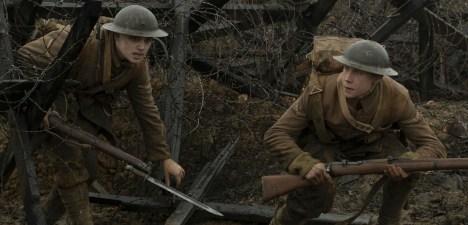
I published a new In the Frame piece at Escapist Magazine a little while ago, looking at the use of long takes within 1917.

The long take is an interesting cinematic technique. Most obviously, it’s a dazzling display of craft and technical proficiency. It’s a power move that exists largely so a director can flex their muscles. However, it also serves a compelling paradoxical purpose. The longer that a director holds a take, the more that the audience drifts away from reality. Cuts allow the audience to ground themselves, to process what they have seen. Removing cuts forces the audience to hold a single long gaze. In 1917, Sam Mendes uses that gaze to collapse time and space. In doing so, he captures some of the insanity of war.

You can read the piece here, or click the picture below.

New Escapist Column! On the Need of “Star Wars” to “Grow Beyond” the Skywalkers…

I published a new In the Frame piece at Escapist Magazine last night, looking at the future of the Star Wars brand.

While there is still some ambiguity about where Disney will take the cinematic franchise following the release of Star Wars: Episode IX – The Rise of Skywalker, a clean break might be the best course of action. Modern franchises are too beholden to fan service and familiarity, to retreading old ground in order to avoid offending or challenging existing fans. This prevents franchises from growing and embracing new ideas and new possibilities. It leaves them stagnant, and ultimately does little to appease fandoms with very strong ideas of how characters or ideas should be portrayed.

You can read the piece here, or click the picture below.

Online Film Critics’ Society Awards, 2019

Christmas is over, but awards season keep right on truckin’.

I’m a member of a couple of critics’ organisations, so we’ve been releasing a couple of these lists upon which I voted. You can also see my own end-of-year list as a Twitter thread.

In the meantime, the Online Film Critics’ Society have released their end of year awards. Thrilled to be a part of the group, who are voting on films released internationally during the calendar year of 2019. As such, it will be a different pool of films than the Dublin Film Critics Circle awards.

Anyway, without further ado…

Continue reading

“So, Your Son is a Nazi”: Modern Hollywood’s Weird Fixation on Feel-Good Stories About Fascists…

JoJo Rabbit is supposed to be an “anti-hate satire”, but what exactly is it satirising?

To be fair to director Taika Waititi, JoJo Rabbit is a well-made and charming crowd-pleaser. It manages something genuinely impressive, offering a feel-good coming of age comedy set against the backdrop of Germany in the dying days of the Second World War. It belongs the awkward, saccharine genre that produced films like Jakob the Liar or Life is Beautiful or The Day the Clown Cried. It is impossible to overstate how thin a razor blade Waititi is dancing, and how remarkable it is that he maintains his balance. The film never feels too sombre or too dark, but never as tasteless as something like The Book Thief.

Of course, Waititi largely manages this through cinematic sleight of hand. He avoids dwelling too heavily or for too long on the victims of fascist oppression in Nazi Germany. JoJo Beltzer finds a young Jewish girl hiding in his attic, but the film never details the horrors of the Final Solution. The characters are repeatedly confronted with the sight of bodies hanging in the public square, but the camera never really lingers on them. Instead, it focuses on JoJo’s reaction to them. The audience’s gaze is fixated on his gaze. The question isn’t how the audience feels about the horror, but how they feel about how JoJo feels.

This raises an interesting and slightly unsettling question about the recent wave of Hollywood films exploring the emergence of the modern extreme right and the resurgence of fascist ideology. Who exactly are these films for? What is the intended audience of JoJo Rabbit, and what exactly is it saying to them?

Continue reading

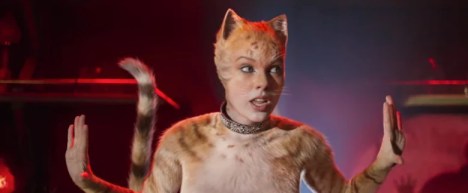
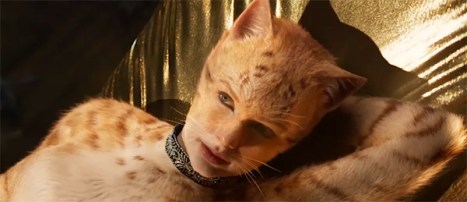
Non-Review Reviewsical: Cats

Were they blind when they made this? Do they think it looks good?
Is it fit for awards? Would it sweep at the Globes?
Can you say of the effects that they look worse than they should?
Are they justifiably excited when the internet goads?

Because Tom Hooper can and Tom Hooper did
Some actors did and some actors would
A major studio would and a major studio can
But reviewers can’t and reviewers don’t.

How about those special effects? Are they truly a feat?
Are they tense when they sense there’s no awards buzz?
Do you mind all the signs with the puns in the street?
Did they know from the go that they’d just filmed a dud?

Because Tom Hooper can and Tom Hooper does
Tom Hooper does and Tom Hooper can
Tom Hooper can and Tom Hooper does
Tom Hooper does and Tom Hooper can
Tom Hooper can and Tom Hooper does

Familiar songs for counterprogramming
All those known songs to bring them all in
There’s even a song that Ray Winstone sings
Tom Hooper’s Cats promises all of these things.

Continue reading

Non-Review Review: Star Wars – Episode IX: The Rise of Skywalker

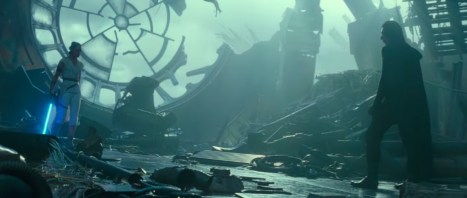
Star Wars: Episode IX – The Rise of Skywalker is probably the weakest live action theatrical Star Wars film, which is quite something in a world where Star Wars: Episode I – The Phantom Menace and Star Wars: Episode II – Attack of the Clones exist.

To be fair, some of the problems with The Rise of Skywalker are forced by external events. Carrie Fisher passed away early during production, and there was always a sense that the third film in the trilogy would focus on Leia in the same way that Star Wars: Episode VII – The Force Awakens had focused on Han and Star Wars: Episode VIII – The Last Jedi focused on Luke. As a result, the film’s consciously flailing around how best to fill that void is understandable.

Similarly, director JJ Abrams arrived on the project at the last minute, after Colin Trevorrow was removed from the project. The new Star Wars trilogy has an abridged production cycle to begin with, but The Rise of Skywalker had to switch hands midstream. As a result, it makes sense that there is a certain rough quality to the storytelling, with Abrams inheriting a film that was not designed for him and trying to impose himself upon it.

These are serious and credible challenges facing The Rise of Skywalker, and it would take an impressive film to overcome these logistical hurdles. As much as Han Solo might not like to hear the odds, those odds have been stacked against The Rise of Skywalker from very early in the production process. The film seems keenly aware of this. At one point, Poe crash lands the Millennium Falcon on the forest moon of Endor. When Jannah comments on the rough landing, Poe replies, “I’ve seen worse.” Jannah replies, “I’ve seen better.”
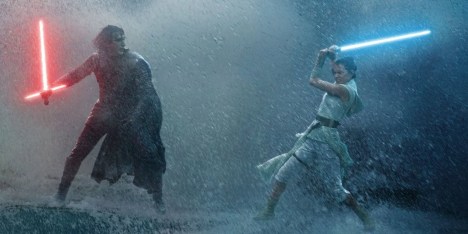
However, while that failure to stick the landing might be forgivable – if disappointing in its own terms – The Rise of Skywalker is most severely undermined by unforced errors. The film makes any number of catastrophic storytelling choices, both in the story that it decides to tell and the way that it ultimately opts to tell it. Whenever The Rise of Skywalker reaches a narrative crossroads, it never fails to pick the weakest of the options in front of it. This is bad of itself, even without the sense that these choices are being driven by the most craven of motivations.

As with films like Justice League, it often feels like The Rise of Skywalker has been shaped and informed by listening to the loudest voices raging on the internet and tailoring a film to appease their aesthetic sensibilities. The grand tragedy of The Rise of Skywalker is that the kind of fans that it is intended to appease are well past being appeased. More than that, these cynical efforts to appease those fans serve to alienate the actual audience. The Rise of Skywalker is everything certain fans wanted from The Last Jedi. Not uncoincidentally, it is nigh unwatchable.
Continue reading

Dublin Film Critics Circle Awards, 2019

IT’S CHRIIIIIISTMASSSSSS!

Which can only mean one thing: end of year “best of” lists!

I’m a member of a couple of critics’ organisations, so we’ll be releasing a couple of these sorts of end-of-years lists upon which I voted.

The Dublin Film Critics Circle have released their end of year awards. As ever, I am thrilled to be a part of the group, who are voting on films released in Ireland during the calendar year of 2019. As such, it will be a different pool of films than the Online Film Critics Society awards; films like Parasite or 1917 are excluded from consideration.

A massive thanks to the wonderful Tara Brady for organising the awards this year, balloting members and collating results.

Anyway, without further ado…

Continue reading

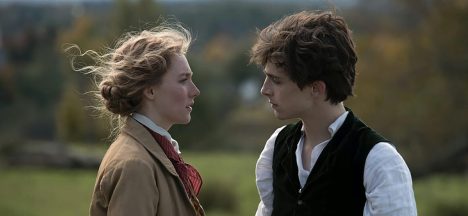
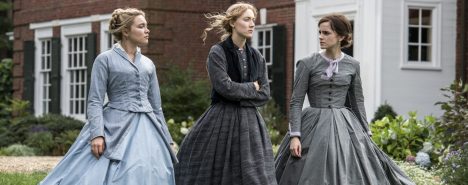
Non-Review Review: Little Women (2019)

Little Women is immensely charming and highly engaging.

As is the style of the time, writer and director Greta Gerwig offers something of a “remix” of Louisa May Alcott’s classic American novel. It’s an approach that infuses the film with an appealing poppy sensibility, as the story weaves through time and navigates on theme more than plot. It tells a story of the lives of the four March sisters as they journey from their teenage years into adulthood, wrestling with all the opportunities and challenges that such an adventure offers them.

Come what Chalamet.

Little Women works well for a number of reasons. The most obvious reason is the immensely talented cast. Gerwig reunites with a number of cast members from Lady Bird on Little Women, including Saoirse Ronan in the lead role and supporting turns from both Tracy Letts and Timothée Chalamet. These veterans team up with some of the most charismatic actors working today, including players like Meryl Streep, Laura Dern and Bob Odenkirk. The restructuring of the film plays to the strength of the cast, Gerwig effectively reworking the text as a hangout movie with some pretty cool people.

That said, there is an uncomfortable tension that simmers in the background of the film, in which two of its central themes collide in ways that the movie isn’t quite able to handle.

Women during war.

Continue reading

Of Death Stars, Sarlaccs and Sexting: The Curious Sexual Energy of “Star Wars”…

At its core, Star Wars is a Jungian, Campbellian and Freudian story about what it’s like to grow up.

This is perhaps most obvious within the original trilogy. Star Wars: Episode V – The Empire Strikes Back is ultimately about the realisation that your parents will eventually and inevitably fail you. Star Wars: Episode VI – The Return of the Jedi is about growing up and learning to make peace with them anyway. Of course, the individual films frame these core themes through their own lenses. Star Wars: Episode VII – The Force Awakens reframes that adventure so it centres on people who have rarely had the opportunity to anchor such a story. Star Wars: Episode VIII – The Last Jedi asked what that meant in 2017.

Naturally, this coming of age story is framed in terms of adventure – young characters discovering that they are part of an epic mythology that guides them towards confrontations with ancient and incredible evils, often learning hidden truths about themselves and their destiny. There’s a reason that the Star Wars franchise has come to be associated with the “monomyth”, distilling the hero’s journey into something with a story with universal resonance. It is a story about what it feels like to grow up.

It is also, inevitably, very much about sex. And in some very interesting (and quite eccentric) ways.

Continue reading

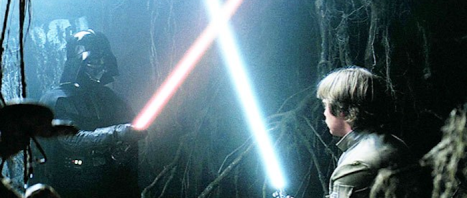
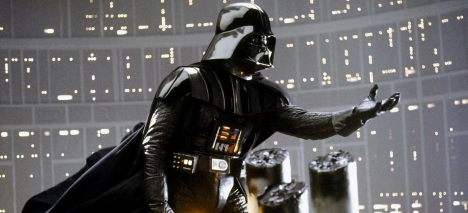
“The Price You Pay for Being Successful”: How “The Empire Strikes Back” Was One of the First Blockbusters of the Eighties…

Star Wars is often discussed in the context of the late seventies, whether the political context of the Vietnam War or George Lucas’ status as an up and coming director alongside the likes of Francis Ford Coppola or Steven Spielberg or even just the way in which it shifted movie-making away from the new Hollywood model towards the blockbuster template.

Despite all of this, it is often overlooked just how firmly Star Wars: Episode V – The Empire Strikes Back is rooted in the context of the early eighties. There are obviously any number of reasons for this. Most obviously, Star Wars: Episode VI – Return of the Jedi consciously retreated back to the late seventies trappings of the original film, right down to its decision to restage the Vietnam War with adorable toyetic teddy bears in the place of the Viet Cong. There’s also a sense in which the cultural markers of The Empire Strikes Back are more subtle than those of Star Wars.

Sabre-rattling.

Watched from a modern perspective, The Empire Strikes Back seems to herald the arrival of the new decade. Like all great sequels, it broadens both the scale and scope of Star Wars, but it also pushes the franchise forward. Even beyond the now iconic revelations about family lineage and power dynamics, The Empire Strikes Back radically redefines what it means to be a Star Wars film. It is no longer about navigating the moral ambiguity of an uncertain time, wrestling with the spectre of American might. It is instead about exploring social power structures, of finding one’s place in system.

The Empire Strikes Back might just be the first truly great eighties movie.

A little father-son outreach.

Continue reading