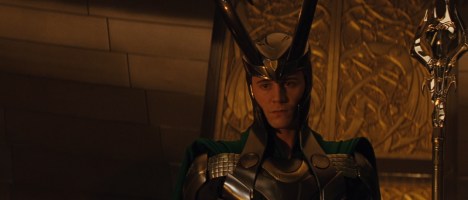
I published a new In the Frame piece at The Escapist this evening. With Loki arriving on Disney+ on Wednesday, it seemed like the perfect opportunity to take a look at the Marvel Cinematic Universe’s God of Mischief and what makes Loki such a compelling character.
There are lots of reasons why Loki has succeeded where other Marvel Studios villains have failed. Part of this is undoubtedly the casting of Tom Hiddleston. However, part of it is also down to the way in which Loki offers an interesting twist on the classic Campbellian archetype. Arguably more than any other character in the MCU, including his own brother, Loki is defined by has complicated and contradictory relationship with his father.
You can read the piece here, or click the picture below.
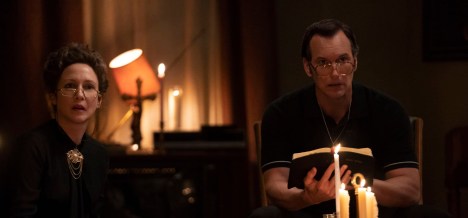
I’m thrilled to be launching 3-Minute Reviews on The Escapist. Over the coming weeks and months, I will be joining a set of contributors in adding these reviews to the channel. For the moment, I’m honoured to contribute a three-minute film review of The Conjuring: The Devil Made Me Do It, which released in cinemas and on HBO Max this weekend.
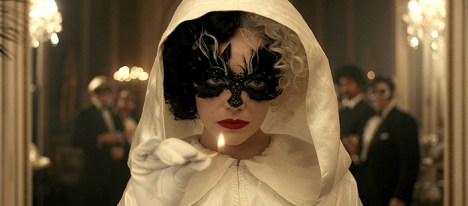
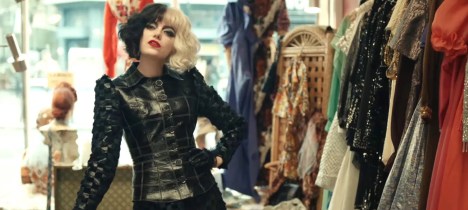
I published a new In the Frame piece at The Escapist this evening. With the release of Cruella in theatres and on Disney+, it seemed like a good opportunity to take a look at the trend towards overly deterministic origin stories.
The origin story has arguably always been around, even if the term itself only really entered the mainstream through comic books and then making the leap into film criticism with comic book movies. Nevertheless, the recent trend of overly-determined origin stories betrays something frustrating about the state of our collective imagination. One of the most disappointing aspects of Cruella is the way that the film takes a simple but weird figure and paints an origin that is completely and predictably by the numbers.
You can read the piece here, or click the picture below.
It’s absurd to think that The Conjuring is probably the second most successful shared universe at Hollywood.
Of course, this is arguably more an indictment of the struggles that companies like Warner Bros. and Universal have faced in trying to launch competition for the Marvel Cinematic Universe, but it is still impressive that a gigantic homage to populist seventies horror has successfully grossed nearly two billion dollars across eight films. After all, this is a property anchored in a cinematic nostalgia which has succeeded through casting character actors appreciably older than most horror leads, notably Vera Farmiga and Patrick Wilson, but also Linda Cardellini, Anthony LaPaglia, Miranda Otto, Lili Taylor and Ron Livingston.
“Holy Plot! I mean, this plot… it’s full of holes…”
Following a variety of spin-offs and tie-ins including The Nun, The Curse of La Llorona and the separate Annabelle trilogy, The Conjuring: The Devil Made Me Do It is the third entry in the franchise’s cornerstone series. It is the first entry in that main series not to be directed by James Wan. Instead, Wan hands over directorial responsibilities to Michael Chaves, who helmed The Curse of La Llorona. Still, in terms of aesthetic and scale, The Devil Made Me Do It is recognisable as a continuation and development of the previous two entries in the trilogy.
Much like The Conjuring 2, The Devil Made Me Do It is a curious genre hybrid. It feels like a conscious effort to build a blockbuster horror movie, incorporating elements from more populist films and tying them back to the nuts-and-bolts mechanics of classic horror films. Like The Conjuring 2, this hybridisation is perhaps more interesting than it is effective. It doesn’t entirely work, but it certain merits investigation.
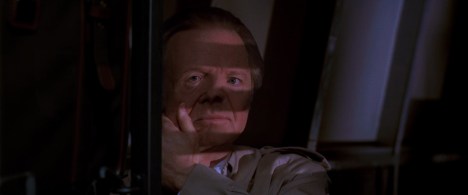
I published a new In the Frame piece at The Escapist this evening. With Brian dePalma’s Mission: Impossible turning twenty-five years old this month, it seemed as good a time as any to take a look back the film that started the modern iteration of the franchise.
In hindsight, it is impossible to imagine Mission: Impossible getting made today. The movie’s big twist is the revelation that the one character carried over from the television show, a standard bearer for the larger franchise, has secretly betrayed everything that the audience took for granted. The twist was controversial at the time, with several members of the original cast and some fans objecting to the characterisation. However, in a franchise-driven age where any deviation from the template is a source of outrage, it’s impossible to imagine Mission: Impossible attempting anything so bold today.
You can read the piece here, or click the picture below.
Cruella arrives as the culmination of two interconnected trends.
Most obviously, Cruella is the latest in the long line of live action (or pseudo-live action) adaptations of classic Disney properties hoping to turn the studio’s animated back catalogue into a source of rich intellectual property that can be steadily mined for quick returns. Movies like Beauty and the Beast, Aladdin and The Lion King all grossed over a billion dollars, so there is surely an audience hungry to see beloved childhood classics transferred into live action.
Ready for some hot takes?
Ironically enough, 101 Dalmatians was one of the first films to make that leap from pencil and inks to live action, with an adaptation (and a sequel) in the mid-nineties. Indeed, it’s arguable that Glenn Close’s incarnation of Cruella DeVil looms just large enough in the culture that a simple reboot of the premise might feel a little gauche. Jon Favreau could direct a second pseudo-live-action version of The Jungle Book for the company, but only because the earlier effort had no cultural footprint.
So Cruella is not content to be a straight-up reimagining of the classic Disney cartoon. Instead, the film draws from another contemporary trend when it comes to managing these intellectual properties: the villain-centric reboot. Cruella is arguably of a piece with recent pop culture like Ratchet, Maleficent or Joker, all works that reimagined a familiar intellectual property through the lens of its antagonist. There is evidently money in this concept, with Joker earning over a billion dollars and Maleficent earning half a billion and inspiring a sequel.
A crime of fashion.
So Cruella offers an origin story for the classic Disney villain, inviting the audience to get to know the monstrous fashion designer whose defining character trait was her desire to skin a lot of adorable puppies to make the perfect coat. It’s certainly an ambitious assignment. While Cruella is one of the most striking villains in the Disney canon, with one of the catchiest theme songs, she is hardly the most complex or nuanced. There’s hardly a lot of tragedy to be mined in a character so horrifically monstrous that “if she doesn’t scare you, no evil thing will.”
This sets up the central tension in Cruella, and the problem that the movie never quite manages to resolve. Cruella is a much stronger movie whenever it allows itself to drift away from the shadow of 101 Dalmations and become its own thing, but it suffers greatly when it finds itself drawn back into the gravity of the original Disney classic. Cruella works reasonably well as a seventies-set fashion heist movie, but struggles when it tries to be a compelling villain origin story for a character who really never needed one.
I’m thrilled to be launching 3-Minute Reviews on The Escapist. Over the coming weeks and months, I will be joining a set of contributors in adding these reviews to the channel. For the moment, I’m honoured to contribute a three-minute film review of Cruella, which released in cinemas and on Disney+ this weekend.
So, as I have mentioned before, I am launching a new video series as a companion piece to In the Frame at The Escapist. The video will typically launch with every second Monday article, and be released on the magazine’s YouTube channel the following week. This is kinda cool, because we’re helping relaunch the magazine’s film content – so if you can throw a subscription our way, it would mean a lot.
This week, given that TENET is now available to stream in the United States and around the world, it seemed like a good time to take a look at Christopher Nolan’s latest. In particular, a look how the themes of TENET resonate with other films in Nolan’s filmography, from Memento to The Prestige to Inception to Interstellar.
I published a new In the Frame piece at The Escapist this evening. With TENET now on streaming, it seemed like a good time to dive into the film’s position within Christopher Nolan’s filmography.
Most discussions of Nolan’s filmography focus on the director’s obsession with time, and TENET makes sense in that context. However, the film also ties into more existential anxieties that simmer through Nolan’s body of work, in particular the question of reality actually is and how best to respond to a world that can fundamentally chaotic, hostile and unknowable. TENET deals this this theme, confronting its audience and its characters with a reality that appears to be unraveling.
You can read the piece here, or click the picture below.
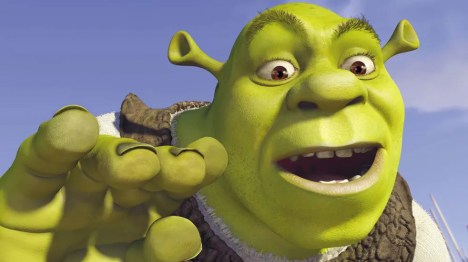
I published a new In the Frame piece at The Escapist this evening. With the twentieth anniversary of Shrek, it seems like a reasonable opportunity to take a look back at the film and its sizable pop culture legacy.
Shrek emerged at the turn of the millennium as a response to the kind of animation that had dominated American cinema during the nineties. In contrast to the calculated earnestness and sincerity of the Disney Renaissance, and its many imitators, Shrek‘s irony and cynicism felt like a breathe of fresh air. It was a film that didn’t take itself too seriously, indulging in knowing jokes and winking references. It was a bold counter-cultural statement that nobody expected to succeed. However, it did succeed, and ironically became one of the defining films of the twenty-first century.
You can read the piece here, or click the picture below.

















 the m0vie blog