• Following Us

  • Categories

  • Check out the Archives


  • Awards & Nominations

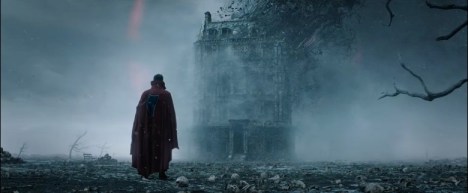
New Escapist Column! On the “Doctor Strange in the Multiverse of Madness” as a Critique of the Marvel Power Fantasy…

I published a new In the Frame piece at The Escapist this evening. With the release of Doctor Strange in the Multiverse of Madness, it seemed like a good opportunity to take a look at what the film says about the larger thematic preoccupations of the Marvel Cinematic Universe.

The Marvel Cinematic Universe is built around the superhero power fantasy, with much of the franchise focusing on the idea that its central characters should be allowed to do whatever they want, to bend the world to their tremendous wills. Multiverse of Madness is an interesting and deliberate deconstruction of this power fantasy, focusing on a superhero who has internalised that idea to a dangerous degree, while teaching another character that perhaps the ends don’t always justify the means.

You can read the piece here, or click the picture below.
New Escapist Column! On the “Doctor Strange in the Multiverse of Madness” and Marvel’s Strength at Improv…

I published a new In the Frame piece at The Escapist this evening. With the release of Doctor Strange in the Multiverse of Madness, it seemed like a good opportunity to take a look at what the film says about Marvel Studios’ production model.

After more than a decade of success, Marvel Studios have built up a deserved reputation as a company that makes efficient and clean blockbusters. However, this reputation is often built upon the myth of the company’s ability to make and commit to long-term plans, to map out the shared universe months and years in advance. In reality, the opposite is true. Marvel Studios succeeds in large part because it has built a robust production machine that has the flexibility to adapt and evolve on the fly and in real-time, to account for any number of unforeseen potential possibilities.

You can read the piece here, or click the picture below.

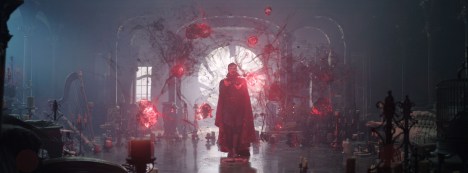
New Escapist Column! On the “Doctor Strange in the Multiverse of Madness” as a Parable About the Dangers of Rejecting Reality…

I published a new In the Frame piece at The Escapist this evening. With the release of Doctor Strange in the Multiverse of Madness, it seemed like a good opportunity to talk about the film.

Despite its title, Doctor Strange in the Multiverse of Madness seems refreshingly wary of the multiverse as a concept, understanding that the collapse of reality is not necessarily a good thing. Indeed, despite the title, the film is largely about the importance of embracing and accepting one’s original reality, and a cautionary tale about the dangers of retreating into fantasy. In particular, Doctor Strange in the Multiverse of Madness is a horror story about the lengths that people will go to preserve their fantasies – and the consequences of those actions.

You can read the piece here, or click the picture below.

New Escapist Video! “Doctor Strange in the Multiverse of Madness is Good Old-Fashioned Superhero Fun”

I’m thrilled to be launching movie reviews on The Escapist. Over the coming weeks and months, I will be joining a set of contributors in adding these reviews to the channel. For the moment, I’m honoured to contribute a three-minute film review of Doctor Strange in the Multiverse of Madness, which is in theatres around the world now.

New Escapist Column! On the “Doctor Strange” as a Film About Time and Death…

I published a new In the Frame piece at The Escapist this evening. With the upcoming release of Doctor Strange in the Multiverse of Madness, it seemed like a good opportunity to take a look back at Scott Derrickson’s somewhat underrated contribution to the Marvel Cinematic Universe.

Doctor Strange felt like an oddity when it was released, sandwiched between Captain America: Civil War and Guardians of the Galaxy, Vol. 2. It was a very conventional origin story, stripped of the legacy character attributes of Ant Man, the crossover baggage of Black Panther or the period piece nostalgia and narrative trickery of Captain Marvel. It was perhaps the most straightforward superhero origin story since the earliest days of the Marvel Cinematic Universe, specifically recalling both Iron Man and Thor.

However, underneath the surface, there was something more interesting happening. Doctor Strange is a rare superhero movie that is about both the passage of time and inevitability of death, where the ultimate act of villainy is to pervert either flow. It’s a movie about accepting that change happens, and that sometimes a moment doesn’t last forever. It’s a theme that felt particularly relevant to the Marvel Cinematic Universe, given that it was going to lose two of its three lead characters in the very near future.

You can read the piece here, or click the picture below.

New Escapist Column! On a Grand, Unified Theory of Chris Chibnall’s “Doctor Who”…

I published a new In the Frame piece at The Escapist on Friday. With the broadcast of Legend of the Sea Devils last weekend, marking the second-to-last episode of the Chris Chibnall era of Doctor Who, it seemed like a good opportunity to take a look back over Chibnall’s tenure.

Chibnall’s tenure on Doctor Who is interesting, in large part because it feels so aesthetically and philosophically distinct from the thirty years before it. It marks a clear departure from the version of the show overseen by script editor Andrew Cartmel and by showrunners Russell T. Davies and Steven Moffat. Central to this is a very strong belief in the status quo, in the idea that things are simply the way that they are, and that change is largely impossible and not worth the effort. It’s a startlingly cynical worldview, but it’s one that permeates Chibnall’s Doctor Who.

You can read the piece here, or click the picture below.

New Escapist Column! On “The Northman”, and the Desire to Make Movies Weird Again…

I published a new In the Frame piece at The Escapist this evening. With the release of The Northman in the United Kingdom this week and in the United States next week, it seemed like an opportunity to take a look at the welcome return of weird to the blockbuster arena.

Modern blockbusters are frustratingly generic. As budgets have ballooned and intellectual property has trumped high concepts, studios have grown increasingly conservative with their larger projects. This is part of what makes The Northman so interesting. It’s great to see a director like Robert Eggers receive a reasonable budget and a sizable platform in order to make a movie that speaks very specifically to his own aesthetic. It’s refreshing to see a movie this expensive that is this committed to its aesthetic.

You can read the piece here, or click the picture below.

New Escapist Video! “The Northman is a Breathtaking Blockbuster”

I’m thrilled to be launching movie reviews on The Escapist. Over the coming weeks and months, I will be joining a set of contributors in adding these reviews to the channel. For the moment, I’m honoured to contribute a three-minute film review of The Northman, which is in theatres in the U.K. and Ireland now and in the United States next week.

New Escapist Column! On the Forgotten Nineties Pulp Superhero Boom…

I published a new piece at The Escapist this evening. With the looming release of Doctor Strange in the Multiverse of Madness, it seemed like a good opportunity to take a look at Sam Raimi’s first superhero movie: Darkman.

Darkman is notable because it belongs to a wave of early nineties superhero movies that were heavily influenced by the pulp heroes of the thirties and forties: Batman, Dick Tracy, The Rocketeer, The Shadow, The Mask, The Phantom. This is a fascinating and often overlooked trend in the history of what would become the biggest genre in Hollywood. It’s interesting to look at these movies collectively, to place in the wave of a broader cultural nostalgia for the pop culture of the era.

You can read the piece here, or click the picture below.

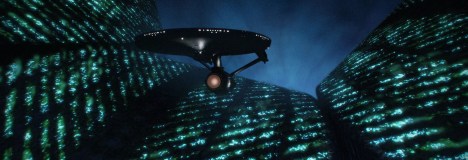
New Escapist Column! On How “The Motion Picture” Gave the “Star Trek” Universe Room to Breathe…

I published a new In the Frame piece at The Escapist this evening. With the release of the recently remastered Director’s Edition of Star Trek: The Motion Picture, it seemed like a good opportunity to take a look at the first feature film in the Star Trek franchise.

The Motion Picture is often derided by its critics as “the Motionless Picture”, reflecting the film’s slow pacing and simplistic plot in contrast to its more relaxed runtime. These criticisms are entirely valid, but they also ignore one of the central appeals of The Motion Picture. Just two years after George Lucas welcomed viewers to “a galaxy far, far away” with Star Wars, The Motion Picture made the Star Trek universe truly tactile and tangible. The film is perhaps best understood as an experience rather than a narrative, a window into the franchise’s fictional universe.

You can read the piece here, or click the picture below.