• Following Us

  • Categories

  • Check out the Archives


  • Awards & Nominations

New Escapist Video! On “Joker” and the Exhaustion of Outrage Culture…

So, as I have mentioned before, I am launching a new video series as a companion piece to In the Frame at The Escapist. The video will typically launch with the Monday article, and be released on the magazine’s YouTube channel the following week. This is kinda cool, because we’re helping relaunch the magazine’s film channel.

With that in mind, here is last week’s episode, covering the anniversary of the outrage over the release of Joker, and how that demonstrates how cheap outrage has become.


New Escapist Column! On the Contemporary Resonance of John Carpenter’s “Apocalypse” Trilogy…

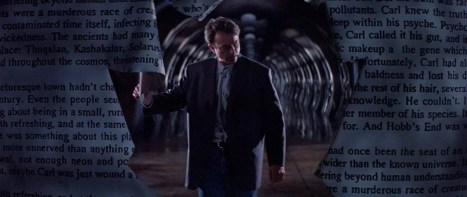
I published a new In the Frame piece at The Escapist this evening. With Halloween approaching, the column is going to take a little bit of a detour into some spooky stuff, and I’m very excited.

John Carpenter remains one of my favourite horror movie directors. A large part of that is just down to simple craft. Carpenter can make a cheap movie look great. More than that, though, Carpenter’s unique brand of horror has aged very well. This is particularly true of Carpenter’s “Apocalypse” trilogy – The Thing, Prince of Darkness, In The Mouth of Madness. Carpenter imagines the end of the world not with a bang, with the slow and unsettling collapse of the invisible forces holding it together. The world unravels and unspools, and chaos breaks through

You can read the piece here, or click the picture below.

New Escapist Column! On “The Mummy”, the Most Maligned of Movie Monsters…

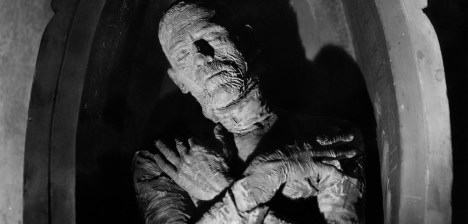
I published a new In the Frame piece at The Escapist on Friday. With Halloween approaching, the column is going to take a little bit of a detour into some spooky stuff, and I’m very excited.

I’m thrilled that I got to write this piece about the Mummy, which remains one of the most interesting of the classic movie monsters because it seems to exist at odds with the rest of the classic fiends. There are plenty of classic Dracula and Frankenstein films, the Wolfman and the Invisible Man have been handled well over the years, but the Mummy always seems like the odd creature out of every wave of classic creature feature films. So I was thrilled to do a bit of a deep dive into it to look at how – and why – that is.

You can read the piece here, or click the picture below.

New Escapist Column! On the “Joker” Controversy, One Year Out…

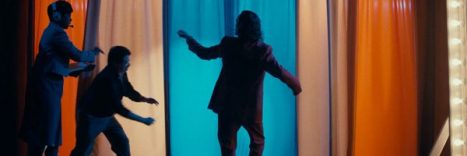
I published a new In the Frame piece at The Escapist this evening. It’s been roughly a year since the release of Joker, so it seems appropriate to take a look back at the controversy surrounding the film.

The controversy around Joker is interesting, because it was at once so loud and so meaningless. In the lead-up to the film’s release, there was a lot of hyperbole around the movie, arguing that it might empower or encourage a certain audience – angry young men – to commit acts of violence. This made the release of the film something of a wry practical joke, with Joker ultimately bending over backwards to avoid any potentially inflammatory choices. The result was a storm that raged in a tea cup, but which seemed eager to bubble over.

You can read the piece here, or click the picture below.

New Escapist Video! On the Snyder Cut and the Future of Pandemic Cinema…

So, as I have mentioned before, I am launching a new video series as a companion piece to In the Frame at The Escapist. The video will typically launch with the Monday article, and be released on the magazine’s YouTube channel the following week. This month, it will be releasing on the Thursday.

With that in mind, here is last week’s episode, covering the long-looming release of The Snyder Cut of Justice League, and why this might represent an attractive model for studios desperately looking for new (and affordable) content in the midst of a pandemic.

New Escapist Column! On the Rejection of the “Chosen One” in “Blade Runner 2049″…

I published a new In the Frame piece at The Escapist this evening. Since Blade Runner 2049 opened three years ago this week, I thought it was worth taking a look back at the science-fiction sequel.

One of the interesting tensions within Blade Runner 2049 is the way that the film continuously gestures at an epic plot – a story of a lost replicant messiah, of “miracles” and “angels”, of wars and revolutions. However, the film largely eschews this in favour of focusing on a much more intimate and personal level of drama. Blade Runner 2049 is a story about a character wrestling with the fact that they were never a “chosen one”, in a manner that perhaps reflects the mood of the culture around it.

You can read the piece here, or click the picture below.

New Escapist Video! On How the Joker Hijacks “The Dark Knight”…

So, as I have mentioned before, I am launching a new video series as a companion piece to In the Frame at The Escapist. The video will typically launch with the Monday article, and be released on the magazine’s YouTube channel the following week. This month, it will be releasing on the Thursday.

With that in mind, here is last week’s episode, covering the directorial craft of Christopher Nolan and how that comes into play with The Dark Knight, particularly the way in which the Joker hijacks the film around him. You can watch the pilot video here, and read the companion article here.

“The Blood Stays on the Blade”: The Birth of a Nation in Scorsese’s “Gangs of New York”…

The podcast that I co-host, The 250, continued our belated Summer of Scorsese last week with a look at Kundun. This week, we’re looking at Gangs of New York. It is a fun and broad discussion that is well worth your time, but it spurred some of my own thoughts about Martin Scorsese’s complicated and messy 2002 passion project.

Martin Scorsese had wanted to make Gangs of New York for over thirty years.

The director had reportedly stumbled across a copy of Herbert Asbury’s book while house-sitting for a friend over New Year in 1970. Gangs of New York became one of the projects that Scorsese desperately wanted to make, alongside The Last Temptation of Christ, which had been given to him by Barbara Hershey on the set of Boxcar Bertha. Of course, Scorsese would not get to make either The Last Temptation of Christ or Gangs of New York during the seventies. Instead, the implosion of New York, New York would set his plans back years.

Scorsese had reportedly been hoping to make either The Last Temptation of Christ or Gangs of New York following the release of New York, New York, when Robert DeNiro convinced him to direct Raging Bull instead. Scorsese would spend the eighties adapting to the collapse of the New Hollywood movement, and would just about manage to get The Last Temptation of Christ produced. He never gave up on Gangs of New York, and the film went through various iterations over the years. It might have starred Jim Belushi and Dan Aykroyd or Mel Gibson and Willem Dafoe.

When the possibility of making Gangs of New York emerged in the late nineties, it might have seemed like a culmination. As the project lurched closer and closer to actually materialising, it must have seemed like it would be one of Scorsese’s last major motion pictures. After all, Scorsese was almost sixty. Steven Spielberg and George Lucas were the only two other “movie brats” who were still making high-profile and big-budget films. There was perhaps a sense that Scorsese might just about have this film left in him, before retiring to less mainstream and more esoteric works.
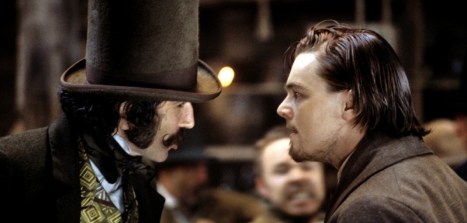
While Scorsese had entered the nineties on a high note with Goodfellas, the films that followed were not as universally welcomed. Roger Ebert complained about “a certain impersonality” in Cape Fear, the film following Goodfellas. The Age of Innocence arrived with a shrug. Casino was treated as highly derivative of Goodfellas, with Peter Travers sighing that “the black cloud of letdown hung over Scorsese’s epic tale.” Kundun sparked a diplomatic incident with China, and was quietly buried by Disney. Bringing Out the Dead felt like a curiosity more than a classic.

Of course, history has been kind to all (or at least most) of those films. Scorsese’s nineties output is recognised in hindsight as a vibrant and important part of his career. Nevertheless, as Gangs of New York slowly and awkwardly forced itself into being, it might have looked like the last swing of the bat from one of the great American directors. A film that had been simmering in the director’s imagination for decades, it might serve as a definitive and concluding statement about the city and the nation that he loved.
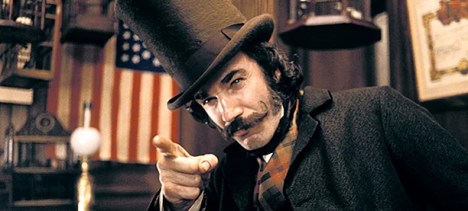
More than twenty years after the shutters came down on the New Hollywood movement, Scorsese would finally get to make an epic that was comparable to Francis Ford Coppola’s Apocalypse Now or Michael Cimino’s Heaven’s Gate. Of course, those sorts of projects feel like capstones – Heaven’s Gate famously brought United Artists tumbling down, while Coppola would never direct anything with as much freedom or cultural impact after Apocalypse Now. As such, Scorsese’s long-delayed shot at making his epic passion project seemed like closure.

Looking back at Gangs of New York, this seems absurd. Almost two decades after Gangs of New York, Scorsese is still making films. Scorsese is enjoying larger budgets on films like The Irishman and The Killers of the Flower Moon than he did earlier in his career. If anything, Gangs of New York is a watershed. It is not Scorsese’s epic finale, but is instead the first in a series of epics that includes films like The Aviator or The Wolf of Wall Street. It introduced Scorsese to a young actor who “reignited” his enthusiasm for film making.
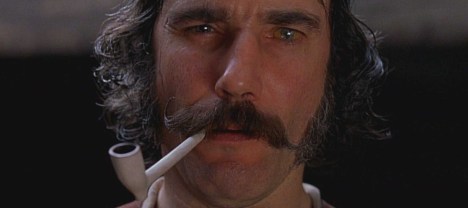
Indeed, time has been very kind to Gangs of New York. The film seemed to arrive at a crucial moment, both for Scorsese as director and for the United States as a nation. Gangs of New York offers a snapshot of American history that resonates strongly. It is not so much a historical picture as a dive into the depths of a shared unconscious and an excavation of the scars left on the American psyche. The catchy Oscar-nominated theme song might have boasted that the film was about “the hands that built America”, but the film was decidedly less optimistic in its perspective.

Gangs of New York is a story about the blood that stains those hands, and how history tends to repeat for those who refuse to learn from it.
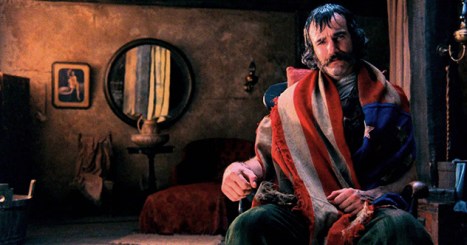
Continue reading

New Escapist Column! On the Snyder Cut and the Future of Pandemic Production…

I published a new In the Frame piece at The Escapist this evening. With news that Zack Snyder will be reuniting with actors like Henry Cavill, Ben Affleck and Gal Gadot to shoot new scenes for his long-gestating cut of Justice League.

Although there’s been some understandable confusion at the news that Snyder will be shooting new footage to extend his planned film into a miniseries, the reality of Justice League is that it represents one possible path through the pandemic for Hollywood studios, allowing for the production of a blockbuster-level spectacle both for a reasonable budget and in relative safety. As the industry braces for an uncertain future, Zack Snyder’s Justice League might represent an unlikely model for the medium-term.

You can read the piece here, or click the picture below.

New Escapist Column! On “Antebellum” and What Makes a Good Twist…

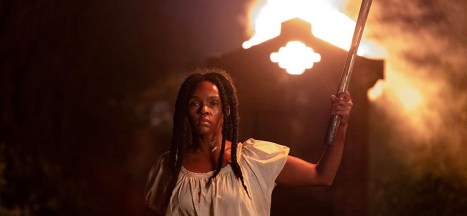
I published a new In the Frame piece at The Escapist on Friday. Since Antebellum has been out for two weeks now, it seemed fair to discuss the movie’s twist – and, in particular, what it is that makes a “good” twist and how such a twist serves the movie of which it is part.

Arguably, any movie with a twist has to be two movies: the movie that the audience watches for the first time blind, and the one that they rewatch knowing the twist. As such, for a movie with a twist to be truly good, it has to succeed as two (occasionally wildly) different movies. That’s a lot of pressure, and illustrates why truly great twists are so rare and why they are often elevated to the status of cinematic legend. However, a bad twist can ultimately undercut both of the movies that it needs to be, making the failure even more noticeable.

You can read the piece here, or click the picture below.

Burning unease.