• Following Us

  • Categories

  • Check out the Archives


  • Awards & Nominations

Wolverine/Gambit: Victims by Jeph Loeb and Tim Sale (Review/Retrospective)

This May, to celebrate the release of X-Men: Days of Future Past, we’re taking a look at some classic and modern X-Men (and X-Men-related) comics. Check back daily for the latest review.

Wolverine/Gambit feels like a nineties comic in so many ways. Jeph Loeb’s narration consciously apes the popular style that Frank Miller brought to The Dark Knight Returns and Batman: Year One, among others. The focus on two characters within the X-Men mythos reflects the popularity of the brand during the decade, but the focus on Wolverine and Gambit also speaks to a very nineties enthusiasm for anti-heroes. Similarly, the comic transforms a relatively cartoonish bad guy into a misogynistic serial killer, complete with snippets of letters from Jack the Ripper to provide a suitable amount of pretension.

Wolverine/Gambit is a fairly dodgy comic book, one that embodies some of the worst trends in nineties comic books. Perhaps the most notable thing about Wolverine/Gambit: Victims is the fact that it provides an example of a relatively early collaboration between writer Jeph Loeb and Tim Sale.

Seeing eye-to-eye...

Seeing eye-to-eye…

Continue reading

Warren Ellis’ Run on Astonishing X-Men – Ghost Box, Exogenetic and Xenogenesis (Review/Retrospective)

This May, to celebrate the release of X-Men: Days of Future Past, we’re taking a look at some classic and modern X-Men (and X-Men-related) comics. Check back daily for the latest review.

Astonishing X-Men is an interesting book. It was originally launched to allow Joss Whedon and John Cassaday to work on an X-Men title that was (mostly) free from the confines of the wider Marvel Universe at their own pace. However, when – after considerable delays – it finally finished, it seemed quite tough to figure out what to do with the book. Astonishing X-Men was selling too well to cancel outright, and Marvel had the opportunity to capitalise on its popularity and acclaim.

Assigning writer Warren Ellis to the title was quite a clever decision. While Ellis might lack the broader pop culture cache of Joss Whedon, he is a known and respected comic book writer. Allowing Warren Ellis to cut loose on a title usually results in a delightfully chaotic and exciting comic book that manages to stand apart from just about any mess of continuity that might have spawned it.

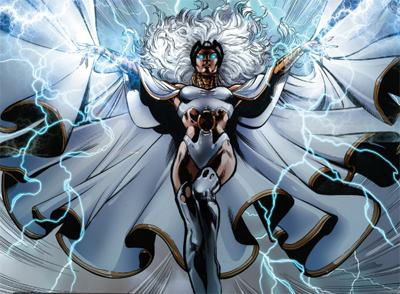
Storm warning...

Storm warning…

Ellis’ output on Astonishing X-Men is practically breathtaking. Ellis has a tendency to stay on mainstream superhero comics for relatively short runs. He worked on Secret Avengers for six months, and spent a year each on Ultimate Fantastic Four and Thunderbolts. Ellis tends to step into a superhero comic, shake things up rather brilliantly, and then walk away having made quite an impression. In many cases, Ellis’ short runs serve to define characters for years afterwards; look at Norman Osborn.

However, despite this reputation for short tenures on superhero comics, Ellis produced eighteen issues with the Astonishing X-Men brand; eleven issues of the main series, two issues of the Ghost Boxes miniseries and five issues of the Xenogenesis miniseries. That’s quite an impressive body of work. It is enough for a reasonably-sized omnibus collection. It allows Ellis a lot of room to play with his ideas, and also to make quite a mark on the central characters.

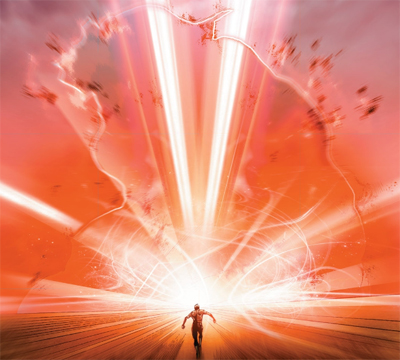
Having a blast...

Having a blast…

Continue reading

Jameson Cult Film Club Screenings of Fight Club, June 4th and 5th 2014!

The Jameson Cult Film Club is a wonderful excuse to celebrate cinematic classics. The group organise screenings throughout the year inviting audiences to immerse themselves in a much-loved cinematic classic – for example, Silence of the Lambs, Predator, or even The Blues Brothers. Taking a familiar Dublin location and turning it into something like a set from the film, the Jameson Cult Film Club works as a celebration of these iconic films.

This summer, the team are doing a double screening of David Fincher’s classic Fight Club on the 4th and 5th of June at a top secret location in Dublin. I’m violating the first and seconds rules of Fight Club by telling you this, but I’m sure it’ll work out okay at the end. One of the better things about the Jameson Cult Film Club is that the screening are absolutely free – tickets are raffled to film fans who apply via the Jameson Cult Film Club website.

IMG0049

Whether you’ve seen Fight Club, or whether you haven’t, it’s a wonderful excuse to appreciate one of David Fincher’s defining cinematic works, and one of the films that solidified him as a talent to watch, only a few months before the release of Gone Girl, his latest effort and adaptation of Gillian Flynn’s best-selling thriller.

I’ve included the fill press release below, but you can head over to the Jameson Cult Film Club website and apply for tickets. (By the way, I love the poster design.)
Jameson Cult Film Club screenings of Fight Club - June 4th and 5th - Dublin

Continue reading

3epkano Performing Live Accompaniment to Metropolis, National Concert Hall, 17th July 2014!

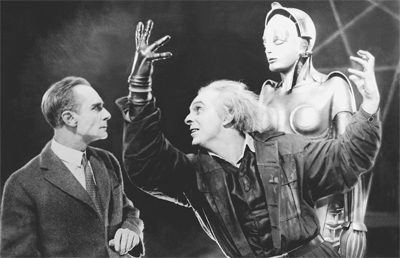
Irish post-rock band 3epkano are ten years old this year. To celebrate their tenth anniversary, the band performing a live musical accompaniment to Fritz Lang’s iconic 1927 science-fiction classic Metropolis. A movie that helped to shape an entire genre, Metropolis will be screened in its original format, set to an original score composed and performed by 3epkano. It’s a staggeringly ambitious concert, and a fantastic way to celebrate ten years of music-making.

metropolis1

A classic of German expressionist cinema, a triumph of silent movie-making and a reminder of just how iconic and influential Fritz Lang was, Metropolis is an epic that really deserves to be seen on a large screen. It looks to be one of the cinematic highlights of the summer, and well worth checking out for anybody with even a passing interest in the history of cinema.

The concert will take place in the National Concert Hall at 8pm on Thursday, 17th July 2014. It’s a wonderful excuse to see a classic through fresh eyes, with Lang’s work on Metropolis looking as impressive today as it did almost ninety years ago. Tickets are available via the National Concert Hall website.

An Interview with Chris Claremont, Part V (of V)

All this week, to celebrate the release of X-Men: Days of Future Past, we’re publishing a serialised interview that we conducted with the wonderful Chris Claremont back in February for publication in a British comic book magazine. Many thanks to Mr. Claremont for taking the time to talk to us, and also to Adam Walsh for allowing us to publish this.

It’s hard to imagine Chris Claremont having too many regrets, something he readily concedes.

His work on the X-Men remains iconic and influential. His relationship with Marvel has provided an incredibly pay-off for the publisher.

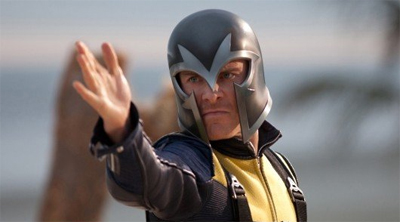
“The benefits are still playing out in other media,” he explains. “The brutal fact of the matter is that there have been seven movies derived from the X-Men. My fingerprints in terms of characters, and circumstances and the approach to storytelling are all over them.”

xmenfirstclass8

Continue reading

X-Men: The End – Book Two: Heroes and Martyrs (Review/Retrospective)

This May, to celebrate the release of X-Men: Days of Future Past, we’re taking a look at some classic and modern X-Men (and X-Men-related) comics. Check back daily for the latest review.

To describe Chris Claremont’s three six-part miniseries that comprise X-Men: The End as “convoluted” is to miss the point. Of course they are convoluted. Claremont is essentially writing a gigantic epilogue to his work on Uncanny X-Men. He is tidying away decades of continuity and offering a sense of closure to his work on these characters and their world. Claremont is an exceptional storyteller when it comes to long-form serialised storytelling.

As a writer, Claremont tends to layer interesting twists on top of interesting twists, with every resolution opening up more avenues for future stories to explore. He has demonstrated an ability to string along plots for decades, revisiting characters and situations years after most readers had forgotten about them. These are the qualities that make his Uncanny X-Men run so deeply fascinating, but they are also the qualities that make him a bit of an awkward fit for a concept like The End, an epic miniseries built around the idea of wrapping up the entire X-Men mythos.

Some things never go into fashion...

Some things never go into fashion…

However, what is so fascinating about X-Men: The End is that all of the elements that Claremont uses are the same elements that he has been playing with since he took over Uncanny X-Men. The story beats have a familiar pattern to them, the themes are familiar, the characters speak as they did in the years that Claremont wrote them. What is fascinating about X-Men: The End is the way that it serves to really set Claremont’s take on the X-Men in stone, treating the elements associated with Claremont as a truly inexorable part of the comic’s mythology.

X-Men: The End is very much a Chris Claremont comic, through-and-through. That’s what makes it feel like such a perfect fit.

A wing and a prayer...

A wing and a prayer…

Continue reading

An Interview with Chris Claremont, Part IV (of V)

All this week, to celebrate the release of X-Men: Days of Future Past, we’re publishing a serialised interview that we conducted with the wonderful Chris Claremont back in February for publication in a British comic book magazine. Many thanks to Mr. Claremont for taking the time to talk to us, and also to Adam Walsh for allowing us to publish this.

Seventeen years is a long time in real life. It’s an eternity in comic book publishing.

Chris Claremont remained on Uncanny X-Men for seventeen years non-stop from 1975 through to 1991. Even Stan Lee only wrote The Amazing Spider-Man for a decade. It’s a phenomenal accomplishment, particularly in an industry where that sort of creative stability is uncommon.

Did Claremont have any idea at the time that he would be working on the title for that long? “I never thought I would stay on for seventeen years,” he freely admits. “I just never ran out of ideas. It was too much fun. They were my friends, I didn’t want to dump them and run away.

xmen-claremont2

Continue reading

Non-Review Review: Maleficent

As portrayed in the classic 1959 version of Sleeping Beauty, Maleficent is an absolutely fascinating character. Like so much in that film, she is woefully under-developed, but brilliant character design by Marc Davis and sterling voice work from Eleanor Audley helped to fashion an iconic characters. In spite (or perhaps because) of the fact that Sleeping Beauty establishes so little about her, Maleficent endures one of the most recognisable and memorable characters in the Disney animated canon.

So, if a live-action villain-centric feature film was going to tackle one of the classic villains from the studio’s rich history, it makes sense that Maleficent would be chosen. Angelina Jolie seems almost born to play the role, carrying herself with a regal grace, an icy detachment, an impeccable sense of comic timing and spot-on vocal impersonation of Eleanor Audley. The production design on Maleficent is absolutely stunning, with the movie occasionally seeming like an animated classic brought to life.

If only the same amount of enthusiasm had been invested in the script.

All fired up...

All fired up…

Continue reading

Non-Review Review: Sleeping Beauty (1959)

Sleeping Beauty is very much a product of the fifties, with the movie’s production spanning most of the decade. The story work commenced in 1951, with vocal performances recorded the following year. The movie was eventually released in 1959, to lukewarm critical and commercial success.

However, Sleeping Beauty reflects the fifties in other ways. The story about a young woman who needs to learn to do as her guardians instruct her, how marriage is really the ideal prospect for a woman of sixteen, and about how people we label as “evil” are unquestionably beyond redemption, Sleeping Beauty really plays to a very fifties mindset.

(Appropriately enough, the high budget and lacklustre box office performance of Sleeping Beauty would be a major part of the reason that Walt Disney would post its first annual loss in 1960.)

Sleep well...

Sleep well…

Continue reading

An Interview with Chris Claremont, Part III (of V)

All this week, to celebrate the release of X-Men: Days of Future Past, we’re publishing a serialised interview that we conducted with the wonderful Chris Claremont back in February for publication in a British comic book magazine. Many thanks to Mr. Claremont for taking the time to talk to us, and also to Adam Walsh for allowing us to publish this.

The heart of Chris Claremont’s storytelling is character.

In talking about the iconic X-Men characters he helped to shape and define, he’ll often use their first names. Even minor characters like Thunderbird get referenced using their proper names.

“People are not picking up the book to see the action,” Claremont explains. “People are picking up the book to see the characters.” For Claremont, one of the keys to writing Uncanny X-Men for so long was remaining true to the characters.

wolverinesavethetiger7

Continue reading