• Following Us

  • Categories

  • Check out the Archives


  • Awards & Nominations

Star Trek – Patterns of Force (Review)

The first Star Trek pilot, The Cage, was produced in 1964. To celebrate its fiftieth anniversary, this December we are reviewing the second season of the original Star Trek show. You can check out our first season reviews here. Check back daily for the latest review.

Patterns of Force is a rather strange little episode, the type of weird and iconic adventure that Star Trek tended to do quite well. It’s very much an off-the-wall adventure, of the kind that none of the spin-off shows would attempt. “Planet of the Nazis” is a concept that belongs alongside other second-season episodes like “Planet of the Romans” or “Planet of the Gangsters.” It’s a very goofy premise, one that requires considerable suspension of disbelief before the episode even starts.

And, yet, despite the many serious problems with Patterns of Force, this is an episode that very clearly and very forcefully has something to say. Reflecting the world in which it aired, Star Trek is a show that is largely defined by the Second World War. In The City on the Edge of Forever, it was revealed that the Second World War had to happen to beckon the bright and optimistic future of Star Trek. Almost forty years later, the final televised season of the franchise would return to that idea in its opening episode.
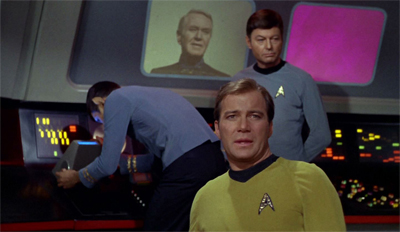
"Computer, query. What is Godwin's Law?"

“Computer, query. What is Godwin’s Law?”

Kirk’s “final frontier” was Kennedy’s “new frontier” extrapolated centuries into the future, an optimistic and very American vision of what the twenty-third century might hold. Given that the show aired two decades following the end of the Second World War, the conflict that made America the most powerful global superpower, it makes sense that the conflict should cast a shadow over Star Trek. Various members of the production had served in the conflict, and it remained part of the national consciousness.

So an episode pitting Kirk and Spock against honest-to-goodness space Nazis seemed inevitable.

"Well, there goes syndication in Germany..."

“Well, there goes syndication in Germany…”

Continue reading

My 12 for ’14: Interstellar and Our Place in the Stars…

With 2014 coming to a close, we’re counting down our top twelve films of the year. Check back daily for the latest featured film.

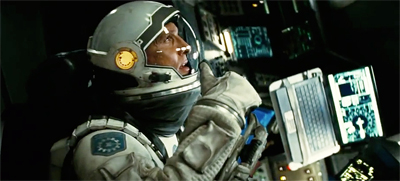
Interstellar is an unapologetically emotional film.

This seems a bit odd, given the reputation that Christopher Nolan has built up as a somewhat cold and clinical film maker. However, that reputation always seemed a little undeserved, based more on his meticulous craftsmanship and tendency towards intricate plot structures than on the material content of his movies. Nolan’s films have always had strong emotional cores buried beneath cynical exteriors. He is one of the few writers to give Batman a happy ending, after all.

interstellar8

Interstellar tips its hand early on, with Brand proposing love as a universal force on par with gravity. Despite Interstellar‘s keen attention to detail and physics, the final act was all but inevitable. At its core, Interstellar is the story about a father’s love transcending time and space. The actual mechanics necessary to reach that point are intricate and stylishly realised, but they are not the point of the film. Ironically, in constructing a film that repeatedly (and consciously) mimics 2001: A Space Odyssey, Nolan casts off the stock comparison to Kubrick.

Oddly enough, Nolan brings a decidedly old-school aesthetic to Interstellar. Any number of visuals from the film would not look out of place on the battered cover of a fifties or sixties paperback. Filmed using practical effects and on real film, Interstellar‘s style evokes an older style of cinematic spectacle. Even its pacing evokes classic Hollywood storytelling, with Interstellar never feeling too rushed or relaxed as it crafts a three-hour saga. The result is stunningly beautiful piece of work.

interstellar2 Continue reading

Star Trek – Return to Tomorrow (Review)

The first Star Trek pilot, The Cage, was produced in 1964. To celebrate its fiftieth anniversary, this December we are reviewing the second season of the original Star Trek show. You can check out our first season reviews here. Check back daily for the latest review.

Return to Tomorrow is similar to By Any Other Name in a number of ways.

Most superficially, it’s an episode about aliens in human bodies, who find themselves learning (or, in this case, remembering) how to appreciate all that mankind has to offer. The plot similarity is rather broad, but it seems strange that By Any Other Name and Return to Tomorrow would be produced right after one another, and that no significant effort would be made to space them apart on initial broadcast. (Both aired in February of 1968.)

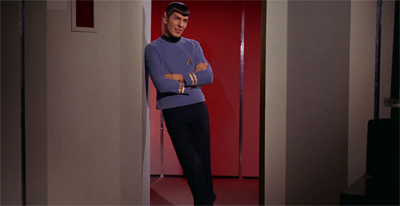
Leonard Nimoy only gets to smile once a year, so the show makes the most of it...

Leonard Nimoy only gets to smile once a year, so the show makes the most of it…

However, there are more fundamental and underlying similarities between Return to Tomorrow and By Any Other Name. Both are episodes that are very much engaged with the underlying philosophy of the franchise, particularly concerning humanity’s place in the universe. Indeed, there’s an argument to be made that Return to Tomorrow and By Any Other Name both work much better as statements of philosophical intent than they do as stories in their own right.

Co-written by Gene Roddenberry, Return to Tomorrow is a rather generic piece of television, but one that feels like a considered statement of the franchise’s central themes.

"Things are going to be a little different around here..."

“Things are going to be a little different around here…”

Continue reading

My 12 for ’14: The Grand Budapest Hotel and faint glimmers of civilization left in this barbaric slaughterhouse that was once known as humanity…

With 2014 coming to a close, we’re counting down our top twelve films of the year. Check back daily for the latest featured film.

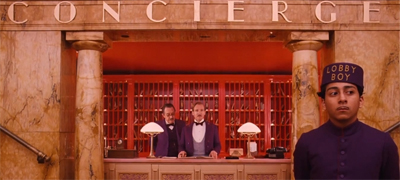
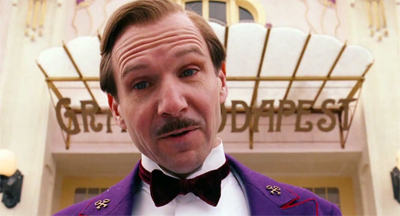
I have yet to meet anybody who truly disliked The Grand Budapest Hotel.

I’m sure they exist. In fact, I suspect that a couple might make themselves known in the comments. However, for most of 2014, The Grand Budapest Hotel was the safest possible cinema recommendation from “that guy who really thought that Cloud Atlas and The Dark Knight Rises were the best films of their respective years.” Sure, there were people who did not love it, and a few legitimate complaints, but even the most cynical friends, acquaintances and family members warmed to Wes Anderson’s delightfully eccentric European comedy adventure thriller.

thegrandbudapesthotel

There is a lot to like here. Anderson has always had a style that is uniquely his own, but it feels like the film maker has grown dramatically over the last couple of years. The Fantastic Mr. Fox, Moonrise Kingdom and The Grand Budapest Hotel are absolutely lovely pieces of cinema that look stunning and are written with just the right balance of knowing irony and sincere affection. It’s never entirely clear how much Anderson buys into the romantic fantasies constructed by his characters, but that is part of the appeal.

The Grand Budapest Hotel is a fantastic accomplishment all round.

thegrandbudapesthotel4 Continue reading

Star Trek – By Any Other Name (Review)

The first Star Trek pilot, The Cage, was produced in 1964. To celebrate its fiftieth anniversary, this December we are reviewing the second season of the original Star Trek show. You can check out our first season reviews here. Check back daily for the latest review.

By Any Other Name is very much a stock episode of Star Trek. It hits on all manner of familiar themes and ideas. It’s a story about powerful aliens who seem to overpower the crew, only to be outmanoeuvred themselves. It is about the Enterprise literally going where no human has gone before. It is about how humans are undeniably and incomparably special – about how becoming human opens up the aliens to a world of sense and experience.

However, By Any Other Name never really has anything particularly insightful to say about any of this stuff. The script to the episode is a mess, despite the best efforts of D.C. Fontana to develop the character beats. For a show based around such core Star Trek concepts and storytelling devices, By Any Other Name is surprisingly all over the place, with a wildly dissonant tone and a sense that the script was desperately padded in order to extend it out to the requisite fifty minutes.

"No dice, Captain..."

“No dice, Captain…”

By Any Other Name is not a terrible episode of Star Trek, but it’s not a particularly good one either. It is just “there.” In many ways, it feels like an example of an episode designed to fill a gap in twenty-odd-episodes-a-year schedule. After all, the last eight episodes of the season were pushed into production at short notice when NBC opted to pick up the show for the rest of the season during the production of The Gamesters of Triskelion. It makes sense that the episodes in this final stretch of the third season are somewhat rough.

By Any Other Name is a familiar Star Trek plot with a somewhat bloated script and a sense that the show is just trying to eat up minutes between here and the end of the season.

"It appears the rock knows as little as we do, sir..."

“It appears the rock knows as little as we do, sir…”

Continue reading

My 12 for ’14: The Wolf of Wall Street and More!

With 2014 coming to a close, we’re counting down our top twelve films of the year. Check back daily for the latest featured film.

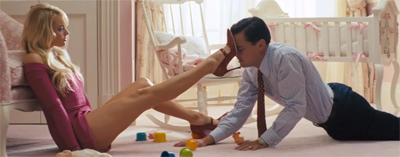
Everything about The Wolf of Wall Street is excessive, even its length.

Still, The Wolf of Wall Street never feels like long film. This is somewhat paradoxical. After all, the film does not have too much ground to actually cover. For a film that runs to almost three hours, the movie has a pretty straightforward plot. Cinema audiences are quite familiar with this sort of story: the story of a wealthy crook who inevitably (and spectacularly) implodes. The audience watching The Wolf of Wall Street knows the tale inside out: the arrogance, the hubris, the greed; the consequences, the price, the fallout.

thewolfofwallstreet4

Of course, our villain doesn’t really implode. It turns out that – despite what we’d like to believe – crime does pay. The Wolf of Wall Street alludes to this uncomfortable truth in its closing scene, as Belfort attracts an audience of people eager (and willing to pay) to learn his financial secrets. The cruel gag extends even beyond the movie’s own narrative into the real world; Belfort has boasted he made more from The Wolf of Wall Street than he did from his time on Wall Street. He has used very little of that money to pay back the victims he swindled.

In many ways, The Wolf of Wall Street plays like a belated companion piece to Goodfellas or Casino, a loose exploration of greed and corruption that avoids a lot of the easy moralising that audiences have come to expect from stories like this. Instead, The Wolf of Wall Street basks in its hedonism, affording its villainous protagonist almost unquestioned control of the narrative. As such, it seems to tease the audience: who would be able to refuse such luxury and such debauchery? There’s something delightful uncomfortable in how the film needles the viewer.

thewolfofwallstreet6 Continue reading

My 12 for ’14: Gone Girl and the most $£@!ed up people…

With 2014 coming to a close, we’re counting down our top twelve films of the year. Check back daily for the latest featured film.

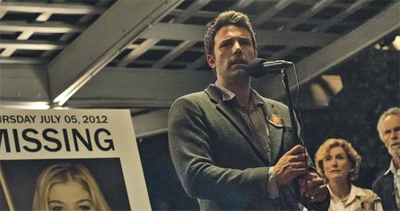
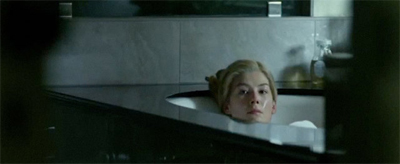
Gone Girl is a surprisingly playful film.

David Fincher is a director who likes to play with his audience, constructing elaborate and stylish labyrinths that might trap the audience as easily as they trap his characters. Gone Girl plays to Fincher’s strengths, as Gillian Flynn adapts her best-selling novel into a pulpy thriller. The news that Fincher and Flynn would collaborate on HBO’s Utopia is fantastic, giving television viewers something to anticipate; one hopes that the collaboration might be as fruitful as that enjoyed by Nic Pizzolatto and Cary Joji Fukunaga on True Detective this year.

gonegirl3

Gone Girl is a story about stories. Most particularly, it is the story of two people fighting to control their own narratives; to try to steer the stories being told around them. Is Nick Dunne a loving husband desperately searching for his missing wife? Or is Nick Dunne a sociopath desperately trying to cover-up her murder? Is Amy Dunne an innocent victim who has worked her way into the heart of the American public? Or is Amy Dunne a manipulative and ruthless (and ruthless) cynic who has helped to turn her marriage into a perpetual struggle?

Gone Girl is a very sleek and stylish film that is lovingly crafted and wryly self-aware. It is a horror story about a dysfunctional marriage, a tale about media fascination and a black comedy about resentment and revenge. More than that, it is a puzzle that competes against the audience, a story that seems to change form at any point where the viewer might finally have come to grips with what they are watching.

gonegirl5

Note: This “best of” entry includes spoilers for Gone Girl. You should probably go and see the movie, because everybody is talking about it. Don’t worry, we’ll wait for you. Still there? Good. Let’s continue. Continue reading

My 12 for ’14: The Lego Movie and Everything is Awesome…

With 2014 coming to a close, we’re counting down our top twelve films of the year. Check back daily for the latest featured film.

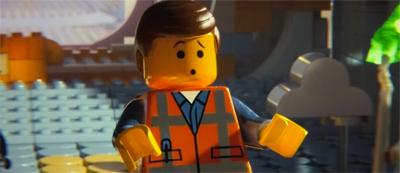
The very idea of The Lego Movie invites cynicism.

It is the latest in the long line of toy-to-film adaptations that includes such auspicious cinematic magics Transformers and Battleship. More than that, it is a film about a toy that has found particular success licensing existing properties – so it would be very easy to turn The Lego Movie into a collection of recognisable characters having generic adventures while selling their toys to an eager young audience. In a market where studios like Pixar had raised the bar for family-friendly animation, The Lego Movie seemed like it could be cringe-worthy.

thelegomovie

Instead, The Lego Movie is one of the most purely enjoyable movies of 2014. It is a film that appeals to all children, no matter their age. From seven to seventy, The Lego Movie is constructed with such energy and enthusiasm that it is impossible to resist. Even the most hardened cynic and most ruthless pessimism will struggle not to smile at certain points as The Lego Movie marches to its own wryly and playfully subversive beat. The amount of charm on display here should win over everybody.

The Lego Movie is still a feature-length advertisement for a world-renowned brand, but it manages to capture the fun and the excitement of that brand in a way that will feel familiar to those viewers who do remember playing with blocks; no matter how long ago.

thelegomovie3 Continue reading

Star Trek – A Piece of the Action (Review)

The first Star Trek pilot, The Cage, was produced in 1964. To celebrate its fiftieth anniversary, this December we are reviewing the second season of the original Star Trek show. You can check out our first season reviews here. Check back daily for the latest review.

A Piece of the Action is the last script credited to Gene L. Coon.

Of course, Coon would write two episodes for (and contributed two more stories to) the show’s troubled final season under the alias Lee Cronin. However, A Piece of the Action could be seen as the last hurrah for Gene L. Coon’s vision of Star Trek. The writer and producer had helped to shape and define many of the ideas that Star Trek fans take for granted. A lot of the core Star Trek ideas that have permeated into popular culture – the Federation, the Klingons – originated with Coon.

Dey call his Boss Koik...

Dey call him Boss Koik…

While Coon is often overlooked when it comes to crediting those responsible for creating Star Trek as fans have come to know it, history has tended to gloss over his wry subversive streak. In many ways, Coon could be said to be the godfather of Star Trek: Deep Space Nine. Had he not passed away at the tragically young age of forty-nine, Coon might have been coaxed back to write a first season episode of Deep Space Nine alongside Dorothy Fontana. Coon was, after all, the first Star Trek writer to shrewdly and knowingly problematicise the Federation.

So it feels appropriate that the last Star Trek script credited to Coon should have Kirk proposes the Federation as an intergalactic racket.

Top gun...

Top gun…

Continue reading

My 12 for ’14: Nightcrawler and Bleeding Leads…

With 2014 coming to a close, we’re counting down our top twelve films of the year. Check back daily for the latest featured film.

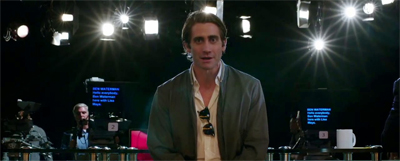
One of the most compelling criticisms of Nightcrawler is that the almost obligatory comparisons to Network are all too apt; that the film has not really bothered to update its social and political commentary for the twenty-first century. In many ways, this is true. The social satire at the heart of Nightcrawler is pretty familiar at this point. Lou Bloom is a young man who talks like a living and breathing self-help book, willing to do whatever is necessary to get ahead in life. It is just the latest in a long line of searing criticism of American capitalism.

After all, Nightcrawler would make a suitable companion piece to The Drop or Snowpiercer from this year; perhaps it make an interesting double-feature with Killing Them Softly from last year. The decision to focus this tale of exploitational capitalism on the media industry means that Network becomes the obvious point of comparison for Nightcrawler – just as 2001: A Space Odyssey inevitably comes up in discussions of Interstellar. If it feels like the satire has not really been updated, that is because that satire is still largely relevant.

nightcrawler6

That said, Nightcrawler is just a stunningly well-produced film. Writer and director Dan Gilroy brings a delightfully kenetic energy to the movie. Cinematographer Robert Elswit helps to give the film a unique style by adopting a hybrid approach to filming the movie – the daylight scenes are shot on film, while the late-night sequences are shot on digital. This helps to create a clear sense of different between the Los Angeles seen during the day and nightmarish version present by Nightcrawler after dark.

However, Nightcrawler largely belongs to Jake Gyllenhaal, who provides one of the year’s most mesmorising lead performances as a young man willing to do whatever it takes to get ahead. Whatever it takes.

nightcrawler1 Continue reading