• Following Us

  • Categories

  • Check out the Archives


  • Awards & Nominations

The X-Files – The Pine Bluff Variant (Review)

This May and June, we’re taking a trip back in time to review the fifth season of The X-Files and the second season of Millennium.

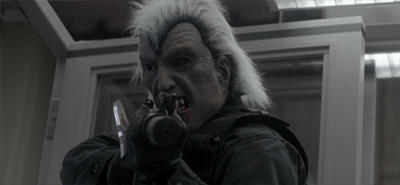
The Pine Bluff Variant is probably John Shiban’s best solo script for The X-Files.

It is the kind of story that the show does very well, a taut conspiracy thriller packed with sharp twists and turns. Not all of those twists and turns make a great deal of sense, but there is an incredible momentum to the episode that keeps it moving forward. John Shiban’s script is beautifully brought to life by Rob Bowman’s direction, with Bowman demonstrating once again why he was the perfect choice to direct The X-Files: Fight the Future. The Pine Bluff Variant is a well-constructed piece of television.
He who hunts monsters...

He who hunts monsters…

It also fits quite comfortably in the context of where the show is at this point in time. The fourth and fifth seasons of The X-Files saw the show really engaging with the dark underbelly of conspiracy culture just as Mulder when through his own dark midnight of the soul. After three seasons of endorsing paranoia and skepticism, The X-Files was ready to deal with the sorts of organised groups that believed in such conspiracies. The Pine Bluff Variant has Mulder infiltrating a militia a few months before the release of Fight the Future would recreate the Oklahoma City Bombing.

It is a thread with which the show had been playing since The Field Where I Died early in the fourth season. The Pine Bluff Variant is the last time that the series pushes these sorts of militia groups to the fore, with Mulder reaffirming and regaining his faith at the climax of Fight the Future. It is a suitably satisfying farewell to this recurring thematic motif.
Fleshing out the threat...

Fleshing out the threat…

Continue reading

Millennium – Somehow, Satan Got Behind Me (Review)

This May and June, we’re taking a trip back in time to review the fifth season of The X-Files and the second season of Millennium.

Somehow, Satan Got Behind Me is Darin Morgan’s last script for Millennium.

It is an interesting script. It not as straightforward (and linear) as his scripts for Clyde Bruckman’s Final Repose or Jose Chung’s “Doomday Defense”, but it is not as outwardly complex (and intricate) as Jose Chung’s “From Outer Space.” These descriptors are all relative, of course. Somehow, Satan Got Behind Me is a Darin Morgan script through-and-through. It is clever, well-constructed, and thoughtful. It is one of the most eccentric episodes in a season full of eccentric episodes.

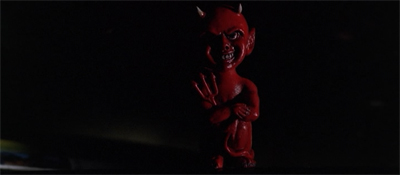
Little devil...

Little devil…

However, Somehow, Satan Got Behind Me remains rather hard to pin down. It doesn’t feel as cohesive or as singular as Morgan’s other scripts. Morgan tends to build his episodes around big thematic tentpoles. There are ideas and themes that reverberate across and throughout Somehow, Satan Got Behind Me, but the nature of the script means that the episode lacks the unity of purpose that viewers have come to expect from Darin Morgan. Somehow, Satan Got Behind Me is a rollercoaster of an episode, which seems to hop from one idea to another.

Of course, that would seem to be the point. Somehow, Satan Got Behind Me is a bold and experimental script in its own way. Morgan has essentially constructed a set of four interlocking (and occasionally thematically overlapping) short stories that are built around his own core themes and ideas. These are small and intimate tales, lying at the intersection between the mundane and the surreal. As such, it seems like the perfect place for Darin Morgan to take his second bow.

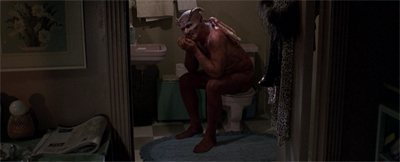
A demon crying on a toilet. What more could you want?

A demon crying on a toilet.
What more could you want?

Continue reading

The X-Files (Topps) #39 – Scum of the Earth (Review)

This May and June, we’re taking a trip back in time to review the fifth season of The X-Files and the second season of Millennium.

Scum of the Earth taps right into the sweet spot for John Rozum’s sensibilities.

Rozum’s work on Topps’ monthly X-Files comic book might not have been quite as ambitious as that of his predecessor, but he had his own areas of interest and recurring themes. Scum of the Earth provides the perfect intersection between the classic horror comic aesthetic of stories like The Kanashibari and Donor and the more environmentally-conscious storytelling of scripts like Skybuster or Cam Rahn Bay. It is essentially a retelling of The Blob starring Mulder and Scully, in which the blob is created by toxic waste and bio-terrorism.

The green death...

The green death…

Scum of the Earth is not particularly elegant in its storytelling. Rozum’s script covers a lot of ground in the space of a single issue, presenting Mulder and Scully with a crisis that could easily threaten the entirety of the United States. it genuinely feels like Mulder and Scully have wandered into some lost fifties b-movie, capturing a lot of the atmosphere to which Ivan Reitman seemed to aspire by casting David Duchovny in Evolution a few years later. Scum of the Earth is an exceedingly silly comic book, and unashamedly so.

It is also great fun, which is something that really can’t be undersold when you are talking about an X-Files tie-in comic book.

Swamp Thing!

Swamp Thing!

Continue reading

The X-Files – All Souls (Review)

This May and June, we’re taking a trip back in time to review the fifth season of The X-Files and the second season of Millennium.

There are a lot of aspects of The X-Files that mark it as an artifact of the nineties.

It is easy to point to all the visual cues and indicators – the mobile phones, the suits, the cars. The political elements are all in play as well – the unquestioned assumption that the United States is the global superpower, the indulgence in a paranoia that exists in sharp contrast to the material prosperity surrounding it. There are even any number of pop cultural references buried within episodes themselves – from Byers and Frohike joking about Bill Clinton’s haircut in Fearful Symmetry to Scully quoting Babe in Home.

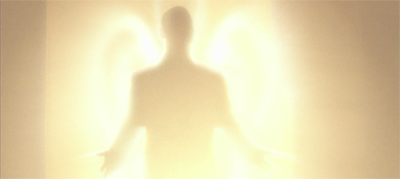
Angels in America...

Angels in America…

However, perhaps the most obvious indicator of the nineties is the way that The X-Files seems to fetishise absolute and unquestioning faith. Through episodes like Miracle Man, RevelationsAll Souls and Signs and Wonders, there is the recurring sense that giving oneself over absolutely and completely to religious faith is a sign of strength and certainty. At times, it seems like the writers are almost envious of those who have unwavering conviction in their beliefs amid the wry cynicism of the nineties.

The X-Files finds something romantic in such pure and uncompromised faith. After all, Gethsemane had proved that even Mulder has his doubts. This fixation on unquestioning religious belief made a great deal of sense against the backdrop of nineties disillusionment, but it a lot more uncomfortable when examined in hindsight through the prism of the early twenty-first century.

Scully has seen the light...

Scully has seen the light…

Continue reading

Millennium – A Room With No View (Review)

This May and June, we’re taking a trip back in time to review the fifth season of The X-Files and the second season of Millennium.

“This is how it will all end,” Jose Chung idly speculated half-way through Jose Chung’s “Doomsday Defense.” He advised Frank that the end of the world will not begin “with floods, earthquakes, falling comets or gigantic crabs roaming the earth. No, doomsday will start simply out of indifference.” He may have been correct. It is one thing to kill a person; it is quite another to destroy their spirit, hollowing out the shell before slotting them comfortably back into a functioning society.

A Room With No View plays Chung’s observation and plays it straight. Well, mostly – there is something darkly comical about Landon’s reaction to discovering that he is being abducted into Oregon. Appropriately enough, Lucy Butler’s hideout in Hood County is relatively close to the town of Boring, Oregon. A Room With No View is a bleak and cynical piece of work, an existential apocalyptic horror story perfectly suited to Millennium. It is an episode that would seem strange or unusual in any circumstances, but fits quite comfortably here.

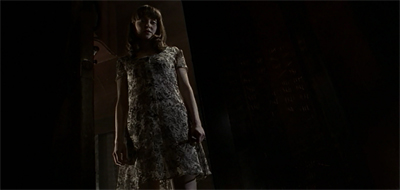
Here's Lucy!

Here’s Lucy!

On paper, A Room With No View could easily seem cynical or exploitative. It is the story about a sadistic kidnapper who abducts teenagers to torture and sexually abuse them in a dungeon. The basic plot elements of A Room With No View come from the pop culture serial killer playbook, to the point where it is not too hard to image the episode as a trashy instalment of CSI or Criminal Minds or – truth be told – the first season of this show. In basic structure, A Room With No View could seem as crude as Wide Open or Weeds or Loin Like a Hunting Flame.

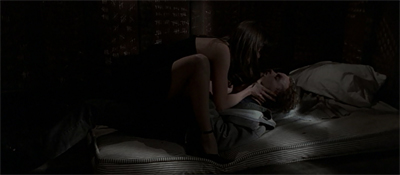
However, it is the execution of A Room With No View that marks as a genuine classic. For all that the episode trades in the stock tropes of serial killer fiction, it is doing something unique and provocative with them. Writer Ken Horton and director Thomas J. Wright construct a potent allegory for abuse and under-achievement, a haunting horror story that is all the more unsettling for its refusal to conform to audience expectations for a story like this.

Blue is not always the warmest colour...

Blue is not always the warmest colour…

Continue reading

The X-Files – Mind’s Eye (Review)

This May and June, we’re taking a trip back in time to review the fifth season of The X-Files and the second season of Millennium.

Likely as a result of the peculiar factors around its production, the fifth season of The X-Files is a rather strange cocktail.

There are only twenty episodes in the season. Seven of those are mythology episodes – Redux I, Redux II, Christmas Carol, Emily, Patient X, The Red and the Black, The End. The rest of the season devotes considerable space to experimentation and adventurous storytelling. Episodes like Unusual Suspects and Travelers take the focus off Mulder and Scully. Shows like The Post-Modern Prometheus and Bad Blood are experimental in their storytelling. Episodes like Chinga and The Pine Bluff Variant focus almost exclusively on one or other of the leading duo.

Locked out...

Locked out…

Even the remainder are not what might be described as typical “monster of the week” stories. Both Detour and Folie a Deux focus on the relationship between Mulder and Scully as much as the monster at the heart of the story. Kill Switch is an episode written by a special guest writing team, one that defines itself by how odd it feels. All Souls is a meditation on Scully’s faith. The fifth season doesn’t really have a lot of room left for the classic episodic no-frills-attached “monster of the week” stories.

Which is part of what makes Mind’s Eye so fascinating. In any other season, Mind’s Eye would stand as a pretty solid example of the form – a pretty solid “this is what The X-Files does” episode of television like Pusher or Leonard Betts before it. However, the fifth season is so strange and weird in structure and form that Mind’s Eye stands out all the more. The best of the season’s straight-down-the-middle standalone stories, Mind’s Eye throws the rest of the season into contrast. It demonstrates just how odd the fifth season actually is.

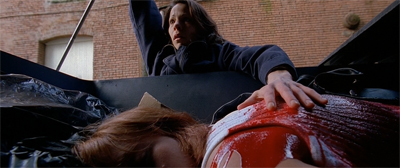
A bloody disaster...

A bloody disaster…

Continue reading

Non-Review Review: Entourage

Entourage is surprisingly inoffensive.

It has been four years since HBO’s showbiz comedy went off the air. In many respects, Entourage feels like a class reunion – even to somebody unfamiliar with the source material. There is a lot of affection here, no real sense of tension or stress. Everybody is perfectly comfortable, and the entire film has the feeling of something that everybody involved has been doing for quite some time. Anything that looks like a rough edge has been smoothed off, so the film glides along without any meaningful obstruction.

All at sea...

All at sea…

Entourage is not a great film on its own terms. However, it is not trying to be. Instead, it feels like an affectionate slice of nostalgia. It is telling that most of the cameos in the film tend to nod towards older actors and audiences. At one point, Johnny “Drama” Chase reflects that he was cast in the table read of The West Wing and he finds himself competing for roles against David Faustino of Married With Children. Faustino is just one cast member of Married With Children to cameo. Entourage feels familiar and safe, and entirely comfortable with those attributes.

The result is a functional cinematic adaptation for a show that probably did not need one. The stakes in Entourage never feel particularly high, the characters never seem particularly worried. It seems like Entourage was produced in the same way that it was intended to be enjoyed – in a rather relaxed and cordial fashion, without any real verve or energy.

Going for Gold...

Going for Gold…

Continue reading

Millennium – Anamnesis (Review)

This May and June, we’re taking a trip back in time to review the fifth season of The X-Files and the second season of Millennium.

In Arcadia Ego and Anamnesis form a strange late-season duology, exploring the roles of important female Christian icons.

In Arcadia Ego was the story of a (possibly) divine conception and birth, one evoking the story of the Virgin Mary. Initially, it seems like Anamnesis is another story about the Virgin Mary, when a bunch of high-school girls claim to have seen a religious apparition in their local church. However, after a bit of investigation, it quickly becomes clear that the religious figure at the centre of Anamnesis is not the Virgin Mary, but is instead the other major female character from the Gospels; it is Mary Magdalene.

Holy Mary...

Holy Mary…

Appropriately enough for an episode built around a female character who is often ignored and overlooked, Anamnesis is an episode largely driven by two of  the series’ three most prominent female characters. Anamnesis follows an investigation into this hysteria led by Catherine Black and assisted by Lara Means. As a matter of fact, Anamnesis is the only episode of Millennium that does not feature Frank Black. According to an interview with Back to Frank Black, writers Kay Reindl and Erin Maher had considered including him via phonecall, but quickly dropped that idea.

Anamnesis is a fascinating piece of television. It is a script written by two female writers, driven by two female regulars, investigating a case built around a mostly female guest cast. It is a testament to just how far Millennium has come in its second season that it can do a show like this. The first season had no female writers and had only Catherine Black as a prominent female character. It is the great that show can something like this, but do it so casually and effortlessly. Anamnesis is an underrated and overlooked second season script.

Going around in circles...

Going around in circles…

Continue reading

Millennium – In Arcadio Ego (Review)

This May and June, we’re taking a trip back in time to review the fifth season of The X-Files and the second season of Millennium.

A relatively recent study of teenage pregnancies accounted for forty-five virgin births in the United States, based on data from 1995, 2008 and 2009. Extrapolating from this data, the researchers estimate that almost 1% of births in the United States could be considered virgin births.

Of course, the researchers suggest a notable correlation between these self-described virgin births and other interesting social factors – virgin mothers are statistically quite likely to have low levels of sex education and are quite likely to have taken chastity vows. The myth of a virgin birth is powerful, and it is easy to understand in the context of contemporary attitudes about sex and sexuality that almost one in every hundred pregnant teenagers would rather claim a virgin birth than admit that they had sexual intercourse.

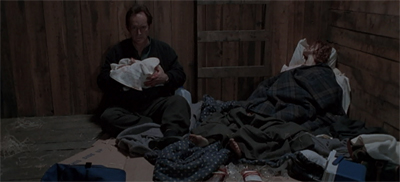
And Frank's left holding the baby...

And Frank’s left holding the baby…

In Arcadia Ego is not a particularly subtle script. Writer Chip Johannessen is quite candid about how he feels about all of this, telling a story about a modern-day immaculate conception featuring two escaped prisoners just looking for a reprieve from all the abuse and violence that they have encountered. In Arcadia Ego is a very socially-conscious piece of work, a rather pointed episode that pokes and prods at some the hypocrisies and inconsistencies in how we talk about sex and women in contemporary society. It is never too hard to tell how Johannessen feels on the matter.

At the same time, In Arcadia Ego is also a thoughtful and moving story about love, hope and faith. After a stretch of episodes that have seen Frank becoming more and more uncertain, In Arcadia Ego casts Frank as a pillar of moral certitude. While it might be a little clumsy in places, In Arcadia Ego is never less than well-intentioned.

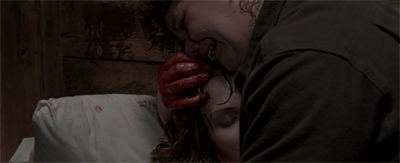
Bloody murder...

Bloody murder…

Continue reading

The X-Files (Topps) #38 – Cam Rahn Bay (Review)

This May and June, we’re taking a trip back in time to review the fifth season of The X-Files and the second season of Millennium.

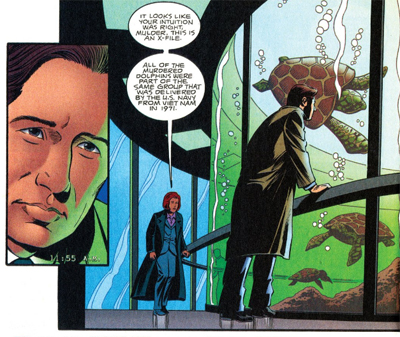
Cam Rahn Bay returns to one of the recurring themes of John Rozum’s run on Topps’ X-Files tie-in comic book.

It is essentially a cautionary tale amount mankind tampering with nature and the unforeseeable repercussions of such meddling. As such, it feels very much in keeping with scripts like Skybuster or Scum of the Earth. This idea of human hubris is a theme that is very much in keeping with The X-Files as a franchise, perhaps most keenly reflected in Chris Carter’s deep affection for Mary Shelley’s Frankenstein and for environmental causes. Cam Rahn Bay is very much in keeping with that aesthetic.

All at sea...

All at sea…

However, there are problems with the story. Most obviously, Rozum’s prose seems a little clunky and awkward. Cam Rahn Bay is a heavy-handed and clumsy meditation on mankind’s fixation with imposing its will over the natural world. However, there is also something slightly hypocritical about the story. As much as Cam Rahn Bay criticises the use of animals in a military capacity, it never seems to question the use of animals in captivity. While the training of dolphins to do military work is treated as deplorable, training them to do tricks for entertainment is lauded.

Cam Rahn Bay feels a little tonally ill-judged, with this fairly significant blindspot undermining a lot of Mulder’s impassioned rhetoric about how mankind treats the natural world.

"Sorry, I was just thinking abotu Deep Throat..."

“Sorry, I was just thinking abotu Deep Throat…”

Continue reading