• Following Us

  • Categories

  • Check out the Archives


  • Awards & Nominations

Batman: Sword of Azrael (Review)

This March sees the release of Batman vs. Superman. To celebrate, we’ll be looking at some iconic and modern Batman and Superman stories over the course of the month.

Given how messy Knightfall ended up, readers would be forgiven for assuming that the Batman editorial staff had been making it up on the fly.

To a certain extent, the editors and writers were effectively making it up as they went along. According to writer Greg Rucka, the big Batman events of the nineties were not so much mapped out as loosely plotted. The creative talent had some vague idea of where they wanted to go and what they wanted to accomplish, but not necessarily the particulars of how they would get there or how they would accomplish it. After all, Rucka’s novelised adaptation of No Man’s Land had a different ending to the comic book because the novel had to be finished ahead of time.

All fired up...

All fired up…

Reading Knightfall, it quickly becomes clear that the writers had no real idea about how they wanted the story to unfold. The event has a fairly solid first act, but its second act is cluttered and much of the resolution is messy and unsatisfying. At the same time, it is clear that the writers had some idea of what they were doing and where they were going; at least in the beginning. As much as the sprawling nineties even might bungle the pay-off, it benefits from a very careful and meticulous set-up.

A lot of the key elements of the Knightfall saga were set up and signposted ahead of time. The months leading up to the start of Knightfall in April 1993 were quite busy at the Batman offices. Shondra Kinsolving was introduced in November 1992. Bane was introduced in a special one-shot in January 1993, The Vengeance of Bane, that provided the back story of the new antagonist. Bridging these two milestones was the miniseries Batman: Sword of Azrael, introducing the character who would step into the vacancy left by the broken bat.
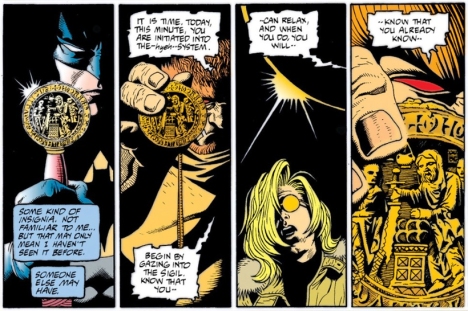
Medallion man.

Medallion man.

Continue reading

Star Trek: Deep Space Nine – Paradise Lost (Review)

This February and March, we’re taking a look at the 1995 to 1996 season of Star Trek, including Star Trek: Deep Space Nine and Star Trek: Voyager. Check back daily Tuesday through Friday for the latest review.

Part of what is so remarkable about Star Trek: Deep Space Nine is how prescient it seems.

The Star Trek franchise is renowned for its central metaphors and allegories, its fondness for addressing contemporary issues through abstract philosophical discussions. Even the most casual of television fans can point to episodes like Let That be Your Last Battlefield or A Private Little War as examples of the franchise’s engagement with contemporary social issues. (Of course, they may not be able to actually name those episodes.) Of course, the reality was always more complicated than that, but this social engagement is part of the popular memory of the franchise.

Armed and dangerous...

Armed and dangerous…

While there is a tendency to overstate the importance of social commentary and engagement in the history of the Star Trek franchise, it is a massive part of the cultural behemoth. Although not every (and arguably not even most) Star Trek episodes are explorations of moral philosophy that apply to the contemporary world, they are an essential part of each and every Star Trek series. Sometimes these episodes are brilliant, and sometimes they are heavy-handed. Sometimes they are earnestly sincere, and sometimes they are hopelessly misguided.

However, Deep Space Nine stands out in comparison to its contemporaries. Even twenty years after the show aired, it seems like Deep Space Nine speaks to contemporary anxieties and uncertainties.

The Changeling Face of Evil...

The Changeling Face of Evil…

Continue reading

Non-Review Review: Zootropolis (aka Zootopia)

This film was seen as part of the Audi Dublin International Film Festival 2016.

Zootropolis is a solidly entertaining family film that strains under the weight of its core premise.

There is a great idea in here, a detective film set in an anthropomorphised world featuring a rabbit and fox who must team up to solve a number of mysterious disappearances. Along the way, writers Jared Bush and Phil Johnston fashion the story into an allegory rich with social commentary about race and class issues in American cities. It helps that the script is light on its feet and packed with enough fast gags that it breezes along without ever getting stuck in the same place for too long.

zootopia4

However, this becomes a problem in and of itself. There is a sense that Zootropolis struggles to do too much in the space afforded to it. The plot covers quite a lot of ground as our plucky heroes embark on their investigation, including extended (and overt) riffs on pop culture standards like The Godfather and Breaking Bad. There are points at which it feels like Zootropolis might be a much stronger film if it slowed down a bit, instead of hopping from one set-up to the next in the style of its rabbit protagonist.

Zootropolis largely works, but it never comes together in the way that the best Disney outings do. There are points at which Zootropolis feels more like a turducken than a chimera.

zootopia5

Continue reading

Non-Review Review: Whiskey Tango Foxtrot

This film was seen as part of the Audi Dublin International Film Festival 2016.

It can be difficult to balance tone when setting a comedy inside a warzone.

That difficulty only increases when setting that comedy in the aftermath of the United States invasion of Afghanistan. America’s military intervention in Iraq and Afghanistan remains a defining moment in twenty-first century history; although the Obama administration might have worked hard to reduce commitment to the region, the conflicts remain divisive and controversial. As such, setting a comedy drama against the backdrop of the Afghan conflict is a dicey proposition.

whiskeytangofoxtrot6

Whiskey Tango Foxtrot struggles to pitch itself at the right tone, unsure whether it is an absurdist comedy about the excesses of modern war or a character study of what it must be like to live in such an environment or whether it is a more mature reflection on life during wartime. Whiskey Tango Foxtrot tries to have the best of all possible world, which leaves the film bouncing between extremes. There are moments of irreverent irony followed by earnest sincerity. The movie alternates between bitter cynicism and saccharine optimism.

The result is a movie that feels uneven and unfocused, tonally lost and wildly variable. And not in a way that reflects the conflict unfolding in the background.

whiskeytangofoxtrot5

Continue reading

The Adventures of Superman – The Sound of One Hand Clapping (Review)

This March sees the release of Batman vs. Superman. To celebrate, we’ll be looking at some iconic and modern Batman and Superman stories over the course of the month.

Max Landis has a relatively unique path to writing for Superman.

Landis is one of the most striking young writers to emerge from Hollywood in quite some time, making a strong impression through his collaboration with Josh Trank in the low-budget found-footage superhero film Chronicle. Landis has diversified somewhat since that original screenplay; a filmography that includes films like Mr. Right, American Ultra and Victor Frankenstein suggests that Landis’ interests lie more in unconventional pairings than in the superhero genre itself.

The Joker's gags really bombed...

The Joker’s gags really bombed…

Nevertheless, Landis is a writer who does seem fascinated with the mechanics and underlying logic of superhero storytelling. A year before the release of Chronicle, Landis put together a short film that served as an extended discussion of The Death and Return of Superman featuring a variety of top tier talent like Mandy Moore, Elijah Wood, Ron Howard and Simon Pegg. At once reveling in the absurdity of the massive nineties comic book crossover and interrogating its central character’s identity crisis, it was a potent piece of pop culture criticism.

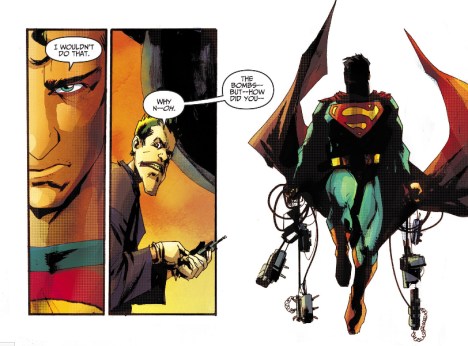
In the years following his initial success, Landis has remained relatively connected with the Man of Steel. He drafted an eight-page origin for the Atomic Skull for the first annual of DC comics’ relaunched Action Comics run, and would get a change to craft his own origin story for Clark Kent in American Alien. However, he also wrote a short two-issue story as part of DC’s digital-first The Adventures of Superman comic, scripting Superman’s first encounter with the Clown Prince of Crime.

Last laugh...

Last laugh…

Continue reading

Non-Review Review: Hitchcock/Truffaut

This film was seen as part of the Audi Dublin International Film Festival 2016.

Hitchcock/Truffaut is incredibly light and fluffy.

In many respects, Kent Jones’ documentary about the eponymous piece of classic film literature plays like something of a late night infomercial populated with nerdiest film endorsements imaginable. Hitchcock/Truffaut is not so much interested in exploring and expanding its source text, instead settling for celebration. Wes Anderson boasts that his copy of the book is so well-used that it is held together by rubber bands; Kiyoshi Kurosawa explains that the only thing holding him back from blatantly stealing from the book is a promise to himself.

hitchcocktruffaut

There is not anything particularly wrong with this. There is something quite fun in watching film-makers get evangelical about their craft. All of the talking heads offer some insight into their own work when they expand upon what Alfred Hitchcock means to them. Martin Scorsese’s joy as he journeys shot-by-shot into Psycho is infectious, and it is clear that everybody involved with the project holds Hitchcock in the highest possible regard and embraces him as a cornerstone of modern movie-making.

Hitchcock/Truffaut‘s biggest issue is also its strongest virtue; this is a cheerful and superficial acknowledgement of its subject, one that decides particularly in-depth coverage of the auteur is secondary to rendering the material accessible to neophytes.

hitchcocktruffaut5

Continue reading

Non-Review Review: Miles Ahead

This film was seen as part of the Audi Dublin International Film Festival 2016.

Miles Ahead is a very strange film.

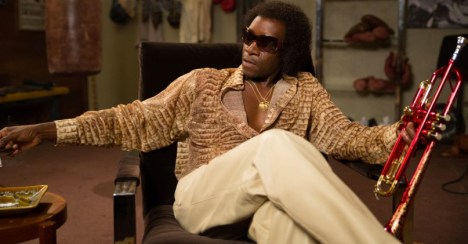
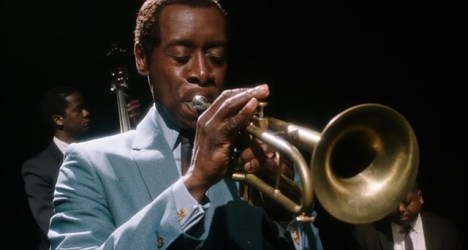
Don Cheadle stars as jazz musician Miles Davis. Not that Davis particularly cares for the descriptor. “That’s a made-up word, jazz,” he reflects during the opening credits. Asked to select a better description of his work, Davis settles on “social music.” In many ways, that awkward conversation sets the tone for the rest of the film, which weaves between a fairly conventional music biopic and a comedy musical heist adventure for no real reason beyond the fact that it really doesn’t want to be a conventional music biopic.

milesahead2

Miles Ahead feels like a passion project for Cheadle, who not only headlines the film but also directs and co-writes. Watching the movie unfold, it is clear that Cheadle cares deeply for the source material and understands the challenges the face any twenty-first century musical biography. Because Miles Ahead is adapting a life for film, it cannot avoid the familiar beats; the drug addiction, the disintegrated marriage, the wilderness years. However, Cheadle works to undercut these familiar tropes through a surreal and ambitious framing device.

Miles Ahead does not work. The film has no shortage of ambition, very clearly angling towards a free-form narrative style intended to evoke the protagonist’s unique musical sensibility. Cheadle is determined that Miles Ahead will not be lumped among the dozens of fairly nondescript musical biographies, instead tailoring something to his subject. However, Miles Ahead lacks the improvisational flourish that defines its central character, feeling more disjointed than harmonious.

milesahead3

Continue reading

Star Trek: Deep Space Nine – Homefront (Review)

This February and March, we’re taking a look at the 1995 to 1996 season of Star Trek, including Star Trek: Deep Space Nine and Star Trek: Voyager. Check back daily for the latest review.

Homefront and Paradise Lost are a fascinating example of what Star Trek: Deep Space Nine does best, both in terms of theme and storytelling.

In many ways, Homefront and Paradise Lost are among the most culturally relevant episodes produced during the series’ seven-season run. The two-parter speaks to a lot of concerns and anxieties that were part of the public consciousness during the nineties, but exploded in the early years of the twenty-first century. Homefront and Paradise Lost feel more powerful in the era of airport security screenings and extraordinary powers than they did on their original broadcast. These are among the most important episodes the franchise ever produced.

Broken link...

Broken link…

However, the two-parter is also a great example of how the production team on Deep Space Nine approach storytelling. Not just in terms of arc-building and serialisation, but also in terms of structure and pacing. Unlike The Way of the Warrior, which was very clearly a single ninety-minute episode of television, Homefront and Paradise Lost are very clearly structured as two separate episodes of television. It is a subtle distinction, but one which has a significant impact in how the creative team tell their story.

More than that, Homefront and Paradise Lost represent a great example of the strengths of the production team’s improvisational approach to long-form plotting.

More like Starfleet INsecurity, amirite?

More like Starfleet INsecurity, amirite?

Continue reading

Non-Review Review: Mammal

This film was seen as part of the Audi Dublin International Film Festival 2016.

Mammal is a psychosexual exploration of grief with a strong sense of direction and two strong central performances, albeit one that manages the rare feat of feeling both sensationalism and lifeless in the same instant.

Writer and director Rebecca Daly has a strong sense of tone, creating a palpable uncertainty and anxiety that pervades the first half of the film. Daly crafts an engaging sense of ambiguity, allowing tensions and uncertainties to simmer beneath the surface of the relationship between her two central characters. The performances help a great deal, with Rachel Griffiths doing great work as the divorced and isolated Margaret and Barry Keoghan offering strong support as the mysterious Joe. Mammal is filled with awkward silences and tense foreboding.

mammal

Unfortunately, all of those tension and anxiety has to build to something, and Mammal suffers in how it decides to deliver upon and follow through on all that suspense and ambiguity. Mammal really struggles during its second act, offering twists that should be shocking but are ultimately entirely predictable. Mammal seems to try to escalate in its final act, but the film suffers quite a bit from its own efficiency at setting the mood. In its last forty minutes, the film is left nowhere to go but the most expected directions, the blows softened by the fact they’ve been awkwardly signposted.

Mammal works best when it focuses on the interiority of its characters, but struggles when it asks them to act upon one another.

mammal2

Continue reading

Star Trek: Voyager – Resistance (Review)

This February and March, we’re taking a look at the 1995 to 1996 season of Star Trek, including Star Trek: Deep Space Nine and Star Trek: Voyager. Check back daily Tuesday through Friday for the latest review.

Resistance is a very episodic instalment of Star Trek: Voyager.

It begins with the ship facing a convenient plot-generating fuel-shortage, the type of problem that the ship had encountered near the start of Phage or The Cloud or Tattoo. It is the kind of problem that was not mentioned in previous episodes, and which will never be presented as a potentially recurring problem. In fact, Resistance is the only episode of Voyager (or Star Trek) where the word “Tellerium” is mentioned. Many of the stock criticisms of Voyager apply here.

Fifty shades of Joel Grey...

Fifty shades of Joel Grey…

At the same time, Resistance is proof that the episodic model is not entirely without merit. For all that modern television has tended towards serialisation and arcs and long-form storytelling, there is nothing inherently wrong with a good old-fashioned done-in-one adventure. On a purely cosmetic level, Resistance is the typical Voyager episode; it relies on contrivance, it features a host of guest characters who will never appear (or be mentioned) again, it has no lasting impact. And yet it works better than any episode to this point in the second season.

As easy as it is to get distracted by arguments about serialised and episodic storytelling, or about arcs and standalones, the truth is that Voyager‘s problems are at once more simple and more complex than that. The grand irony of the second season is that it is the only season of Voyager to attempt a storytelling arc, but that storytelling arc is pretty universally derided as one of the worst things that the show ever did. (It isn’t really, but it’s still pretty bad.) The truth is that it doesn’t matter how Voyager chose to tell its stories, as long as it told them well.

Mellon head...

Mellon head…

Resistance is a fairly standard episode of Voyager, but it is elevated in the telling. The story seems unlikely to rank among anybody’s favourite Voyager episodes, but it is an efficient and effective character study with a solid script and a great central performance. The production team were able to recruit Oscar-winning actor Joel Grey as the primary guest star, lending the story an incredible level of pathos. Lisa Klink also makes quite an impression with her debut teleplay, providing a story that is careful to give most of the cast something to do.

The result is proof that there’s nothing inherently wrong with a largely episodic approach to Star Trek storytelling, as long as the material is up to scratch.

"This is knife reunion, no?"

“This is knife reunion, no?”

Continue reading