• Following Us

  • Categories

  • Check out the Archives


  • Awards & Nominations

Non-Review Review: Green Room

This film was seen as part of the Audi Dublin International Film Festival 2016.

Green Room is a masterful artisanally-crafted suspense thriller.

Writer and director Jeremy Saulnier crafts a loving tribute to seventies horror that feels like a truer successor to the “backwoods horror” genre than many contemporary remakes and reimaginings. Following a punk band named The Ain’t Rights that stumble into a tense stand-off with a bunch of neo-nazis in rural Oregon, Green Room is almost aggressively old-school in its horror sensibilities. It is tense and claustrophobic, paranoid and unsettling. Saulnier has a masterful understanding of the genre and its expectations, crafting a pitch perfect homage.
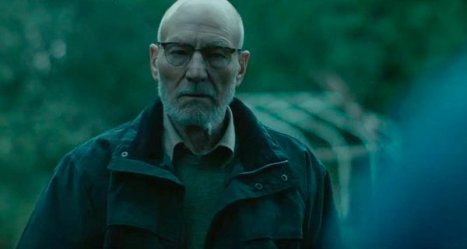
greenroom

Green Room is a very canny piece of work, but never in a manner that is distracting. The film is wry without being ironic, more arch than subversive. Appropriately enough, given its punk protagonists, the movie’s hints of cynicism about its genre and set-up bely a more earnest appreciation of the form. Green Room is a classic and conventional horror film about a bunch of kids who took a wrong turn, and it is utterly unapologetic about that. Instead, it commits to providing one of the most visceral traditional horror experiences in recent memory.

Green Room is a nasty piece of work. And is all the better for it.

greenroom6

Continue reading

Star Trek: Deep Space Nine – Our Man Bashir (Review)

This February and March, we’re taking a look at the 1995 to 1996 season of Star Trek, including Star Trek: Deep Space Nine and Star Trek: Voyager. Check back daily Tuesday through Friday for the latest review.

Our Man Bashir is an underrated masterpiece.

It is possibly the best holodeck (or holosuite) episode in the history of the franchise; only Ship in a Bottle can really compete. A lot of this is down to the production value of the episode; Our Man Bashir looks and sounds beautiful, a delightfully detailed throwback to its source material. The production team on the Star Trek franchise seldom get enough credit for their skill at realising alien worlds and cultures from scratch, but their beautiful evocation of sixties design is breathtaking. Our Man Bashir is a clear forerunner to Trials and Tribble-ations, less than a year away.

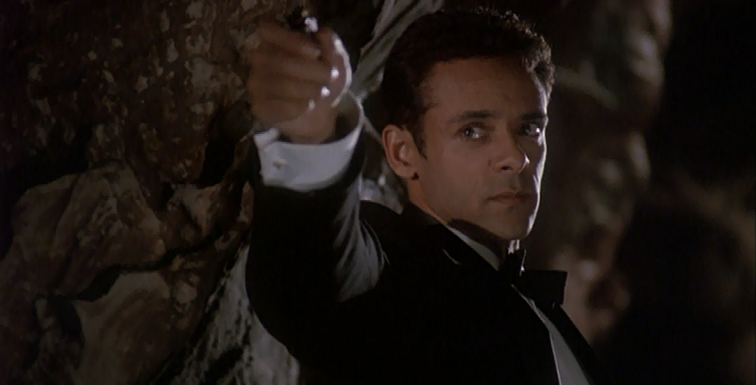
"The name's Bashir, Julian Bashir..."

“The name’s Bashir, Julian Bashir…”

However, there is more to it than that. Like Little Green Men, Our Man Bashir succeeds as a (relatively) light-hearted run-around that never loses track of its characters. The first three seasons of Star Trek: Deep Space Nine struggled with the character of Julian Bashir; audience members could wait entire seasons for a good Bashir episode. With the fourth season, three come along at once. Our Man Bashir might look light and fluffy – and it largely is – but it never loses sight of its core character dynamics in the midst of all the fun unfolding around them.

More than that, Our Man Bashir plays into the broader themes and strengths of the fourth season. The climax of the episode feels like Deep Space Nine is ruminating on its new-found place dictating the direction of the Star Trek canon. Bashir’s decision to “save the day by destroying the world” feels oddly prophetic. The fifth season of the show would find the writers destroying some of the most fundamental rules of the franchise in an effort to keep things vital.

Got some bottle...

Got some bottle…

Continue reading

Non-Review Review: Demolition

This film was seen as part of the Audi Dublin International Film Festival 2016.

Demolition is saturated by quirk.

Demolition is suffocated by quirk.

Continue reading

Non-Review Review: Anomalisa

This film was (almost) seen as part of the Audi Dublin International Film Festival 2016.

Anomalisa is a heartbreaking tale of isolation and loneliness, an affecting drama about living in a world that feels illusory.

Directed by Duke Johnson and Charlie Kaufman, from Kaufman’s screenplay adapted from his own stageplay, most of the discussion of Anomalisa has focused upon its unconventional production. The movie was essentially crowdsourced, as the space allocated in the closing credits to the project’s kickstarter backers will attest. However, Anomalisa is also a stop motion production, painstakingly and meticulously filmed using life-like dolls to tell a sad story about adultery and anomie.

anomalisa1

In some respects, this fascination with form makes sense. After all, Anomalisa is a very human and grounded story. Even allowing for the difficulty that Kaufman had fundraising for the project, it would likely have been more practical to realise the story with living performers in a more conventional style. However, the distinctive technique provides a powerful emotional weight to Johnson and Kaufman’s story. The relative banality of the illusion is very much the much the point.

Anomalisa is not so much a story about fantasy as it is about a disconcerting sense of unreality.

anomalisa-098_0

Continue reading

Star Trek: Deep Space Nine – The Sword of Kahless (Review)

This February and March, we’re taking a look at the 1995 to 1996 season of Star Trek, including Star Trek: Deep Space Nine and Star Trek: Voyager. Check back daily Tuesday through Friday for the latest review.

The Sword of Kahless is the first episode of Star Trek: Deep Space Nine to focus primarily on Worf.

The character arrived on the show (and the station) in The Way of the Warrior, but his development since then had largely been confined to secondary plots. In Hippocratic Oath and Starship Down, Worf learned that life on Deep Space Nine would not be the same as life on the Enterprise. However, he had not really been the centre of any given episode before this point. (Even in The Way of the Warrior, Worf’s arrival and crisis of conscience was just one facet of a larger political situation.)

Sword of destiny...

Sword of destiny…

This is quite remarkable, and a result of a number of unique factors. Most obviously, Worf was not just any new cast member. Worf was a character who had arrived over from Star Trek: The Next Generation, and so was something of a known quantity to fans. There was less of a need to establish who Worf was, because most fans already knew. More than that, a lot of the early fourth season episodes had been in development before Michael Dorn had been confirmed to be joining the ensemble. As such, they tended to focus on other characters.

Nevertheless, it is remarkable that the fourth season is almost one-third of the way through its run before the production team devoted an episode to the newest member of the cast. It is a testament to the production team that the show had the confidence and restraint to adopt such an approach to such an obviously popular character. More than that, The Sword of Kahless is undoubtedly a Worf-centric episode, but it is a Worf-centric episode that makes it quite clear that Worf is a Deep Space Nine character now.

"Thank you, sir. May I have another?"

“Thank you, sir. May I have another?”

Continue reading

Non-Review Review: High-Rise

This film was seen as part of the Audi Dublin International Film Festival 2016.

Ben Wheatley’s High-Rise is a beautiful ugly film.

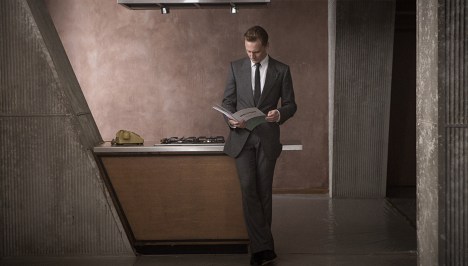
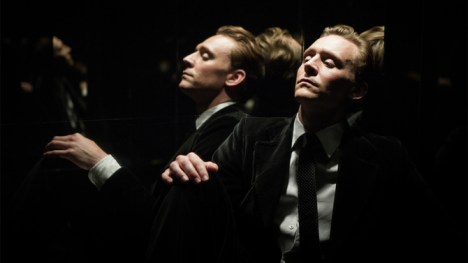
An adaptation of J. G. Ballard’s surrealist novel, High-Rise fits rather comfortably within Wheatley’s aesthetic. There is an apocalyptic paranoia running through the film, which charts the social decay of the eponymous building over a three-week period. Class warfare is rendered literal in multiple senses, as the lower classes visit violence upon the wealthier inhabitants of the tower block. Even during the most peaceful and serene sequences of the movie’s first half, there is an underlying anxiety and dread bubbling just beneath the surface.

highrise3

High-Rise is disjointed and uneven, but that would seem to be something of the point. Amy Jump’s screenplay and Ben Wheatley’s direction eschew conventional pacing, with the world collapsing more in fits and starts than in a steady decline. Wheatley and Jump also edit the film, emphasising the chaotic nature of this collapse through jumps and montages that document the erosion of social order in a manner that ebbs and flows. It is disorientating and occasionally even frustrating, but one senses that this is meant to be the point.

High-Rise is a messy piece of work. But then, as the movie seems to suggest, things get messy when life is forced into a neatly delineated box.

HR_0430_tiff.tif

Continue reading

Non-Review Review: The Truth Commissioner

This film was seen as part of the Audi Dublin International Film Festival 2016.

The Truth Commissioner began life as a pitch for a BBC television show.

This is quite clear from the way that film is put together, both in terms of plotting and in terms of visual composition. It is not too difficult to imagine The Truth Commissioner stretched out to a prestigious six-week television drama event series, playing as a sibling series to other politically-charged thrillers like The Honourable Woman or The Night Manager; albeit with a more modest cast and location than those two recent high-profile examples of the BBC’s dramatic programming.

thetruthcommissioner1

As written by Eoin O’Callaghan, The Truth Commissioner feels rather condensed; populated by a cast of characters who seem compressed to fit the movie’s relatively modest runtime. Character relationships and dynamics are rendered in extremes; they are either left inferred or bluntly stated. There is a sense that The Truth Commissioner has been stripped down to fit this particular format, playing as a rough outline of a strong central idea rather than a fully realised political thriller.

Director Declan Recks does a great job realising this contemporary Belfast drama, layering on the paranoia as the eponymous character finds himself navigating dangerous waters. The Truth Commissioner is a stylish piece of work, albeit one that seems more like a condensed BBC drama than an exciting feature film in its own right.

thetruthcommissioner

Continue reading

Non-Review Review: Kung-Fu Panda III

This film was seen as part of the Audi Dublin International Film Festival 2016.

Kung-Fu Panda III retains the energy and style that distinguished the prior instalments of the series, even if the emotional beats feel further and further removed from what made the original such a beloved animated classic.

The original Kung-Fu Panda offered a compelling genre mash-up, slotting anthropomorphised animals into a kung-fu action adventure. However, despite the pulpier elements of the plot, Kung-Fu Panda carried a surprising emotional weight. Featuring one of Jack Black’s strongest performances and mining the incongruity of a Panda martial artist for all its worth, Kung-Fu Panda fleshed out and developed its world and its characters with a surprising amount of depth.

kungfupanda3

However, that emotional depth faded over the course of the sequels. Kung-Fu Panda II touched on issues related to identity and adoption amid a more generic action adventure, fleshing out Po’s backstory and exploring how he came to be raised by a mongoose. Picking up on the cliffhanger teased in the closing scene of Kung-Fu Panda II, Kung-Fu Panda III finds Po reconnecting with his long-lost father and trying to make sense of his place in the world. However, a lot of its emotional beats feel overly familiar and routine.

Still, Kung-Fu Panda III retains the energy and dynamism of the prior two installments, with a kinetic visual style and a number of visually impressive set pieces. It just feels a bit more hollow than the previous films in the series.

kungfupanda3a

Continue reading

The X-Files Polls Results

A quick thanks to all who voted in our big X-Files poll to wrap up our coverage of the classic era of the show – from The Pilot up through The X-Files: I Want to Believe. I was very pleased with the response the poll got, with over 100 votes cast. (101, in total.) The results are below, but first two quick housekeeping announcements:

a.) we’ll be covering the modern era of the show (the IDW comics and the six episodes) sometime later in the year, probably around the DVD/blu ray release when things in my personal life are less hectic; part of that hecticness is because…

b.) I’ve written an unauthorised and unofficial critical history of The X-Files that is going to print at the end of the month; I’ll publish more details closer to publication, but it’s very much a refinement of everything that’s been put on the blog, with better research, more detail and a clearer narrative throughline; there is one really cool detail: the introduction is very kindly being written by the wonderful Kumail Nanjiani.

Anyway, enough housekeeping. Let’s get to the results!

xfilespoll15

Continue reading

Non-Review Review: Hail, Caesar!

This film was seen as part of the Audi Dublin International Film Festival 2016.

Hail, Caesar! is little more than an excuse for the Coen Brothers to adventure through classic Hollywood; a series of fantastic scenes and sequences tied together more by central theme than by a linear plot. It is telling how many performers essentially find themselves relegated to only a single scene or two, with performers like Scarlett Johannessen, Jonah Hill, Tilda Swinton, Frances McDormand, Alison Pill, Ralph Fiennes and Channing Tatum effectively (and occasionally literally) dancing around the film than weaving through it.

In many respects, this simply shouldn’t work. On paper – and perhaps on reflection – Hail, Caesar! plays like an anthology of great little scenes; a collection of short films all linked by the classic Hollywood aesthetic more than a single unifying narrative. The actual substance of the film is quite removed from the story promised by the trailers, which seem to tease “an old-timey movie Ocean’s Eleven with actors teaming up to rescue a kidnapped George Clooney.” It spoils nothing to reveal that the movie is most definitely not about that.

hailcaesar4

Although the kidnapping of Baird Whitlock is a central thread, Hail, Caesar! plays more like a day in the life of Hollywood studio fixer Eddie Mannix. Mannix is (very) loosely based on the real studio executive (and notorious “fixer”) of the same name, although it seems quite unlikely that he ever had a day quite as bizarre as that presented here. The Coen Brothers have a great deal of fun incorporating classic Hollywood iconography into their film, both as movies within the movie and then in a more meta-fictional manner towards the climax.

However, Hail, Caesar! is tied together through its recurring humanism. The movie opens with Mannix taking confession for his sins, part of a daily ritual. One of the films featured is an old-school biblical epic. Complex economic theories are woven through the narrative, and the film repeatedly touches upon the awkward relationship that exists between Capitol Pictures and its performers. Although Hail, Caesar! is too shrewd to propose easy answers to its complex web of character interactions, it does tease some insightful questions. And features some great set pieces.

hailcaesar5

Continue reading