• Following Us

  • Categories

  • Check out the Archives


  • Awards & Nominations

Star Trek: Voyager – Resolutions (Review)

This February and March (and a little bit of April), we’re taking a look at the 1995 to 1996 season of Star Trek, including Star Trek: Deep Space Nine and Star Trek: Voyager. Check back daily for the latest review.

So, shipping.

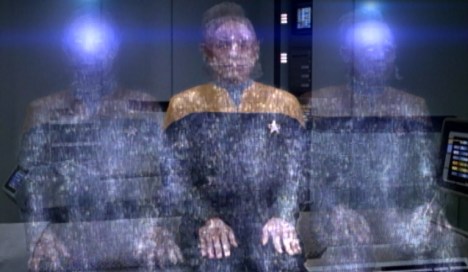
Times change surprisingly quickly. It is fair to say that Star Trek: Voyager emerged in a different world than the original Star Trek. However, it also emerged in a different world than Star Trek: The Next Generation. In a way, the show had acknowledged as much through its experiments with serialisation earlier in the second season. Michael Piller was trying to keep the franchise at the bleeding edge of contemporary television, realising that the medium was not the same as it had been when Jean-Luc Picard emerged at the end of the Reagan era.

Reach out...

Reach out…

Resolutions nods towards a different type of change in the way that television storytelling worked, particularly conversations about television storytelling. Although it could be argued that Star Trek helped to popularise the notion of romantically (or sexually) pairing off television characters through the practice of “slashing” Kirk and Spock, the notion of “shipping” had begun to enter the mainstream during the mid-nineties. The raw sexual chemistry between David Duchovny and Gillian Anderson on The X-Files played no small part.

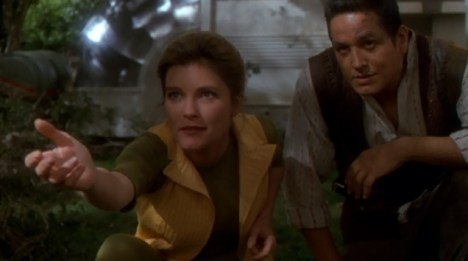
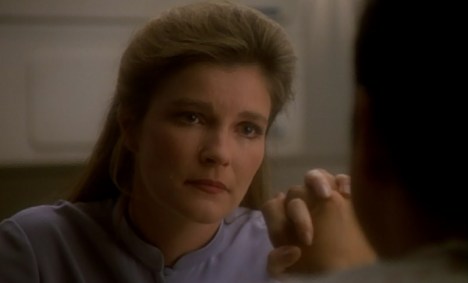
Resolutions is essentially about “shipping” Janeway and Chakotay.

... and touch somebody.

… and touch somebody.

Continue reading

Star Trek: Deep Space Nine – To the Death (Review)

This February and March (and a little bit of April), we’re taking a look at the 1995 to 1996 season of Star Trek, including Star Trek: Deep Space Nine and Star Trek: Voyager. Check back daily for the latest review.

To the Death continues the late fourth season shift in focus back towards elements unique to Star Trek: Deep Space Nine.

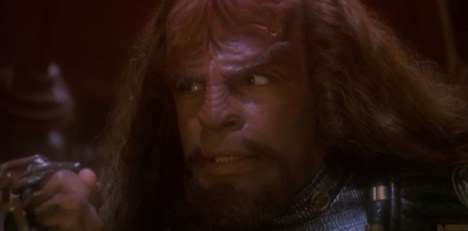
At the end of the third season, the production team found themselves receiving notes and input from the network, who wanted Deep Space Nine to go in a different direction. The writing staff on Deep Space Nine were willing to compromise, and took some of the network input on board. As a result, The Way of the Warrior added Worf to the cast and brought the Klingons back to the fore. However, it was clear that Deep Space Nine was not particularly interested in telling a long-term story about new hostilities between the Federation and the Klingons.

The Weyoun of the Warrior...

The Weyoun of the Warrior…

Over the course of the fourth season, the writing staff’s original plans and interests began to reassert themselves in an organic and logical manner. A story similar to Homefront and Paradise Lost had originally been planned to bridge the third and fourth seasons; instead, it was pushed back to almost half-way through the fourth seasons. The Bajoran religion was still the focus of Accession. Gul Dukat received a character arc in Indiscretion and Return to Grace. The Jem’Hadar got a focus episode in Hippocratic Oath. Ferengi politics popped up in Bar Association.

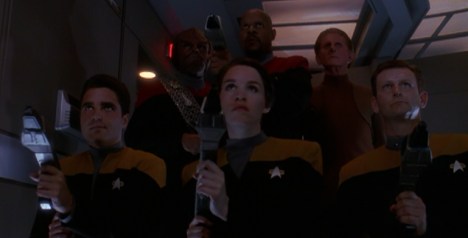
However, these aspects of the show really galvanise towards the end of the fourth season, with the production team really focusing on the elements that had been important during the third season and which would become even more important during the fifth season. For the Cause marked the return of the Maquis as a political player. Body Parts focused on Ferengi culture. However, three of the season’s final four episodes focus on the Dominion, working to reestablish the Dominion as the most credible of threats and the show’s primary antagonists.

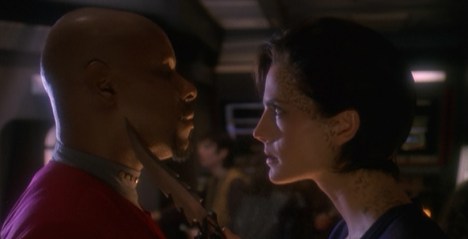
Boy, does Sisko ever break out the welcome wagon...

Boy, does Sisko ever break out the welcome wagon…

Continue reading

Star Trek: Voyager – Tuvix (Review)

This February and March (and a little bit of April), we’re taking a look at the 1995 to 1996 season of Star Trek, including Star Trek: Deep Space Nine and Star Trek: Voyager. Check back daily for the latest review.

Tuvix is a controversial piece of Star Trek.

The episode tends to polarise fandom. In particular, the climax of the episode seems to divide fans firmly down the middle. When the fan site Trek Today marked the end of Star Trek: Voyager by staging a mock “Court Martial of Captain Kathryn Janeway”, it was argued that the events of Tuvix should have been included as evidence against her. It is no surprise that the episode generated such a strong response. Discussing the production of the episode, Tom Wright reflected, “The truth is that the higher ups of Star Trek knew that this would cause some controversy.”

"Neevok was never gonna cut it."

“Neevok was never gonna cut it.”

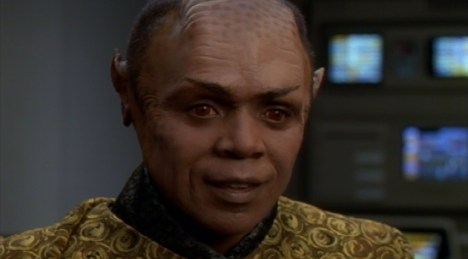
Of course it generates some controversy. This is the episode where Janeway elects to murder one crew member in order to resurrect two lost crew members. This is a story about how the title character is convenient for about forty-five minutes of screentime, only for the crew to quickly dispose of him as soon as the end credits beacon. Tuvix never really makes a convincing moral case for why the eponymous character has to die, beyond the fact that it conveniently resets the status quo.

Then again, perhaps that is reason enough.

Two for the price of one...

Two for the price of one…

Continue reading

Non-Review Review: The Man Who Knew Infinity

It takes a lot of skill to make mathematics seem beautiful. It is enough work to render those complex equations that mash together numbers and greek letters as something profound and understandable to contemporary audiences. After all, maths is static at best. When it comes to the kind of mathematical genius that inspires these sorts of biographies, the math tends towards the abstract. When The Man Who Knew Infinity works best, it manages to capture just some of the romance trapped between those braces.

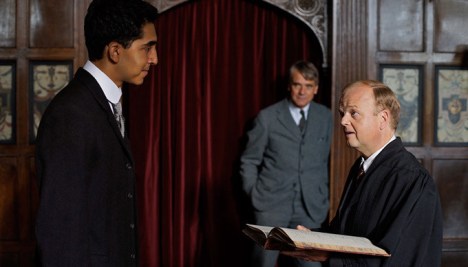
Of course, there are points at which The Man Who Knew Infinity threatens to get too romantic. Writer and director Matthew Brown has an obvious (and infectious) enthusiasm for his subject, Indian mathematician Srinivasa Ramanujan. The Man Who Knew Infinity works best when it expresses this affection through its leads. Jeremy Irons makes a surprisingly convincing evangelist for abstract mathematics, and Dev Patel offers utter conviction in the lead role. However, there are points at which Brown seems unwilling or unable to trust his actors or his audience.

What a nice fellow...

What a nice fellow…

Continue reading

Star Trek: Deep Space Nine – For the Cause (Review)

This February and March (and a little bit of April), we’re taking a look at the 1995 to 1996 season of Star Trek, including Star Trek: Deep Space Nine and Star Trek: Voyager. Check back daily for the latest review.

For the Cause essentially refocuses the fourth season of Star Trek: Deep Space Nine, rallying the season’s strength as the finalé approaches.

After a bunch of lackluster episodes, from Rules of Engagement through to Shattered Mirror and The Muse, the show finds its voice once again. For the Cause is not just a great episode of television, it is an episode uniquely tailored to this particular show. For the Cause would not work on any of the other for Star Trek shows, so precisely is it calibrated to what makes Deep Space Nine unique. It is a story about trust and betrayal, but also one that chips away at the romance of Starfleet and the Federation.

Pinning his colours to the mast...

Pinning his colours to the mast…

What is particularly interesting about the stretch of episodes running from here through to Broken Link is the sense that Deep Space Nine is getting back to basics. The fourth season is somewhat overshadowed by the addition of Worf to the cast and the emphasis placed on the Klingons in The Way of the Warrior. Although the production team do a great job working within the studio mandate, this shift in focus has meant that many more traditional elements of Deep Space Nine have been shunted into the background.

The final stretch of the fourth season finds the show returning to ideas that were threaded through earlier seasons and were shifted slightly out of focus with the return of the Klingons. For the Cause brings the Maquis back to the fore. To the Death, The Quickening and Broken Link focus on the Dominion threat. Body Parts returns to Ferengi politics. To be fair, the Maquis were the only element that totally faded from view over the fourth season, so it makes sense to return to them first.

A stunning betrayal...

A stunning betrayal…

Continue reading

Star Trek: Voyager – The Thaw (Review)

This February and March (and a little bit of April), we’re taking a look at the 1995 to 1996 season of Star Trek, including Star Trek: Deep Space Nine and Star Trek: Voyager. Check back daily for the latest review.

The Thaw is a visually striking piece of Star Trek.

The Thaw is among the most delightfully surreal and abstract episodes of Star Trek to be broadcast after October 1975. One of the more interesting aspects of Star Trek: Voyager is how consciously the show tries to return to the storytelling aesthetic of the original Star Trek show, at least in its early years. While the design aesthetics and characters might have been largely ported over from Star Trek: The Next Generation, the first few seasons of Voyager frequently feel like a conscious attempt to update sixties Star Trek tropes for the nineties.

In darkness dwells...

In darkness dwells…

This is obvious in a number of ways. Caretaker consciously tried to evoke the old “space western” aesthetic, to the point of featuring a Native American first officer and introducing the Kazon as horribly racist “primitive” stereotypes. Time and Again relished primary colour costuming for their suspiciously human-like aliens. These themes became more prominent in the second season, with the b-movie aesthetic of Threshold, the space horror of Persistence of Vision and Meld, and the reverse aging allegory of Innocence.

While Tuvix essentially offers a reverse twist on The Enemy Within, it is The Thaw that feels most obviously like a sixties episode trapped in ember. The allegorical storytelling, the abstract set design, the creepy campy tone. Voyager might be half-way across the galaxy, but it is never too far from the familiar.

"We never bother to scream... ... when your mask came off."

“We never bother to scream…
… when your mask came off.”

Continue reading

Non-Review: Eye in the Sky

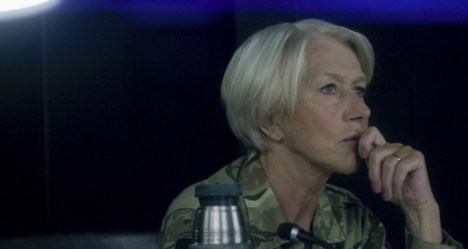
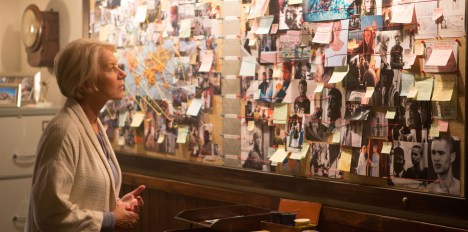
Eye in the Sky is a powerful contemporary morality play.

Eye in the Sky feels a lot like an old-style “television play.” It recalls the sorts of stories from the period when television was trying figure out its relationship between film and stage. The action unfolds in a number of relatively confined locations with a relatively modest cast. This cast is then presented with a moral dilemma, which the script spends most of its one-hundred-minute runtime carefully twisting and unpacking. Even today, it is not too difficult to imagine an event “live” broadcast on a smaller broadcaster working from the same premise.

Mirr(en)ed in doubt...

Mirr(en)ed in doubt…

That is not to suggest that Eye in the Sky is cheap or uncinematic. Director Gavin Hood imbues the story with a lush cinematic style that feels a lot bigger than the moral drama playing out between the characters. Hood gives Eye in the Sky a sense of scale and heft that belies any formal similarities of classic television productions. At times, Hood is a little too cinematic, the hand of the director feeling a little too heavy in a morality play that takes great pains to be even-handed and complex.

However, these moments are fleeting; the film’s power lingers longer.

Eye see all...

Eye see all…

Continue reading

Star Trek: Deep Space Nine – The Muse (Review)

This February and March, we’re taking a look at the 1995 to 1996 season of Star Trek, including Star Trek: Deep Space Nine and Star Trek: Voyager. Check back daily Tuesday through Friday for the latest review.

If Shattered Mirror represents the writing staff on Star Trek: Deep Space Nine trying to stave off late-season exhaustion by cutting loose with an extended Star Wars homage, then The Muse represents an altogether different response to the strain of the twenty-six episode season.

The Muse was a painful episode. It did not emerge fully-formed, with writer René Echevarria struggling to bring the story to screen. The result is a mess of an episode. The Muse is not a good episode of television, and is almost universally accepted as such. Afforded the opportunity to remove one episode from his Star Trek CV, director David Livingston suggested it was with obvious choice. “Which would I erase? Which was the one with Meg Foster? The Muse. That was not very good. In fact, that was not good.”

Blood on the page...

Blood on the page…

Continue reading

Non-Review Review: Batman vs. Superman – Dawn of Justice

Batman vs. Superman is a curiosity, a fascinating mess of a film that doesn’t really work but which constantly teases its audience with the idea that it might work in a variety of intriguing way.

Batman vs. Superman is certainly ambitious. Although the story about a persecuted alien immigrant obviously comes with no small amount of political subtext that feels applicable at a time of resurgent nationalist sentiment, the most remarkable thing about Batman vs. Superman is the way that the script is very consciously and awkwardly attempting to get at bigger underlying themes. Whereas Christopher Nolan tailored his impressive Batman trilogy for the realities of twenty-first century America, Batman vs. Superman is attempting something greater.

batmanvssuperman8

Of course, what it is actually attempting is hugely contradictory. It occasionally seems like director Zack Snyder is working at cross purposes with writers Chris Terrio and David S. Goyer. Appropriately enough for a director who recently announced plans to adapt The Fountainhead, Snyder is trying to construct a Randian power fantasy about the moral authority that rests with exceptional people like Superman. In contrast, Terrio and Goyer want to construct a fable about Superman as an embodiment of hope for a sinful Earth.

While Snyder seems at times to wrestle against the script, Terrio and Goyer face their own issues. While Batman vs. Superman is thematically ambitious and philosophically rich, it is also positively abstract in its plotting. Events occur for no reason beyond plot necessity, while character motivation is delivered through dreams and metaphor. Contrivances and illogicalities abound, to the point where any number of plot developments might have easily been avoided if characters simply talked to one another about what exactly they thought was going on in a given moment.

batmanvssuperman3

There are no shortage of issues with Batman vs. Superman, issues so fundamental that it is hard to imagine how an extended cut will do anything but deepen them. There are points at which the movie’s attempts to fashion a pop mythology are so dense as to suggest a required reading list, saturating with knowing references to everything from Lolita to A Streetcar Named Desire to Final Crisis. There is an argument to be made that Batman vs. Superman is not only illogical, but unapologetically (and perhaps unforgivably) pretentious.

And, yet, acknowledging all of these flaws, there is something strangely compelling about the muddled spectacle of it all. There is a sense that Snyder and Terrio and Goyer are really trying to do something in a manner that is bold and ambitious. (Just not necessarily the same things.) As crazy as it sounds – and it sounds crazy – Batman vs. Superman is the result of the same style of Warner Brothers movie-making that led to the infinitely superior Mad Max: Fury Road and The Dark Knight. There is a willingness to let artists take massive risks with significant budgets.

batmanvssuperman4

Warner Brothers has a track record of supporting and encouraging these gambles. Sometimes these gambles pay off. No other major studio would have signed off on Mad Max: Fury Road, to pick an example. Christopher Nolan produced a trilogy of engaged and exciting blockbusters built around a character most had written off in live action. Sometimes this big budget auteur model doesn’t pay off. Say what you might about Cloud Atlas and Man of Steel, but they are indisputably unique and distinct visions of their creative architects.

In its abstraction, its tone and its aesthetic, Batman vs. Superman has the look and feel of a two-hundred-and-fifty million dollar indie feature. It might lack the polish and finesse (and, to be frank, cohesion and internal logic) of other major superhero films. However, it has a weirdly compelling spark and ambition that is lacking from the more standardised model of Marvel Studios blockbuster. The result is deeply unsatisfying, yet strangely compelling.

batmanvssuperman1

Continue reading

Star Trek: Deep Space Nine – Shattered Mirror (Review)

This February and March, we’re taking a look at the 1995 to 1996 season of Star Trek, including Star Trek: Deep Space Nine and Star Trek: Voyager. Check back daily Tuesday through Friday for the latest review.

Shattered Mirror and The Muse represent the nadir of the fourth season of Star Trek: Deep Space Nine.

To be fair, it could be worse. Neither episode is Let He Who is Without Sin or Profit and Lace or The Emperor’s New Cloak. Neither is a good episode by any measure, and they certainly rank among the weakest episodes in the show’s seven year run. However, they are more misbegotten lumps of clay than spectacular disasters. Still, as critical defenses go, that is a fairly unconvincing effort. “It could be a lot worse” is hardly the most ringing of critical endorsements.

A close shave...

A close shave…

On the other hand, the fourth season of Deep Space Nine is a fairly spectacular piece of television when taken as a whole. There is a strong argument to be made for the fourth season as the most consistently entertaining season of Deep Space Nine, which stands it in good stead when placing it in the context of the franchise as a whole. The fourth season of Deep Space Nine is one of the best seasons that the franchise ever produced, right alongside the third season of Star Trek: The Next Generation.

However, even the third season of The Next Generation had its weaker moments; The Price and Ménage à Troi come to mind. The realities and demands of television production mean that a perfect twenty-six episode season without any duds is an aspirational object rather than an achievable goal. The constant churn required to produce twenty-six forty-five minute blocks of television within nine or ten months means that not every episode is going to end up perfectly sculpted. Some will be great, some will be bland. Some will be bad.

ds9-shatteredmirror11a

Yanking his chain…

Continue reading