• Following Us

  • Categories

  • Check out the Archives


  • Awards & Nominations

Non-Review Review: Sweet Country

This film was seen as part of the Audi Dublin International Film Festival 2018.

“What chance does this country have?” asks Sam Neill towards the climax of Sweet Country.

In the context of the scene, it isn’t entirely clear to whom the character is speaking. There is one other individual in the scene, but they are preoccupied at that moment and it’s not clear they are even within earshot when Neill’s character makes his grave assessment about the future of this young nation. However, outside the context of the scene, it is very apparent to whom Neill’s character is addressing his concerns. He is speaking directly to the audience through the medium of film.
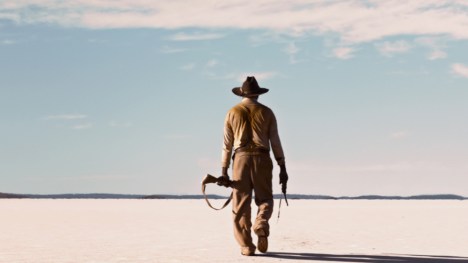
Sweet Country is not a film that does subtlety or nuance. As Neill’s character offers this pointed question, he stumbles through the Australian wilderness, as if to suggest that he is lost. He stops just short of bluntly stating that he is lost, just like this country, the film demonstrating uncharacteristic faith in the audience’s narrative and thematic comprehension. Nevertheless, just in case the audience still doesn’t get it, Neill’s character asks this very profound question while wandering in the direction of the tail end of a rainbow set against a stormy sky.

“What chance does this country have?” the character wonders. The audience doesn’t feel the need to articulate the obvious response, “Not much, if it produces films like this.”

Continue reading

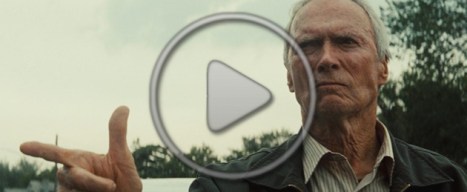
67. Gran Torino (#157)

Hosted by Andrew Quinn and Darren Mooney, The 250 is a (mostly) weekly trip through some of the best (and worst) movies ever made, as voted for by Internet Movie Database Users. New episodes are released every second Saturday at 6pm GMT, with the occasional bonus episode between them.

This time, Clint Eastwood’s Gran Torino.

Korean War Veteran Walt Kowalski lives out his life in the deteriorating suburbs of Detroit, disconnected from his family and whiling away his days drinking beer on his porch. Initially aggressive and belligerent towards the Hmong family who moved in next door, Kowalski finds himself drawn into the lives of the two youngest children, forming an unlikely bond and forcing him to reassess his opinion of the community.

At time of recording, it was ranked the 157th best movie of all time on the Internet Movie Database.

Continue reading

Non-Review Review: First Reformed

This film was seen as part of the Audi Dublin International Film Festival 2018.

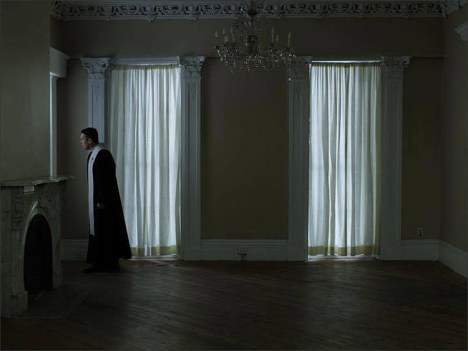
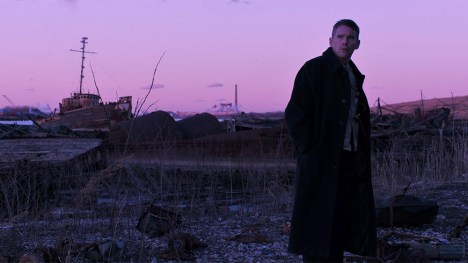
First Reformed is an unholy mess.

On paper, First Reformed has some very interesting ideas. It is a film grappling very consciously with weighty themes and heavy subject matter. It is about the challenge of finding faith in a modern and cynical world, and about reconciling the mundane maintenance of spiritual belief with the euphorically elevation of pure devotion. This is a broad theme that resonates in a world that feels increasingly disconnected and diffused, in a time when people feel increasingly distant from purpose or meaning.

Indeed, the core premise invites comparisons to Taxi Driver, which remains the defining work in Schrader’s filmography. Schrader has been working as a writer for almost forty-five years, and as a director for forty years, but his body of work is still discussed in terms of the second script that he wrote. Although most audiences associate Taxi Driver with the creative partnership of Scorsese and DeNiro, it was a work that was very important to Schrader, articulating themes and ideas to which he would return time and time again.

First Reformed brings Schrader back to that, with Reverend Ernst Toller feeling very much like a spiritual sibling to Travis Bickle, a man who struggles to make sense and to find meaning in a chaotic world and who decides to impose his own order upon the universe. Schrader is very much playing with his own history and iconography here, playing out a familiar story in a new setting with a slightly different emphasis. As with a lot of artists revisiting their earlier and defining, the results are frustrating. First Reformed bends and contorts in the shadow of its predecessor, never coming into its own.

Continue reading

Non-Review Review: The Breadwinner

This film was seen as part of the Audi Dublin International Film Festival 2018.

Stories enrich us, stories empower us, stories sustain us.

The Breadwinner is many things. It is a beautifully animated film from Irish studio Cartoon Saloon, a worthy successor to The Secret of Kells and Song of the Sea, and also the first time that the company have looked beyond Irish shores for one of their feature-length releases. It is a stunning adaptation of Deborah Ellis’ novel, offering a compelling glimpse into Afghanistan as controlled by the Taliban at the turn of the millennium. It is a genuinely affecting tale of a young girl surviving in a climate that seems actively hostile to her very existence.

However, The Breadwinner is also a meditation upon the power of stories. This is not a surprise, it is very much in keeping with the aesthetics and interests of Cartoon Saloon. It is a recurring theme in their work. (As a point of comparison, Pixar Studios are invested in parental anxieties, down to the inclusion of the “Pixar Babies” in the credits of every major release.) Indeed, The Breadwinner might be seen as a spiritual successor to (or the third part of a thematic trilogy with) The Secret of Kells and Song of the Sea, stories about children reconnecting with the mythic history of their countries.

Indeed, this is one of the most striking and appealing aspects of The Breadwinner is the way in which it finds something universal in its very specific setting. The Breadwinner is a story very firmly anchored in one time and place, but one that should resonate with everyone.

Continue reading

Non-Review Review: Mute

Mute is a bold and ambitious mess.

Mute is perhaps most interesting for what it is, and most frustrating in what it is about. In its own way, Mute stands as a triumph of the Netflix model. As it streams, Mute is undoubtedly the film that director Duncan Jones wanted to make. Indeed, it is next to impossible to imagine Mute making its way through the conventional studio system, and certainly not in the form that appeared on Netflix. Even watching the film play out, those never-materialised studio notes suggest themselves. (Most notably, “What is this film saying?”) There is nothing that feels like compromise about the film, and there is something very appealing in that.

However, there is also something deeply frustrating in Mute. The film is undoubtedly the unfiltered creative vision of its director, but there is something overwhelming in that. Mute is beautiful to look at, but almost too much to take in. Its world is vivid and fully formed, its atmosphere rich and evocative. However, there is something awkward in the story that unfolds within this dystopian landscape, the narrative never quite cohering in the same way as its grimy futuristic Cold War Berlin.

Mute is a film that is fascinating and impressive, if far from satisfying.

Continue reading

Star Trek: Voyager – One Small Step (Review)

Star Trek: Voyager marks the end of the future.

Many fans would point to Star Trek: Enterprise as the moment that the larger Star Trek franchise turned its gaze backwards and embraced a sense of broad nostalgia for a future that was already behind that explored in the original series. After all, the last television series of the Berman era took the franchise back to its roots and paved the way for both J.J. Abrams’ pseudo-reboot in Star Trek and for Bryan Fuller and Alex Kurtzman’s prequel in Star Trek: Discovery.

First (and Last) Flight.

However, this overlooks the importance of Voyager in signposting this shift. In some ways, Voyager represents the end of the final frontier. Chronologically speaking, Endgame is the last episode of the larger Star Trek franchise, the future beyond the finale explored only in Star Trek: Nemesis and as part of the back story to the rebooted Star Trek. Chronologically speaking, Voyager represents the last television series within the Star Trek universe. However, Voyager very carefully and very consciously seeds the nostalgia that would later envelope the franchise.

This is obvious in any number of ways. Voyager is a show that is literally about the desire to return home rather than to push forward. Caretaker established the show as an extended homage to fifties pulp storytelling. The politics of the series – reflected in episodes as diverse as Real Life, Displaced and Day of Honour – were decidedly conservative. Even the genre trappings of the series were often framed in terms of mid-twentieth century pulp fiction; the space lift in Rise, the broad allegory in Innocence, the atomic horror of Jetrel.

We come not to praise Voyager, but to bury it.

However, all of this is rooted in a very conscious yearning on the part of Voyager to connect to its roots. Numerous small scenes across the seven-season run of the show hint at this sentiment; Janeway discussing the romantic past in Flashback, the literal journey home in Future’s End, Part I and Future’s End, Part II, the retrofuturism of Tom Paris’ various holoprogrammes, Janeway’s fascination with her long-lost ancestor in 11:59. There was a sense that Voyager was a series as intent on journeying backwards in time as much as space, even outside of its time travel obsession.

One Small Step stands out as one of the most obvious and blatant examples of this nostalgia within Voyager, in many ways feeling (like Friendship One in the subsequent season) like an attempt to seed the literal prequel that would materialise in Enterprise.

It turns out that John Kelly crossed over into a subspace anomaly drawn by Jack Kirby.

Continue reading

Non-Review Review: Black ’47

This film was seen as part of the Audi Dublin International Film Festival 2018.

Black ’47 is a powerful piece of pulp storytelling, a bold and daring window into an under-served chapter of Irish history.

Directed by Lance Daly, working from a story derived by a variety of writers, Black ’47 is essentially a western set against the background of the Irish Famine. Of course, the reality is much more nuanced than that simple description would suggest, but it provides a suitable starting point for discussion. Indeed, all the genre elements are in place; a soldier returns home from war to discover the horrors that have befallen his family, and decides that there shall be no justice on earth save for that which he might exact by his own hand.

Black ’47 is a very sparse and rugged film. It would be a surprise if the nominal lead character, Feeney, speaks more than one hundred words. Indeed, at one point he explicitly rejects the English language as a tool of communication. The landscape of the film is rough and cold, the audience feeling the chill that runs through the film and almost smelling the decay in the air. Black ’47 reflects its rough and wild settings, and the characters who have been shaped and moulded by those surroundings.

Black ’47 is an effective piece of storytelling.

Continue reading

Non-Review Review: The Lodgers

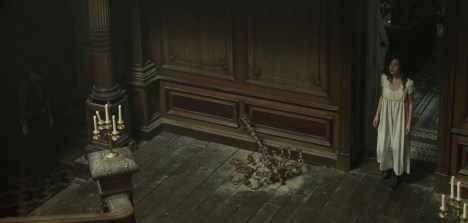
The Lodgers is a beautifully-directed and somewhat muddled gothic horror film.

The Lodgers literally drips with atmosphere, as one might imagine given the combination of writer David Turpin and director Brian O’Malley. Turpin has studied and lectured in English, writing his doctoral thesis on therianthropy. O’Malley directed Let Us Prey, one of the most visually striking and memorable Anglo-Irish horror films of the past couple of years. As such, a gothic horror set against the backdrop of Irish Independence seems very much in keeping with their aesthetics, and it does not disappoint.

The fall of the house of Lodgers.

The Lodgers is a rich piece of work, both in terms of visuals and themes. Like any good horror story, the subtext simmers through the work, O’Malley and Turpin tapping into rich veins of social and political anxiety, often weaving those threads together in a compelling and exciting manner. The Lodgers might be best described as the work of Edgar Allan Poe channeled through a seance with William Butler Yeats. It feels undeniably Irish, rooted in the land and its people.

At the same time, The Lodgers suffers slightly in its own internal mechanics. Like the big house at the centre of the story, the construction is largely sound. However, there is a sense that some upkeep and maintenance might be required. The Lodgers is undercut by a number of key defects including its casting and its dialogue. The Lodgers is visually striking and rich, but it stumbles in some of its more basic elements.

Stairway to heaven.

Continue reading

66. Singin’ In the Rain (#92)

Hosted by Andrew Quinn and Darren Mooney and this week with special guest Grace Duffy, The 250 is a (mostly) weekly trip through some of the best (and worst) movies ever made, as voted for by Internet Movie Database Users. New episodes are released every second Saturday at 6pm GMT, with the occasional bonus episode between them.

This time, Gene Kelly and Stanley Donen’s Singin’ in the Rain.

Regarded as one of the best musicals ever made, Singin’ in the Rain focuses on the transition from silent film toward talkies. With his studio embracing sound, leading man Don Lockwood begins to question his ability and his ability in a rapidly-changing industry. But love and good fortune are waiting just around the corner.

At time of recording, it was ranked the 92nd best movie of all time on the Internet Movie Database.

Continue reading

New Podcast! Scannain Podcast (2018) #5!

A very brief Scannain podcast for a very busy week!

Discussing the latest in film news here and abroad, the Scannain podcast is a weekly podcast discussion of what we watched, what we talked about, what is dominating and the box office, and what is lurking on the horizon film-wise. This week we talked about everything from food bullying to Ryan Murphy to the upcoming slate of Irish horror films, along with usual features like the top ten.

I’m thrilled to be part of a panel including returning guest Grace Duffy and new guests Nicola Timmins and (late arrival) Daniel Anderson. Give it a listen below.