• Following Us

  • Categories

  • Check out the Archives


  • Awards & Nominations

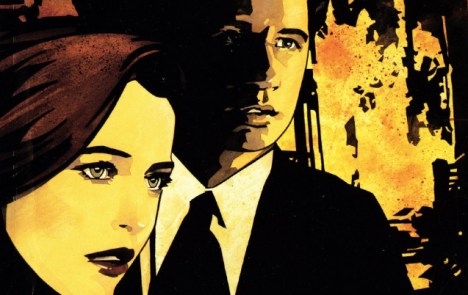
Roy Thomas’ Run on The X-Files: Season One (Topps) (Review)

We’ve recently finished our reviews of the nine seasons of The X-Files. Along the way, we tried to do tie-ins and crossovers and spin-offs. However, some of those materials weren’t available at the right time. So this week will be spent finishing Topps’ line of “Season One” comics, published during the fifth season in the lead up to The X-Files: Fight the Future.

It is hard to figure out what exactly the point of the Season One line was meant to be.

In a very superficial way, the point was obvious. The intent was to add a second regular series to Topps’ line of comics based around The X-Files. Even during the comic book bubble burst of the mid- to late-nineties, The X-Files was a good seller for the company. The monthly book sold well enough that Topps’ eagerly supplemented it. New stories were published as Digest editions, published alongside the less successful Ray Bradbury comics. Annuals were published alongside the monthly book. Collections were published frequently.
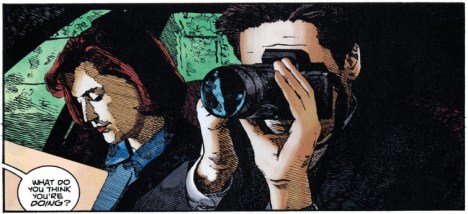
xfiles-beyondthesea13

However, this was not enough to satisfy market demand. Topps wanted to publish more X-Files material with greater frequency. However, Ten Thirteen were less interested with the supervision that the line required. A compromise seemed in order. Rather than creating a new original series of comic books, they flooded with market with new adaptations of existing X-Files media. Writer Kevin J. Anderson and artist Gordon Purcell offered a four-part comic book miniseries adapting Anderson’s Ground Zero prose novel.

The publisher also decided to put out a series of adaptations of classic first season episodes, released once every two months. These would be adaptations of stories that had already been properly vetted by Ten Thirteen, having been produced in-house. The trick would simply be translating them into comic books.

Burn with me.

Continue reading

Non-Review Review: Joy

Joy is very much a showcase for David O. Russell’s interests, and his excesses.

Russell is a filmmaker with a particular sensibility in style. This is particularly obvious in the way that the director feels continuously drawn to the same performers and themes. As with many of Russell’s films, the cast of Joy is populated by actors who have worked with the director before. This is most apparent in the casting of Russell’s current creative ruse Jennifer Lawrence, who worked with Russell on Silver Linings Playbook and American Hustle. She is joined by Russell veterans like Bradley Cooper and Robert DeNiro.

Could the domestic cleaning industry use a shot in the arm?

Could the domestic cleaning industry use a shot in the arm?

Similarly, the film plays to Russell’s particular fascinations; Joy ties together the director’s engagement with Americana and his exploration of dysfunctional family dynamics. Joy places these two themes front-and-centre, but never quite synthesises them into a convincing whole. All too often, it feels like Joy is far more interested in the discordant home life of its female protagonist than all of the historical details it has to weave into her rags-to-riches tale. This causes problems when her journey takes her away from that home, and the film loses interest.

Joy is somewhat overstuffed, its attention wandering as the run-time goes on. For a story about a self-made millionaire whose rags-to-riches success embodies the ideal of the American Dream, Joy often feels quite rote; luxuriating in its depiction of her family life, the movie’s second half feels over extended as it clocks through all the beat expected in a story like this. Its final third is given over to a crisis that feels as obligatory as its resolution is convenient. For a movie about a woman with an ability to see innovation, Joy is trapped by its conventionality.

Talk about a mop top...

Talk about a mop top…

Continue reading

The X-Files: Season One (Topps) #9 – Shadows (Review)

We’ve recently finished our reviews of the nine seasons of The X-Files. Along the way, we tried to do tie-ins and crossovers and spin-offs. However, some of those materials weren’t available at the right time. So this week will be spent finishing Topps’ line of “Season One” comics, published during the fifth season in the lead up to The X-Files: Fight the Future.

And, with Shadows, the Season One line comes to a close.

Although The X-Files was at the very peak of its popularity between the fifth and sixth seasons, the Topps line of comics was winding to a close. Although Topps had turned a very tidy profit on the line, Ten Thirteen had been less enthused by the relationship. The production company decided not to renew their contract with Topps, and so the X-Files line of comics was quietly retired. Shadows was published in July 1998, a month following the release of The X-Files: Fight the Future.

A shadow of itself...

A shadow of itself…

It was not the last X-Files comic book to be published by Topps. The company would release one more issue of the regular series – Severed – shortly before the start of the sixth season. There was little indication that Topps expected the contract to come to an end; the publisher had actually solicited two further issues of the Season One line beyond Shadows, adaptations of The Jersey Devil and Ghost in the Machine. These were somewhat lackluster first season episodes, but episodes with the sort of impressive visual ideas that might translate well to the comic book medium.

An adaptation of The Jersey Devil and Ghost in the Machine would certainly have made for a more visually satisfying final issue than an adaptation of Shadows.

What we do in the shadows...

What we do in the shadows…

Continue reading

Non-Review Review: The Revenant

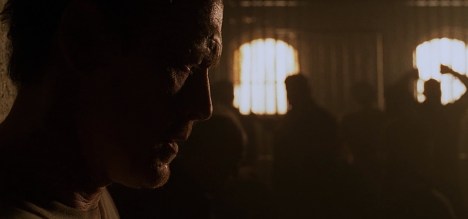
The Revenant is a beautiful and visceral piece of work.

Sporting a troubled production history, The Revenant is surprisingly straightforward film. Based on the tale of famed fur trapper (and tall-tale-teller) Hugh Glass, The Revenant charts one man’s journey from near-death back to civilisation against the harsh and unforgiving American wilderness. The Revenant is essentially a journey in a straight line, as Glass struggles to find a way back to security and revenge himself upon his colleagues who left him for dead. The film’s biggest structural issues lie in a desire to distort or convolute that straight line.

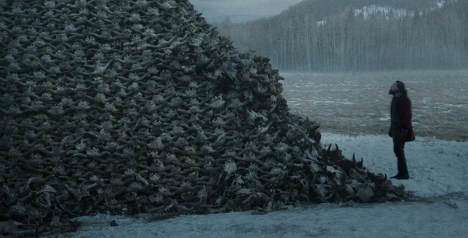
therevenant6

However, the fairly linear and straightforward plot is really just a framework for director Alejandro G. Iñárritu and cinematographer Emmanuel Lubezki to present the audience with striking vistas and symbolism that ranges from blindingly obvious to wilfully obtuse. The film is absolutely stunning, capturing its tone perfectly and presenting any number of memorable images and moments. Even when the visual trips sideways or backwards feel indulgent or unnecessary, they are still beautiful.

The Revenant is perhaps a little too fixated on over-complicating what is a fairly straightforward narrative, with a script that can seem unexpectedly obtuse for what is basically a single long chase movie crossed with a classic “man against nature” survival film. Nevertheless, the result is a striking piece of work that is awe-inspiring in visual (and visceral) terms.

therevenant7 Continue reading

The X-Files: Season One (Topps) #8 – Beyond the Sea (Review)

We’ve recently finished our reviews of the nine seasons of The X-Files. Along the way, we tried to do tie-ins and crossovers and spin-offs. However, some of those materials weren’t available at the right time. So this week will be spent finishing Topps’ line of “Season One” comics, published during the fifth season in the lead up to The X-Files: Fight the Future.

Beyond the Sea is more than just the best episode of the first season.

Beyond the Sea is one of the best episodes that the show ever produced. Airing half-way through the first season of The X-Files, Beyond the Sea demonstrated exactly what the show was capable of doing at that point in its run. It was a television masterpiece, and remains one of the very best episodes of an extended nine-season run. More than Ice, more than E.B.E., more than Darkness Falls, Beyond the Sea is the unqualified success story of the show’s first season.

Sea change...

Sea change…

This makes the decision to adapt it as part of the Season One line a relatively risky endeavour. The last two episodes adapted as part of the series – Space and Fire – are unlikely to rank highly on any fan’s assessment of the show’s first year. This was not a bad strategy. If the comic book adaptations were good, like the adaptation of Space had been, then it was a success story for everybody involved. If the comic book adaptations were not great, as was the case with Fire, then it seemed unlikely that anybody would care too much.

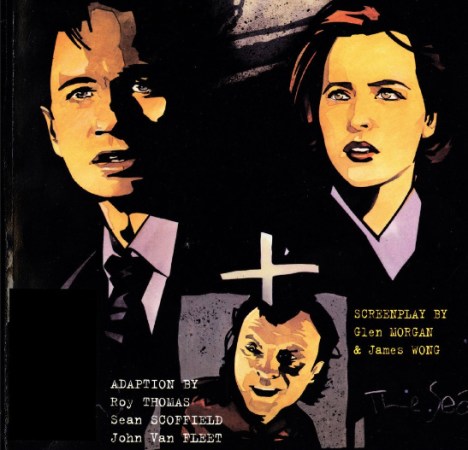
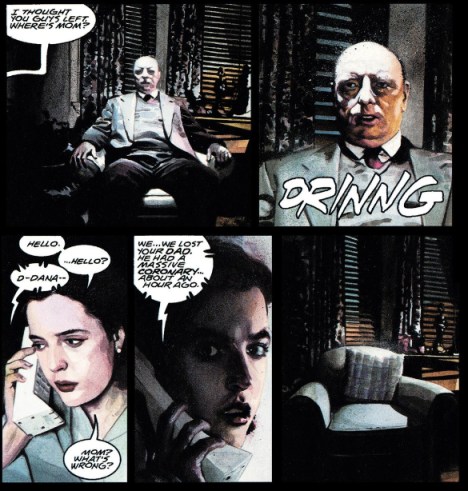
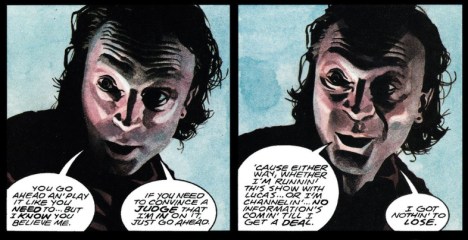
Adapting the season’s strongest episode was a bold creative decision. It seemed highly unlikely that writer Roy Thomas and artist Sean Scofield could compete with the episode written by Glen Morgan and James Wong and directed by David Nutter. The best case scenario for an adaptation of Beyond the Sea would be to serve as a reminder of just how wonderful the television episode had been, rather than a comic book that was memorable in its own right. It was very much a situation where the best possible outcome was not messing it up.

Haunting visit...

Haunting visit…

Continue reading

The X-Files: Season One (Topps) #7 – Fire (Review)

We’ve recently finished our reviews of the nine seasons of The X-Files. Along the way, we tried to do tie-ins and crossovers and spin-offs. However, some of those materials weren’t available at the right time. So this week will be spent finishing Topps’ line of “Season One” comics, published during the fifth season in the lead up to The X-Files: Fight the Future.

Space was perhaps the best of Topps’ Season One line of comics, a version of the first season episode that came much closer to realising the potential of Chris Carter’s outer space mystery than anything that appeared on a television screen during the show’s first year. In a way, Space suggested a possible sustainable model for the Season One line of comics beyond a rather cynical attempt to have two separate X-Files comics running in parallel. What if the Season One line could be used to “fix” stories that had misfired the first time around?

This makes a certain amount of sense. After all, there is little point in just rehashing the show’s strongest moments. The comic adaptation of Beyond the Sea might entertain, but it will never be the definitive or stronger example of that story. The comic adaptations lack the chemistry of David Duchovny and Gillian Anderson, but they do have an unlimited visual effects budget and the ability to filter a story through a unique artistic sensibility. So perhaps Season One should not fixate on a “greatest hits” tour of the first season, but should instead focus on the misfires.

Burn with me...

Burn with me…

Continue reading

The X-Files – Season 9 (Review)

This December, we’re taking a trip back in time to review the ninth season of The X-Files.

Very few television shows end when they should.

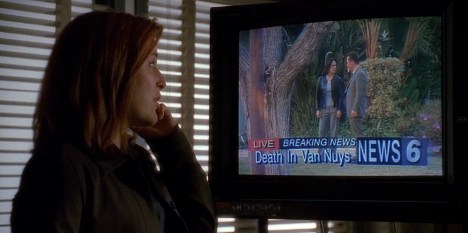
As much as television might be an artistic medium, it has generally been governed by commercial realities. The length of a television episode is not determined by the volume of the story that needs to be told, but is dictated by the slot allocated it with room left over for advertising. The length of a season is typically negotiated between the demands of the creative team and the needs of the network. Popular shows are seldom allowed to retire at a natural end point, but are instead extended until they reach viable syndication figures or the audience loses interest.xfiles-improbable30a

Things are changing, to a certain extent. The emergence of cable television has allowed creators a greater degree of freedom in how they want to tell their stories. Television series are allowed to wrap up on their own terms, even when they are at the height of their popularity. There is even a bit more give-and-take when it comes to scheduling shows that do not fit comfortably within the standard hour-long block. This allows shows like Breaking Bad, The Sopranos and Mad Men the chance to conclude at a point where it is organic to do so.

However, this was not the television landscape in which The X-Files emerged. Although it helped shape and define television in the nineties, The X-Files was very much a product of the network television system. That meant extended season runs, but it also meant that the show was sustained as long as it remained popular. Due to the fact that television audiences tend to drain rather than spontaneously disappear, this meant that the show was arguably extended years past an organic end point. Indeed, The X-Files had several logical end points.

xfiles-johndoe7a

The plan was to wrap things up after five seasons, meaning that The End might have been the end, and that the show might never have moved from Vancouver to Los Angeles. However, the show was extended for two seasons as ratings declined from their peak. At the end of the seventh season, Requiem was written and filmed before anybody knew there would be an eighth season. A disastrous television season forced Fox to renew the show. The eighth season ended with Mulder and Scully in a happy place in Existence, but was such a success that Fox greenlit a ninth season.

It is interesting to wonder what might have become of The X-Files had the show ended at any of those three logical end points. Would the show be more fondly remembered? Would the general consensus be that the series had ended in a reasonable place? Would fans be relatively satisfied with what had been offered? Would recommendations of the show be a lot less guarded than they would become in the years ahead? There is no way to know the answers to any of these questions. However, there is no getting around the fact that the ninth season is a disaster.

xfiles-sunshinedays15a

Continue reading