• Following Us

  • Categories

  • Check out the Archives


  • Awards & Nominations

The Lone Gunmen – Three Men and a Smoking Diaper (Review)

This October/November, we’re taking a trip back in time to review the eighth season of The X-Files and the first (and only) season of The Lone Gunmen.

Three Men and a Smoking Diaper might just be the worst episode of The Lone Gunmen.

It is also the only episode to be written solely by Chris Carter, who had also contributed to The Pilot.

Good advice...

Good advice…

Continue reading

The Lone Gunmen – Like Water For Octane (Review)

This October/November, we’re taking a trip back in time to review the eighth season of The X-Files and the first (and only) season of The Lone Gunmen.

Taken together, Like Water for Octane and Three Men and a Smoking Diaper represent perhaps the creative nadir of the first season of The Lone Gunmen.

They are the episodes that not only engage in the excesses of the show’s early first season, but practically revel in them. In particular, Like Water for Octane is an episode that thinks it is hilarious to have a sequence where Langly sticks his hand up the backside of a bull, while the climax revolves around Jimmy strategically tugging the bull’s “one giant udder” at just the right the moment. The problem is not that the gags are juvenile. The problem is that the gags simply aren’t funny. And there are a lot of unfunny gags across these two episodes.

New patriots...

New patriots…

Again, there is a sense that these are ultimately just teething problems, that The Lone Gunman has not quite figured out what it wants to be. The show improves in later episodes, but not necessarily because the gags get funnier. The gags do get funnier, but there is never really a sense that The Lone Gunmen is funny enough to carry forty-five minutes on cheap laughs. Instead, the show seems to release that it needs more than “dick and ass” jokes to sustain itself. Like Water for Octane and Three Men and Smoking Diaper are devoid of heart.

More than that, though, Like Water for Octane feels like a fundamental betrayal of the show’s core principles. It is a story about the Lone Gunmen struggling to expose the truth, only to decide that the people are too stupid to be trusted with the truth and that the trio should appoint themselves custodians of that truth. The episode seems entirely sincere in this belief, which makes it seem like the production team have somehow completely misunderstood their own characters.

Out of the night...

Out of the night…

Continue reading

The Lone Gunmen – Eine Kleine Frohike (Review)

This October/November, we’re taking a trip back in time to review the eighth season of The X-Files and the first (and only) season of The Lone Gunmen.

With Eine Kleine Frohike, the first season of The Lone Gunmen is still in its teething phase.

There is a sense that the writers are still finding the show’s voice and struggling to get the tone right, while also trying to figure out how to structure an episode and what to do with the two new characters. Eine Kleine Frohike is messy and disjointed, but that is to be expected three episodes into the first season of an hour-long comedy. The first season of any show will inevitably be a bit rough; it is very rare for a television series to emerge from its production team fully formed.

Eich bin ein Frohike...

Eich bin ein Frohike…

At the same time, there are a few things that Eine Kleine Frohike does quite well, with John Shiban honing in on a few of the show’s strengths. Most obviously, Eine Kleine Frohike positions Frohike as the heart of the leading trio. Byers has always been the idealist of the bunch, but Frohike has a fundamental (and perhaps unlikely) dignity that makes him a solid foundation for an episode like this. Indeed, the best scene in Eine Kleine Frohike uses Frohike’s humanity to forge a connection with a guest character who otherwise seems like a joke.

Eine Kleine Frohike is too disjointed to really work, but it does represent a clear step forward for the show.

The son also rises...

The son also rises…

Continue reading

Doctor Who: The Zygon Inversion (Review)

“I wouldn’t even let you get talking like you always do. Bullet between the eyes. First thing.”

“Again, thank you.”

“Twelve times, if necessary.”

“Yes, well, why limit yourself? You’ve really thought this through.”

“I’m a big fan.”

– Osgood and the Doctor plan an invasion (planet well, even)

It seems rather odd to think that The Zygon Invasion and The Zygon Inversion are the most conventional two-parter of the season to this point. In terms of structure and plot, the two episodes bleed quite neatly into one another. There is no temporal shift like the shifts that divide Under the Lake and Before the Flood or The Girl Who Died and The Woman Who Lived. There is no sharp tonal shift like the shift that divides The Magician’s Apprentice and The Witch’s Familiar.

In terms of format, The Zygon Invasion and The Zygon Inversion are very much a classic two-parter without any significant structural sleight of hand. The themes and characters remain consistent, details set up in The Zygon Invasion pay off in The Zygon Inversion. This is very much a two-parter in the mould of the Davies era, where it feels like the story is split over two forty-five minute slots because there is simply too much material to handle in a single episode. It is very interesting, given how the earlier episodes tended to play with the form.

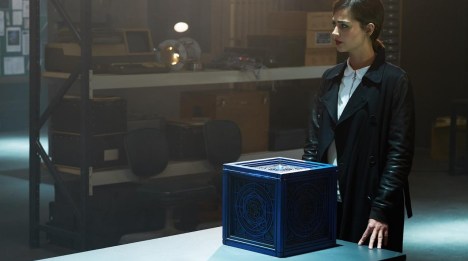
"... or you can take the mystery box..."

“… or you can take the mystery box…”

Of course, The Zygon Invasion and The Zygon Inversion are also very good on their own terms. They are the standout episodes of the season to this point. They comprise one of the most satisfying two-parters of the Moffat era, if not the entire revival. There are times when the Moffat era can get a little lost in formal ambition, but The Zygon Invasion and The Zygon Inversion work because they are simply a good story well told. The lack of structural hijinks or narrative experimentation allows for a story that is ambitious on its own terms.

The Zygon Invasion and The Zygon Inversion are a fantastic piece of work for the show.

"Seeking companion. Must enjoy long walks on the beach. And in eternity."

“Seeking companion. Must enjoy long walks on the beach. And in eternity.”

Continue reading

The Lone Gunmen – Bond, Jimmy Bond (Review)

This October/November, we’re taking a trip back in time to review the eighth season of The X-Files and the first (and only) season of The Lone Gunmen.

If The Pilot is a proof of concept, then Bond, Jimmy Bond is all about demonstrating that The Lone Gunmen can work on a weekly basis.

Second episodes are more important than most viewers realise. While television pilots typically enjoy larger budgets and looser schedules in an effort to demonstrate that a concept can work as a television show, second episodes are very much about demonstrating precisely how that model will be applied to the structure of a weekly television show. The second episode is about transitioning from a pilot into a weekly schedule. As such, Bond, Jimmy Bond is much more indicative of the first season of The Lone Gunmen than The Pilot was.
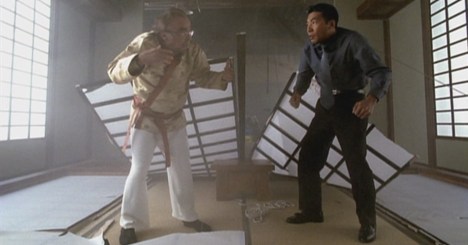
All set.

All set.

So Bond, Jimmy Bond is largely about laying groundwork for what follows, and for setting the tone for what comes next. The title makes this clear, introducing the fifth and final member of the leading ensemble. While The Pilot had made room for Zuleikha Robinson as the mysterious Yves Adele Harlow, Bond, Jimmy Bond introduces Stephen Snedden as the well-meaning but none-too-bright James “Jimmy” Bond. This is the cast as it will remain for the rest of the run, give or take a guest appearance from Kimmy the Nerd.

However, there are also changes behind the scenes. Rob Bowman directed The Pilot, his last piece of work with Ten Thirteen before leaving to concentrate on feature film work like Reign of Fire and Elektra. On the commentary to The Pilot, Frank Spotnitz affectionately joked that they couldn’t afford Bowman. That seems perfectly believable, given Bowman’s rising star. As such, Bryan Spicer was drafted in to direct Bond, Jimmy Bond. Spicer would direct the lion’s share of the show, helming six of the show’s thirteen episodes.
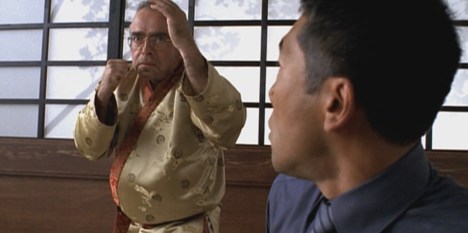
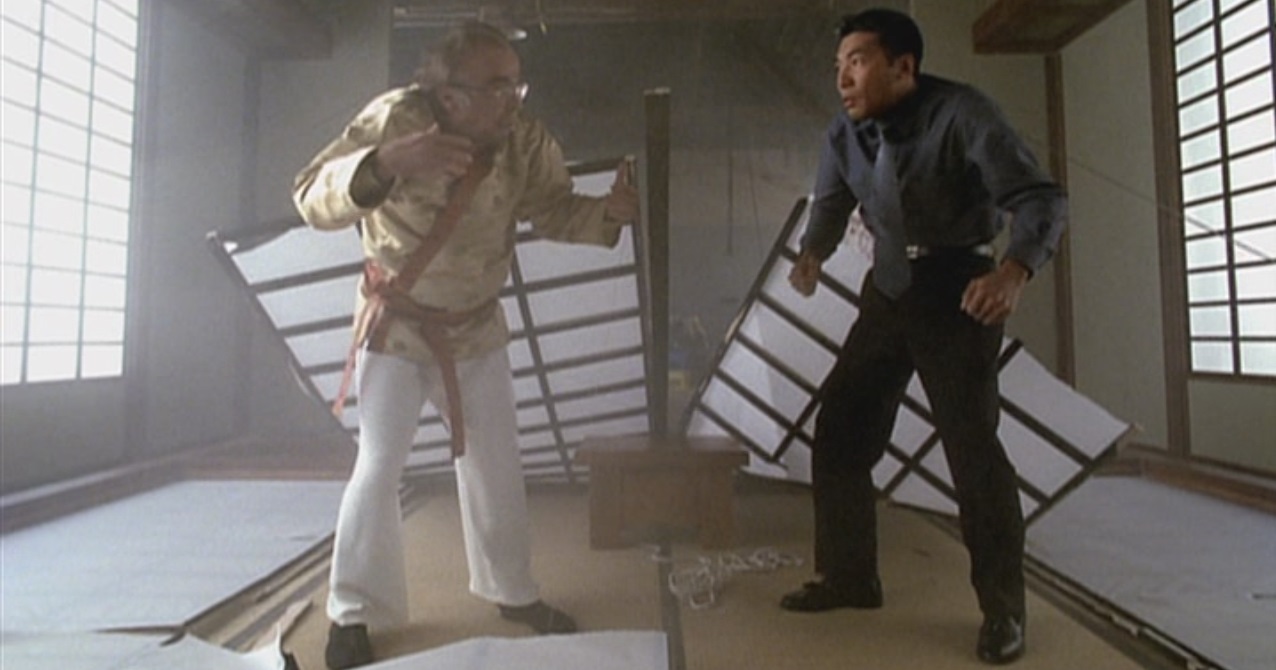
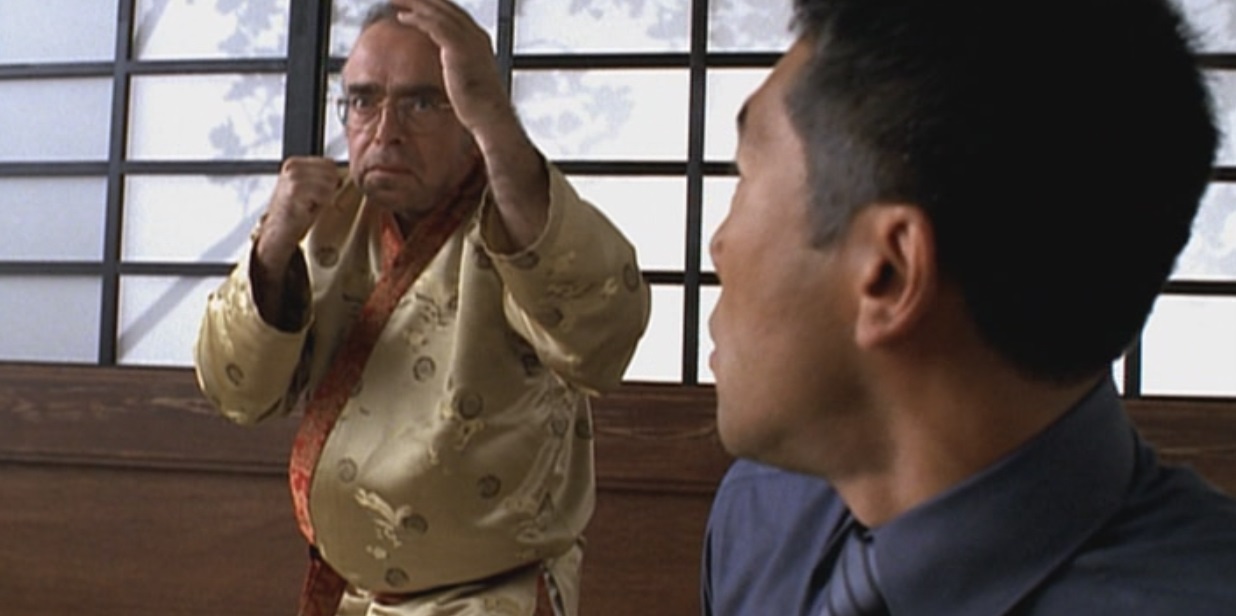
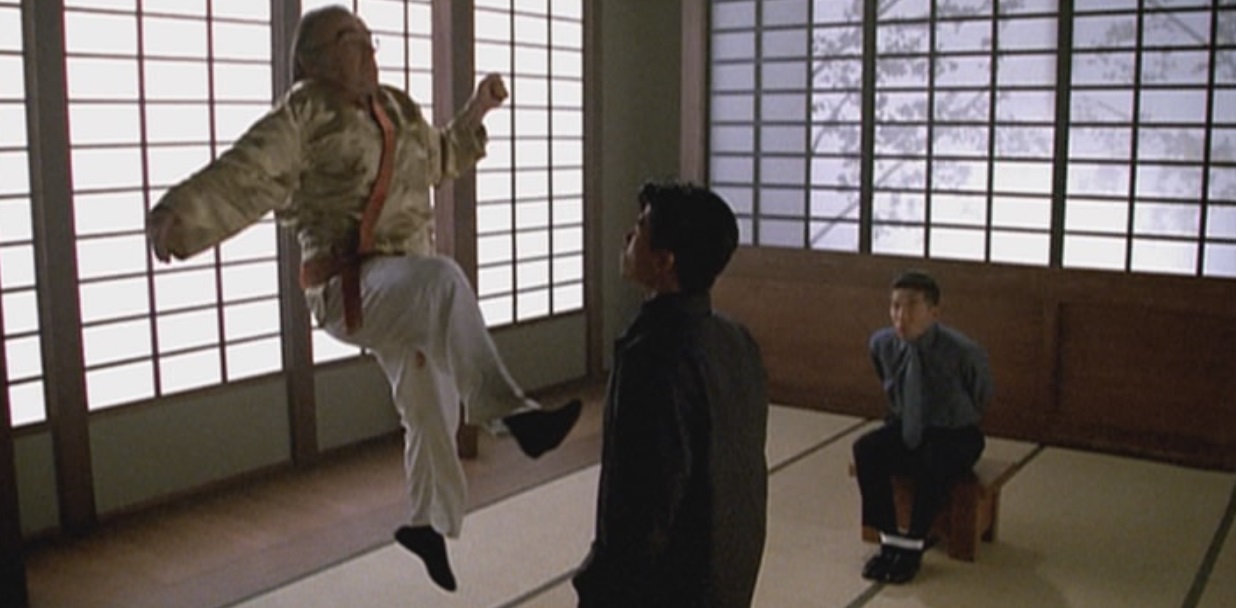
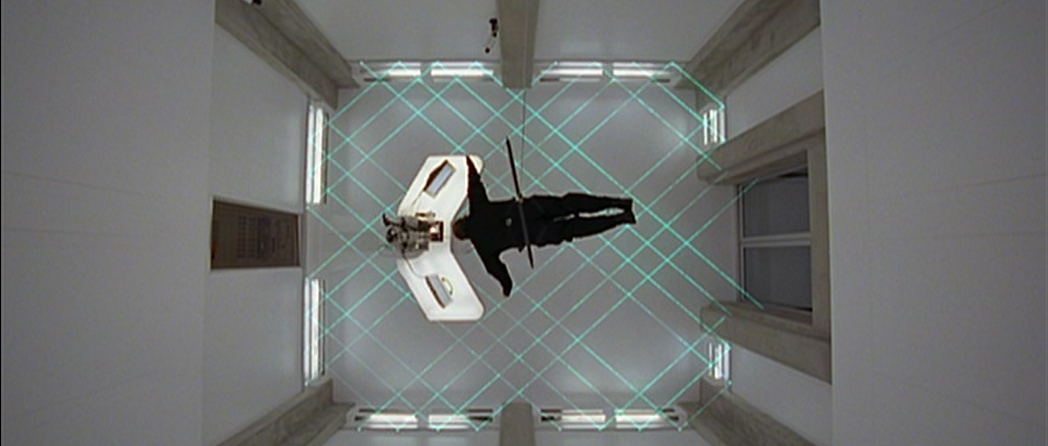
"I know kung-fu..."

“I know kung-fu…”

Spicer was very much the logical choice. He had only directed a single episode of The X-Files, but it was an important episode from the perspective of The Lone Gunmen. Spicer had helmed Three of a Kind towards the end of the show’s sixth season, the second Gunmen-centric episode and the show that provided a clear inspiration for the television series. In its own way, Three of a Kind was as much a pilot for The Lone Gunmen as Unusual Suspects or The Pilot had been, and Bryan Spicer was a perfectly logical choice for for the show’s signature director.

However, Bond, Jimmy Bond also cements some other details that will be important for the rest of the season. The Pilot had been an off-beat thriller, but it was a story with incredibly high dramatic stakes and a solid dramatic arc. The Pilot skewed, consciously or not, more towards a quirky thriller than an action comedy. As such, the wacky hijinks of Bond, Jimmy Bond are much more in line with the tone of the series than the grave threat that was posed in The Pilot. For better or worse, Bond, Jimmy Bond sets the agenda for the season ahead.
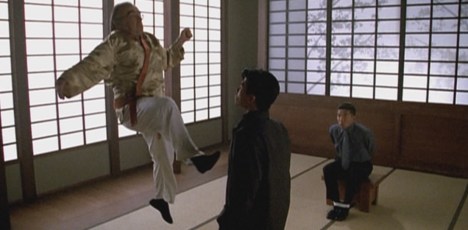
The last time Ten Thirteen got accused of mimicking The Matrix, everything worked out perfectly...

The last time Ten Thirteen got accused of mimicking The Matrix, everything worked out perfectly…

Continue reading

The Lone Gunmen – Pilot (Review)

This October/November, we’re taking a trip back in time to review the eighth season of The X-Files and the first (and only) season of The Lone Gunmen.

It is meant to be a joke.

It is an episode known as The Pilot, because it is a proof of concept for a new series that can be shown to executives in the hopes that they might green-light it and give the production team a series order. That is, after all, what a television pilot is. It is the first episode of a television show to be filmed, usually with considerable space between it and the rest of the first season. There is time for network notes and feedback, to determine what works and what doesn’t. There is space for recasting and reshooting, which becomes more problematic on a weekly schedule.

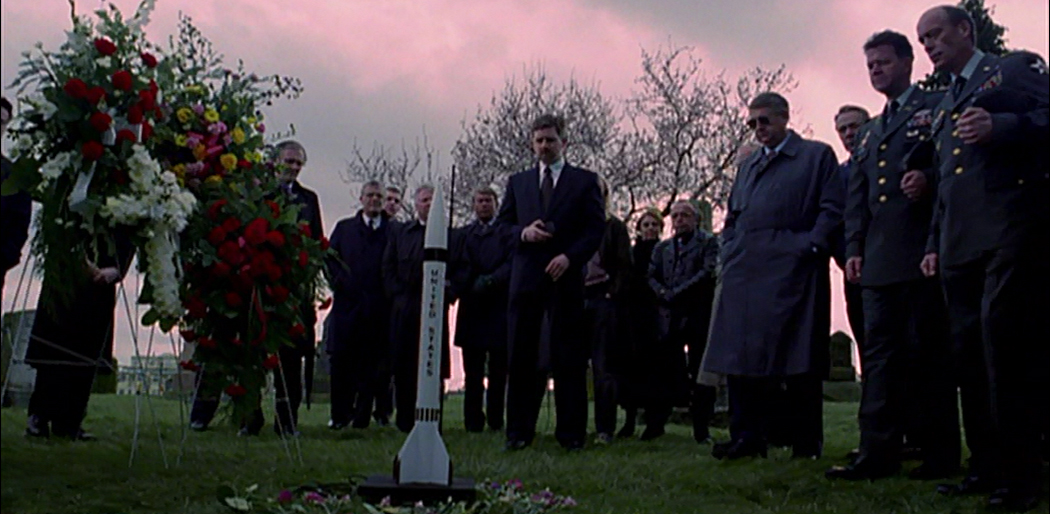
Rocket man.

Rocket man.

However, the fact that the first episode of The Lone Gunmen is called The Pilot is also a rather wry punchline. It is a self-aware reminder that the show takes itself considerably less seriously than Millennium or Harsh Realm. After all, even if this weren’t the very first episode of a new television show, it might be called The Pilot. Based purely on the plot, the episode might have been called The Pilot. It is an episode about a sinister plot to hijack planes using advanced technology. So calling the episode The Pilot is a cheesy and goofy bit of wordplay.

Of course, there is very little funny about it in hindsight.

Don't leave us hanging...

Don’t leave us hanging…

Continue reading

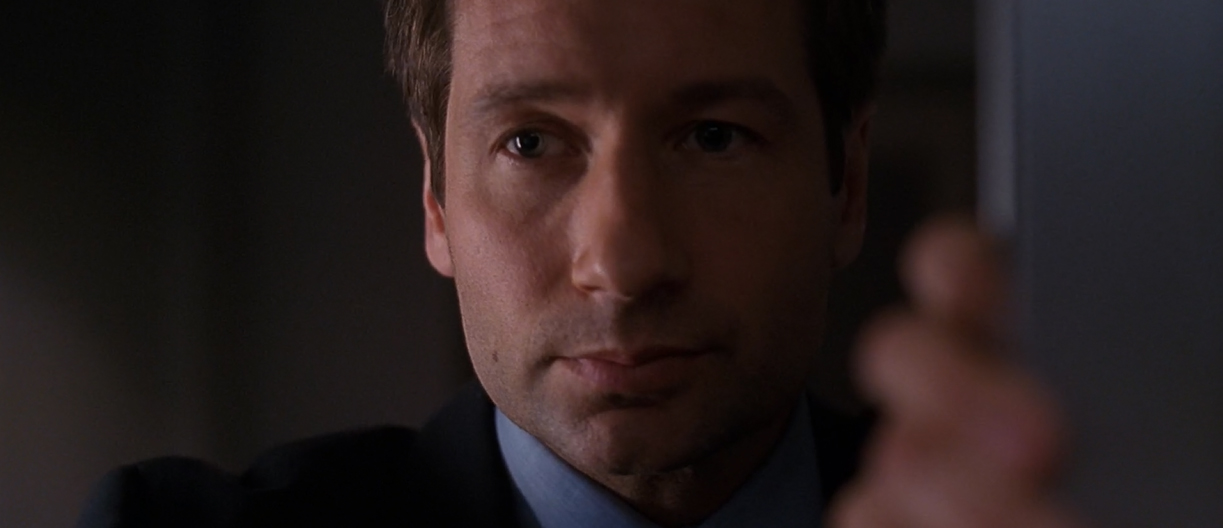
The X-Files – This is Not Happening (Review)

This October/November, we’re taking a trip back in time to review the eighth season of The X-Files and the first (and only) season of The Lone Gunmen.

The eighth season of The X-Files is remarkable in a number of ways.

It accomplishes a lot of things, and does them in a very logical and linear way. The departure of David Duchovny at the end of the seventh season set an agenda for the season ahead, and gave the production team a very clear set of goals. The eighth season required more discipline and planning than any of the previous seven seasons, with less room for improvisation or error. If Chris Carter and his team were to succeed at bringing the eighth season to life, it would require even more care and discipline than the show usually required.

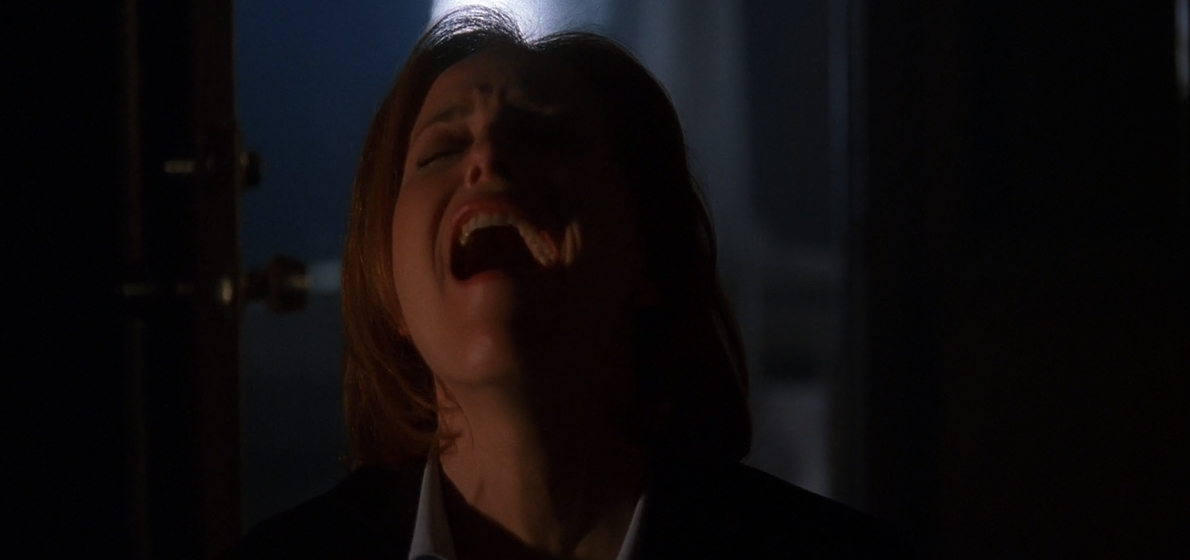
"Nooooo!"

“Nooooo!”

One of the least discussed aspects of the eighth season is the care that the production team took to structure it. The eighth season of The X-Files is the most meticulously and carefully structured season of The X-Files, clearly adhering to an internal three act structure. The first seven or eight episodes (Within to Via Negativa or Per Manum) are all set-up. The next five (Surekill to Medusa) explored that new set-up. The final eight (This is Not Happening to Existence) closed out the plots and threads of the season, leaving the show in a very different place.

The decision to shift Per Manum around in the broadcast order changes things slightly, but there is still a sense that the eighth season was entering its end game in late February 2001. Positioned at the start of the season’s third act, This is Not Happening offers perhaps the bleakest cliffhanger and puts our heroes at their lowest possible point. Adhering to the classic three-act structure, This is Not Happening serves as the emotional climax of the season. With a five week gap between the broadcast of This is Not Happening and DeadAlive, this is one hell of a cliffhanger.

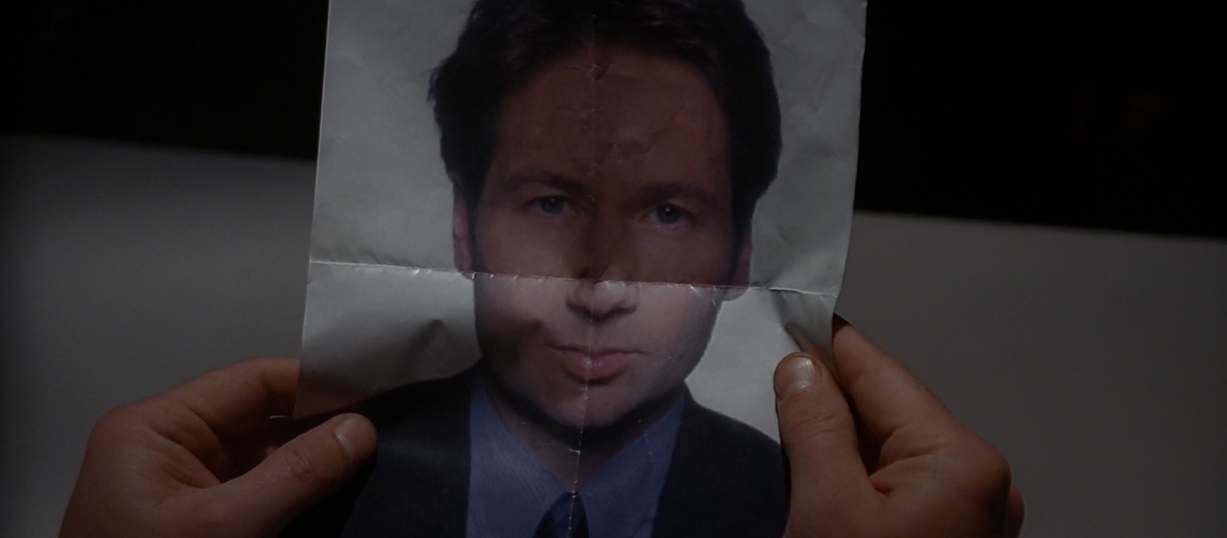
"Have you seen this devilishly handsome man?"

“Have you seen this devilishly handsome man?”

Continue reading

Non-Review Review: Spotlight

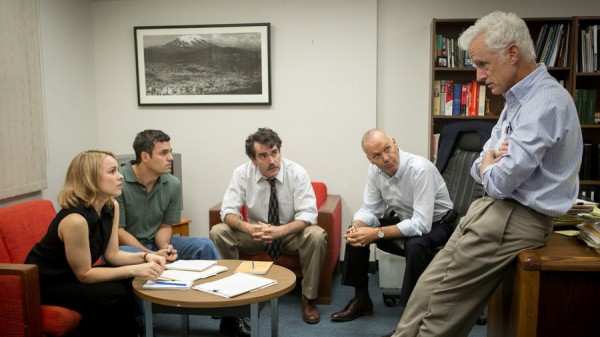
Nominally, Spotlight is about the exposé that ran in the Boston Globe identifying dozens of paedophile priests who had been shuffled around Boston parishes and the corrupt institution that sheltered them. Thomas McCarthy’s film never shies away from the horror stories told by the survivors of such institutional abuse, nor does it ignore the systems that were complicit in perpetuating and covering up that abuse. Running just over two hours, McCarthy’s film is meticulous and painstaking as it sorts through all the leads and follows the unravelling thread.

However, Spotlight is also about something bigger. It is a story about institutional structures as they exist, and how those structures are primarily motivated to protect themselves. The big reveal in Spotlight is not that the abuse is taking place, it is just how many people tried in how many different ways to expose that abuse to the cold light of day. The Catholic Church might be the most significant institution involved in the cover-up, but Spotlight suggests that the structures of Boston (and implicitly all over the globe) failed the people who needed them most.

spotlight4

Spotlight is a powerful film. McCarthy is not the most dynamic or exciting of directors, but his matter-of-fact presentation style suits the material perfectly. Towards the end of the film, journalist Matt Carroll jokes that he has started working on a horror novel to distract himself from the particulars of the case. Spotlight is very much a horror story, but a horror story where the discomfort is tied to the sheer inevitability. McCarthy’s camera is always definite and steady; a slow pan or zoom confirms what the audience already suspects, and is all the more effective for it.

McCarthy has assembled a fantastic cast, including John Slattery as Ben Bradley Junior. Bradley is the son of Benjamin Bradley Senior, the executive editor at The Washington Post who oversaw the Watergate coverage and who was played by Jason Robards in All the President’s Men. This creates a nice thread of real-life continuity for Spotlight, cementing its pedigree. McCarthy’s journalism epic is powerful stuff, and perhaps the most compelling endorsement of long-form investigative journalism to appear on screen in quite some time.

spotlight3

Continue reading

The X-Files – Per Manum (Review)

This October/November, we’re taking a trip back in time to review the eighth season of The X-Files and the first (and only) season of The Lone Gunmen.

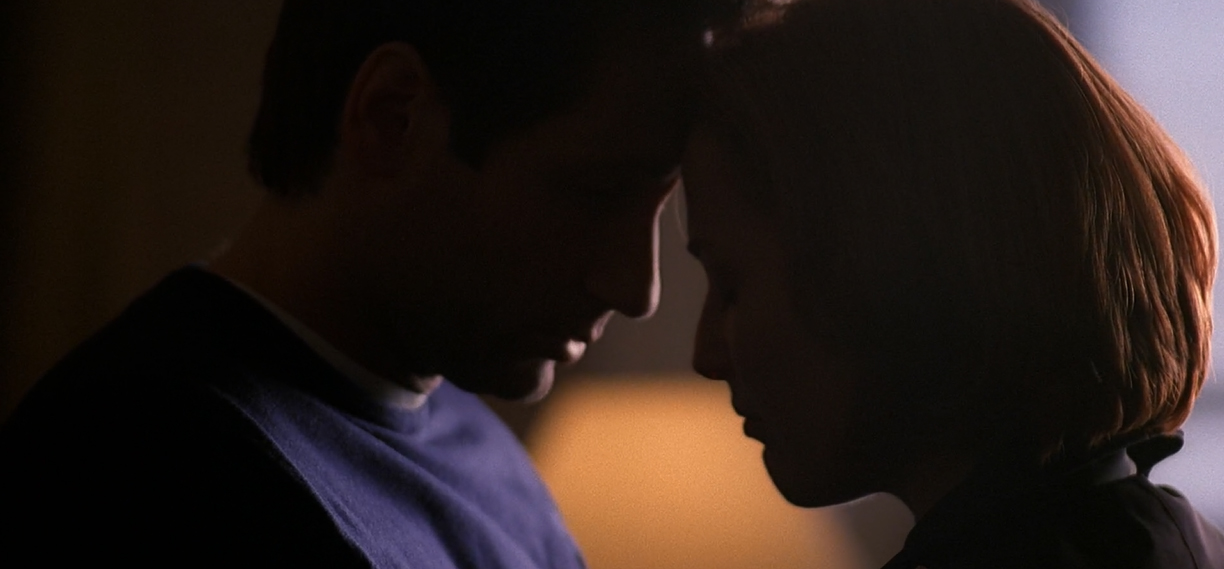
Per Manum marks a very serious shift in the eighth season of The X-Files.

It marks the point at which the show becomes more serialised and more tightly interwoven on an episode-to-episode basis than it had been at any point in the past. There are several “monster of the week” stories populating the final third of the eighth season (most obviously Vienen, Empedocles and Alone), but the last eight episodes of the season are more tightly interlocked than any other eight episodes of the show. Perhaps the closest comparison is to the opening nine episodes of the second season, but even the majority of those were stand-alones in a new status quo.

Things past...

Things past…

With Per Manum, the show reengages with the two big central mysteries driving the mythology of the eighth season. The closing moments of Requiem featured the disappearance of Mulder and the revelation of Scully’s pregnancy, establishing them as a driving force for the future of the show. Of course, nobody knew what form that future would take when Requiem was written and filmed. However, it is interesting how little forward momentum the eighth season has on these plot points. Two-thirds of the way through the season, neither is closer to resolution.

Of course, that is not to suggest that the production team have forgotten about Scully’s pregnancy or Mulder’s disappearance. One of the stronger aspects of the eighth season is the way that these details are woven into the plots of episodes where they are not even explicitly acknowledged. Mulder’s disappearance informs Scully’s unspoken reluctance to trust Doggett in Roadrunners; Scully’s pregnancy explains her decision not to go into the subway tunnels with Doggett in Medusa. Still, there is no linear sense of progress by this point of the year.

Hold it there...

Hold it there…

This is probably because these two plot threads cannot necessarily be explored in increments. Within and Without suggested that Mulder was being experimented upon from the comfort a spaceship; short of Scully and Doggett hijacking a space-shuttle, there is little they can do to affect his return but wait. Similarly, Scully’s pregnancy has a natural time limit imposed upon it; short of inducing labour, there is little she can do to affect the outcome but wait. As such, these are not the most dynamic plot points, but they work quite well in the context of the eighth season.

The first two thirds of the eighth season are spent waiting and anticipating, reflecting on strange absences and unexpected presences. The final third is spent rushing towards the finish line. Per Manum marks the transition point.

Don't turn this into a competition, Doggett...

Don’t turn this into a competition, Doggett…

Continue reading

The X-Files – Medusa (Review)

This October/November, we’re taking a trip back in time to review the eighth season of The X-Files and the first (and only) season of The Lone Gunmen.

Medusa is an odd episode of the eighth season, precisely because of its normality.

Medusa was produced directly before This is Not Happening, the episode that marked the return of David Duchovny to the show as a regular; he would remain a regular for the rest of the season. When it came to the broadcast order of the season, the episodes were shuffled around slightly. Medusa aired directly before Per Manum, an episode which featured an appearance by David Duchovny in flashback. Whether the season is watched in broadcast or production order, David Duchovny’s name appears in the opening credits from the next episode until the end of the season.

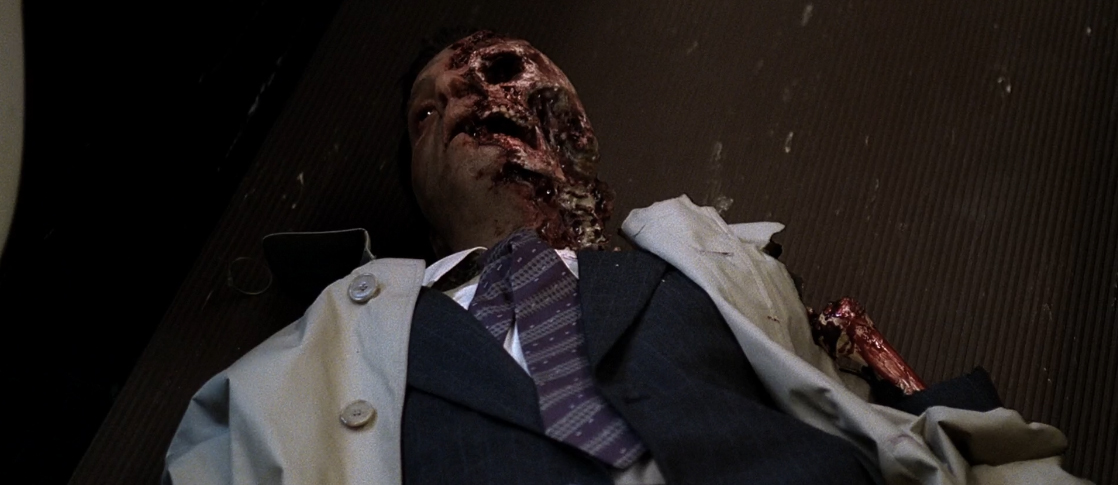
"I want to take his face... off."

“I want to take his face… off.”

Medusa marks the end of the short-lived “Scully and Doggett era” of The X-Files. This is the last point in the eighth season (and also the last point ever) that Doggett and Scully have a show to themselves. The ninth season introduces the characters of Monica Reyes and Walter Skinner to the opening credits. Of course, it is interesting to wonder whether there ever really was a “Scully and Doggett era.” Certainly, the eighth season took its time to let Scully and Doggett get comfortable with one another between Within and Via Negativa.

This puts Medusa in the very strange position of having to close out an “era” of the show that essentially spanned four episodes: Surekill, Salvage, Badlaa and Medusa. This is the eighth season’s last example of “business as usual”, which seems all the more unusual that business has only recent approached something resembling normality.

He's practically just skin and bones...

He’s practically just skin and bones…

Continue reading