• Following Us

  • Categories

  • Check out the Archives


  • Awards & Nominations

The X-Files – En Ami (Review)

This September, we’re taking a trip back in time to review the seventh season of The X-Files and the first (and only) season of Harsh Realm.

The seventh season mythology has a weird hazy feeling to it. It feels almost like a postscript.

It is hard to explain what is happening with the mythology at this point. Two Fathers and One Son had promised an end to the over-arching conspiracy narrative, but it felt like something of a half-measure. The First Elder and the Second Elder were killed off, but most of the other major players remained. Although Scully congratulated Mulder on toppling the conspiracy in Biogenesis, the same episode seemed to off-handedly suggest that the Cigarette-Smoking Man was still working on it. He was still talking hybrids in The Sixth Extinction II: Amor Fati.
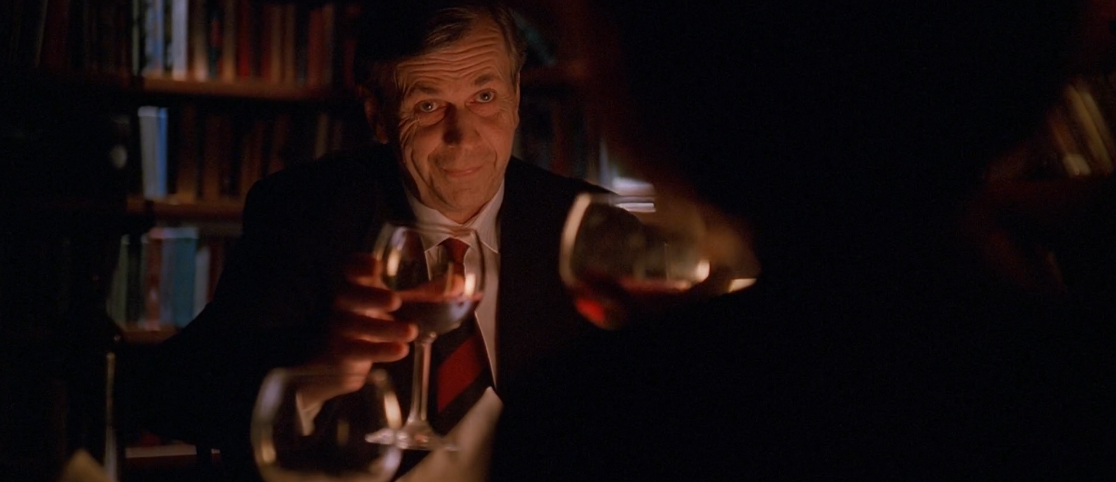
I'll drink to that...

I’ll drink to that…

At the same time, Two Fathers and One Son marked the end of the mythology as an on-going concern. The particulars of colonisation and the nature of the Cigarette-Smoking Man’s work were confined to limbo, some sort of bizarre twilight realm where they might exist or they might not; they simply drift around the show like ghosts. Whether or not Two Fathers and One Son actually resolved any aspect of the show’s overarching plot is open to debate; however, they very clearly suggested that the mythology was not the show’s central story going forward.

In the seventh season, it frequently feels like the mythology is a hazy backdrop against which character-driven stories might unfold. In The Sixth Extinction, an alien ship becomes a gateway to meditations on the nature of human existence while Krycek blackmails Skinner and Fowley still works with the Cigarette-Smoking Man. In The Sixth Extinction II: Amor Fati, the Cigarette-Smoking Man is making hybrids and murders Fowley, but the heart of the story is Mulder’s flirtation with temptation. Sein und Ziet and Closure have nothing to do with colonisation.
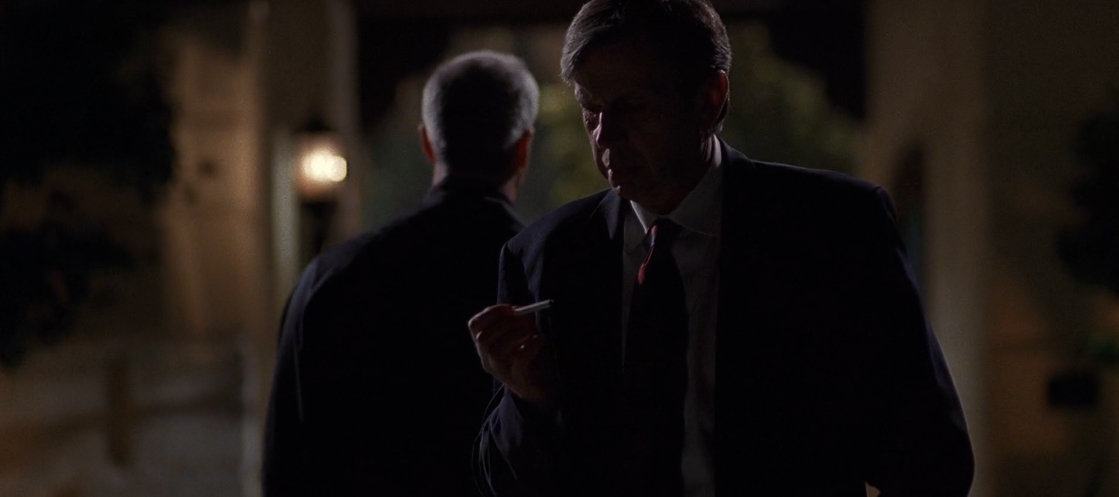
Smokey and the bandit...

Smokey and the bandit…

To be fair, this was arguably always the case with mythology episodes. In hindsight, it can seem like the mythology episodes were less part of an on-going story and more meditations on common themes tied into a shared continuity. Colony and End Game are spectacular pieces of television, but they are hard to reconcile with later revelations. The End arguably has more in common with Biogenesis than it does with the feature film into which it is supposed to tie. However, the mythology always held the promise of revelations and twists to propel it forward.

The principal effect of Two Fathers and One Son seems to have been to take away that sense of purpose and destination. The mythology is no longer building towards something or racing forward. Instead, the mythology stories seem to take place in the wasteland; a world in ruins, with only the fractured semblance of internal logic. En Ami continues the trend of setting character-driven stories amid the hazily defined unreality. Scully and the Cigarette-Smoking Man take a road-trip together through whatever is still standing.
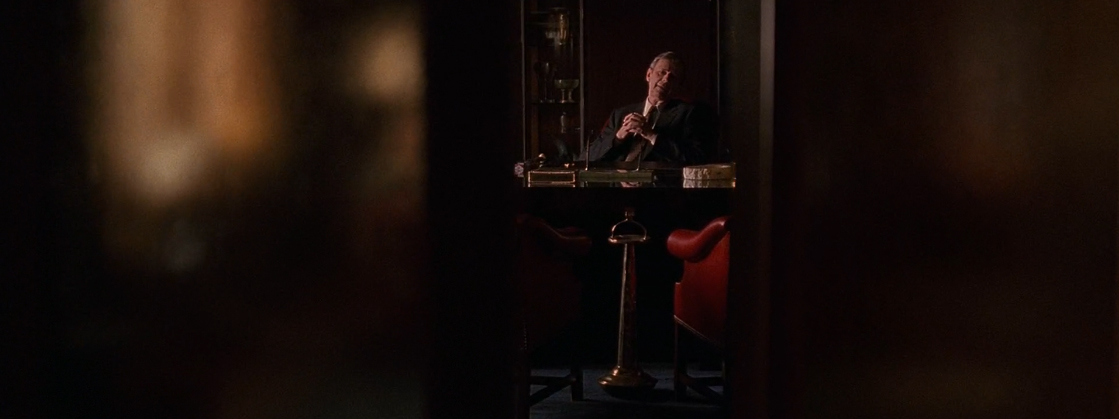
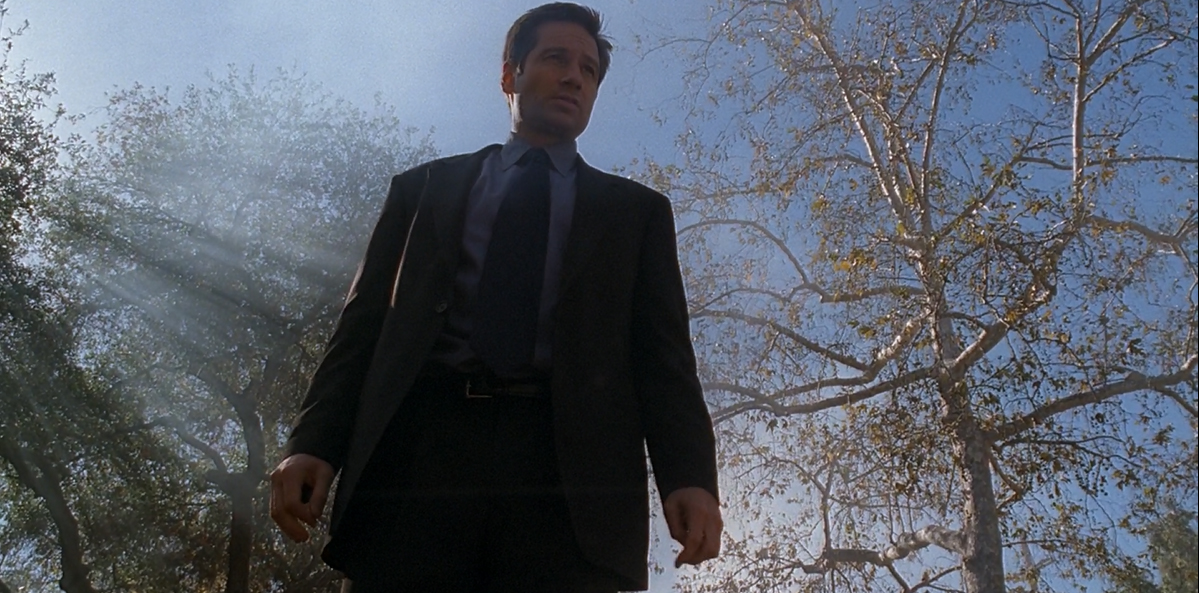
Peering through an open door...

Peering through an open door…

Continue reading

The X-Files – Theef (Review)

This November, we’re taking a trip back in time to review the seventh season of The X-Files and the first (and only) season of Harsh Realm.

Theef is an underrated seventh season episode, one often forgotten and overlooked as season seven moves firmly into its second half.

The episode represents another conscious attempt to get “back to basics.” Continuing the vein of Hungry or Millennium or Orison or Signs and Wonders, the script for Theef hopes to prove that the show can still produce a genuinely scary hour of television in its seventh season. It certainly succeeds; Theef is a delightfully unsettling story, one that borders on the downright nasty. From the closing shot of the teaser – a body suspended from a chandelier with the word “Theef” scrawled on a wall in his own blood – Theef goes for the jugular.

"I think he's trying to tell you something."

“I think he’s trying to tell you something.”

Continue reading

The X-Files – First Person Shooter (Review)

This November, we’re taking a trip back in time to review the seventh season of The X-Files and the first (and only) season of Harsh Realm.

On paper, this should be a slam dunk.

X-Cops was an incredibly risky and experimental episode of The X-Files that really pushed the show in an unexpected direction. The idea of crossing over into Cops was strange and surreal; it seemed like a gimmick that could backfire spectacularly. How could an episode of The X-Files adopt many of the identifiers and signifiers of Cops while still managing to tell its own story? It was a risky proposition, but writer Vince Gilligan and director Michael Watkins managed to pull it off, producing a definite highlight of the seventh season. (If not the final three seasons.)

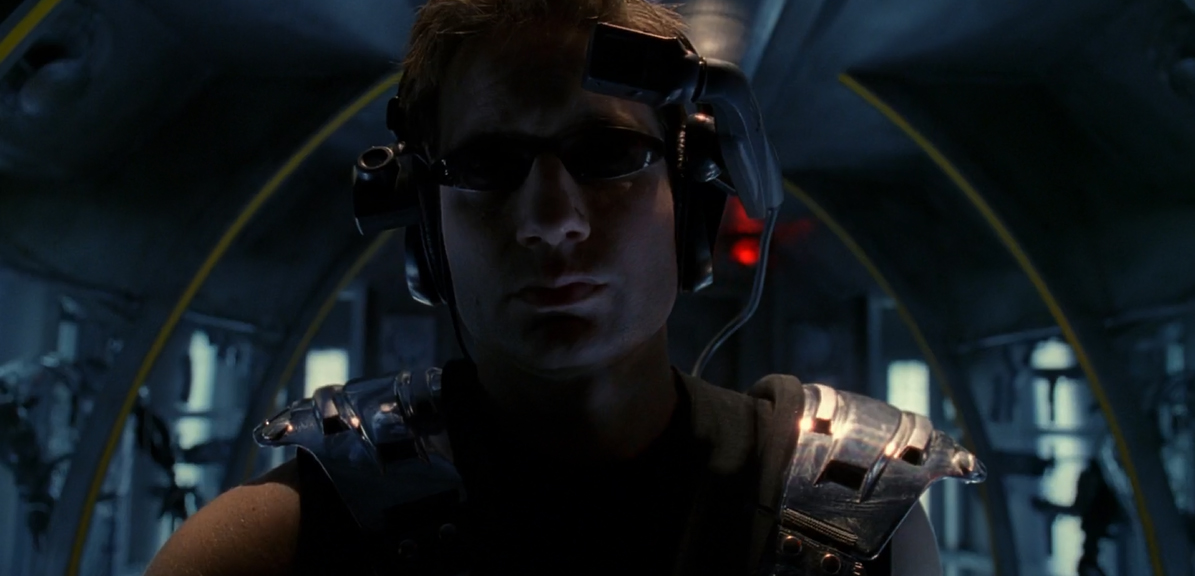
Game on.

Game on.

First Person Shooter is a similarly ambitious episode, but one that should be a much safer bet. While it pushes the show outside its comfort zone in terms of setting and concept, it does not stray too far from the basic X-Files template. It is written by outsider writers William Gibson and Tom Maddox, but could logically be seen an extension of their superlative script for Kill Switch. In fact, Kill Switch wasn’t even the show’s first “killer artificial intelligence” story; Howard Gordon and Alex Gansa had written Ghost in the Machine as the series’ eighth episode.

On paper, First Person Shooter is ambitious without being entirely unprecedented. Still, the script bends the show too far out of shape. The episode seems to warp and distort the series around it. Despite the fact that First Person Shooter contains far more of the trappings and structures of The X-Files than X-Cops, the episode feels far less comfortable in its own skin. First Person Shooter plays almost like an episode of The X-Files filtered through a lens of unreality; it feels like a textured wireframe model of an X-Files episode, wandering lost in the uncanny valley.

Game over.

Game over.

Continue reading

The X-Files – X-Cops (Review)

This November, we’re taking a trip back in time to review the seventh season of The X-Files and the first (and only) season of Harsh Realm.

There is a very serious argument to be made that X-Cops represents the last point at which The X-Files truly pushed itself.

There are experimental episodes later in the run that play with new narrative forms and concepts. Improbable features a snazzy musical number; Lord of the Flies intersects with stunt-driven television shows; Sunshine Days has the characters enter The Brady Bunch. However, X-Cops represents the last time that The X-Files allows itself to be completely submerged in a high-concept idea, following the concept through to its logical conclusion in the spirit of Jose Chung’s “From Outer Space” or Bad Blood or Triangle.

xfiles-xcops17a

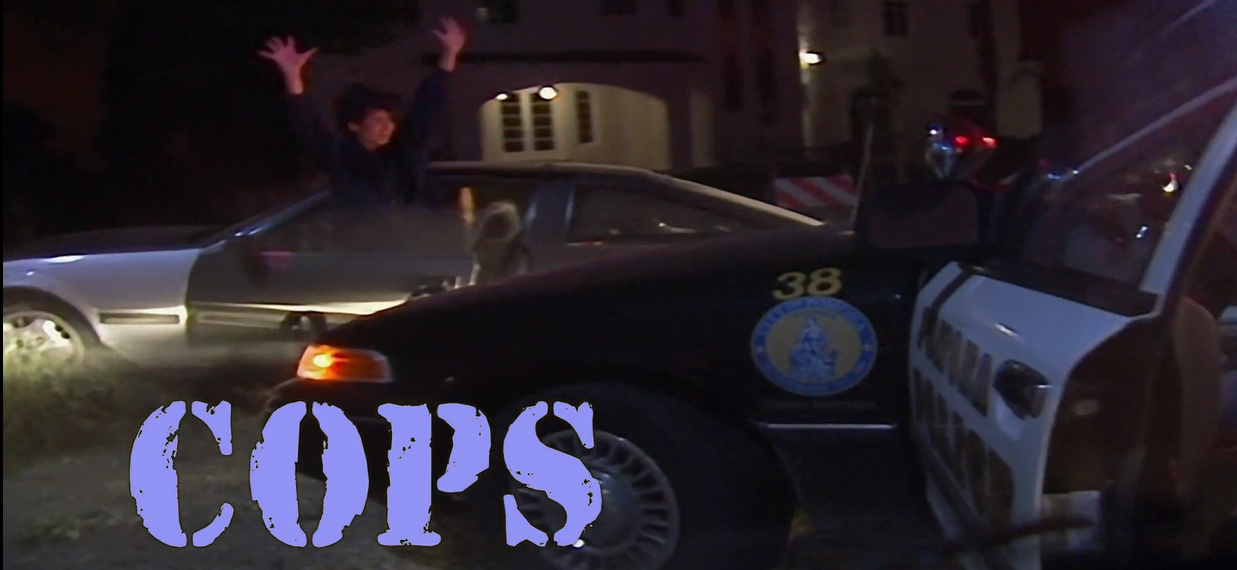
X-Cops features Mulder and Scully crossing over into an episode of Cops. However, the episode is told entirely from the perspective of the Cops production team, filmed and broadcast as if it were an episode of Fox’s long-running law enforcement reality television show. The camera becomes a performer in X-Cops, and at no point in the entire forty-five minutes does it “break character.” Barring the use of the X-Files opening credits sequence and superimposing the logo at commercials, X-Cops adopts the form and structure of Cops.

This is a boldly experimental piece of television; it is not the sort of episode that viewers expect from a show in its seventh season. This is a giddy and goofy concept more akin to enthusiastic student filmmaking than an established television institution. After Sein und Zeit and Closure suggested that The X-Files was winding down, X-Cops proves that there’s life in the old show yet. Sadly, this feels like something of a last gasp; there would never be quite as much life in The X-Files after this point.

xfiles-xcops2a

Continue reading

Doctor Who: The Magician’s Apprentice (Review)

“The TARDIS will not be entered. The TARDIS will be destroyed.

“Good luck with that. She’s indestructible.”

“Did the Doctor tell you that? Because you should never believe a man about a vehicle.”

 – The Daleks, Clara and Missy share some truths

The ninth season is certainly ambitious.

The idea of building an entire season around a series of interconnected two-parters is a departure from the show’s traditional format. It certainly makes it a lot harder to review the show on a week-by-week basis, if only because it means that reviewers are talking about each episode having only seen around half the story. That is not the way that people typically consume Doctor Who. Even modern DVD releases of the classic series package whole series together so it is not so much a four- (or six-) part episode as a single story.

Battlefield.

Battlefield.

Since it returned to television in 2005, Doctor Who has adopted an approach to narrative driven by the single episode as the default narrative unit. Sure, there were multi-part stories; but they were the exception rather than the rule. Sure, there were season long arcs; but they were largely driven by arc words and core themes as much as plot. This was, after all, the big controversy over Moffat’s “Impossible Girl” arc, which was presented as a plot mystery only to be revealed as a clever thematic point.

During the Davies era, the two-parters were typically allocated for big “event” episodes. There were roughly three in a season, and they allowed the show to adopt a bigger sense of scale and spectacle. The first two-parter was typically lighter and little bit toyetic (the “toy monster” two-parter) and the second was a lot darker and ominous (the “highlight of the season” two-parter). Davies would then use a two-parter to provide a suitably bombastic conclusion to the season, offering “blockbuster” family entertainment at the height of summer.

An axe to grind...

An axe to grind…

Continue reading

The X-Files – Closure (Review)

This November, we’re taking a trip back in time to review the seventh season of The X-Files and the first (and only) season of Harsh Realm.

Sein und Zeit and Closure don’t fit together at all.

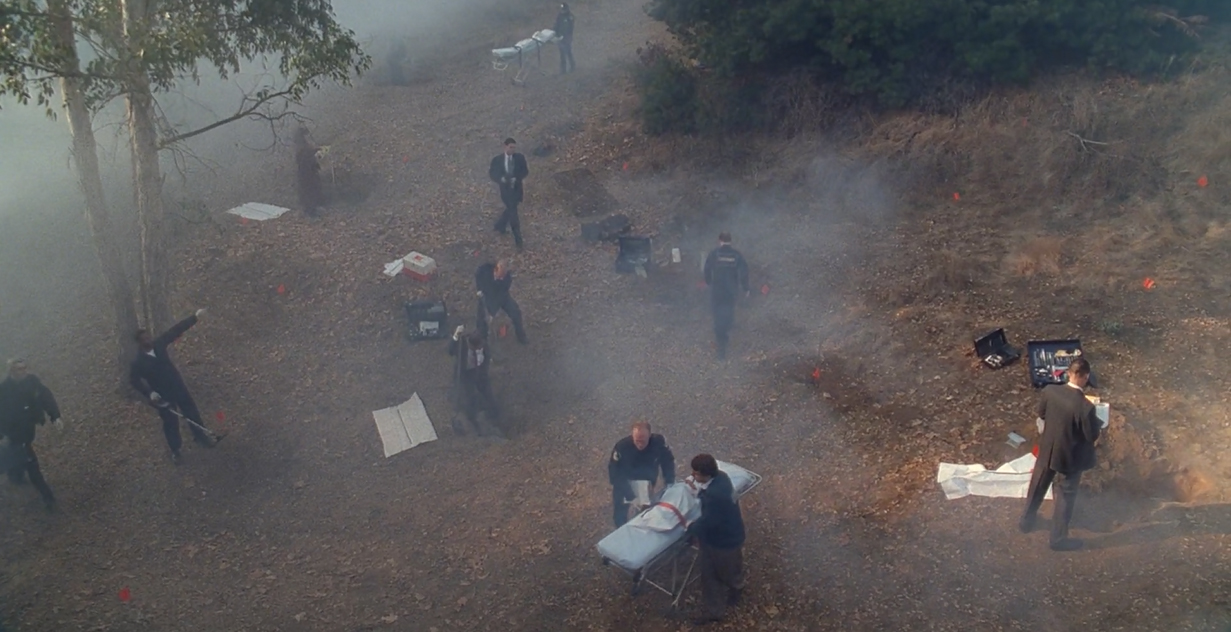
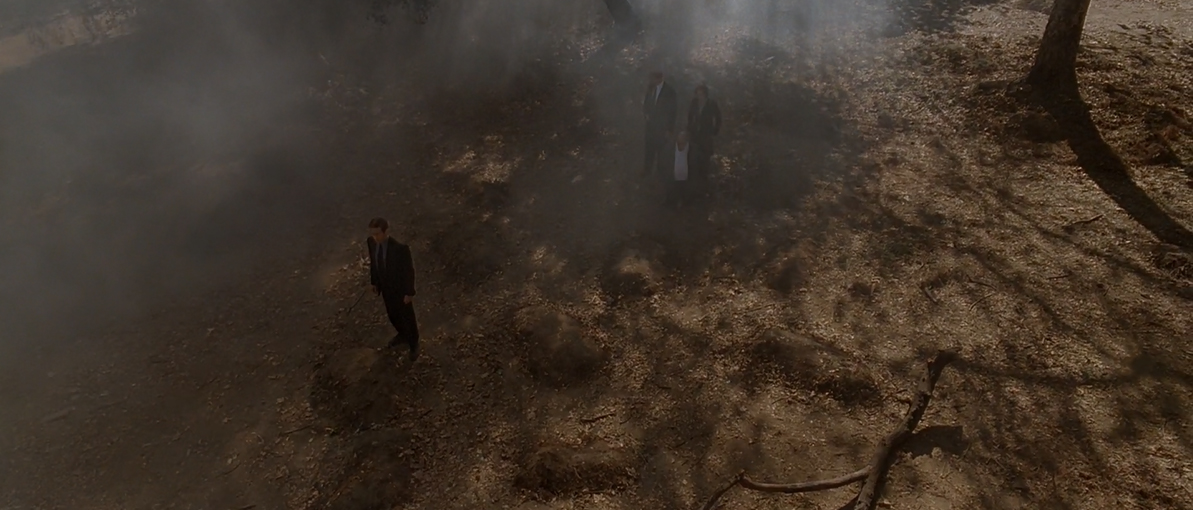
There is a nice symmetry to the stories, with Sein und Zeit closing with Mulder standing amid a mass grave and Closure opening with the excavation of the same mass grave. The contrast between the two shots of the same space says a lot about the differences between Sein und Zeit and Closure. Sein und Zeit is an episode that isolates Mulder, demonstrating how alone he truly is in the world and how all his beliefs might be empty; Closure responds by cluttering up the narrative and revealing an absurdly convoluted explanation of what happened to Samantha.

A grave subject...

A grave subject…

Even the themes of the two episodes are almost unique. Both Sein und Zeit and Closure are driven by Mulder’s desire to make sense of what happened to his sister, but both adopt diametrically different approaches towards the question. Sein und Zeit proposes that the world is a random and cruel place where bad things happen to children for no reason beyond the sadistic whims of strangers, while Closure embraces the idea that there is a larger scheme in which these horrible events occur.

There is a yin-and-yang structure to Sein und Zeit and Closure, a sense that the two episodes are almost at odds with one another when it comes to the fate of Samantha Mulder. Closure offers something approaching hope. It is too much to describe Closure as a happy-ending to the character arc that ran through the first seven seasons of the series, but it does offer Samantha an ending that is not soul-destroyingly bleak. It offers Mulder resolution and understanding. In his own words, it offers him freedom.

"Conscience... it's just the voices of the dead... trying to save us from our own damnation."

“Conscience… it’s just the voices of the dead… trying to save us from our own damnation.”

It is a very hopeful suggestion. It is a particularly hopeful suggestion coming at the middle of the show’s seventh season, as the resolution to Mulder’s character arc. The audience has spent seven years watching Mulder deal with the trauma of the loss of his sister, wrestling with the fear that he might never find an answer; or that he might find an answer that fails to make sense of it all. What if he found an answer that made sense of everything? What if Samantha’s disappearance wasn’t just part of a government conspiracy? What if it was part of something bigger?

What if the disappearance of Samantha Mulder meant everything?

A man alone.

A man alone.

Continue reading

The X-Files – Sein und Zeit (Review)

This November, we’re taking a trip back in time to review the seventh season of The X-Files and the first (and only) season of Harsh Realm.

Sein und Zeit and Closure don’t fit together at all.

There is a clear demarcation that exists between the two episodes, to the point where they cannot really be described as a single two-part story. Following the disappearance of Amber Lynn LaPierre from her home, Sein und Zeit closes with the arrest of a serial child-murderer and the discovery of a mass grave. There is not a whiff of the show’s central mythology to be found, despite Mulder’s insistence and anxiety. Although Closure picks up where Sein und Zeit left off, it embarks on its own separate story that does draw heavily from the show’s established mythology.

A grave subject...

A grave subject…

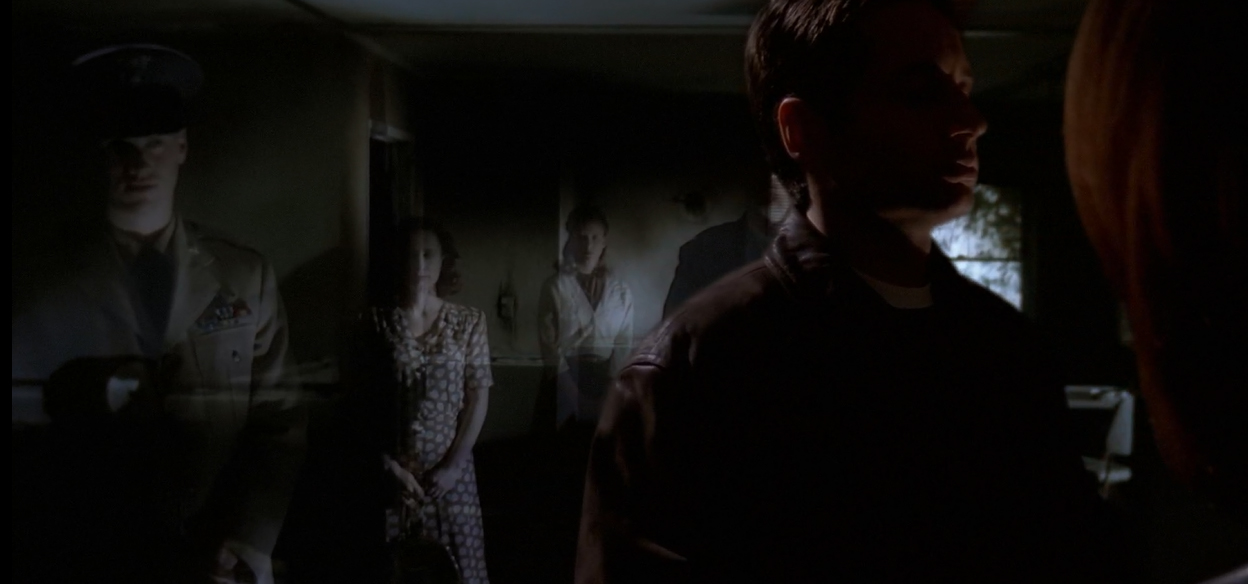
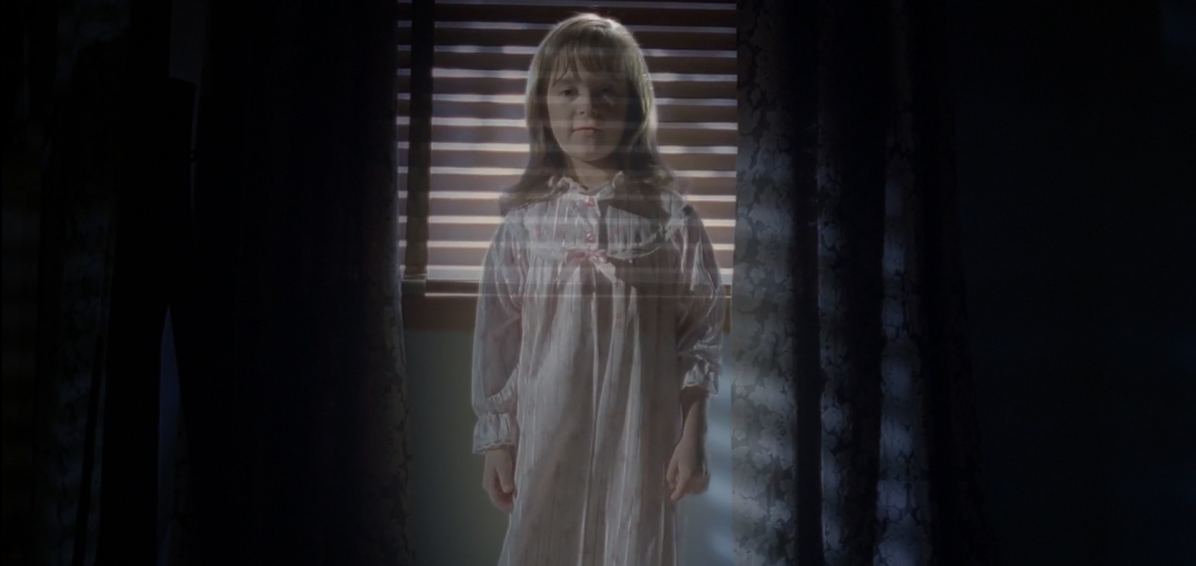
Even the guest casts of the two episodes are almost unique. Outside of David Duchovny and Gillian Anderson, only two guest stars appear in both episodes. Rebecca Toolan and Megan Corletto both play characters who die in Sein und Zeit, but appear as ghosts in Closure. The featured guest stars in Sein und Zeit do not reappear in Closure, and vice versa. Even the series’ recurring cast is firmly divided between the two halves; Walter Skinner appears in Sein und Zeit, while the Cigarette-Smoking Man plays an important role in Closure.

There is a yin-and-yang structure to Sein und Zeit and Closure, a sense that the two episodes are almost at odds with one another when it comes to the fate of Samantha Mulder. Sein und Zeit dares to ask what might happen if there was no rhyme or reason to her abduction; what if it was just a tragedy, like the tragedies that happen to happy families all the time? Mulder has invested so much of himself in the quest to explain what happened on that night in late November 1973; what would happen if there were no meaningful explanation?

"Conscience... it's just the voices of the dead... trying to save us from our own damnation."

“Conscience… it’s just the voices of the dead… trying to save us from our own damnation.”

It is a very bleak suggestion. It is a particularly bleak suggestion coming at the middle of the show’s seventh season, as the resolution to Mulder’s character arc. The audience has spent seven years watching Mulder dig deeper and deeper into a sinister conspiracy against mankind, largely motivated by the fact that his sister’s disappearance is a part of some larger puzzle. What if it wasn’t? What if Mulder’s whole quest were simply a lie that he had told himself? What if Mulder wanted to believe so badly that he convinced himself that this made sense?

What if the disappearance of Samantha Mulder meant nothing?

A man alone.

A man alone.

Continue reading

Non-Review Review: Miss You Already

It is very difficult to produce a film about cancer that does not seem cloying or cynical. As a narrative device, cancer can often feel like a conscious attempt to manipulate the audience’s sentiment. It is an illness which means a lot to a lot of people, and which prompts a whole host of strong feelings among those who have lived with it and those who have known those close to them who lived with it. It is very difficult to properly calibrate a film about cancer so that it doesn’t feel like a short cut to audience empathy and sympathy.

Miss You Already walks a very fine line. It trips across that line on more than a few occasions, tripping over into the stock clichés of the “life-affirming cancer film.” There are emotional montages that capture and contrast the reality of life with and without cancer; there are familiar pop songs laid over sequences of characters coping with tremendous personal stress; there is the concious self-aware manipulation of footage in such a way as to visually underscore the passage of precious time or the pace of life.

missyoualready5a

There are some storytelling decisions that do feel a little too clever and a little too shrewd, a very obvious attempt to provide optimistic symmetry to the mortality that nestles at the heart of the film. Miss You Already feels almost too conscious of itself at certain points, too aware of the audience to which it plays. The film works best when it ignores the familiar structuring, when it avoids trying to offset the morbid material with something a little lighter. Although occasionally smothered by familiar story beats, there are moments of humanity here.

It is to the credit of the two lead performers that those moments of humanity still shine through. Drew Barrymore is charming and charismatic in the role of narrator and witness, but the film belongs to Toni Collette. Collette anchors the film, proving a weight and emotional centre that is occasionally obscured by its recognisable structure. Miss You Already doesn’t quite work, but Collette’s performance gets it a lot closer than it might otherwise.

missyoualready

Continue reading

The X-Files – Signs and Wonders (Review)

This November, we’re taking a trip back in time to review the seventh season of The X-Files and the first (and only) season of Harsh Realm.

Religion is a major part of The X-Files. After all, what is the show but a meditation on faith?

In a way, this is an aspect that dates the series. While the show’s conspiracy theories and surveillance culture paranoia resonate as effectively in 2015 as they did in 1995, the show’s religious themes seem innocent and naive in the wake of 9/11 and the War on Terror. Signs and Wonders was broadcast towards the end of January 2000. It is hard to imagine the episode being produced even two years later, once the world had been so thoroughly shaken by acts of religious zealotry.

Snaking along...

Snaking along…

The X-Files exists as a product of the nineties, pre-dating what many have termed “the new atheism.” It exists against the backdrop of the Clinton era, in the space between the fall of the Berlin Wall and the start of the War on Terror. There are points when the shew resonates beyond that; The X-Files is often a profound and thoughtful meditation on issues like trust and faith. However, there are also points where The X-Files almost seems fused in time; where it seems like a moment has been captured in celluloid like a mosquito trapped in amber.

Signs and Wonders feels like one of those moments, sitting between the failed impeachment of President Bill Clinton and the triumphant election of President George W. Bush. This is what the last gasp of the nineties looks like.

Snake handling...

Snake handling…

Continue reading

Non-Review Review: Life (2015)

The biggest problem with Life is that the film is largely lifeless.

Life is the story of the iconic photographs of James Dean taken by photographer Dennis Stock in the run-up to the release of East of Eden in March 1955. At that point, Dean was a young actor on the cusp of stardom. As the premiere of East of Eden approached, Dean still aspiring towards his definitive role in Rebel Without a Cause. Dennis Stock saw something in the young actor, believing he might capture a moment of cultural change in the brooding young actor.

"The coat, he borrowed from James Dean..."

“The coat, he borrowed from James Dean…”

Even if they didn’t make the cover of Life magazine, Stock’s photographs have come to define Dean in the popular memory. These photographs capture Dean at his most brooding and his most joyous, capturing the extremes of his experience. Snapping Dean walking through the rain in Times Square or reading comics with his brother, Dennis seemed to trap some of the essence of the actor in his work. Life centres on the complicated relationship that exists between the two men, as they attempt to get a read on one another and navigate the taut waters of celebrity.

However, for a film inspired by (and derived from) an instantly recognisable set of photos, there is something just a little bit too staid about Anton Corbijn‘s two-hour long character study. It feels like a loose selection of pop psychology strung around some faithful recreations, missing the vibrancy and the intimacy that made those shots so distinctive.

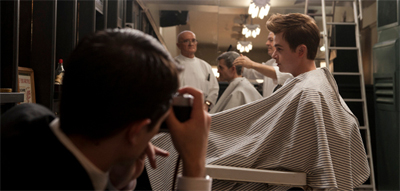
#HairRaising

#HairRaising

Continue reading