• Following Us

  • Categories

  • Check out the Archives


  • Awards & Nominations

Doctor Who: The Hungry Earth (Review)

To celebrate the fiftieth anniversary of the longest-running science-fiction show in the world, I’ll be taking weekly looks at some of my own personal favourite stories and arcs, from the old and new series, with a view to encapsulating the sublime, the clever and the fiendishly odd of the BBC’s Doctor Who.

The Hungry Earth originally aired in 2010.

Oh look! Big mining thing! Oh, I love a big mining thing. See, way better than Rio. Rio doesn’t have a big mining thing.

– the Doctor looks on the bright side of arriving in not!Rio

The Hungry Earth represents the biggest structural shift of Steven Moffat’s first season of Doctor Who. The writer would indulge in a number of radical structural changes over his time running the show, but his first season as showrunner conforms to the pattern of Russell T. Davies’ four full seasons. There’s the introductory present/past/future trilogy, the two mid-season two-parters and the gigantic two-part season finalé. The content of Moffat’s season might have been markedly different (actual romantic snog! a season building an arc that isn’t just references and easter eggs!), but the format was carried over faithfully.

Moffat’s following two seasons would get more experimental. For one thing, both seasons would be split in half. This allowed Moffat to offer the first genuine cliffhanger in the revival’s history to last more than a week, with a gap of several months between A Good Man Goes to War and Let’s Kill Hitler. His second season would feature the first two-part season opener (and first one-part season finalé) of the revived television show. His third season would feature no two-part episodes, spread across two calendar years.

However, sitting at the tail end of his first season, The Hungry Earth feels like the strangest structural element of Moffat’s first year in charge of Doctor Who. It’s what would traditionally be the first two-parter of the season, pushed back towards the end of the year.

Balancing the scales...

Balancing the scales…

Continue reading

Non-Review Review: Pacific Rim

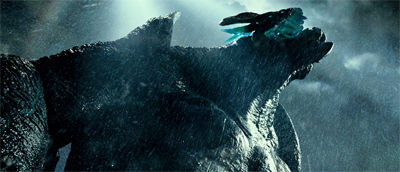
The generic way of describing Pacific Rim seems to be Transformers vs. Godzilla, which really says more about how hard it is to sell an original blockbuster these days than it does about the quality of the film itself. There are obvious and superficial similarities between Pacific Rim and the two film series cited – giant robots and monsters from the ocean – but that cynical synopsis doesn’t do justice to director Guillermo Del Toro’s bold vision.

Pacific Rim is a punchy old-school summer blockbuster, one which remembers that characters are the foundation of drama, and which imbues its flesh-and-blood cast with as much personality as the flesh-and-blood spectacle unfolding overhead.

Here there be monsters...

Here there be monsters…

Continue reading

Civil War: Wolverine (Review)

To celebrate the release of The Wolverine later in the month, we’re taking a look at some classic X-Men and Wolverine comics every Monday, Wednesday and Friday here. I’m also writing a series of reviews of the classic X-Men television show at comicbuzz every weekday, so feel free to check those out.

A lot of the recent big Marvel events, stretching from Brian Michael Bendis’ Avengers Disassembled through to at least Avengers vs. X-Men, can be read as commentaries on post-9/11 America. In particular, they focus on questions the relationship between the power and trust held by various authorities, and how those are earned or abused. Perhaps Civil War was the most overt of these, with the conflict in the comic coming down to the clash between the demands of liberty and security.

So, I suppose, at least Marc Guggenheim’s Wolverine tie-in to the event is explicit about what it’s trying to do. It’s any even more explicit 9/11 parable, casting the famous mutant as an investigator looking for his own kind of justice in the wake of a horrifying terror attack.

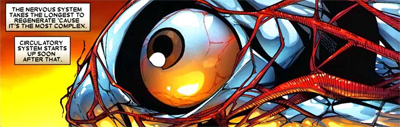
Talk about seeing eye-to-eye...

Talk about seeing eye-to-eye…

Continue reading

Watch! Only God Forgives UK Trailer!

Only God Forgives is just about my most anticipated movie of the year. Drive was my favourite film of 2011, so the re-teaming of director Nicholas Winding Refn and lead Ryan Gosling immediately piques my interest. Coupled with the power of the premise and the beauty of the clips we’ve seen so far, it’s very hard not to get too excited about the film. Luckily, it’s only a month away from release in the UK and Ireland. That’s not too long, and to tide us over, here’s the latest beautiful-looking UK trailer.


The Sopranos: Boca (Review)

Boca pretty much interrupts a hot streak of first season Sopranos episodes. It serves as a reminder that the show might have brought the medium into the twenty-first century, serving as a massive influence on televisual storytelling over the past decade, but the first season was still a product of nineties television. Boca feels strangely like a stand-alone episode, a strange artefact from some parallel universe where David Chase and his team decided that The Sopranos might work just as well as a piece of episodic television, rather than as serialised narrative.

Boca feels like one of those “ripped from the headlines” issue-conscious pieces of television drama, as if we’re watching The Sopranos by way of Law & Order. Of course, the script still has the show’s wit, and the episode plays into the series’ themes, but Boca feels a little strange. It’s not a bad piece of television, but it’s the first episode of The Sopranos that feels like it could have been repurposed from something else.

Old love...

Old love…

Continue reading

Doctor Who: Dragonfire (Review)

To celebrate the fiftieth anniversary of the longest-running science-fiction show in the world, I’ll be taking weekly looks at some of my own personal favourite stories and arcs, from the old and new series, with a view to encapsulating the sublime, the clever and the fiendishly odd of the BBC’s Doctor Who.

Dragonfire originally aired in 1987.

You’re going to go looking for the dragon?

Absolutely.

Oh, cool. Can I come too?

– Ace introduces herself to the Doctor smoothly

Dragonfire is better than Delta and the Bannermen, which is certainly damning with faint praise. Like the rest of Sylvester McCoy’s first season, Dragonfire suffers because of a gap between concept and execution. There is a wealth of good ideas here, but Dragonfire can’t seem to develop any of them to the point where they stand out. Of this troubled first season, it’s perhaps the serial where the conflict between the show’s old-fashioned production and more modern writing are thrown into sharpest contrast. Dragonfire looks like it wants to be a classic Doctor Who episode, even though it’s written like anything but.

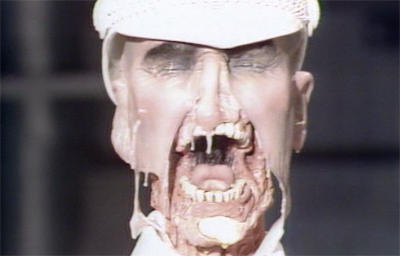
"I'm melting!"

“I’m melting!”

Continue reading

Kieron Gillen’s Run on Uncanny X-Men – Avengers vs. X-Men (Review/Retrospective)

To celebrate the release of The Wolverine later in the month, we’re taking a look at some classic X-Men and Wolverine comics every Monday, Wednesday and Friday here. I’m also writing a series of reviews of the classic X-Men television show at comicbuzz every weekday, so feel free to check those out.

Kieron Gillen is one of the unsung heroes of modern superhero comics. Over the past few years, Gillen has come to the attention of readers for replacing or supplementing a-list talent on a-list books. He took over Thor after J. Michael Straczynski abruptly wrapped up his run on the Norse god, only to shuffle off the book when Matt Fraction took over. While Straczynzki’s run was collected in an omnibus, Gillen’s has yet to receive hardcover status. He wrote the wonderfully underrated Journey into Mystery as a supplement to Fraction’s Thor, which might hopefully get a deluxe reprinting at some point in the future.

He took over Uncanny X-Men following Fraction’s departure. He barely had time to establish his run on Marvel’s merry mutants before writer Jason Aaron up-ended the status quo with Schism, essentially restructuring Marvel’s X-Men line. Gillen remained on Uncanny X-Men in the wake of Schism, the title resetting to #1. However, less than a year into the run, Gillen’s Uncanny X-Men was caught up in Marvel’s high profile crossover of the year, Avengers vs. X-Men.

Explosive...

Explosive…

Gillen departed the book following Avengers vs. X-Men, in yet another reshuffle of Marvel’s X-Men line. (Brian Bendis promised to push the line in a new direction, writing both All-New X-Men and Uncanny X-Men.) Half of Gillen’s run on the relaunched Uncanny X-Men was tied into the gigantic Avengers vs. X-Men.

But don’t let that fool you. It’s really very, very good. In fact, it ranks as among the very best X-Men work since Joss Whedon and John Cassaday left Astonishing X-Men.

All fired up...

All fired up…

Continue reading

Doctor Who: Delta and the Bannermen (Review)

To celebrate the fiftieth anniversary of the longest-running science-fiction show in the world, I’ll be taking weekly looks at some of my own personal favourite stories and arcs, from the old and new series, with a view to encapsulating the sublime, the clever and the fiendishly odd of the BBC’s Doctor Who.

Delta and the Bannermen originally aired in 1987.

Hey, this doesn’t look like Disneyland.

No, well, according to my reckoning, it seems to be somewhere in, er, Wales.

– Murray and the Doctor get in touch with the “real fifties”

Delta and the Bannermen is quite terrible. That said, it’s not terrible in the same way that, say, Timelash or Attack of the Cybermen or The Twin Dilemma is terrible. It doesn’t offer a demonstration of everything intrinsically wrong with this era of the show, and the frustration isn’t compounded by the sense that nobody producing the show seems interested in watching it and maybe learning from their mistakes.

While that is certainly a promising thing from the perspective of the show, it doesn’t really do the viewer that much good when they are watching it.

Large ham, incoming!

Large ham, incoming!

Continue reading

The Sopranos: The Legend of Tennessee Moltisanti (Review)

The Legend of Tennessee Moltisanti begins with a dream sequence. We’re not yet at the point where The Sopranos would spend an entire episode inside the head of one of its characters (okay, not literally, at any rate), but it sets a tone for the rest of the episode. The Sopranos attracts attention as an exploration of the American Dream, a look at what life is like in the shadow of all those expectations and aspirations, but it also feels like a black absurdist comedy.

The Sopranos could be one of the funniest shows on the air, and that grim sense of humour is pushed to the fore with The Legend of Tennessee Moltisanti, where the unfunniest thing in the episode is the stand-up comedian working an ageing crowd.

It's a laugh...

It’s a laugh…

Continue reading

Doctor Who: Paradise Towers (Review)

To celebrate the fiftieth anniversary of the longest-running science-fiction show in the world, I’ll be taking weekly looks at some of my own personal favourite stories and arcs, from the old and new series, with a view to encapsulating the sublime, the clever and the fiendishly odd of the BBC’s Doctor Who.

Paradise Towers originally aired in 1987.

Oh, I see. It’s some sort of robotic cleaner with automotive bicurval scraping blades. Impressive workmanship.

You don’t understand.

No, I don’t, but I intend to.

– the Doctor and the Deputy Chief Caretaker

Paradise Towers is brilliant. It’s crazy, it’s overstated, it’s an hour too long and it suffers from the fact that nobody really knows what they’re doing, but there’s a sense of genius at work here. Script editor Andrew Cartmel took over at the start of the season, with no scripts. Time and the Rani came from John Nathan Turner’s reliable Pip and Jane Baker, so Paradise Towers is the first script where Cartmel has been allowed to make his mark.

And it’s precisely what the show needed. The execution is significantly flawed, the pacing is all wrong and there’s a sense that not everybody between the script and the camera realised what was going on, but it has a distinct energy to it. Time and the Rani was essentially Doctor Who struggling to keep its head above water. Paradise Towers sees the show diving right into the eighties.

"... where the grass is green and the girls are pretty..."

“… where the grass is green and the girls are pretty…”

Continue reading