Well, it’s been a fun month. I’ve been blogging from Dublin’s annual movie festival, the Jameson Dublin International Film Festival, which ran for the eleven days leading up to the Oscars. I saw twenty-five films in the festival, two films outside it, and took part in two of the special movie-related events. It was quite a month of high-intensity movie-going experiences, and I think that the entire group responsible for organising the festival deserve considerable credit for pulling off. I thought it might be handy to centralise all my reviews and articles relating to the festival in one place, just for ease of reference. Some of these might be opening near you soon, some may get more limited releases, and some are already out, but these are the films I saw as part of the Jameson Dublin International Film Festival 2012.
I have to admit that I quite like DC’s approach to event tie-ins. Whenever a massive series like Infinite Crisis or Final Crisis or Blackest Night emerges, it doesn’t disrupt the on-going narratives being told in the books. Instead, the crossovers are shrewdly isolated to tie-in miniseries, so as to minimise interference. This means that a reader of Grant Morrison’s Batman & Robin doesn’t need to concern themselves with the zombie apocalypse in Blackest Night, as Peter Tomasi is handling a separate miniseries. Blackest Night: Flash, however, is something of a different beast, as there was no on-going Flash series at the time, with Blackest Night: Flash serving as a bridge between Flash: Rebirth and Geoff Johns’ on-going Flash series. The fact that the miniseries was written by the main architect of the event also makes the tie-in seem that little bit more essential, putting Blackest Night: Flash in quite a strange place.
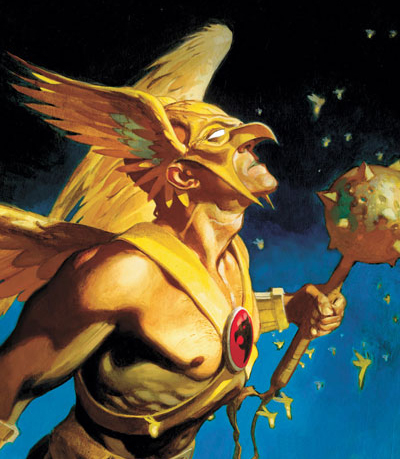
I’m always glad to see a nice, big and thick DC comics omnibus. Marvel have cornered the market in putting out over-sized gigantic collections of modern and classic runs on iconic characters, and I’m disappointed that it has taken DC so long to follow suit. After all, they have any number of long runs on iconic characters by acclaimed creators deserving some nice love. Geoff Johns’ Hawkman run is perhaps the writer’s run that I was least excited about, but it’s still nice to get the majority of Geoff Johns’ character-defining and continuity-clarifying run on the character handily collected in one gigantic package.
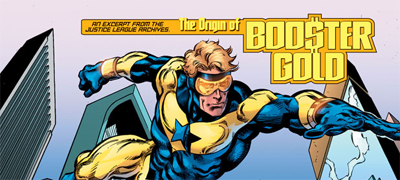
I guess when you’re as popular as Geoff Johns you can pretty much pick your own projects. He’s pretty much the driving force at the company, having helmed two of the bigger more recent “event” crossovers (Infinite Crisis and Blackest Night) as well as managing the return of Hal Jordan to the pages of Green Lantern and Barry Allen to The Flash. He has always skilfully walked the line between a hardcore nerd who knows everything there is to know about DC’s incredibly complicated history and the source of some of the company’s most accessible output. His runs on the “big” name characters (such as Superman) are some of the easiest to read comic books currently published, however it’s clear he has a somewhat deeper level of knowledge and understanding of the way that the DC universe works, and is read to dive into the nooks and crannies of obscure characters and half-remembered trivia with the fervour of a pure geek. Booster Gold is perhaps the best example of this sort of work.
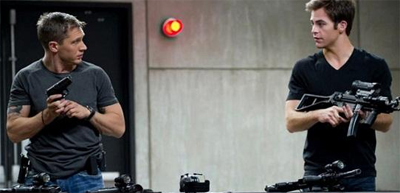
It’s hard to find anything redeeming in McG’s This Means War, a romantic comedy that attempts to court the male demographic with promises of car chases and explosions and action sequences. However, the movie has some rather unpleasant undertones as it devolves into a competition between two male friends to see who can effectively trick a beautiful young woman into falling in love with them. Interestingly, the movie is primarily about these two guys and their relationship, with the (supposed) object of their affection serving as a glorified prop.
I am looking forward to Prometheus, as are most film geeks out there. Ridley Scott is returning to the shared fictional universe he created with the original Alien to tell an incredibly ambitious science-fiction epic, with a tremendous cast and a huge budget. We don’t know much about it at the moment, and that’s not a bad thing. I’m always a sucker for a clever piece of viral marketing, and this video appeared on-line today. it wasn’t leaked to film sites or geek news. It was published on TED.com, an on-line forum for “ideas worth spreading”, where today’s real-world luminaries share their thoughts on the problems of the day. Sir Peter Weyland, one half of the fictional mega-corporation Weyland-Yutani, has provided us with his own talk, from the year 2023.
Directed by Luke Scott and written by Damon Lindelof, this is a light piece, featuring Guy Pierce and some CGI. However, it very shrewdly does several things. It explains and contextualises the title, even if it wasn’t too much to guess that hubris and ambition would play a major role in a science-fiction film named for the guy who stole fire from the gods. It gives us a glimpse of the film’s universe, and provides connective tissue, explaining how we got from today to the gigantic futuristic universe. It even ties itself to Lawrence of Arabia, no mean feat.
It’s well worth a gander.
And here’s Sir Peter’s official biography, for those looking for a bit more context:
Sir Peter Weyland was born in Mumbai, India at the turn of the Millennium. The progeny of two brilliant parents; His mother, an Oxford Educated Professor of Comparative Mythology, his father, a self-taught software Engineer, it was clear from an early age that Sir Peter’s capabilities would only be eclipsed by his ambition to realize them. By the age of fourteen, he had already registered a dozen patents in a wide range of fields from biotech to robotics, but it would be his dynamic breakthroughs in generating synthetic atmosphere above the polar ice cap that gained him worldwide recognition and spawned an empire.
In less than a decade, Weyland Corporation became a worldwide leader in emerging technologies and launched the first privatized industrial mission to leave the planet Earth. “There are other worlds than this one,” Sir Peter boldly declared, “And if there is no air to breathe, we will simply have to make it.”
I’ve been a bit all over the place of late, recovering from the Jameson Dublin International Film Festival. I’m just finishing up the last of my reviews of films caught at the festival, which will be up this week. Anyway, in the mean time, I thought I’d share this delightful post-Oscars parody from Jimmy Kimmel. Sure, the clip might run a little bit too long for its own good, but it has some wonderful laughs, and displays an astute knowledge of movie tropes and clichés. Enjoy.
This film was seen as part of the Jameson Dublin International Film Festival 2012. It was the second “surprise” film.
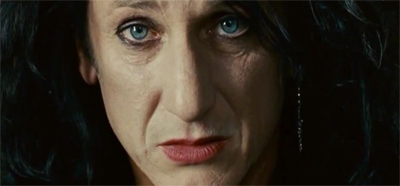
This Must Be The Place is a film that has several interesting components, but keeps them so thoroughly isolated from one another through almost deft use of road movie clichés that nothing ever clicks. Paolo Sorrentino hasn’t so much made a movie as he has stapled a bunch of holiday snapshots together, treating us to a holiday slideshow full of half-finished anecdotes, banal details and no real sense of structure. That’s not to say that there aren’t moments of brilliance scattered through the over-long and self-indulgent mess of a film, but the fact is they can’t add enough flavour to salvage the film.
This film was seen as part of the Jameson Dublin International Film Festival 2012.
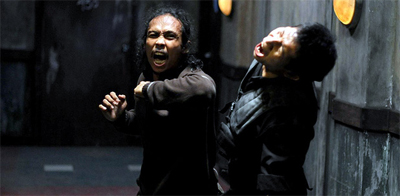
I am not a fan of absolutes. They generally scare me, because they leave so little room for error. With that in mind, I have two things to say about Gareth Evans’ The Raid, the first film to pick up both the Dublin Film Critics’ Circle award for best film and the Jameson International Film Festival’s Audience Award. Put simply, The Raid is the best action movie I have seen in years. The second is that watching it in a cinema with hundreds of film fans feeling the exact same thing might be one of the best movie-going experiences of my life.
This event was held as part of the Jameson Dublin International Film Festival 2012.
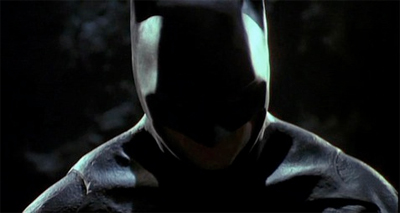
One of the best aspects of the Jameson Dublin International Film Festival is the way that it extends beyond the cinema, into a wider appreciation of film and cinema all around Dublin. From the Jameson Cult Film Club screening of Reservoir Dogs through to the Dublin Film Critics’ Circle awards and even the Untitled screenwriting competition, the eleven-day celebration of cinema seems to encompass all the city and all walks of life. The wonderful folks at the RTÉ Concert Orchestra and the National Concert Hall have a long history of getting into the spirit of the festival, offering high-profile tributes to cinema. Last year, for example, they held a screening of The Four Horsemen of the Apocalypse with a live orchestral accompaniment. This year, they took the penultimate evening of the festival to host a tribute to Danny Elfman, undoubtedly one of the most iconic and influential composers working today. And it was an absolutely brilliant evening.


















 the m0vie blog