• Following Us

  • Categories

  • Check out the Archives


  • Awards & Nominations

The X-Files – Requiem (Review)

This September, we’re taking a trip back in time to review the seventh season of The X-Files and the first (and only) season of Harsh Realm.

As with a lot of the seventh season, Requiem is an oddity.

It is an episode that exists in a weird limbo state, carefully designed and calibrated so that it might serve two – if not three – very different purposes. Requiem was written and filmed at a point where nobody knew what was going to happen next. Requiem could have been either a season or a series finalé; it could have been the last episode of the seventh season, the last episode of the series before the launch of a movie franchise, or even just the last episode ever. That is a lot of weight to put on a single episode.

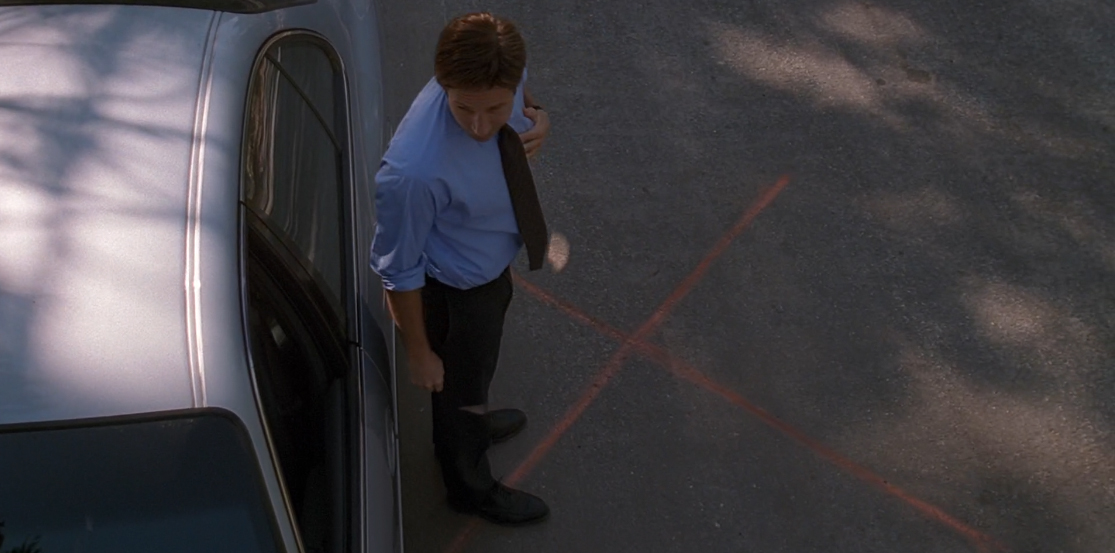
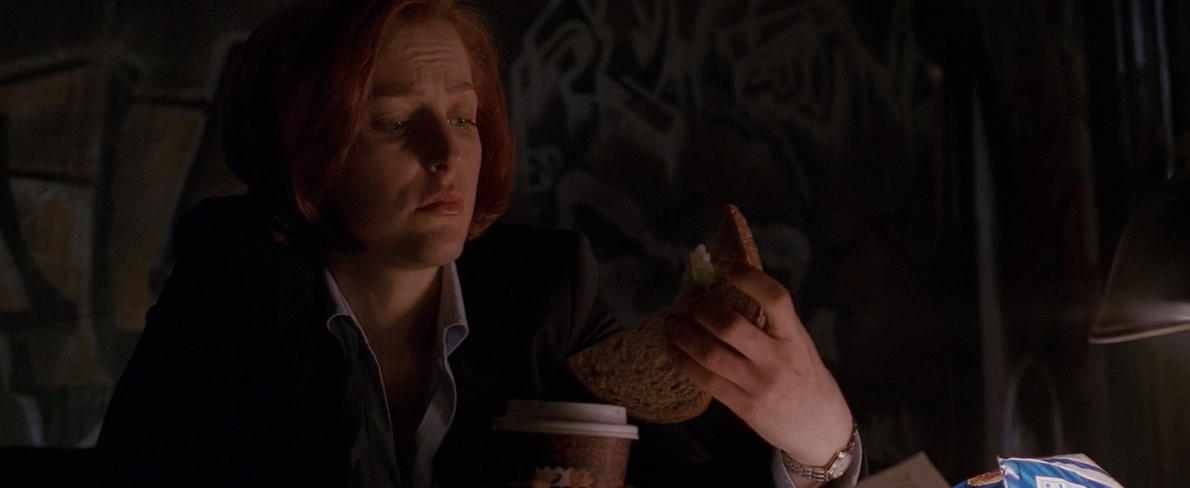
"X" marks the spot where it all began...

“X” marks the spot where it all began…

In essence, Requiem existed in a state of ambiguity and flux. It was never entirely sure what Requiem would be when Chris Carter wrote it or when Kim Manners directed it. Requiem had to be designed to be fluid and malleable; it had to support any context that might be heaped upon it in the editing suite or on broadcast. Stories like Jose Chung’s “From Outer Space” and Bad Blood had explored the blurred boundaries of reality and perception; Requiem is perhaps that idea applied to the show itself.

Chris Carter could tell you what happened in Requiem as it went through production. He could explain plot details and character motivation; he could outline the chain of events that bind Requiem together. However, it was impossible for anybody working on Requiem to actually assert what the episode was until three days before the episode aired. Until that point, Requiem was a shadow or a blur, just waiting for some larger context to bring it into proper focus.

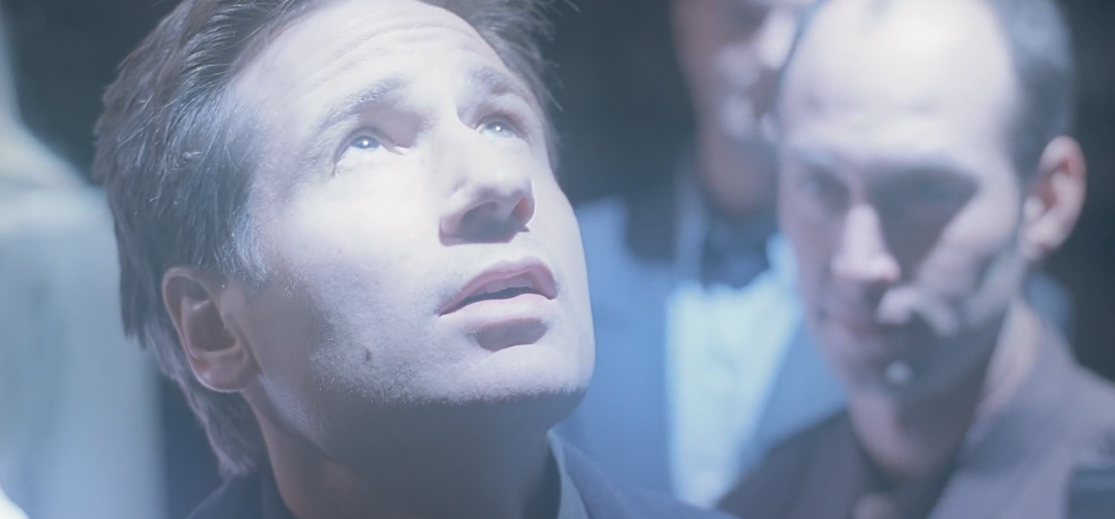
Things are looking up...

Things are looking up…

Continue reading

The X-Files – Je Souhaite (Review)

This September, we’re taking a trip back in time to review the seventh season of The X-Files and the first (and only) season of Harsh Realm.

The late seventh season has something of a twilight quality to it.

Even the show’s production staff are unsure whether the show will be coming back for an eighth season, so every episode takes on a special significance. Could this episode be “the last time that…”? Is Brand X the last time that the show does a traditional monster of the week? Is Hollywood A.D. the last time that David Duchovny writes and/or directs? Is Fight Club the last time that Chris Carter writes a non-mythology episode? Is Je Souhaite the last time that Mulder and Scully just investigate a weird standalone case together? There is a weight to it all.
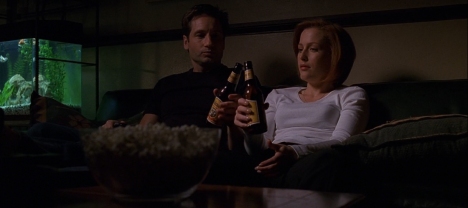
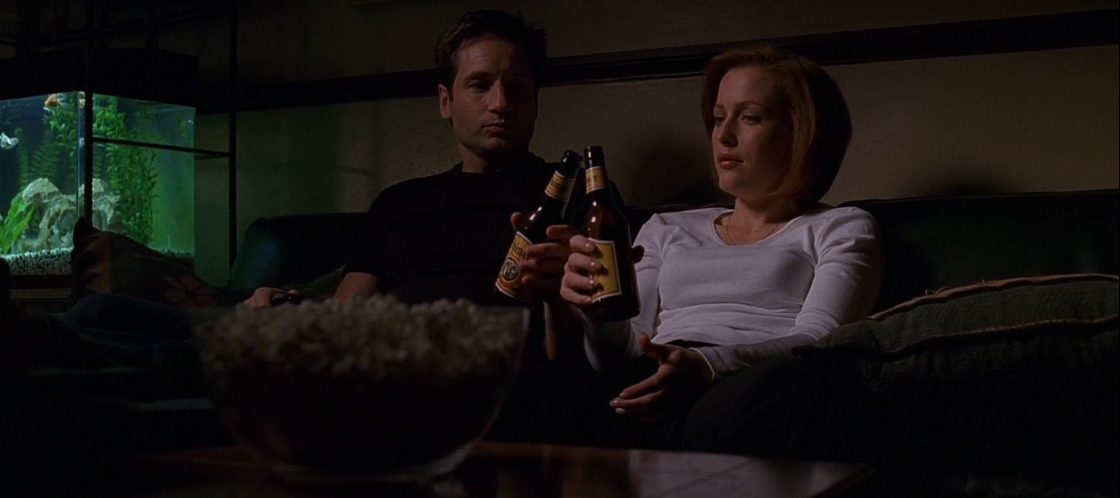
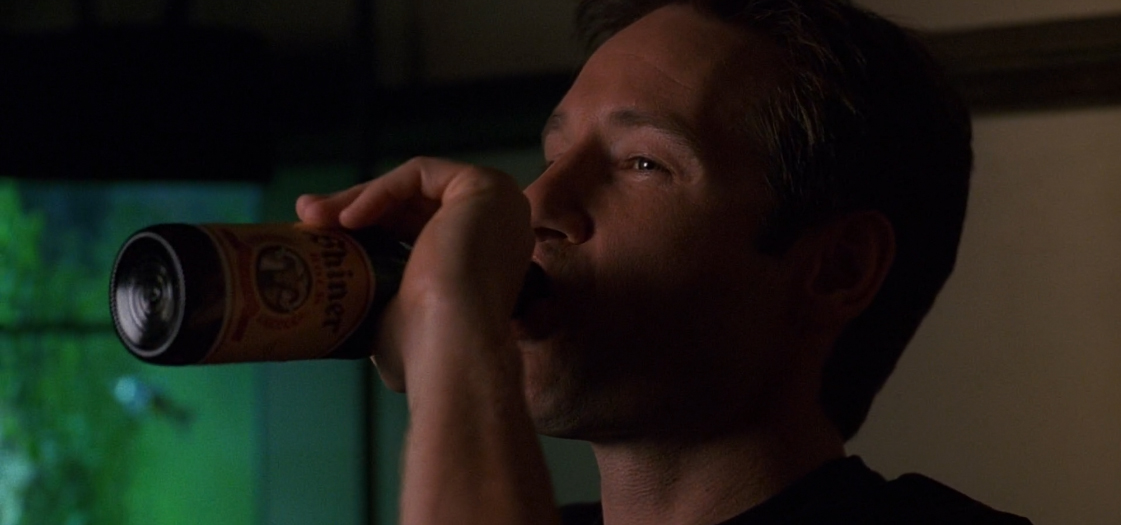
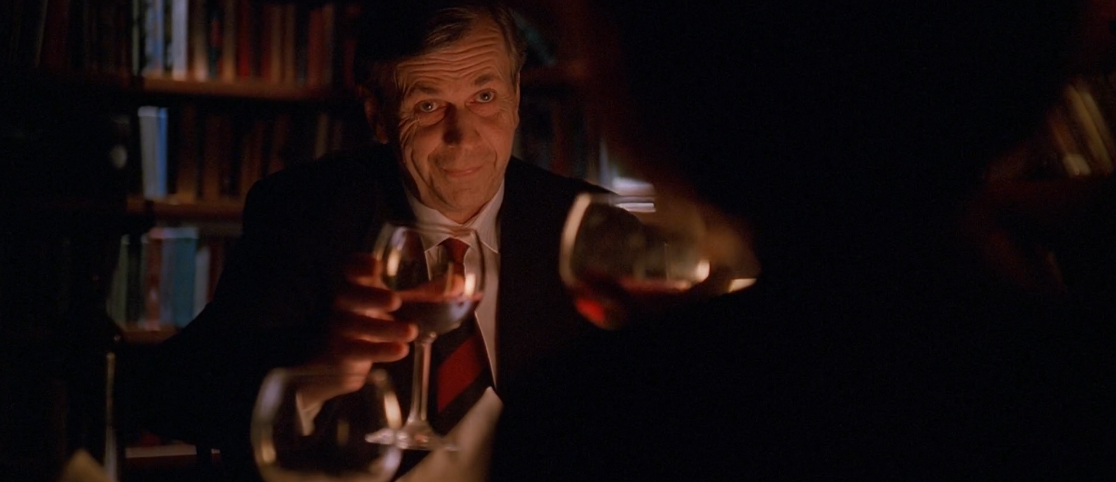
"I'll drink to that."

“I’ll drink to that.”

Of course, the show would come back for an eighth season. There would be lots of traditional monster of the week stories after Brand X. David Duchovny would enjoy another story and directorial credit after Hollywood A.D. Chris Carter would get to write non-mythology episodes after Fight Club, and even get to direct a much more successful whimsical adventure. Mulder and Scully would get to hang out together in the late eighth season and even at the very end of the ninth. In a very real way, this is not the end.

However, in an equally real way, this is the end. It has become hyperbole to suggest that something “… will never be the same again.” Even The X-Files has reinvented itself at least twice by this point, at the start of the third and sixth seasons. However, it is also perfectly reasonable to argue that The X-Files actually will never be the same again. The show changes on a very fundamental level after this point, with Je Souhaite serving as the very last glimpse of the show as it was. In many ways, this is the end of the road.
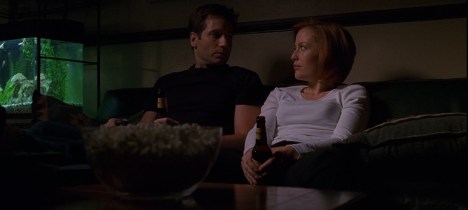
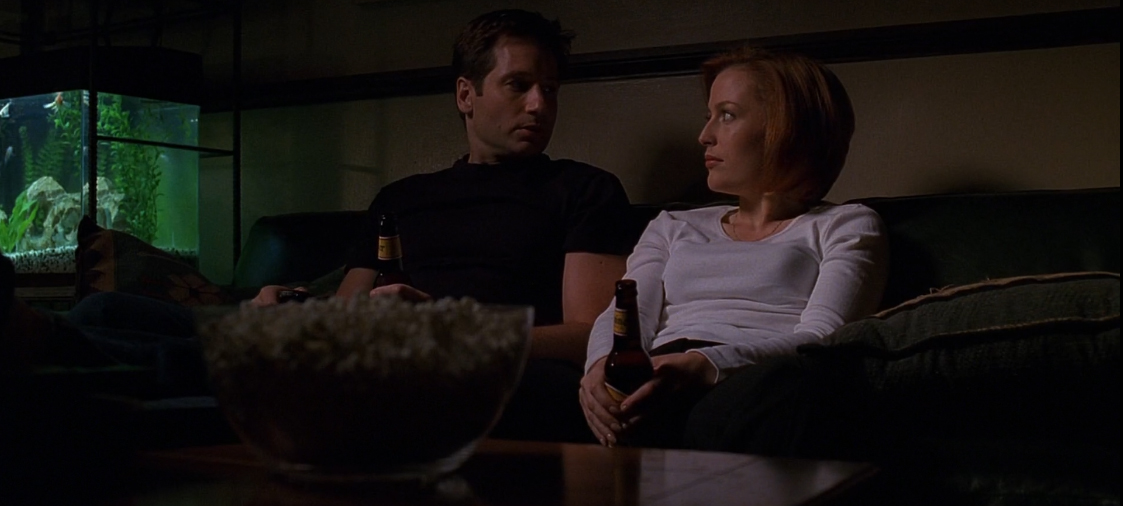
"So... meet up in about fifteen years?"

“So… meet up in about fifteen years?”

Gilligan would get to write and direct another episode of The X-Files before the show finally came to an end. In fact, there are a few thematic similarities between Je Souhaite and Sunshine Days, with both stories serving as affectionate and romantic finalés to Vince Gilligan’s version of The X-Files. There are still two full seasons ahead. Indeed, it is interesting to wonder what it would be like had Je Souhaite come earlier in the season, or even during the sixth season; it would be a light and fun episode, but would have the same heft and weight?

However, there is something different about Je Souhaite. In hindsight, it feels like a snapshot of an extended (seven-year-long) moment coming to end; it is a picture in an photo album that captures Mulder and Scully right on the edge of a transition. It is innocuous, yet profound. It is a picture of college friends sharing a drink at the end of the last term, unaware (or silently aware) of how things will change in the coming months. It is a picture of friends just hanging out before one gets married or has children.
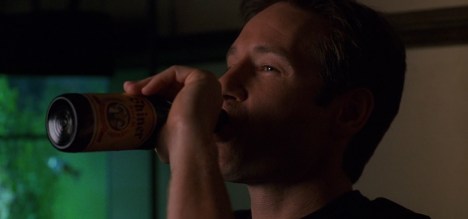
"I am outta here!"

“I am outta here!”

Of course, Mulder and Scully see each other after this point; there is the second half of season eight and the revival hanging in the future. (To say nothing of The X-Files: I Want to Believe or the comics.) College buddies still hang out. People with families maintain friendships. Still, those dynamics change. They are never quite the same. Not better, not worse. Just different. As weird as it is to describe an episode where Mulder encounters a genie as “the point before things got weird”, that’s exactly what Je Souhaite feels like.

What is most striking about Je Souhaite is how much the episode accepts that reality. It is not morose or melancholy; it is practically celebratory. Instead of eulogising the good times, it decides to have a good time. There is something very sweet about that.
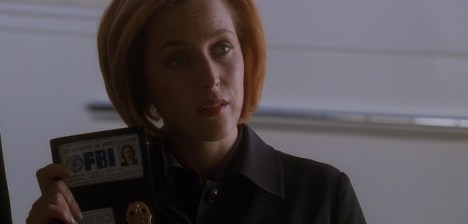
"I'm still here for two seasons..."

“I’m still here for two seasons…”

Continue reading

The X-Files – Fight Club (Review)

This September, we’re taking a trip back in time to review the seventh season of The X-Files and the first (and only) season of Harsh Realm.

Fight Club is an unpleasant episode of The X-Files.

It’s not “unpleasant” in a good way, like (arguably) Signs and Wonders or (definitely) Theef. It is “unpleasant” in a way that feels ill-judged and tone-deaf. Following on the charm and whimsy of Hollywood A.D., the script for Fight Club seems packed with forced charm and staged whimsy. At its most basic level, Fight Club is a comedy episode that simply isn’t funny. More than that, it’s an episode that isn’t particularly funny or clever to begin with, but then spends forty-five minutes insisting upon its own wit.

"Some of us are looking at the stars..."

“Some of us are looking at the stars…”

There is also a sense of unpleasantness about the themes and content of the episode in the context of the late seventh season. After all, it is no secret that the production team were facing considerable internal and external pressure. These pressures included a lawsuit involving the show’s lead actor and the show’s creator (not to mention the show’s network) and the fact that everybody on the production team was waiting for David Duchovny to determine if they would have a job the following season.

With all of this going on in the background, maybe an episode the implicitly features the show’s two lead actors knocking the stuffing out of each other for no good reason is not the best idea in the world.

"Hm..."

“Hm…”

Continue reading

The X-Files – Hollywood A.D. (Review)

This September, we’re taking a trip back in time to review the seventh season of The X-Files and the first (and only) season of Harsh Realm.

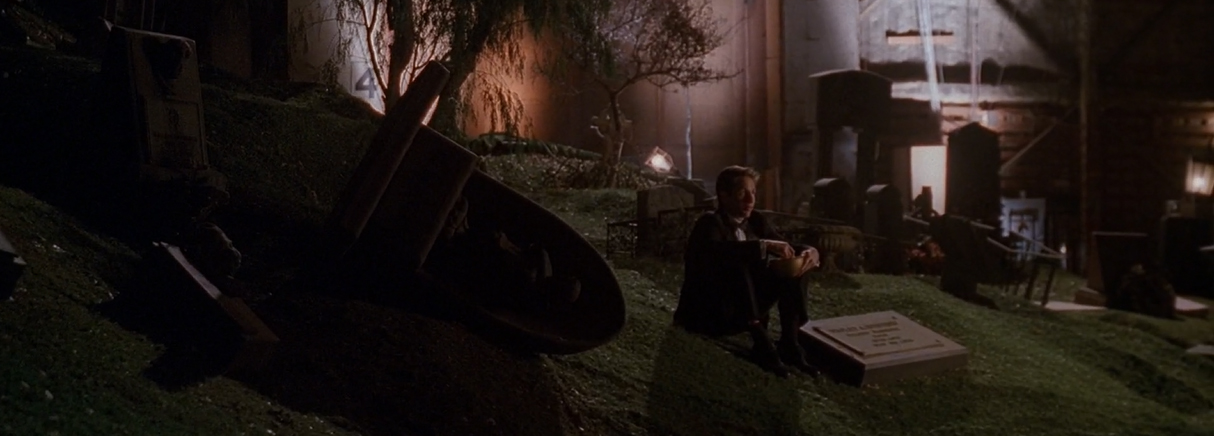
And now as we drift off the laughing agents and back to the graveyard , we see the Lazarus Bowl lying discarded beneath a tree.

A SWITCH, a broken tipped branch of the tree gets blown by the fan’s wind force down toward the plastic grooves of the replica as we move down toward it, we can read a “MADE IN ISRAEL” sticker on its bottom – the branch reaching toward the plastic,  like a woman’s arms to her lover —

Close on the splintered wood making contact on the colored plastic like a phonograph needle on vinyl —

And now MUSIC COMES UP – scratchy like an old record, the fourth track from BUENA VISTA SOCIAL CLUB, in a superior interpretation rendered by Mark Snow, called “PUEBLO NUEVO” – a beautiful stately cha cha instrumental —

We pull back wide as APPARITIONS appear to rise from their graves, rotting, but standing at atte ntion and then —

When the music kicks in, they begin to dance, all of them, in the round – dignified, changing partners… we hear the bones creaking, we see the gentlemanly half skulls smiling…

And now by the magic of Bill Millar & Co., the GREEN SCREEN becomes the rest of a HUGE GRAVEYARD with corpses dancing  stately and dignified upon it as we begin a slow pull out to a heavenly perspective…

This is what life’s about. This is what the dead would do if only they could. As we slowly fade to black, the band plays on.

And we end.

 – David Duchovny takes his bow

Everything ends.

Everything ends.

Continue reading

Harsh Realm – Three Percenters (Review)

This November, we’re taking a trip back in time to review the seventh season of The X-Files and the first (and only) season of Harsh Realm.

Three Percenters is written by Frank Spotnitz.

Spotnitz is the longest serving staff writer on The X-Files, with the exception of Chris Carter. He worked with Carter in shaping and defining the mythology, sharing credit on some of the biggest episodes of the series. He is credited as a screenwriter on both The X-Files: Fight the Future and The X-Files: I Want to Believe. He is the only writer apart from Carter to work on all Millennium, Harsh Realm and The Lone Gunmen. As such, Spotnitz is an essential part of the Ten Thirteen family.

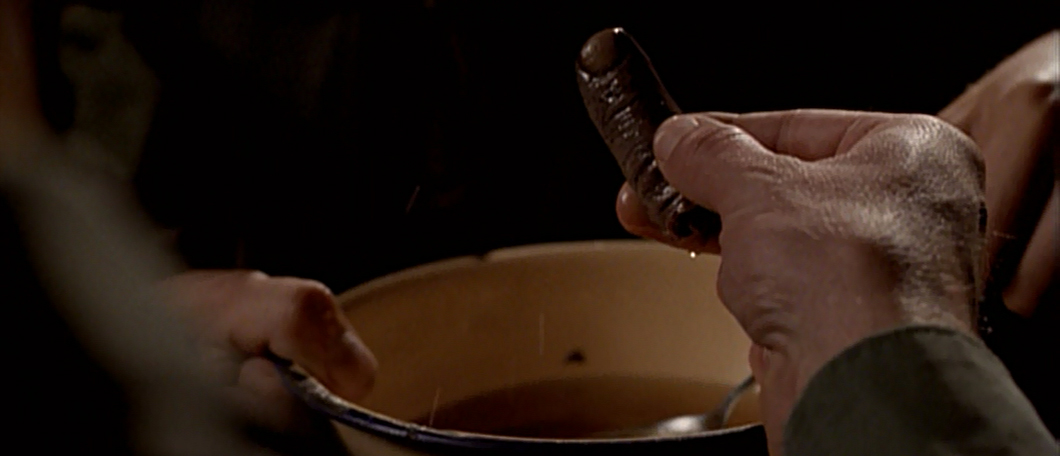
Talk about finger food...

Talk about finger food…

Spotnitz has a very clear of structure. Working on The X-Files, he was renowned for his ability to “break” a story, to split it down to its constituent elements and to make it make sense. His first credit on The X-Files was the script for End Game, which was a hugely important part of shaping and defining the mythology of the show. His two scripts for the first season of Millennium (Weeds and Sacrament) capture the spirit of the show in that moment in time, for better and for worse. It makes perfect sense for Spotnitz to script a first season episode of Harsh Realm.

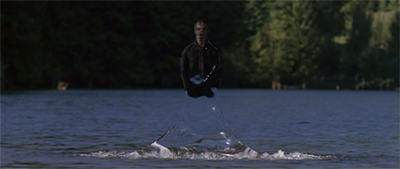
However, Spotnitz’s script for Three Percenters perhaps demonstrates one of the problems with these initial nine episodes. Spotnitz is very good at understanding story structure and logic, but Harsh Realm doesn’t really have a set formula or template that he might be able to apply. Five episodes into its run, the show hasn’t settled into a grove in the same way that Millennium or The X-Files had. This perhaps explains why Three Percenters feels so odd and uneven; it occasionally seems like Spotnitz just pasted over a template from The X-Files itself.

Walking on water...

Walking on water…

Continue reading

The X-Files – Brand X (Review)

This September, we’re taking a trip back in time to review the seventh season of The X-Files and the first (and only) season of Harsh Realm.

Watching the seventh season of The X-Files only reinforces the sense that the production team got extremely lucky with the casting of David Duchovny and Gillian Anderson. The chemistry between the two actors has carried more than a few weak scripts across the seventh season. Lighter shows like Rush, The Goldberg Variation and The Amazing Maleeni were all able to coast off the charm of the pair. It doesn’t matter that the plot resolution in an exposition dump from Mulder when you end on Scully attempting a magic trick. However, this works both ways.

It the seventh season coasts of the charisma of David Duchovny and Gillian Anderson, this means that their inevitable absences are keenly felt. As The X-Files had become more popular, the demand upon Duchovny and Anderson had grown greater; most obviously, the show had dropped its production order from twenty-four to twenty-two episodes. Even allowing for that, the show could no longer make the same demands of Duchovny and Anderson that it had made in the first four seasons. Nor could they simply produce less television.

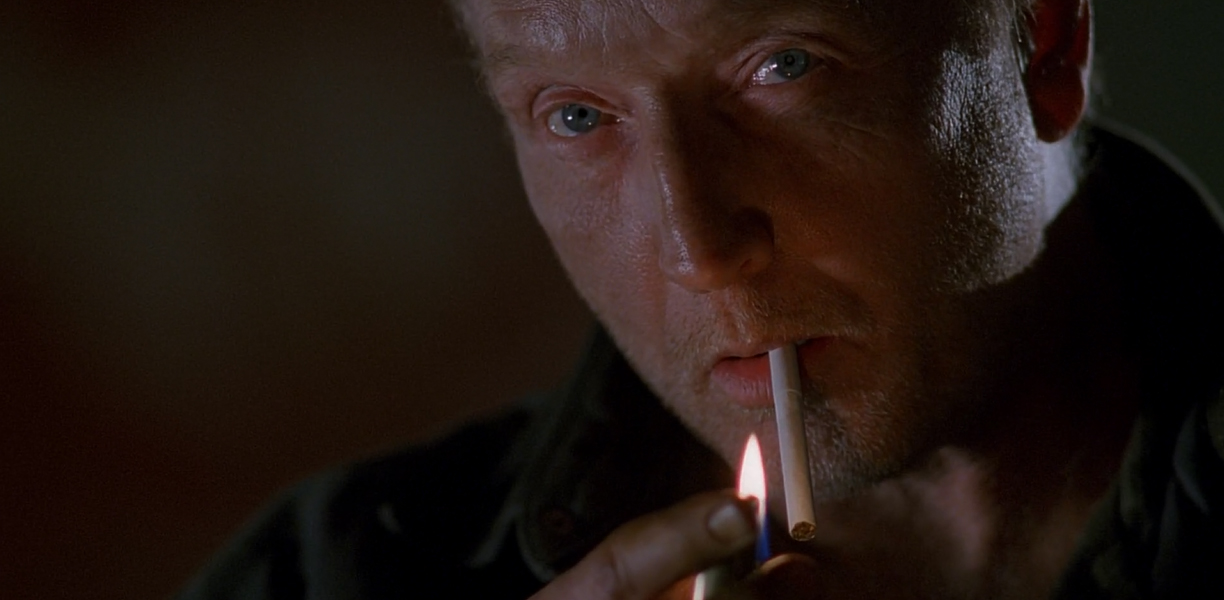
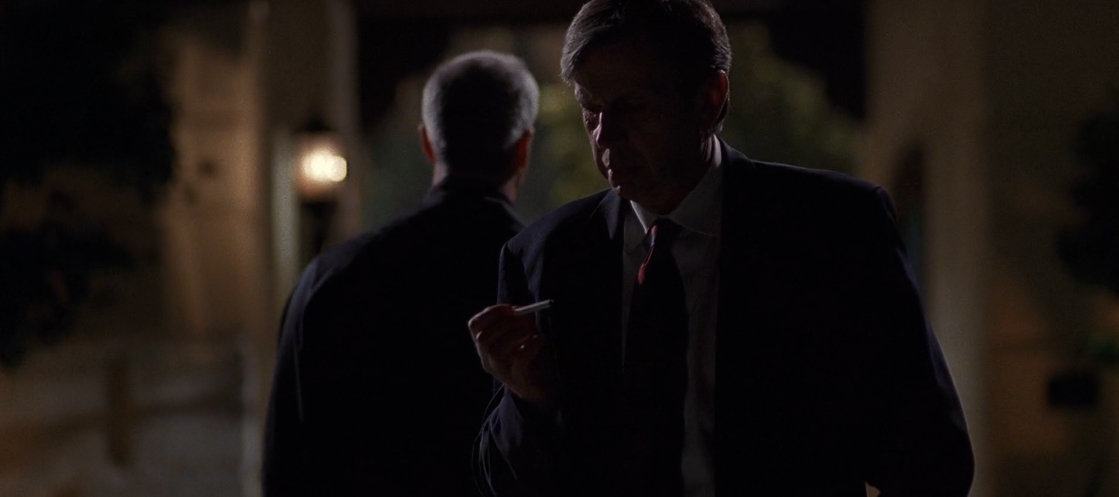
Smoke 'em if you got 'em...

Smoke ’em if you got ’em…

As a result, there are points in the show’s run when either (or both) David Duchovny and Gillian Anderson are unavailable. There are extended periods of the final two seasons that do not feature David Duchovny in any significant capacity. However, even within the seventh season, there are episodes where both leads are unable to fill the narrative space allocated to the lead characters. Gillian Anderson was largely absent from Chimera while working on all things; David Duchovny was largely absent from all things while working on Hollywood A.D.

It is these absences which suggest an uncomfortable truth about The X-Files. The show might have its own chemical dependencies. In a metaphor stretched in an effort to tie it all back to Brand X, the audience might rely on Duchovny and Anderson as surely as a smoker relies on their quick nicotine fix. Any attempt to genetically reengineer the show to ensure a healthier and longer life could easily end up creating a monster.

Talk about a looming legal face-off...

Talk about a looming legal face-off…

Continue reading

The X-Files – Chimera (Review)

This September, we’re taking a trip back in time to review the seventh season of The X-Files and the first (and only) season of Harsh Realm.

There is a sense of fatigue about the seventh season of The X-Files.

It makes a certain amount of sense. After all, seven years is a long time in television. It is a particularly long time when the staff are churning out more than twenty episodes in a year. One hundred episodes is typically considered the threshold for syndication success, but The X-Files crossed that with Unusual Suspects back in the fifth season. By this point, The X-Files is comfortably past one hundred and fifty episodes of television. That is a lot of television. Assuming one were to watch it straight through, that’s nearly five straight days of television.

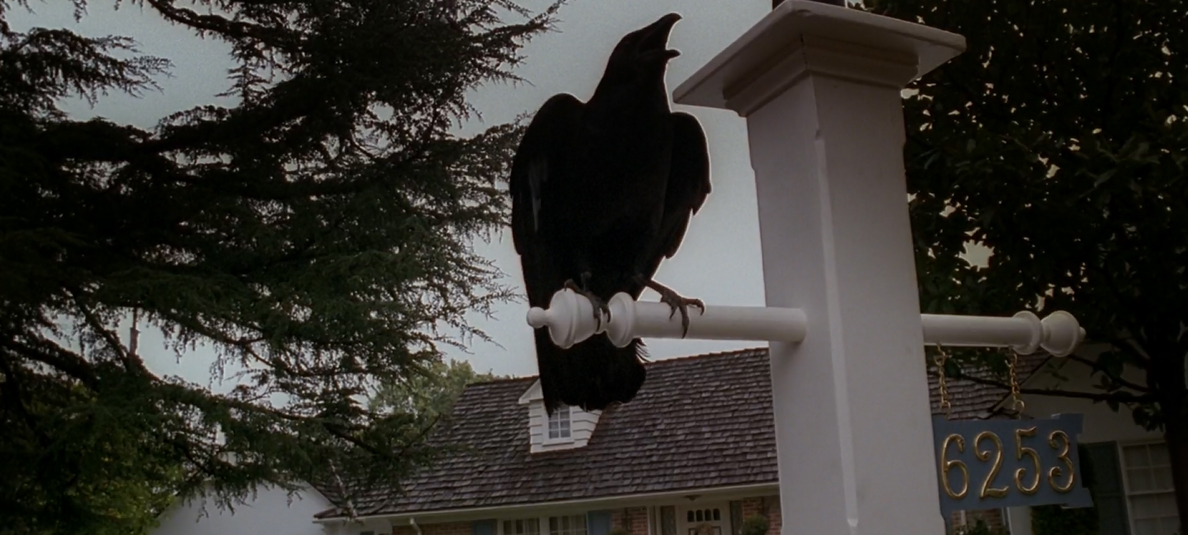
Quoth the raven...

Quoth the raven…

There comes a point where it feels old and outdated, where the sense of novelty and excited has faded to familiarity and dull routine. There comes a point where it feels like there is not much to talk about, because the show has already said a lot of what it has to say about a particular subject. It could be described as a “seven-year-itch”, but there is a reason why shows that last longer than seven seasons tend to rotate actors and producers more frequently than The X-Files has. Occasionally a blood transfusion is necessary to reoxygenate the blood.

Chimera is a perfectly solid episode of television. It is produced to the high standards of The X-Files, directed very well, and written in an efficient manner. However, it feels like it is covering a lot of well-trodden ground for the show with nothing new to say. Chimera feels like it is simply echoing sentiments the show had clearly articulated as recently as the sixth season; a curious blend of Terms of Endearment and Arcadia, but without the novelty or nuance of either. The X-Files has begun to feel as familiar as the rows of suburban houses it so fears.

Food for thought...

Food for thought…

Continue reading

The X-Files – En Ami (Review)

This September, we’re taking a trip back in time to review the seventh season of The X-Files and the first (and only) season of Harsh Realm.

The seventh season mythology has a weird hazy feeling to it. It feels almost like a postscript.

It is hard to explain what is happening with the mythology at this point. Two Fathers and One Son had promised an end to the over-arching conspiracy narrative, but it felt like something of a half-measure. The First Elder and the Second Elder were killed off, but most of the other major players remained. Although Scully congratulated Mulder on toppling the conspiracy in Biogenesis, the same episode seemed to off-handedly suggest that the Cigarette-Smoking Man was still working on it. He was still talking hybrids in The Sixth Extinction II: Amor Fati.

I'll drink to that...

I’ll drink to that…

At the same time, Two Fathers and One Son marked the end of the mythology as an on-going concern. The particulars of colonisation and the nature of the Cigarette-Smoking Man’s work were confined to limbo, some sort of bizarre twilight realm where they might exist or they might not; they simply drift around the show like ghosts. Whether or not Two Fathers and One Son actually resolved any aspect of the show’s overarching plot is open to debate; however, they very clearly suggested that the mythology was not the show’s central story going forward.

In the seventh season, it frequently feels like the mythology is a hazy backdrop against which character-driven stories might unfold. In The Sixth Extinction, an alien ship becomes a gateway to meditations on the nature of human existence while Krycek blackmails Skinner and Fowley still works with the Cigarette-Smoking Man. In The Sixth Extinction II: Amor Fati, the Cigarette-Smoking Man is making hybrids and murders Fowley, but the heart of the story is Mulder’s flirtation with temptation. Sein und Ziet and Closure have nothing to do with colonisation.

Smokey and the bandit...

Smokey and the bandit…

To be fair, this was arguably always the case with mythology episodes. In hindsight, it can seem like the mythology episodes were less part of an on-going story and more meditations on common themes tied into a shared continuity. Colony and End Game are spectacular pieces of television, but they are hard to reconcile with later revelations. The End arguably has more in common with Biogenesis than it does with the feature film into which it is supposed to tie. However, the mythology always held the promise of revelations and twists to propel it forward.

The principal effect of Two Fathers and One Son seems to have been to take away that sense of purpose and destination. The mythology is no longer building towards something or racing forward. Instead, the mythology stories seem to take place in the wasteland; a world in ruins, with only the fractured semblance of internal logic. En Ami continues the trend of setting character-driven stories amid the hazily defined unreality. Scully and the Cigarette-Smoking Man take a road-trip together through whatever is still standing.

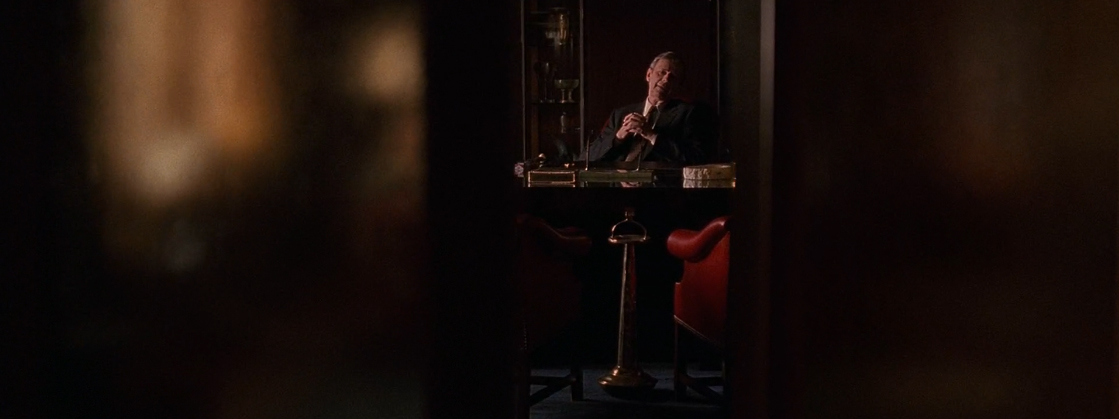
Peering through an open door...

Peering through an open door…

Continue reading

The X-Files – Theef (Review)

This November, we’re taking a trip back in time to review the seventh season of The X-Files and the first (and only) season of Harsh Realm.

Theef is an underrated seventh season episode, one often forgotten and overlooked as season seven moves firmly into its second half.

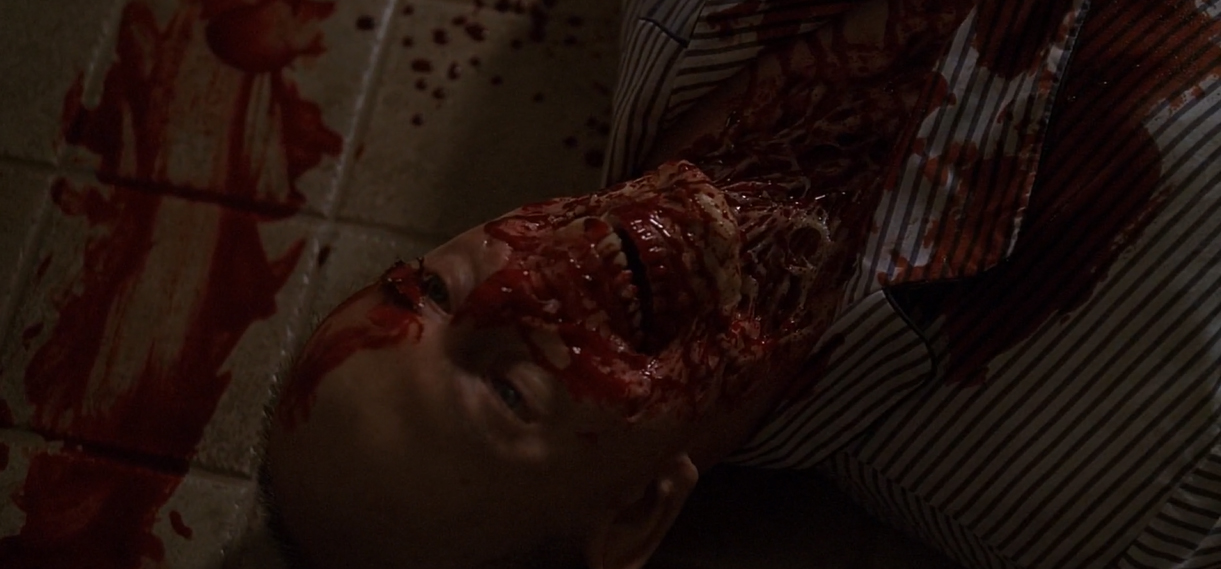
The episode represents another conscious attempt to get “back to basics.” Continuing the vein of Hungry or Millennium or Orison or Signs and Wonders, the script for Theef hopes to prove that the show can still produce a genuinely scary hour of television in its seventh season. It certainly succeeds; Theef is a delightfully unsettling story, one that borders on the downright nasty. From the closing shot of the teaser – a body suspended from a chandelier with the word “Theef” scrawled on a wall in his own blood – Theef goes for the jugular.

"I think he's trying to tell you something."

“I think he’s trying to tell you something.”

Continue reading

The X-Files – First Person Shooter (Review)

This November, we’re taking a trip back in time to review the seventh season of The X-Files and the first (and only) season of Harsh Realm.

On paper, this should be a slam dunk.

X-Cops was an incredibly risky and experimental episode of The X-Files that really pushed the show in an unexpected direction. The idea of crossing over into Cops was strange and surreal; it seemed like a gimmick that could backfire spectacularly. How could an episode of The X-Files adopt many of the identifiers and signifiers of Cops while still managing to tell its own story? It was a risky proposition, but writer Vince Gilligan and director Michael Watkins managed to pull it off, producing a definite highlight of the seventh season. (If not the final three seasons.)

Game on.

Game on.

First Person Shooter is a similarly ambitious episode, but one that should be a much safer bet. While it pushes the show outside its comfort zone in terms of setting and concept, it does not stray too far from the basic X-Files template. It is written by outsider writers William Gibson and Tom Maddox, but could logically be seen an extension of their superlative script for Kill Switch. In fact, Kill Switch wasn’t even the show’s first “killer artificial intelligence” story; Howard Gordon and Alex Gansa had written Ghost in the Machine as the series’ eighth episode.

On paper, First Person Shooter is ambitious without being entirely unprecedented. Still, the script bends the show too far out of shape. The episode seems to warp and distort the series around it. Despite the fact that First Person Shooter contains far more of the trappings and structures of The X-Files than X-Cops, the episode feels far less comfortable in its own skin. First Person Shooter plays almost like an episode of The X-Files filtered through a lens of unreality; it feels like a textured wireframe model of an X-Files episode, wandering lost in the uncanny valley.

Game over.

Game over.

Continue reading