• Following Us

  • Categories

  • Check out the Archives


  • Awards & Nominations

340. Oppenheimer (#59)

Hosted by Andrew Quinn and Darren Mooney, The 250 is a (mostly) weekly trip through some of the best (and worst) movies ever made, as voted for by Internet Movie Database Users. New episodes are released every Saturday at 6pm GMT.

This time, Christopher Nolan’s Oppenheimer.

Physicist J. Robert Oppenheimer brought quantum physics to the United States. However, as the Second World War rages, the scientist finds himself drafted on to the Manhattan Project, and set a single all-consuming task: the creation of an atomic bomb. Oppenheimer throws himself into his work, but can even the best scientific mind of his generation be fully prepared for the consequences of this revelation.

At time of release, it was ranked 59th on the list of the best movies of all time on the Internet Movie Database.
Continue reading

Non-Review Review: The Last Duel

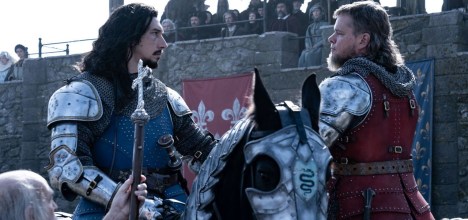
The Last Duel is a thorny and compelling medieval epic. It’s a little rough around the edges, but that’s undeniably part of the appeal.

The Last Duel is adapted from the book of the same name by historian Eric Jager. As its title implies, the film offers an account of the last judicial duel permitted by the Parlement of Paris. That duel was fought between two noblemen: Jean de Carrouges and Jacques Le Gris. The challenge was offered over allegations that Le Gris had raped de Carrouges’ wife, Maguerite. The assumption was that divine authority would ultimately determine where the truth lay in the matter, that the victor in this mortal combat would ultimately be vindicated.

Duel narratives.

Naturally, the events that inspired The Last Duel remain contentious. Historians are not entirely sure what happened, and how much of the various accounts reflect the truth of what happened or have been shaped by the convenient narratives of the victors. The film, with a screenplay from Matt Damon, Ben Affleck and Nicole Holofcener, leans into this ambiguity. The film is structured similarly to Akira Kurosawa’s Roshomon, outlining three separate accounts of the events leading up to the trial from the perspective of each of the key figures: Jean, Jacques and Maguerite.

The result is a film that touches on the blurred boundaries between history and narrative, and explores the way in which these sorts of stories are shaped by wounded pride and vain ego. It’s an uncomfortable and unsettling film, occasionally a little clumsy in its execution, but which grapples with big ideas.

Continue reading