• Following Us

  • Categories

  • Check out the Archives


  • Awards & Nominations

The X-Files – Space (Review)

And so we go from what is possibly the strongest episode of the first season to what is definitely the worst. Space is a colossal failure of an episode, with even writer and creator Chris Carter conceding that it was “one of our most unloved episodes.” However, none of these spectacular failures occur for any particularly interesting reason. It’s the wrong idea with the wrong script with the wrong director, and a result that can’t even claim to be “so bad it’s good” like so many of the series’ other lesser hours.

At best, it’s a cautionary tale, a firm establishment of what The X-Files isn’t. Like The Jersey Devil, it’s an indicator that maybe Chris Carter should have been focused more on show-running than writing. Even factoring in the quite decent pilot, Carter is hardly batting a thousand here. However, it also offers some small measure of proof that – despite show’s fixation on extraterrestrials and UFOs – The X-Files is not really a show about space.
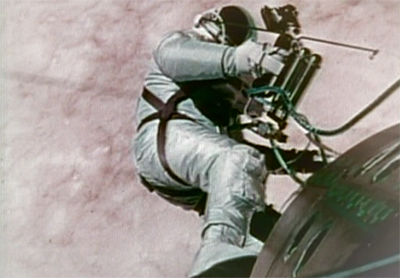
... and the stars look very different, today...

… and the stars look very different, today…

Continue reading

Star Trek: Deep Space Nine – The Maquis, Part I (Review)

Star Trek: Deep Space Nine is twenty years old this year. To celebrate, I’m taking a look at the first season. Check back daily for the latest review or retrospective.

The Maquis is an interesting episode, because it really illustrates the weird place that Star Trek: Deep Space Nine holds in the pantheon. It’s the middle act of an arc designed to play out across the final season of Star Trek: The Next Generation, the second season of Deep Space Nine and into the first year of Star Trek: Voyager. This was all part of gigantic lead-up to Voyager, a way for the producers to generate friction between the regular cast of the show.

However, with The Next Generation ending and Voyager being set on the other side of the galaxy, Deep Space Nine wound up stuck with this plot thread. As Michael Piller concedes in The Deep Space Log Book: A Second Season Companion, “DS9 is the true inheritor of the Maquis since there is no long term benefit to Voyager.” And so – despite the fact the Maquis were never intended for the show – they wind up become a perfect vehicle to explore the show’s world view.

Picard's not the only one who can get a good face palm going on...

Picard’s not the only one who can get a good face palm going on…

Continue reading

The X-Files – Shadows (Review)

Shadows feels a tad generic, but that’s by design. Written by the duo of Glenn Morgan and James Wong, Shadows was apparently intended to appease the network by offering something in the mold of a traditional ghost story – indeed, The Entity is often cited as an influence on the episode. Shadows runs off a rather conventional premise – a woman is haunted by a strange force capable of manipulating and moving objects, out to avenge some grave wrong.

In many respects, following The Jersey Devil, it almost seems like the first season of The X-Files is trying to knock off various items on a paranormal checklist. UFOs? Got ’em. A popular cryptozoology monster? Yep. Ghosts or poltergeists? We got a story here. The result is hardly inspiring. The X-Files tends to work a bit better when it’s venturing off the beaten track, taking something that isn’t mainstream and running with it.

Author John Kenneth Muir argued that watching The X-Files was like “watching a movie every week.” If that’s the case, Shadows feels more like a movie of the week.

The pen is mightier than the sword!

The pen is mightier than the sword!

Continue reading

The X-Files – The Jersey Devil (Review)

And with The Jersey Devil, the first season of The X-Files hits its first major snag. The first four episodes have done an efficient job laying down the character arcs and the ground rules for this new conspiratorial series. The rest of the season – like a lot of first seasons – has a great deal of difficulty trying to figure out a formula that works using those elements.

The Jersey Devil is, by all accounts, an episode that should work. It has a nice pseudo-scientific premise. It is written by the creator of the show, and who – at this early stage – could claim a better idea of how the series works than Chris Carter? It gives us some personal insight into both of our protagonists, and it sort of clarifies that Squeeze is not going to be the exception – that there will be a lot of anthology-style episodes.

And yet, despite all that, it doesn’t quite work. The premise is never as interesting as it should be. Chris Carter confirms that while he is a fantastic ideas man, he is not the strongest writer on his own staff. The best of these insights into Mulder and Scully were already made much better in Squeeze, and the rest feel somewhat trite. Despite the fact that it’s only the show’s second anthology-style episode, The Jersey Devil feels like it’s trying to hard to stick to the framework outlined by the three UFO episodes in the series’ opening quartet.

Casting light...

Casting light…

Continue reading

Star Trek: Deep Space Nine – Paradise (Review)

Star Trek: Deep Space Nine is twenty years old this year. To celebrate, I’m taking a look at the first and second seasons. Check back daily for the latest review or retrospective.

In a really weird way, this second half of the second season of Star Trek: Deep Space Nine really has its finger on the pulse of the nineties. Whispers tapped into pre-millennial anxiety, the sort of paranoia that fed into shows like The X-Files and would play itself out through the show’s admittedly underdeveloped “Changeling” arc. In a few episodes, The Maquis will play with the old “freedom fighter/terrorist” debate in a way that was only really possible in an America completely at peace, post-Cold War but pre-9/11.

Paradise taps into some other anxieties. According to The Star Trek: Deep Space Nine Companion, writer Jim Trombetta was heavily influenced by the anti-technology philosophy of the Khmer Rouge, the infamous regime where even the stereotypical signs of learning and education (for example, wearing glasses) were justification for execution. However, whatever the inspiration, Paradise seems to tap into something decidedly more contemporary.

"This is my boom stick!"

“This is my boom stick!”

Continue reading

The X-Files – Conduit (Review)

The X-Files is somewhat fascinating as a historical artifact, a prism through which the viewer might explore the United States in that gap of time between the end of the Cold War and the start of the War on Terror. The show serves as something of a travelogue through the American subconscious, a vehicle for the nation’s fear and anxieties. It might be quaint now to look back on the show’s depiction of mobile phones and the internet, but The X-Files offers a snapshot of an America just on the cusp of that technological revolution, when there were still dark shadows and corners of the continent to be probed and explored.

One of the more interesting aspects of The X-Files is the way that it deals with faith in the nineties. Scully’s attempts to reconcile her religious beliefs with a rational approach to the universe are surprisingly insightful and nuanced, but Mulder’s belief system also offers a vehicle to explore the form that faith might take. “I want to believe,” Mulder confesses at the end of Conduit, with the iconic poster turning the sentiment into a motto. It doesn’t matter that Mulder chooses to invest his faith in aliens or conspiracies, The X-Files is still an exploration of what faith meant in the nineties.

Why is Mulder so driven?

Why is Mulder so driven?

Continue reading

Non-Review Review: Runner Runner

Runner Runner feels like it should be a lot more fun than it winds up being. For a film about gambling, it lays the cards on the table pretty quickly. It’s a story about an ambitious young man who is offered wealth and success, only to eventually discover that the price is nothing less than his soul. As such, our plucky young hero has to keep all the plates spinning as the walls close in around him, trying to keep his head above water and the wolves from his door. There are, of course, other clichés I can throw in there, but these will do for now.

As such, Runner Runner isn’t about originality or insight, borrowing heavily from far better character studies and morality plays – even the casting of Justin Timberlake as a nerdy internet-savvy college student feels like a riff on his role in The Social NetworkRunner Runner is all about the execution of these familiar high concepts and plot points. Unfortunately, the movie never seems too invested in its stakes, or too engaged with the game it is playing. When the chips are down, Runner Runner can nothing but fold.

I want to believe this is the same look Ben Affleck had when reading the internet's response to Batffleck...

I want to believe this is the same look Ben Affleck had when reading the internet’s response to Batffleck…

Continue reading

The X-Files – Deep Throat (Review)

Deep Throat was filmed in August 1993, more than a year after the production of The Pilot in March 1993. In a way, Deep Throat feels like the first proper episode of the show’s first season, even carrying the production number 1×01. It cements a lot of the themes and ideas suggested in The Pilot, more firmly establishing arcs and characters. Indeed, The Pilot ended with a glimpse at the massive government conspiracy surrounding encounters with alien life forms, but Deep Throat serves to demonstrate just how deep that conspiracy goes.

The episode builds on countless ideas and conspiracy theories, delving into the popular suggestion that the United States military has been reverse-engineering alien technology for its own purposes. This suggests that Mulder isn’t just dealing with modern interactions between aliens and humanity, he’s digging into something that is rooted far deeper. As the eponymous informant teases him at the end of the episode, “Mr. Mulder, they’ve been here for a very long time.”

The truth is up there...

The truth is up there…

Continue reading

The X-Files – Pilot (Review)

The X-Files is twenty years old this year. To celebrate, I’ll be spending Month X looking back at the first season.

There was a time, around the third season, when The X-Files became the show. It had grown from the quirky newcomer of Fox’s prime time line-up, through its status as a cult hit, into a bona fides pop culture touchstone. Looking back now, twenty years after the show first began, it is something entirely different. It’s weird to look back over a long-running television, divorced from the immediacy of broadcast, a sort of “if I knew then what I know now…” sort of thing.

However, looking back at The X-Files, it’s more than just knowing how it ends. It’s more than just knowing about the show’s slow and drawn-out two-year death. It’s more than knowing that the conspiracy plotline kinda (but not quite entirely) makes sense, if you look at it the right way and don’t over-think it. Approaching The X-Files now, twenty years later, is more like opening an old tomb, unlocking a time capsule. The musky smell of the past seems to seep out of the television screen, transporting the viewer to a time that really isn’t that far away, but feels like centuries ago.

The X-Files is, undeniably, a pop culture artefact from the nineties, a show that seems to slot almost perfectly between the end of the Cold War and the start of the War on Terror. It’s an exploration of a version of America that simply doesn’t exist any longer, the long and silent pregnant pause where the United States was the world’s sole unchallenged superpower. The X-Files really embodied that period of time, much like 24 managed to channel the anger and the rage of the post-9/11 era into piece of the zeitgeist.

And, to be fair, you can sense that sort of nineties existential anxiety even as early as The Pilot.

Beam me up...

Beam me up…

Continue reading

Non-Review Review: Prisoners

Prisoners is very much a game of two halves. Feeling like two separate films grafted together, Prisoners feels at once like a psychological exploration of American masculinity and also a far more conventional serial killer film. Indeed, had director Denis Villeneuve and writer Aaron Guzikowski decided to cut suddenly to black two-thirds of the way through Prisoners, we’d have a frustrating but much more cohesive atmospheric drama.

Instead, it seems like the duo conspired to surgically attach the last act from a far more conventional thriller on to their robust framework. The result is intriguing, but disappointing – the conventional paint-by-numbers final third diminishing a lot of the richness to be found in the first section of the film.

Somebody is about to get Jack(man)ed...

Somebody is about to get Jack(man)ed…

Continue reading